96 results found

While AI accelerates code generation, formal methods remain critical for ensuring system correctness. Languages like TLA+ and tools like Quint enable developers to model and verify system designs before coding, catching subtle flaws. Quint makes formal methods more accessible with developer-friendly syntax and executability. This approach is vital for verifying AI-generated code through trace validation and model-based testing, ensuring reliability against real-world data.

TypeSafe AI, the creator of the non-text AI model Jev, has achieved a $7.5 billion valuation following a massive $870 million funding round led by Andreessen Horowitz. Launched just weeks ago, Jev quickly went viral, attracting a third of Fortune 500 companies with its unique approach to automation that is faster and more efficient than traditional LLMs.

Explore how to build and train a 25-million parameter LLM directly on your CPU, stripping away the need for expensive GPU clusters. This hands-on approach reveals core LLM architecture, pre-training with cross-entropy loss, and post-training with Reinforcement Learning, allowing rapid iteration and direct observation of model behavior changes.
Hideo Kojima is taking an unprecedented approach to marketing his new horror game, *OD*, by keeping details under wraps to maximize its fear factor. Described as an experiment to push the "limits of fear," it aims for a unique, unadulterated shock. Backed by Xbox and featuring a notable cast, this mysterious project promises a fresh take on psychological terror.

Apple's new CEO, John Ternus, is rapidly overhauling the company's structure by cutting management layers and budgets to accelerate product development, Bloomberg reports. Weeks after taking over from Tim Cook, Ternus seeks a leaner organization, greater agility in launches, and a more experimental approach to AI. A plan to replace 5,000 AppleCare staff with AI is currently on hold.

Verdict Nintendo's Game & Watch isn't just a nostalgic piece of tech; it's a foundational pillar that reshaped the gaming landscape and defined Nintendo's strategic approach for decades. Born from a simple observation

Activision reports that cheating in games is an $8.5 billion industry, encompassing cheat sales, account services, and spoofing. A survey reveals that 69% of online multiplayer studios consider cheating a "significant problem," impacting player retention and revenue. Developers are increasingly investing in sophisticated anti-cheat measures, forming dedicated teams, and adopting multi-layered security approaches to combat this evolving threat.

As software developers, we're constantly pushing the boundaries of what our systems can do, optimizing performance, and building resilient architectures. But how often do we apply the same rigorous approach to our own

Vals, a San Francisco startup, has secured $40 million in Series A funding led by Andreessen Horowitz to revolutionize AI benchmarking. The company aims to replace outdated, manipulable evaluation systems with rigorous, confidential, and task-specific assessments for AI models. Vals' approach focuses on real-world impact across industries, seeking to become the trusted standard for AI accountability and public trust.

Migrating a large legacy monolith often feels like an insurmountable task. The common approach, a "big-bang" rewrite, carries immense risk. It frames the migration as a single, all-encompassing event: move the
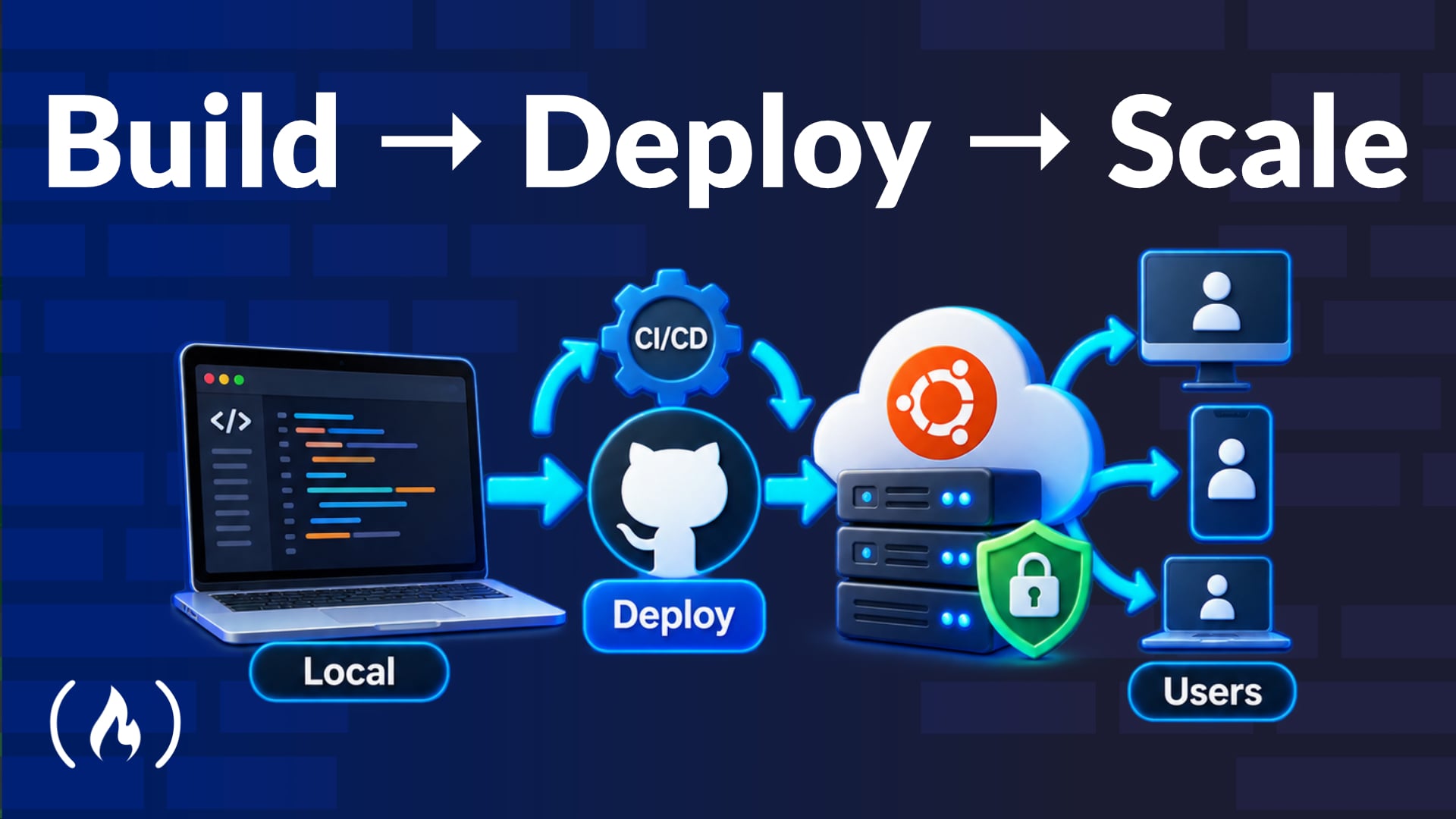
This article highlights a comprehensive freeCodeCamp.org course on deploying, securing, and automating full-stack web applications. It covers crucial steps from server provisioning and foundational security with UFW and Fail2Ban, to application runtime setup, data management, global access via Nginx and Cloudflare, and robust CI/CD pipelines with GitHub Actions. The course emphasizes a hands-on approach, integrating continuous security testing and observability, culminating in a production-ready application.
The OEMpocalypse strategy offers a novel approach to rooting Android devices from an unprivileged app by targeting OEM-specific code. It bypasses generic Linux and chipset driver complexities, aiming for a stable page Use-After-Free (UAF) primitive in OEM kernel drivers, often after an initial sandbox escape through OEM IPC handlers. This method prioritizes reliability and portability across an OEM's lineup, accepting the trade-off of per-OEM exploitation.

Chinese President Xi Jinping proposed a China-led open-source AI community and invited BRICS nations to join the World AI Cooperation Organization (WAICO) at the recent BRICS summit. This push for global collaboration contrasts sharply with Beijing's ongoing internal debates about restricting its own advanced AI models. Meanwhile, the EU's comprehensive AI Act, with its clear, enforceable rules for open-source AI, highlights a significant divergence in global AI governance approaches.

After nine years of publishing success, indie studio No More Robots is launching its first self-developed IP, `Cruise Control`, a puzzle game born from a pivot away from a shelved online shooter. Founder Mike Rose reflects on the company's unconventional, lean approach, the accidental success of `Descenders`, and the massive potential of upcoming title `Another Door`, while also considering his own future in the demanding industry.

Sony's traditional silent approach to PR is facing a strong challenge from an increasingly vocal fanbase, frustrated by the shift to digital-only games and perceived mishandling of live-service titles. While the recent State of Play delivered some good content, it couldn't drown out protests, prompting questions about the long-term viability of Sony's "impassive mask" strategy. Even *GTA 6* might not be enough to quell the widespread discontent.

Educators are abandoning AI detection tools in favor of fundamentally rethinking how they assess students, designing classes that force demonstrable learning. This strategic shift comes after a significant surge in AI-generated essays last year, prompting institutions like the University of Baltimore to re-evaluate their pedagogical approaches. This pivot aims to make AI cheating impractical by prioritizing genuine understanding and critical thinking.
AI is rapidly changing the game for software security, shrinking the window between vulnerability discovery and exploitation. This necessitates a shift from traditional patching based solely on severity scores to a more context-aware approach called exposure management. Developers need to understand how AI accelerates threats and learn to prioritize real risks by analyzing code reachability, dependency trees, and leveraging SBOMs, alongside implementing practical compensating controls and least privilege principles.

This article discusses freeCodeCamp's new course on Excel formulas and functions, tailored for developers. Taught by a former Amazon engineer, the course covers core mechanics, logic, aggregation, modern lookups like XLOOKUP, data manipulation, and dynamic arrays. It emphasizes a 'code-style' approach, enabling developers to master Excel as a powerful data analysis tool, bridging technical skills with business insights.

Industrial giant Caterpillar is pioneering a pragmatic approach to artificial intelligence deployment, drawing upon decades of experience automating challenging physical environments like mining sites. The company's

As autumn approaches and evenings draw longer, there's nothing quite like settling down with a captivating new book. September 2026 brings an exciting array of new titles to the Amazon Kindle Store, ranging from

Mega Man: Dual Override revitalizes the classic series with tight gameplay and smart new features like optional Chip Sets. While still offering core challenges, new additions like increased checkpoints aim to make it more approachable. It's a promising return for the Blue Bomber.
Universities should prepare founders by emphasizing deep technical skills, fostering a culture where startups are a viable path, and, most importantly, encouraging independent student projects. This "quiet" approach, focusing on building and self-directed work rather than formal "entrepreneurship" programs or business plan competitions, best cultivates the talent needed for impactful tech innovation.

Traditional software testing patterns often falter with conversational AI due to its dynamic nature. This guide provides practical strategies for QA engineers and developers to effectively test AI agents, focusing on intent, conversational flow, robustness against hallucinations, and strategic, risk-based approaches to ensure reliable and user-friendly interactions.

A recent Wired article by Rhett Allain delves into the transformative power of transistors, explaining how these tiny electronic switches sparked the computer revolution. Praised by readers for its clarity and comprehensive approach, the piece highlights the enduring significance of this foundational technology.

Chinese AI and chip firms are implementing broad equity and cash incentives to retain engineers, countering fierce domestic competition and geopolitical pressures. Companies like Cambricon offer shares to over 85% of staff, while ByteDance and Tencent provide significant pay increases for AI talent. This approach contrasts sharply with the US's cash-first strategy and Europe's long-term training initiatives.
