
Nintendo's Game & Watch: The Calculator-Inspired Genesis
Verdict Nintendo's Game & Watch isn't just a nostalgic piece of tech; it's a foundational pillar that reshaped the gaming landscape and defined Nintendo's strategic approach for decades. Born from a simple observation
Verdict
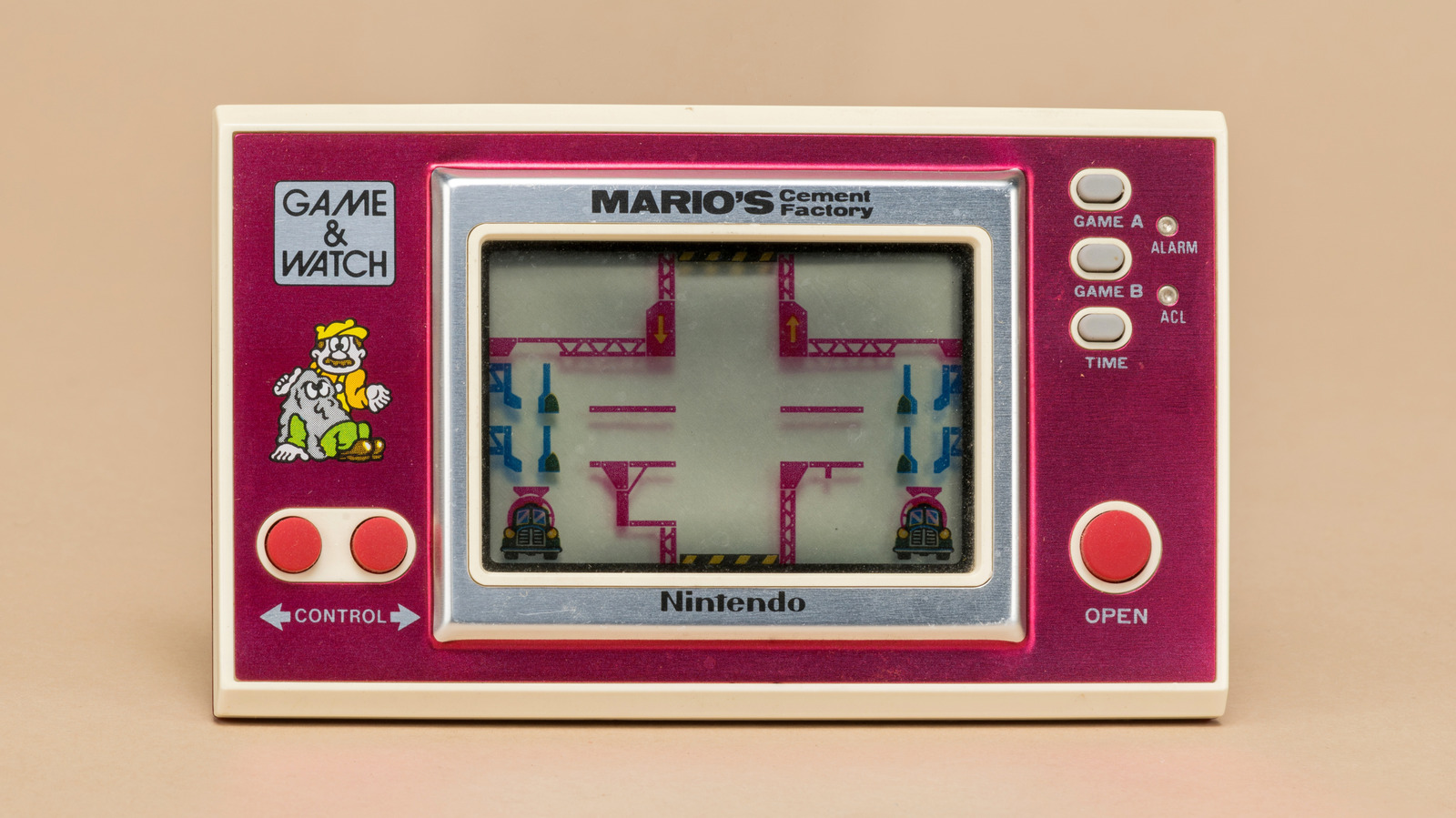
Nintendo's Game & Watch isn't just a nostalgic piece of tech; it's a foundational pillar that reshaped the gaming landscape and defined Nintendo's strategic approach for decades. Born from a simple observation of a bored salaryman and the ingenious repurposing of calculator technology, this handheld series was a game-changer (pun intended). It single-handedly pulled Nintendo from financial turmoil, pioneering portable gaming, introducing iconic design elements like the D-pad and clamshell form factor, and establishing the 'lateral thinking with withered technology' philosophy that still underpins the company's hardware design. While not a modern console, understanding its origin story is crucial for appreciating Nintendo's enduring legacy and innovative spirit.
The Unlikely Birth of a Gaming Icon
Before it became synonymous with video games, Nintendo was a Kyoto-based manufacturer of hanafuda playing cards, a venture that eventually struggled to remain relevant. The company explored various disparate businesses, from taxi services to instant noodles, in a bid to stay afloat. Their eventual foray into toys, particularly with the success of Gunpei Yokoi's Ultra Hand in 1966, offered a glimmer of hope, but true stability remained elusive. By the late 1970s, Nintendo had pivoted primarily to the video game market with early home consoles and arcade divisions.
The true genesis of the Game & Watch, however, came from an unexpected source: boredom and a calculator. In 1979, Nintendo's innovator, Gunpei Yokoi, observed a salaryman on a train amusing himself with a calculator to kill time. This sparked a revolutionary idea: why confine games to arcades or living rooms when they could be portable? This simple insight laid the groundwork for the Game & Watch series, driven by the belief that gaming could be a personal, on-the-go experience.
Ingenuity Through Repurposing: Key Details
Bringing the Game & Watch to life required significant technical ingenuity. Yokoi's timely pitch to Nintendo president Hiroshi Yamauchi coincided with a meeting with Sharp, then the world's leading calculator manufacturer. This fortuitous connection paved the way for a crucial collaboration. The Game & Watch leveraged technology remarkably similar to the calculators of the era, utilizing readily available LCD screens and button cell batteries. Both devices achieved their visuals through a segmented display system, where each character or image was composed of individual segments that could be lit or unlit.
The inaugural Game & Watch title, 1980's Ball, showcased this principle perfectly, employing a chip capable of displaying 72 segments. Initial prototypes were crafted with painstaking physical detail, using cut acrylic plastic and tiny wheat bulbs on circuit boards to match the compact dimensions of the eventual handheld. The development team became a rapid-fire innovation factory, releasing an astonishing 59 Game & Watch titles between 1980 and 1991, nearly one new game every month. As the series evolved, it saw improvements like widescreen displays and, most notably, the introduction of the iconic clamshell dual-screen format – a design that would later influence the Nintendo DS. Globally, the Game & Watch series sold over 43 million units, a testament to its widespread appeal and Yokoi's vision.
Design Philosophy and User Experience
The Game & Watch wasn't just a product; it was the embodiment of a core design philosophy coined by Gunpei Yokoi: "lateral thinking with withered technology." This principle advocates for finding novel applications for older, proven, and therefore more affordable hardware. The Game & Watch itself is a prime example, repurposing calculator tech for entertainment. This approach had direct benefits for the user experience.
By opting for simpler, more cost-effective components, Nintendo could create devices that were highly portable, significantly more affordable, and boasted superior battery life compared to more technologically advanced (and expensive) alternatives. This philosophy was famously applied to Yokoi's subsequent project, the Game Boy, which, despite not having the most cutting-edge hardware, became one of history's most beloved handhelds due to its practicality and accessibility. Even today, devices like the Nintendo Switch 2 continue to prioritize portability and price point over raw power, reflecting this enduring ethos.
Beyond hardware, the Game & Watch introduced two groundbreaking user interface innovations: the portable, protected clamshell design (which prevented screen damage while on the go) and the now-ubiquitous D-pad. These contributions alone underscore the profound impact on how users interact with handheld gaming devices, with both elements still prevalent in modern gaming hardware.
Lasting Impact and Why It Matters
The Game & Watch's significance extends far beyond its own sales figures. As Satoru Iwata, late Nintendo president and producer, noted, without the Game & Watch, "today's handheld game systems would probably be different. I doubt the Game Boy and Nintendo DS systems would have made it out into the world." It wasn't just about launching successful products; it was about defining a new category of entertainment and securing Nintendo's future.
Gunpei Yokoi's innovations pulled Nintendo from the brink of financial collapse twice: first with the Ultra Hand and again with the Game & Watch. His arrival and subsequent work were critical; without them, Nintendo might never have thrived in the video game industry. While modern gamers might only occasionally see themed Game & Watch releases or in-game homages, Yokoi's influence – from the D-pad to the 'lateral thinking' strategy – is deeply embedded in every Nintendo console and game released since.
Pros:
- Pioneering Portable Gaming: Established the handheld gaming market.
- Financial Lifeline: Pulled Nintendo out of significant debt twice.
- Innovative Design: Introduced the D-pad and clamshell form factor.
- Enduring Philosophy: Created "lateral thinking with withered technology," shaping Nintendo's hardware strategy.
- Massive Success: Sold over 43 million units worldwide.
Cons:
- Simple Gameplay: Early titles were inherently basic due to technological limitations.
- Single-Game Focus: Each unit typically played only one game, limiting versatility (though this changed with later multi-screen models).
Recommendation
For anyone with an interest in gaming history, product design, or the incredible resilience of a company like Nintendo, a deep dive into the Game & Watch's origins is highly recommended. While you're not 'buying' the original device for modern gaming, understanding its genesis offers invaluable insight into Nintendo's DNA. It demonstrates how creativity, strategic thinking, and a willingness to repurpose existing technology can lead to groundbreaking innovation and immense success. It's a reminder that sometimes, the most revolutionary ideas come from the simplest observations and clever engineering, rather than just raw processing power.
FAQ
Q: What was the primary inspiration behind the Game & Watch?
A: The primary inspiration came from Nintendo engineer Gunpei Yokoi observing a bored salaryman playing with a calculator on a train. This led him to conceptualize portable gaming devices that could utilize similar, affordable LCD technology.
Q: What lasting impact did the Game & Watch have on Nintendo and the gaming industry?
A: The Game & Watch established Nintendo's 'lateral thinking with withered technology' philosophy, pioneered the portable gaming market, introduced iconic design elements like the D-pad and the clamshell form factor, and helped save Nintendo from financial ruin, paving the way for the Game Boy and Nintendo DS.
Q: Are new Game & Watch devices still being released or celebrated today?
A: While the original line ended in 1991, Nintendo occasionally releases modern, themed Game & Watch units that celebrate classic Nintendo games (like Mario or Zelda) and incorporate features of the original devices, serving as nostalgic collector's items and tributes to its legacy.
Related articles
Android 17 QPR2 Beta 7.1: The Performance Relief You've Been Waiting
Android 17 QPR2 Beta 7.1: Finally Fixing the QPR1 Performance Woes Verdict: Android 17 QPR2 Beta 7.1 is a crucial and highly anticipated software update for Google Pixel users, specifically targeting and resolving the

DJI Solo Video Setups: Smart Choices for Lone Creators
This review delves into DJI's recommended solo video setups, highlighting the Osmo Pocket 3 Creator Combo as a top pick for its integrated camera, gimbal, and mic. It also covers stabilizers like the Osmo Mobile 8 and RS 4, and the DJI Mic Mini series for enhanced audio, providing honest pros, cons, and clear buying advice.

Ars Technica's Rocket Report: Your Essential Space Industry Briefing
Quick Verdict Ars Technica's Rocket Report, presented by veteran space reporter Stephen Clark, offers an invaluable and meticulously organized weekly (or similar frequency, implied by "Edition 9.15") digest of the most

Apple iPhone Duo: A Daring Debut with Notable Compromises
Apple's highly anticipated iPhone Duo, priced at $2,000, has gone on pre-order. While hailed as "Apple's most exciting device in a decade" for its innovative foldable design and immersive display, it comes with significant drawbacks like the absence of FaceID and a premium camera.

KDE Plasma 6.8: A Future-Focused 30th Anniversary Update
Quick Verdict KDE Plasma 6.8, arriving as the "30th Anniversary Edition," is a pivotal release that decisively pushes the desktop environment into the future. With a definitive farewell to native X11 sessions and a

Kojima Compares Divisive New Film 'Digger' to MGS2's Prescient Vision
Gaming icon Hideo Kojima has praised the divisive 2026 film *Digger*, drawing intriguing parallels to his own prophetic game, *Metal Gear Solid 2*. Both works, he explains, uniquely explore the dangers of misinformation and a fragmented digital reality, anxieties he shares with *Digger*'s director, Alejandro González Iñárritu.