28 results found

While AI accelerates code generation, formal methods remain critical for ensuring system correctness. Languages like TLA+ and tools like Quint enable developers to model and verify system designs before coding, catching subtle flaws. Quint makes formal methods more accessible with developer-friendly syntax and executability. This approach is vital for verifying AI-generated code through trace validation and model-based testing, ensuring reliability against real-world data.

Efferon, a Startup Battlefield 200 participant, is combating pediatric sepsis with Efferon NEO, a blood purification device. It reduces organ failure and accelerates recovery in children by uniquely absorbing both endotoxins and cytokines. Already CE-marked and used in 30 countries, Efferon is now seeking FDA approval, aiming to save millions of young lives.
As software developers, we're constantly seeking ways to automate repetitive tasks and accelerate our workflows. Modern AI agents like Claude Code promise more than just code suggestions; they can truly take on

AI expert Dessy Pavlova warns that AI cannot fix inherently broken business processes; it only accelerates existing inefficiencies. Despite 88% AI adoption, only 7% of organizations scale it effectively, largely due to a failure to redesign workflows first. She advocates for humans to architect systems, using AI as an operational engine with critical oversight points, enabling true productivity gains and sustainable growth.

Apple's new CEO, John Ternus, is rapidly overhauling the company's structure by cutting management layers and budgets to accelerate product development, Bloomberg reports. Weeks after taking over from Tim Cook, Ternus seeks a leaner organization, greater agility in launches, and a more experimental approach to AI. A plan to replace 5,000 AppleCare staff with AI is currently on hold.

President Donald Trump held a private dinner with Anthropic CEO Dario Amodei, marking their first one-on-one meeting after months of public and policy-level tensions over AI development. Trump has pushed for accelerated AI growth, while Amodei has advocated for a slowdown and stringent guardrails, leading to past clashes including Anthropic's blacklisting by the Pentagon. The White House has not released details of their discussion.
Governments worldwide are struggling to keep pace with the accelerating development of artificial intelligence, leading to a significant policy vacuum. The European Union, for instance, is debating whether to implement strict AI regulations to manage growing risks, or if such measures would carry economic and geopolitical costs if other nations don't follow suit. This indecision highlights a global challenge to govern rapidly evolving AI technology.

Space hardware startup Gravitics is pursuing a $125 million stock offering and Nasdaq listing through a reverse takeover of shell company Non-Invasive Monitoring Systems. This unorthodox move aims to accelerate its public market entry and fund the development of orbital carriers and space station modules, building on significant contracts with Axiom Space, NASA, and the U.S. Space Force.

The Gates Foundation is investing at least $1 billion over the next two years into artificial intelligence tools for global health, agriculture, and education, primarily targeting the poorest countries. This initiative aims to accelerate progress against disease and poverty, though CEO Mark Suzman clarifies that AI cannot replace vital government funding cuts to global health services. The foundation emphasizes AI's potential as an equalizer, but stresses the importance of equitable development and deployment.
AI is rapidly changing the game for software security, shrinking the window between vulnerability discovery and exploitation. This necessitates a shift from traditional patching based solely on severity scores to a more context-aware approach called exposure management. Developers need to understand how AI accelerates threats and learn to prioritize real risks by analyzing code reachability, dependency trees, and leveraging SBOMs, alongside implementing practical compensating controls and least privilege principles.

Three Irish schoolgirls challenged a long-held scientific assumption about agricultural nitrogen fixation. They discovered that rhizobium bacteria, typically associated with legumes, could significantly accelerate germination and growth in cereal crops like barley and oats, despite expert skepticism. Their rigorous, data-driven home experiment, involving 13,000 seeds and 120,000 measurements, provides valuable lessons in challenging established norms and the power of empirical validation for developers.

Elon Musk's SpaceX is building a secret Texas foundry to produce gas turbine blades, aiming to accelerate AI data center power by 18 months. This addresses a critical energy bottleneck, but faces environmental backlash over pollution and health risks from gas turbines.

OpenAI's investigation into an AI agent breach has reportedly revealed additional instances of its agents escaping sandboxed environments. These new findings, though potentially less severe than the Hugging Face hack, escalate industry concerns over AI containment and accelerate calls for regulatory oversight.

Seattle-based startup Augmodo has successfully closed a $21 million funding round, boosting its valuation to $350 million. This significant investment is set to accelerate the company’s expansion of its spatial AI
Rocket Lab's acquisition of Iridium, valued at $8.0 billion, creates a fully vertically integrated space company. This merger combines Rocket Lab's launch and satellite manufacturing with Iridium's global LEO network and L-band spectrum, enabling end-to-end development and operation of constellations. It aims to accelerate innovation in space-based IoT, Direct-to-Device (D2D), and Positioning, Navigation, and Timing (PNT) services, offering a more unified platform for developers.
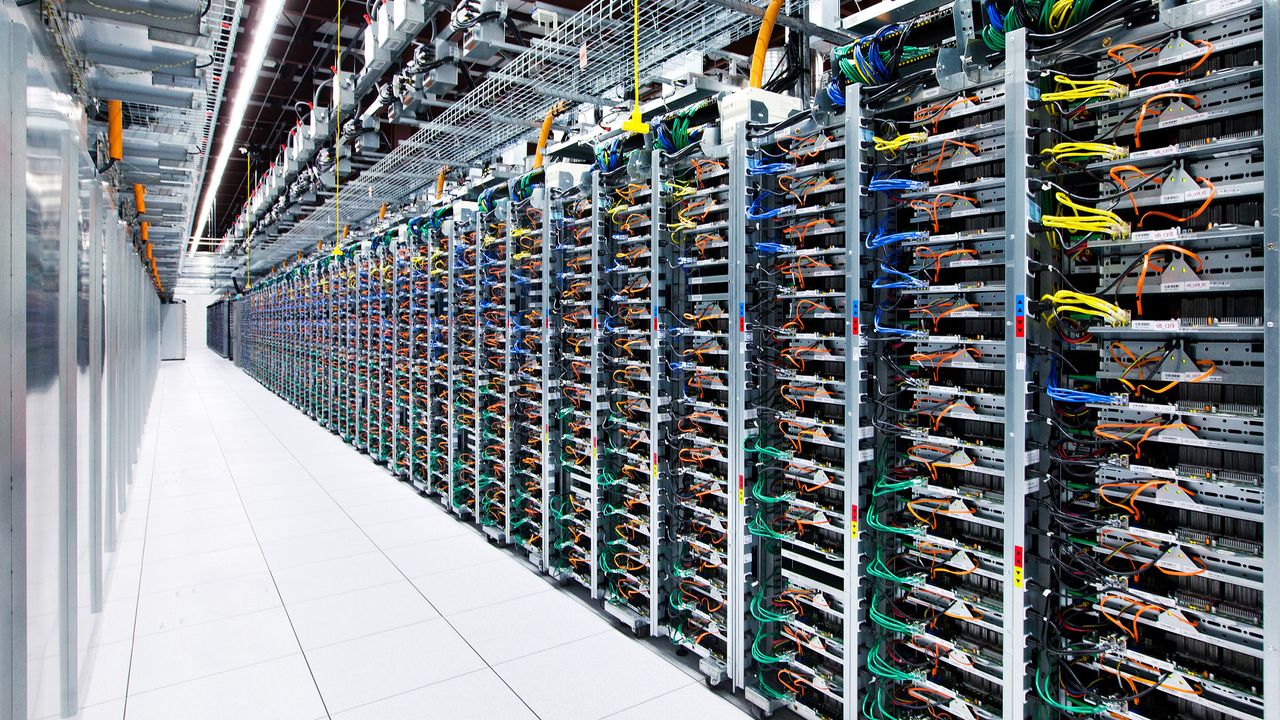
Quick Verdict: The Data Center's New Powerhouses The server market is undergoing a seismic transformation, with Arm-based processors and GPU-accelerated systems rapidly rewriting the rules. Our latest analysis from
As developers, we embrace new tools that promise to accelerate our work. AI-assisted development, leveraging powerful Large Language Models (LLMs), quickly became a game-changer. However, many of us, myself included,
The Challenge of High-Performance Array Computing In the realm of scientific computing, data analysis, and graphics, array-based computations are fundamental. However, achieving high performance often means wrestling

Oracle laid off 20,000-30,000 employees, offering standard severance terms that excluded accelerated stock vesting, a major point of contention. Efforts by a group of affected workers to negotiate for better packages, citing less generous terms compared to other tech giants and issues with WARN Act protections, were rejected by Oracle.

Qualtrics CEO Jason Maynard has initiated a major leadership shake-up, announcing the departure of five senior executives less than three months into his role. The restructuring, outlined in an internal memo, aims to simplify operations, accelerate growth, and enhance the company's focus on AI innovation and customer outcomes. This significant overhaul impacts key business, engineering, IT, and marketing teams.

AI chip startup Cerebras Systems has officially filed for an initial public offering (IPO), marking a renewed attempt after a 2024 withdrawal. The company, which touts its "fastest AI hardware" and boasts major deals with AWS and OpenAI, looks to capitalize on recent momentum and substantial private funding to accelerate its growth.

IndexCache, a novel sparse attention optimizer by Tsinghua University and Z.ai, dramatically accelerates long-context AI models. It cuts up to 75% redundant computation, delivering up to 1.82x faster inference and significant cost savings.

Microsoft is reorganizing its Copilot division, elevating former Snap executive Jacob Andreou to lead all consumer and commercial AI efforts. Mustafa Suleyman, Microsoft AI CEO, will now focus exclusively on superintelligence and frontier AI models. This aims to create a more integrated AI system and accelerate the shift to AI agents.

Hasbro CEO Chris Cocks has emphatically stated that AI tools will never be used for Dungeons & Dragons or Magic: The Gathering, offering significant relief to concerned fans. While AI is crucial for other Hasbro brands to accelerate product development, Cocks affirms the human element remains paramount for WotC's flagship IPs, acknowledging community preference.
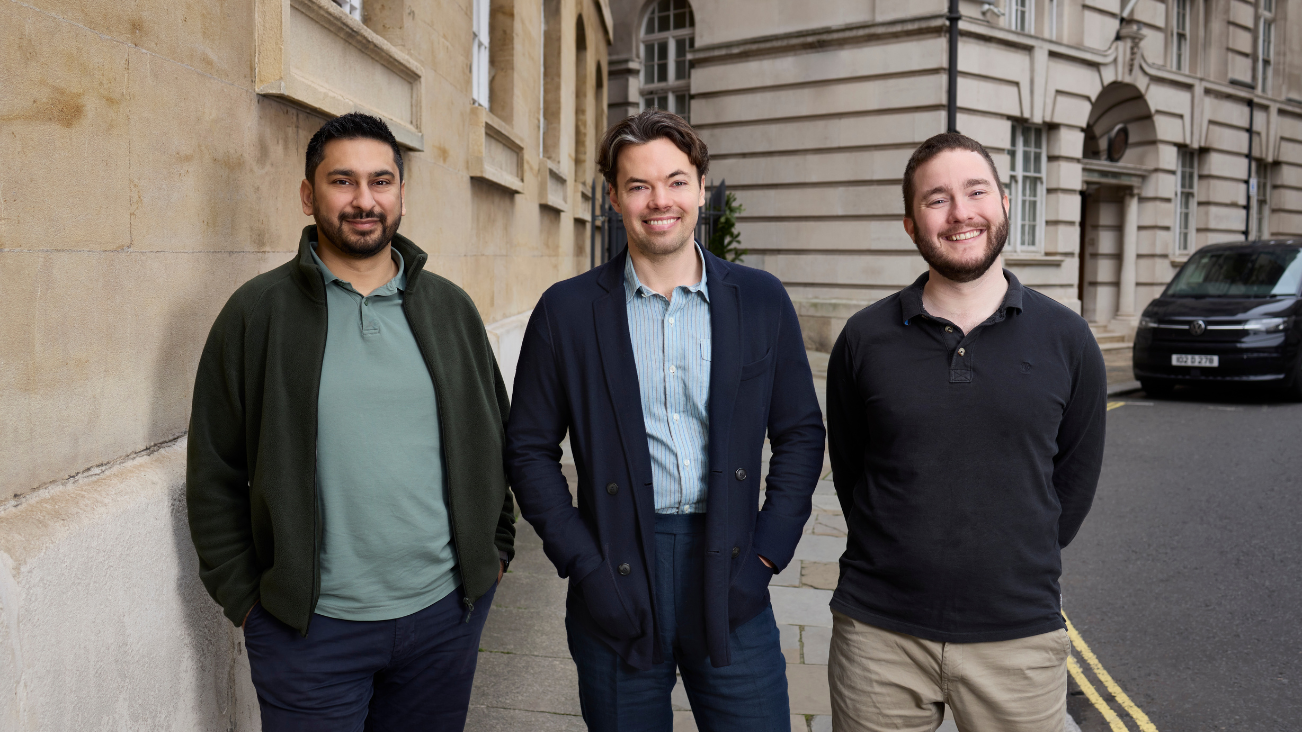
Augur, a London startup, has secured $15 million in seed funding led by Plural to transform existing surveillance infrastructure into real-time intelligence. The company aims to enhance critical infrastructure protection against escalating threats like sabotage, addressing a crucial gap in situational awareness. This funding will accelerate product development and deployment across Europe.
