
AI Can't Fix a Business with Broken Processes, Expert Warns
AI expert Dessy Pavlova warns that AI cannot fix inherently broken business processes; it only accelerates existing inefficiencies. Despite 88% AI adoption, only 7% of organizations scale it effectively, largely due to a failure to redesign workflows first. She advocates for humans to architect systems, using AI as an operational engine with critical oversight points, enabling true productivity gains and sustainable growth.

October 2, 2026
San Francisco, CA – Despite widespread AI adoption, most organizations struggle to scale the technology effectively, a problem largely stemming from attempts to overlay AI onto fundamentally flawed business processes. This is the stark warning from business operations expert Dessy Pavlova, who argues that Artificial Intelligence, while powerful, cannot mend fragmented operations; it merely accelerates existing inefficiencies.
A recent McKinsey 2025 global survey underscores this challenge, revealing that a staggering 88% of organizations are leveraging AI in some capacity, yet only 7% have successfully scaled it across their enterprise. The research points to workflow redesign as a critical, often overlooked factor for achieving significant financial impact from generative AI applications.
The Cost of Fragmented Operations
Pavlova highlights a common scenario: a customer journey involving multiple manual handoffs—from website input to spreadsheets, operating platforms, website updates, and separate finance records. Each step presents an opportunity for delays, duplication, and errors. Even with advanced software at every stage, the overall system remains broken, and integrating AI into such a structure only yields a faster version of the fragmentation.
Her experience, spanning from solo entrepreneurs to multi-million dollar corporations, consistently reveals this pattern. Companies often accumulate numerous tools to solve individual problems, then rely on connectors like Zapier or Make to force them into a semblance of cooperation. This approach, she contends, misses the core opportunity AI presents.
Redesigning Workflows: The Human-AI Partnership
Instead of patching over existing problems, Pavlova advocates for building systems around the business itself. She envisions scenarios where a single human decision can trigger a cascade of automated updates across an entire operational landscape, including websites, scheduling, and financial records. For instance, a change in a class schedule by a human can automatically propagate all necessary updates throughout the system.
Crucially, this model positions humans as the architects and overseers, with AI serving as the operational engine. Pavlova emphasizes the importance of 'stopgates' within these systems, allowing human intervention to review changes, correct anomalies, and confirm successful process completion. This human-machine collaboration is vital because automation without proper oversight simply shifts risk rather than eliminating it.
Evidence for Synergistic Gains
Research supports the efficacy of this integrated approach. A study involving 5,179 customer support agents found that access to generative AI boosted productivity by 14% on average, with inexperienced workers seeing particularly substantial gains. The technology enhanced human performance but did not negate the need for agents to understand their core work. Similarly, McKinsey's latest research reinforces that applying AI to isolated tasks leaves significant value untapped, while reimagined workflows unlock far greater productivity improvements.
IBM's 2026 study also revealed a growing 'AI control gap,' with only 11% of surveyed technology leaders feeling fully prepared for the rapid scale of AI agent deployment. This highlights the urgent need for organizational control mechanisms to keep pace with technological capability, further underscoring Pavlova's call for careful blueprinting.
The Path to Sustainable Growth
For businesses looking to grow, particularly before investing heavily in marketing or customer acquisition, Pavlova advises a thorough mapping of the entire customer journey. This includes tracing information flow, identifying human action points, understanding financial implications, and pinpointing potential error zones. Growth, she warns, will inevitably expose every weak link in an unoptimized system.
Related articles

Judge Rules Police Flock Camera Search 'Mass Surveillance
A federal judge in Oklahoma delivered a landmark ruling on Thursday, declaring that a police investigation utilizing Flock license-plate-reader (LPR) cameras to reconstruct a woman's movements constituted an

Apple Bolsters macOS Full Disk Access Amid AI Agent Security Concerns
Apple is enhancing macOS Full Disk Access controls following concerns about AI agents accessing sensitive user data. This move comes after reports involving Meta's Muse app and a ChatGPT security flaw, aiming to ensure users explicitly understand the risks before granting broad system access.

OpenAI's Dot Agent: Enterprise AI That Can Also Order Your Dinner
OpenAI has launched Dots, a new AI agent platform aimed at enterprise users, accessible via a $100/month Pro account. While it struggled with some personal tasks due to security checks, Dot excelled in complex operations like website redesign and video editing when given direct computer access. This paid model positions Dot as a professional tool for the future of work, contrasting with free, consumer-focused competitors.
regional: Seattle Space Week shines a light on eight problems and
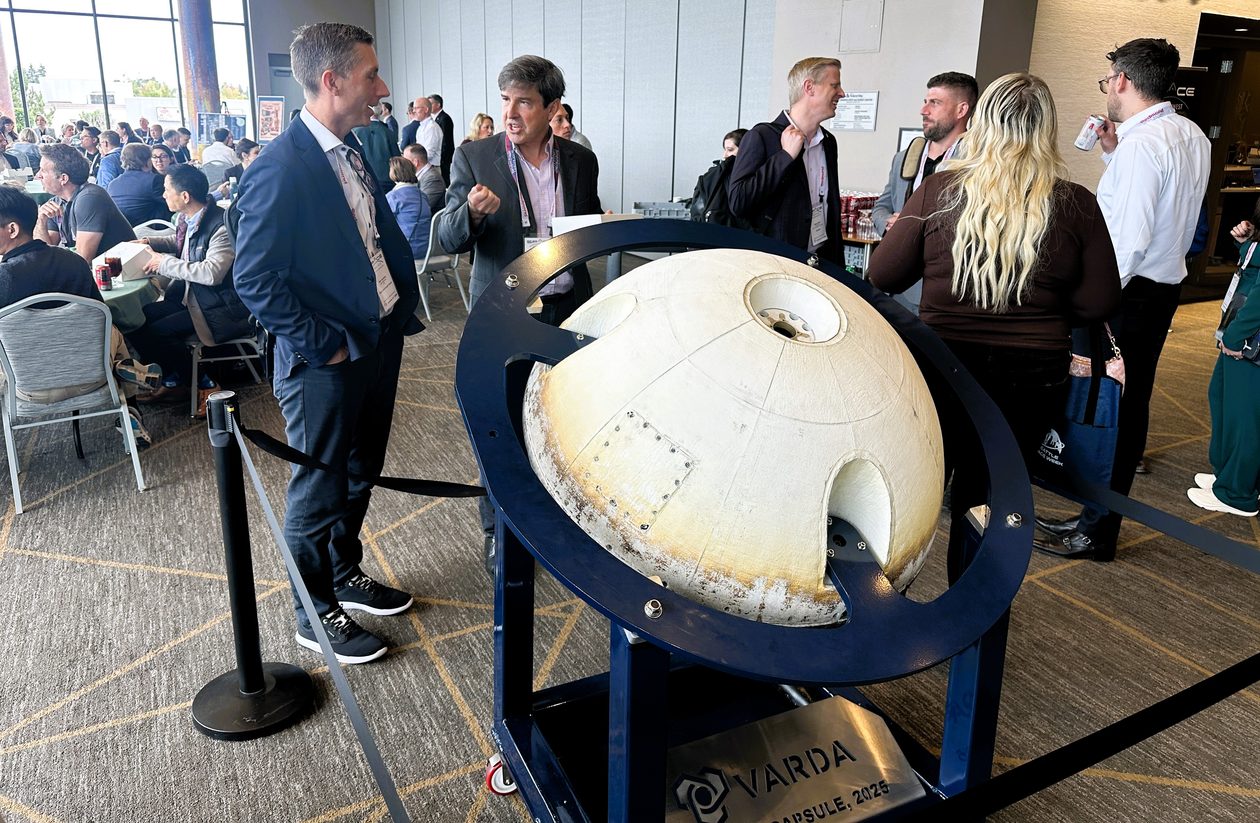
Seattle Space Week highlighted significant growth in Washington's space industry, alongside critical challenges like a launch crisis and workforce shortages. Leaders discussed four problems and four prospects, including securing local funding, competing with rival states, and the potential for new launchers and even a homegrown launchpad. State initiatives, like Governor Ferguson's Space Council, aim to foster public-private partnerships and retain key businesses.

Amazon Ends Data Center NDAs Amid Mounting Public, Political Pressure
Amazon has announced it will no longer use nondisclosure agreements (NDAs) with county officials for its data center projects. This policy reversal, revealed by CEO Matt Garman, addresses widespread community backlash and a surge in legislative efforts targeting the secrecy of data center developments. The company also pledged a $1 billion investment in data center communities over five years, focusing on education, workforce training, and energy efficiency.

Lyft Pays $272.5M to Settle California Driver Classification Lawsuit
Lyft has agreed to pay $272.5 million to settle a California lawsuit over the misclassification of its drivers as independent contractors instead of employees. The settlement covers the period from April 2016 to December 2020, predating the passage of Proposition 22 which solidified drivers' contractor status. This resolves a significant legal chapter for Lyft, though similar cases against other gig companies persist.