
Rocket Lab Acquires Iridium: A Fully Integrated Space Platform
Rocket Lab's acquisition of Iridium, valued at $8.0 billion, creates a fully vertically integrated space company. This merger combines Rocket Lab's launch and satellite manufacturing with Iridium's global LEO network and L-band spectrum, enabling end-to-end development and operation of constellations. It aims to accelerate innovation in space-based IoT, Direct-to-Device (D2D), and Positioning, Navigation, and Timing (PNT) services, offering a more unified platform for developers.
The global space industry is rapidly evolving, shifting from a landscape of specialized providers to one embracing comprehensive, vertically integrated ecosystems. In a landmark move reflecting this trend, Rocket Lab has entered into a definitive agreement to acquire Iridium Communications Inc., valued at approximately $8.0 billion. This strategic merger is not merely a financial transaction; it represents a profound consolidation of capabilities, aiming to establish a fully integrated space company that designs, builds, launches, and operates its own satellite constellations, delivering critical communications infrastructure worldwide.
The Vertical Integration Play
At its core, this acquisition unites Rocket Lab's established prowess in launch services and satellite manufacturing with Iridium's globally recognized satellite communications network and proprietary L-band spectrum. Rocket Lab, renowned for its Electron rocket and the medium-lift Neutron launch vehicle currently in development, along with its extensive spacecraft production capabilities, will now seamlessly integrate with Iridium's resilient low Earth orbit (LEO) constellation.
This vertical integration offers significant operational and strategic advantages. By internalizing launch and manufacturing, the combined entity aims to eliminate reliance on third-party launch providers, capture launch margins, and most critically, guarantee orbital access for future constellation deployments and replenishment missions. This becomes an increasingly vital differentiator in an environment of tightening global launch capacity, ensuring uninterrupted service continuity for vital applications.
Unlocking Critical Space Applications
The merged entity gains immediate access to Iridium's proven LEO network and an existing base of over 2.55 million active subscribers globally. This robust foundation positions the company to aggressively expand into several high-growth space-based application markets:
- Satellite Internet of Things (IoT): Leveraging Iridium's globally harmonized L-band spectrum and LEO network, the new entity can deliver proprietary and standards-based IoT solutions, providing pervasive connectivity for devices in remote, off-grid, or challenging environments where terrestrial networks are often unavailable.
- Direct-to-Device (D2D): A key area of accelerated innovation will be the development and deployment of next-generation Direct-to-Device (D2D) services, known as Iridium NTN Direct SM. This capability is poised to be transformative for national security and emergency response, enabling reliable and resilient communications directly to standard or specialized devices even when traditional networks are compromised or non-existent.
- Positioning, Navigation, and Timing (PNT): Iridium’s network offers a secure and resilient alternative PNT architecture. This is particularly valuable for applications where traditional Global Positioning System (GPS) and other Global Navigation Satellite System (GNSS) signals may be degraded or unavailable, enhancing overall system resilience for government, defense, aviation, and maritime sectors.
- Critical Safety-of-Life Services: The established security and weather-resilient nature of Iridium’s network extends its role in providing critical safety-of-life services, encompassing everything from global maritime distress communications to aviation air traffic management.
By combining these capabilities, the merged company is positioned not just to maintain Iridium's legacy but to build upon it, pioneering new space applications and scaling into previously untapped markets.
Strategic Implications for Developers
For developers, this acquisition signifies a monumental shift towards a more unified and streamlined platform for building and deploying space-based solutions. Instead of navigating a fragmented ecosystem of separate providers for launch, satellite bus manufacturing, and network access, the combined Rocket Lab-Iridium offers a more cohesive and potentially less complex environment. This integration could significantly accelerate development cycles for innovative space applications by offering an end-to-end stack.
The heightened focus on D2D and alternative PNT solutions underscores a growing demand for resilient, ubiquitous connectivity that transcends traditional terrestrial infrastructure limitations. Developers working on remote sensing platforms, autonomous systems, global logistics, or critical infrastructure monitoring will find a more robust and integrated offering. The L-band spectrum's ability to penetrate foliage and light structures, combined with global LEO coverage, makes it exceptionally suitable for a wide array of IoT and D2D applications.
Furthermore, the transaction unifies two deeply trusted government partners, pooling their specialized strengths to deliver highly resilient, next-generation capabilities directly to defense and national security clients. This dual focus on commercial and governmental applications suggests a broad and stable foundation for future service expansion.
Practical Takeaways
- This merger marks a significant step towards fully integrated "space-as-a-service" models, potentially simplifying the development and deployment process for satellite-enabled applications.
- Expect accelerated innovation in Direct-to-Device (D2D) and alternative Positioning, Navigation, and Timing (PNT) solutions, leveraging a robust LEO satellite network.
- The consolidation of globally coordinated L-band spectrum under a single entity is likely to foster the creation of new applications requiring reliable, low-bandwidth global connectivity.
- The internal capture of launch margins and guaranteed orbital access provide long-term stability and predictability for future constellation expansions, benefiting any services built on this infrastructure.
FAQ
Q: How does the L-band spectrum factor into the technical advantages of this acquisition?
A: Iridium's globally harmonized L-band spectrum is crucial for reliable user communications due to its propagation characteristics. It offers excellent penetration through weather and light obstructions, enabling consistent connectivity for diverse applications like IoT, D2D, and PNT, especially in remote or challenging environments where higher frequency bands might struggle with signal attenuation.
Q: What is the significance of the "direct-to-device (D2D)" capability for developers?
A: D2D, or Iridium NTN Direct SM, represents a key growth area. For developers, this means the potential to integrate satellite connectivity directly into a wider range of standard or specialized devices, bypassing the need for dedicated satellite terminals in some cases. This innovation opens up new possibilities for ubiquitous mobile connectivity, enhanced emergency services, and broad IoT deployments, particularly in areas lacking traditional terrestrial infrastructure.
Q: How does vertical integration impact the deployment of future satellite constellations?
A: Vertical integration means Rocket Lab can leverage its own launch vehicles (such as the Electron and the upcoming Neutron) and spacecraft manufacturing for Iridium's next-generation constellation. This approach is designed to eliminate third-party launch costs, capture launch margin internally, and most importantly, guarantee orbital access. For developers building on these platforms, it implies a more predictable and potentially faster path from satellite design to on-orbit operation and service delivery.
Related articles

DJI Solo Video Setups: Smart Choices for Lone Creators
This review delves into DJI's recommended solo video setups, highlighting the Osmo Pocket 3 Creator Combo as a top pick for its integrated camera, gimbal, and mic. It also covers stabilizers like the Osmo Mobile 8 and RS 4, and the DJI Mic Mini series for enhanced audio, providing honest pros, cons, and clear buying advice.

Ars Technica's Rocket Report: Your Essential Space Industry Briefing
Quick Verdict Ars Technica's Rocket Report, presented by veteran space reporter Stephen Clark, offers an invaluable and meticulously organized weekly (or similar frequency, implied by "Edition 9.15") digest of the most

Tesla Unveils Thruster-Equipped Roadster, 2028 Production Targeted
Tesla has unveiled its second-generation Roadster, featuring cold-gas thrusters co-developed with SpaceX, enabling it to jump and flip. The electric sports car demonstrated 0-60mph in an astonishing 0.81 seconds, with production targeted for 2028. This highly anticipated reveal also serves as a key recruitment tool for Tesla's ambitious AI and robotics initiatives.

AI's Confidence vs. Formal Methods' Rigor: Design Flaws & Verification
While AI accelerates code generation, formal methods remain critical for ensuring system correctness. Languages like TLA+ and tools like Quint enable developers to model and verify system designs before coding, catching subtle flaws. Quint makes formal methods more accessible with developer-friendly syntax and executability. This approach is vital for verifying AI-generated code through trace validation and model-based testing, ensuring reliability against real-world data.
regional: A two-person Seattle startup lands $1M to reinvent
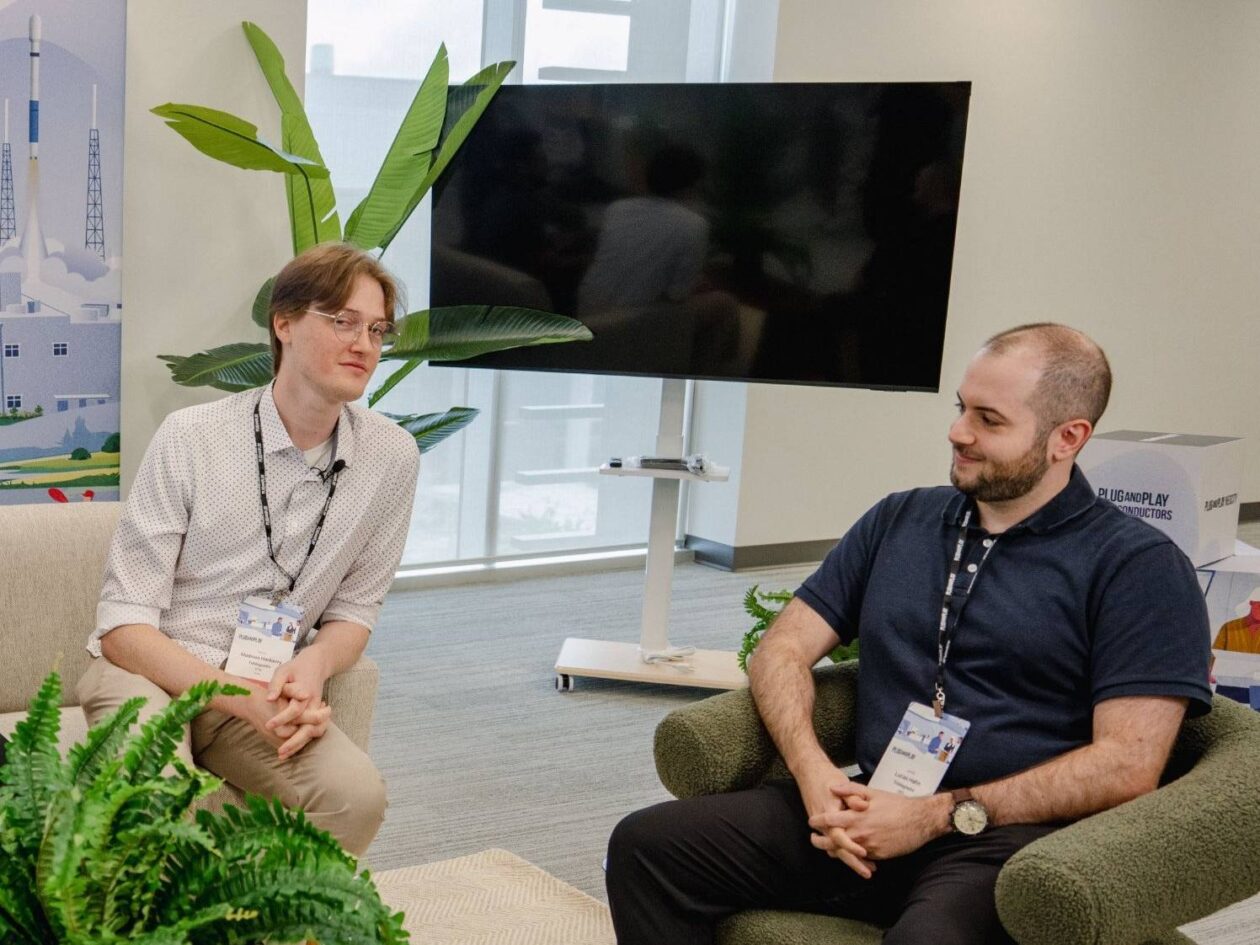
Seattle startup TriMagnetix has secured $1 million to develop semiconductor chips that consume 800 times less energy and are radiation-resistant. The two-person company, leveraging nanomagnetic technology, is targeting space applications and data centers. With new funding and key partnerships, TriMagnetix aims for commercial sales within a year.
Ephemeral PR Preview Environments on GKE: A Deep Dive
Every development team eventually grapples with the limitations of shared staging environments. The familiar scenario: multiple features deployed simultaneously, database migrations clashing, and the phrase "it works on