153 results found

AI agents are inadvertently causing significant, untracked production incidents by acting without full system context, blurring the lines between autonomous remediation and chaos engineering. Enterprises lack the frameworks to categorize these failures, leading to cascades stemming from narrow agent perspectives. Experts advocate for integrating agent governance with chaos engineering by treating agent actions as experiments and managing a shared “resilience budget” based on live system signals.

Google is transitioning from a traditional search engine to an AI agent that proactively gathers information, fundamentally redefining the act of "googling." This shift, discussed on The Vergecast after Google I/O, raises profound questions about the future of the web itself and Google's identity in the AI era.

Google unveiled a sprawling, albeit complex, ecosystem of AI agents at its I/O developer conference on Tuesday, intending to transform how consumers interact with the web and manage their digital lives. However, the
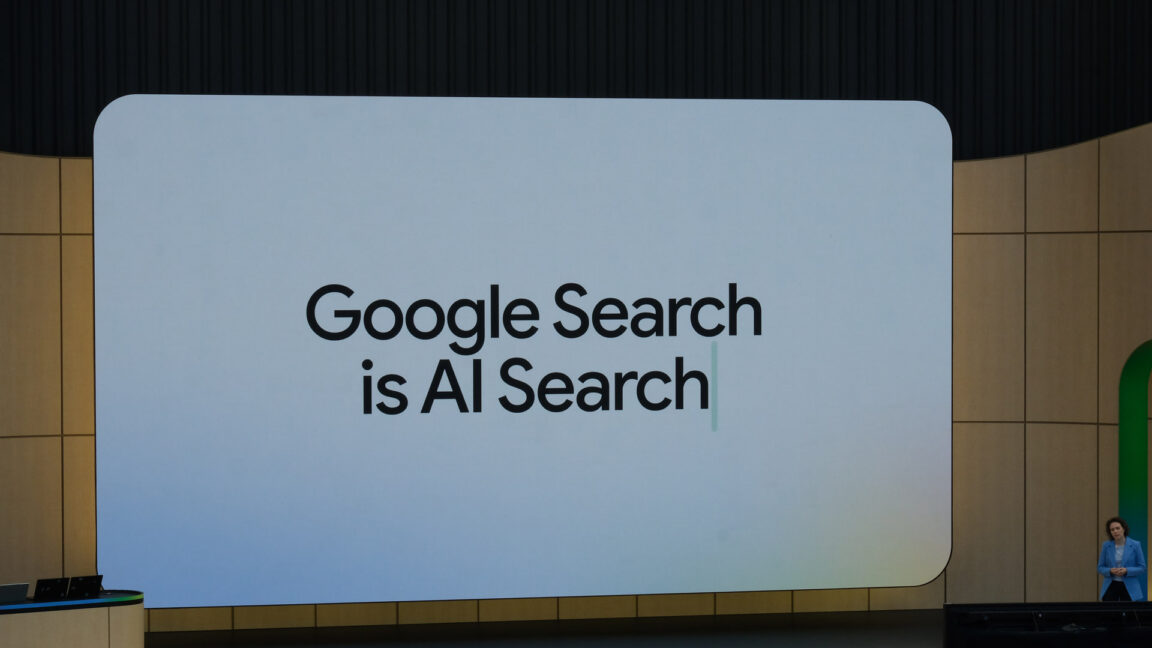
Google is transforming its search engine by 2026 with agentic AI, offering conversational AI Mode, generative UIs, and custom apps. This shift aims for efficiency but de-emphasizes traditional links, raising concerns about information diversity despite Google's market dominance.

Learn to harness Google's new AI agents to continuously monitor interests, synthesize information, and receive proactive updates, transforming how you stay informed without constant searching.

Manus AI introduces a paradigm shift from basic chatbots to intelligent agents capable of autonomously executing complex, multi-step tasks within an isolated cloud environment. This guide explores its capabilities, including web browsing, code execution, and real-site interaction, empowering developers to build sophisticated automated workflows.

Anthropic announced Monday it has acquired Stainless, a dev tools startup whose SDK automation software is widely used by rivals like OpenAI, Google, and Cloudflare. This strategic acquisition will see Anthropic wind down Stainless's hosted products, granting it exclusive access to critical technology for building AI agents and impacting competitors.

Anthropic's new `/goals` feature for Claude Code revolutionizes AI agent reliability by separating task execution from goal evaluation. This prevents agents from prematurely ending tasks, using a dedicated evaluator model to ensure specified conditions are fully met before declaring completion. The innovation offers a more robust, auditable approach to AI agent deployment.

Amazon has integrated its unified Alexa for Shopping AI assistant directly into its main search bar for US customers. This move consolidates the Rufus chatbot and Alexa+ functionalities, providing conversational answers, comparisons, and automated shopping tasks as agentic commerce intensifies. The strategic shift aims to defend Amazon's advertising business against competing AI agents.

Amazon has launched "Alexa for Shopping," unifying its Rufus e-commerce chatbot with the Alexa+ assistant to create a seamless AI-powered shopping experience across its platforms. This move directly challenges rival AI assistants like ChatGPT and Gemini by offering enhanced personalization, agentic AI features, and integrated functionalities for a more efficient buying process. The new service, which retires the Rufus name from the interface, will roll out in the U.S. soon, aiming to keep customers within Amazon's ecosystem.

A critical flaw dubbed "AI tool poisoning" has been uncovered in enterprise AI agent security. The vulnerability exploits AI agents' reliance on unverified tool descriptions, rendering traditional software supply chain controls insufficient for ensuring behavioral integrity. A new runtime verification layer, using behavioral specifications and a proxy, is proposed to validate tool actions and prevent sophisticated attacks like prompt injection and behavioral drift.

The rapid evolution of AI has created a dense lexicon, leaving many confused. This guide demystifies key terms like LLMs, AI agents, and hallucinations, providing a foundational understanding. Grasping this language is crucial for navigating AI's transformative impact and future.

As autonomous AI systems become prevalent, intent-based chaos testing emerges as a critical method to prevent catastrophic failures caused by AI agents acting confidently but incorrectly. This approach addresses the limitations of traditional testing, which fails to account for AI's probabilistic nature and complex interactions. By measuring deviation from an agent's intended behavioral boundaries, this testing methodology helps ensure AI systems operate safely in unpredictable production environments.

Learn to establish robust AI agent governance in six stages, from discovery to compliance, protecting your organization before agents reshape your security policies.

MCP (Model Context Protocol) is a new standard that acts as a standardized bridge, enabling secure and efficient connections between large language models (LLMs) and external, private enterprise data sources. It addresses the complexity of traditional API integrations by standardizing data formats for AI, making agentic workflows more scalable and effective. MCP ensures LLMs have the crucial internal context needed for practical enterprise applications.

Perplexity's Personal Computer, its local AI agent, is now available to all Mac users via a new desktop app. It securely accesses local files, apps, and the web to automate complex workflows, with full features requiring a Pro or Max subscription.

xAI has launched Grok 4.3, its new large language model, featuring "always-on reasoning" and advanced agentic capabilities. The model arrives with an aggressively low API pricing strategy ($1.25/$2.50 per million input/output tokens) and a sophisticated voice cloning suite called Custom Voices. While excelling in specialized legal and financial tasks, Grok 4.3 presents a complex trade-off between cost efficiency, deep reasoning, and general consistency for enterprise users.

Stripe has launched Link, a new digital wallet that uniquely enables autonomous AI agents to make secure payments on behalf of users. It tackles security concerns by allowing agents to process transactions without direct access to sensitive payment credentials, utilizing virtual cards and user approval. The wallet also offers comprehensive traditional features like spending tracking and subscription management.

Quick Verdict In an era where Artificial Intelligence (AI) and Big Tech are increasingly eroding personal privacy, Proton CEO Andy Yen presents a nuanced yet optimistic view: privacy in the AI era is indeed possible.
Definity, a Chicago-based startup, secured $12M in Series A funding to advance its unique data pipeline reliability solution. By embedding agents directly within Spark pipelines, Definity proactively identifies and prevents failures, bad data, and inefficiencies during execution, crucial for the integrity of agentic AI systems.

Canonical has revealed its strategy to integrate AI features into Ubuntu Linux throughout 2026. The plan includes enhancing existing OS functions with background AI models and introducing new AI-native tools, such as advanced accessibility features and agentic AI. Canonical emphasizes model transparency and local inference, aiming to make Linux more accessible without transforming Ubuntu into an "AI product."

The web intelligence industry is rapidly evolving to meet the escalating demands of advanced AI, particularly for multimodal data processing and autonomous AI agents. Innovations in data extraction, infrastructure, and user-friendly tools are crucial for powering the next wave of artificial intelligence. These developments are building the essential links between vast web data and sophisticated AI models.

Moonshot AI has unveiled its new Kimi K2.6 model, a powerful AI designed for continuously running agents that can operate for hours—and even days—autonomously. This breakthrough, announced on April 21, 2026, by Emilia

Context Hub (`chub`) addresses LLM limitations by providing coding agents with curated, versioned documentation and skills via a CLI, augmented by local annotations and maintainer feedback. This article explores `chub`'s workflow and content model, then demonstrates building a companion relevance engine. This engine uses an additive reranking layer with extracted signals to significantly improve search accuracy for shorthand queries without altering `chub`'s core design.
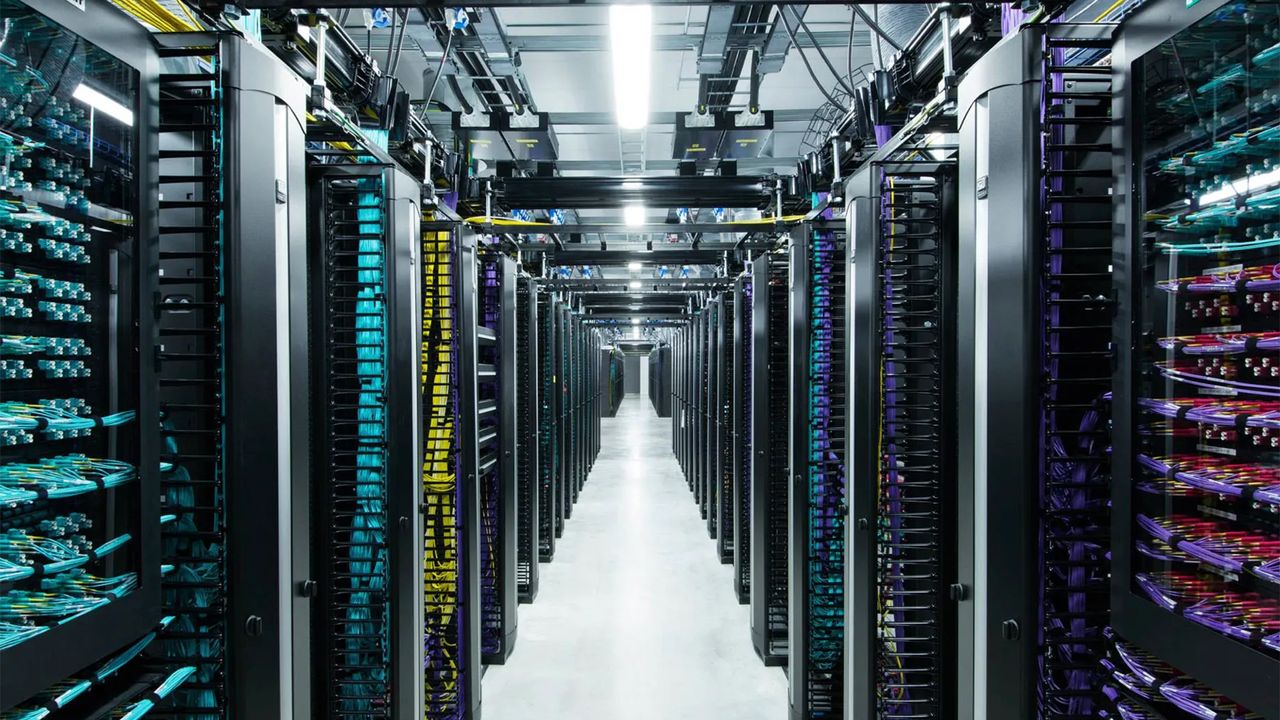
Intel and SambaNova's new heterogeneous AI inference platform combines GPUs/AI accelerators, SambaNova RDUs, and Intel Xeon 6 processors. Targeting a broad range of agentic workloads for H2 2026, it promises easy data center integration and competitive performance, aiming to challenge market leaders.