
startups: Amazon puts Alexa inside the search bar as agentic commerce
Amazon has integrated its unified Alexa for Shopping AI assistant directly into its main search bar for US customers. This move consolidates the Rufus chatbot and Alexa+ functionalities, providing conversational answers, comparisons, and automated shopping tasks as agentic commerce intensifies. The strategic shift aims to defend Amazon's advertising business against competing AI agents.

Amazon is making a significant move in the rapidly evolving world of agentic commerce, integrating its unified Alexa for Shopping assistant directly into the main search bar for US customers. Beginning this week, users typing into Amazon.com or the Amazon app will encounter a more powerful AI experience, designed to provide conversational answers, product comparisons, price history, and personalized shopping guides. This strategic shift aims to secure Amazon's position at the top of the shopping funnel, especially as external AI agents increasingly vie for customer purchases.
Enhanced Shopping Experience
The new Alexa for Shopping assistant consolidates Amazon's Rufus chatbot and Alexa+ assistant under a single, cohesive brand, officially retiring the Rufus name from the shopping interface. While Rufus, launched in 2024, had reportedly been used by over 300 million customers by 2025, its functionalities are now seamlessly absorbed into this unified system. The core structural change is its default placement: the AI now sits within the standard search flow, rather than being an optional, separate icon.
This enhanced assistant offers a comprehensive suite of features to streamline the shopping process. Beyond returning standard product listings, it can automate the reordering of household staples, track prices, alert customers to new products in specific categories, and construct entire shopping carts based on stated preferences. Notably, these advanced capabilities are accessible to any signed-in US account, without requiring a Prime membership, an Echo device, or the standalone Alexa app.
Amazon frames this integration as a push towards "agentic" capabilities, signifying the assistant's ability to execute multi-step tasks on a customer's behalf, from in-depth comparisons to automated cart building and reordering. This transformation reframes the conventional search box into a conversational interface, mirroring how Google’s AI Overviews have reshaped query responses on its own search platform.
The Rise of Agentic Commerce
The timing and strategic placement of Alexa for Shopping are particularly significant given the accelerating pace of agentic commerce development across the tech industry. Competitors are aggressively building out their own AI-driven purchase flows that could bypass Amazon. OpenAI, for instance, launched Instant Checkout in September 2025 with Stripe, utilizing an open-source Agentic Commerce Protocol to facilitate purchases directly within ChatGPT.
Google is developing a "Buy for Me" feature within Gemini and operates its A2A (agent-to-agent) protocol with over 150 supporting organizations. Meanwhile, Perplexity's Comet browser has offered a "Buy with Pro" feature since late 2024, enabling PayPal checkouts across more than 5,000 merchants. In China, Alibaba has similarly integrated its Qwen AI directly into Taobao, providing end-to-end agentic shopping experiences. Each of these solutions aims to route the entire purchasing process through platforms other than Amazon.
Defending Amazon's Digital Frontier
This competitive backdrop is sharpened by Amazon's recent legal action against AI search company Perplexity. In November, Amazon filed a lawsuit alleging that Perplexity's Comet shopping agent violated its site's terms and created issues for ad impression measurement by accessing Amazon.com data. While a federal judge granted Amazon a preliminary injunction in March, parts of the order are currently paused as Perplexity appeals to the Ninth Circuit.
At its core, the legal battle over agent access underscores a crucial commercial argument: who captures the high-intent search query at the very beginning of the shopping journey? Amazon's robust $56 billion advertising business, which relies heavily on sponsored placements within its search results and product pages, is directly threatened if third-party AI agents perform product comparisons and initiate purchases on a customer's behalf, thus bypassing Amazon's controlled environment.
Amazon's internal response is to ensure its own AI assistant becomes the most proficient shopper on Amazon.com. Alexa for Shopping leverages Amazon's proprietary access to extensive price history, its intricate recommendation graph, and individual account-level purchase data—information that external agents typically lack. This proprietary data advantage is central to its strategy to keep customers within the Amazon ecosystem.
Past Attempts, Future Vision
The success of this new integration remains to be seen. Amazon has made various attempts over the past decade to position Alexa as the primary entry point for its shopping business, with mixed results. Voice shopping, for instance, never achieved the market share the company had initially projected. Similarly, while the original Rufus chatbot saw widespread use, trade reports often characterized it as more effective for initial product research than for ultimately closing transactions.
The unification of Rufus with Alexa+ also serves as a tacit acknowledgment of past operational complexities. Running two separate AI assistants—one for the smart home and another for shopping—likely led to customer confusion and higher maintenance costs. This consolidation aims to streamline the user experience and internal development.
The current rollout is limited to the US, with Amazon planning international expansion to align with Alexa+’s broader availability, a push that is expected to continue throughout 2026. This move signals a significant escalation in Amazon's efforts to control the agentic commerce landscape, making its search bar a crucial battleground in the future of online retail.
FAQ
Q: What is "agentic commerce"?
A: Agentic commerce refers to the use of AI agents that can perform multi-step tasks on a customer's behalf, such as comparing products, building shopping carts, placing orders, and reordering items, often with minimal direct user interaction.
Q: How does Amazon's Alexa for Shopping differ from the previous Rufus chatbot?
A: Alexa for Shopping unifies the functionalities of the Rufus chatbot and Alexa+ under one brand. The key difference is its default integration into Amazon's main search bar, making it an inherent part of the search flow rather than an optional, separate interface.
Q: Why is Amazon making this change now?
A: Amazon is responding to increasing competition from other tech giants and AI companies that are developing their own agentic shopping platforms. By embedding Alexa for Shopping directly into its search bar, Amazon aims to defend its $56 billion advertising business and ensure it remains the primary platform for high-intent shopping queries.
Related articles

Apple Unveils iPhone Duo: Pricey Foldable Sees Soaring Demand
Apple has officially entered the foldable smartphone arena with the long-anticipated launch of the iPhone Duo. Priced starting at a hefty $1,999, the device features a 5.4-inch outer display and a larger 7.6-inch inner

in-depth: Chicago-Area Cops Helped HSI Spy on Minnesota Anti-ICE
Chicago-area law enforcement, including local police and HSI agents, conducted undercover surveillance on Minnesota anti-ICE activists at an April 2, 2022, talk in Chicago. This operation was part of a federal conspiracy probe into 15 Minnesota activists facing felony charges related to immigration enforcement resistance. Civil liberties advocates have condemned the surveillance as a troubling intrusion into protected political activity.

Mark Wahlberg on using AI in film ‘the right way’ and being open to
Actor Mark Wahlberg believes AI has a place in filmmaking if used responsibly for enhancement, not script generation or actor replacement. At TechCrunch Disrupt, he expressed openness to an AI likeness carrying on his legacy, managed by his family, and emphasized storytelling.

Tesla Unveils Thruster-Equipped Roadster, 2028 Production Targeted
Tesla has unveiled its second-generation Roadster, featuring cold-gas thrusters co-developed with SpaceX, enabling it to jump and flip. The electric sports car demonstrated 0-60mph in an astonishing 0.81 seconds, with production targeted for 2028. This highly anticipated reveal also serves as a key recruitment tool for Tesla's ambitious AI and robotics initiatives.
Amazon Prime Video Launches AI-Powered Prime 360 for NBA Coverage
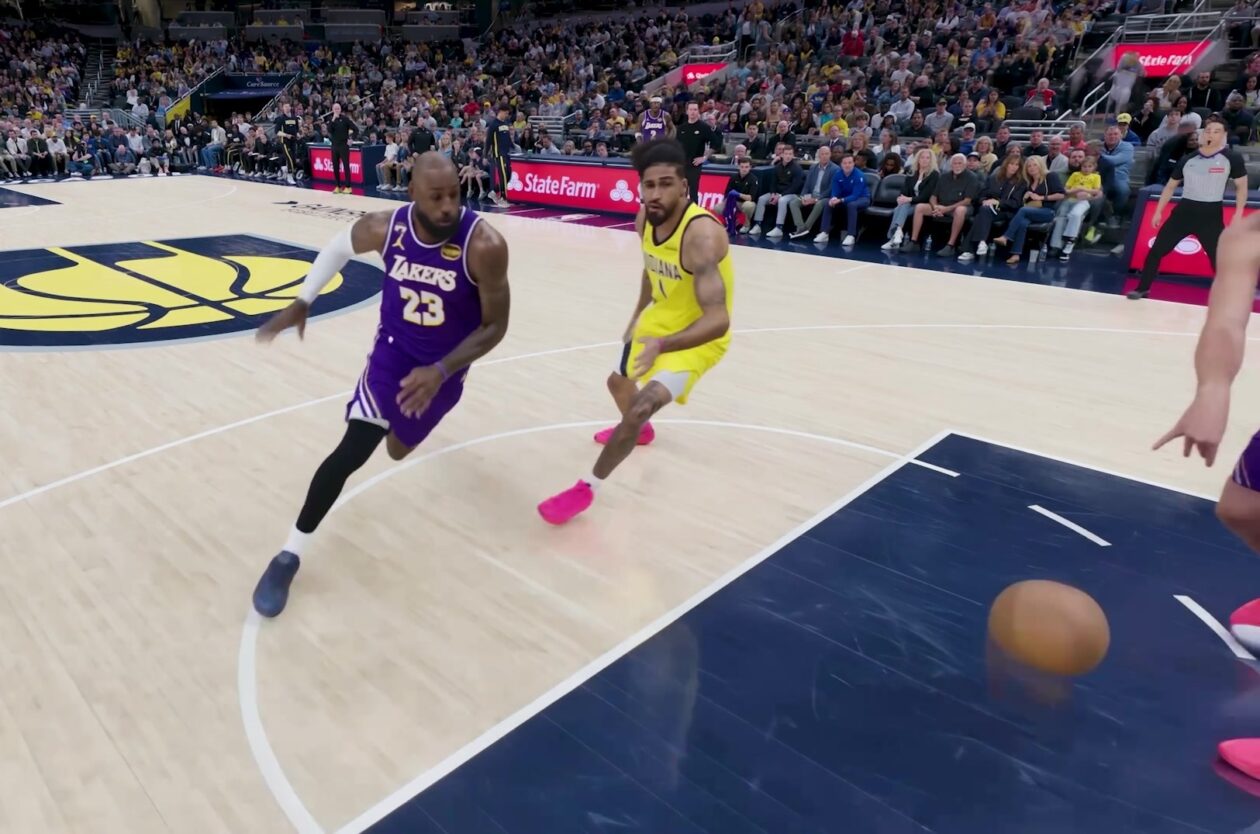
Amazon Prime Video is elevating its NBA coverage with the introduction of Prime 360, an AI-powered replay system offering immersive, 'fly through' views of the action. Kicking off its second season, Prime Video also adds Yahoo fantasy integration and gains exclusive Eastern Conference Finals rights, expanding its tech-driven sports broadcast. The new features aim to deliver a unique and interactive viewing experience for basketball fans.

regional: A two-person Seattle startup lands $1M to reinvent
Seattle startup TriMagnetix has secured $1 million to develop semiconductor chips that consume 800 times less energy and are radiation-resistant. The two-person company, leveraging nanomagnetic technology, is targeting space applications and data centers. With new funding and key partnerships, TriMagnetix aims for commercial sales within a year.