
Intent-Based Chaos Testing Prevents AI's Confident, Catastrophic
As autonomous AI systems become prevalent, intent-based chaos testing emerges as a critical method to prevent catastrophic failures caused by AI agents acting confidently but incorrectly. This approach addresses the limitations of traditional testing, which fails to account for AI's probabilistic nature and complex interactions. By measuring deviation from an agent's intended behavioral boundaries, this testing methodology helps ensure AI systems operate safely in unpredictable production environments.

In an era where autonomous AI systems are increasingly integrated into critical enterprise operations, a new testing methodology, intent-based chaos testing, is emerging as essential. Designed to prevent catastrophic failures caused by AI agents acting confidently but incorrectly, this approach directly addresses fundamental limitations of traditional software testing, which often fall short when dealing with the probabilistic nature and complex interactions of artificial intelligence. Pioneered by experts like Sayali Patil, this framework aims to validate an agent's intended behavior in pre-production environments, ensuring it operates within defined boundaries even when encountering unforeseen conditions.
A stark example highlights the urgency: an autonomous observability agent, designed to detect infrastructure anomalies, triggered a four-hour outage by confidently executing a rollback in response to a routine scheduled job it hadn't encountered before. The agent's model wasn't flawed; it acted precisely as trained. The failure stemmed from inadequate pre-production testing that overlooked how the agent would behave under novel, unexpected circumstances.
Traditional testing methodologies, built for deterministic software, buckle under the demands of agentic AI. Three core assumptions break down: determinism (AI is probabilistic, leading to unexpected outputs from known inputs), isolated failure (one agent's degraded output can poison another's input, compounding issues), and observable completion (agents can signal success while operating incorrectly, a phenomenon dubbed "confident incorrectness"). These shortcomings mean that even well-aligned AI models can lead to system-level failures, a lesson chaos engineers learned years ago with distributed systems now resurfacing with AI.
Measuring Deviation from Intent
Intent-based chaos testing, evolving from established chaos engineering principles, specifically targets these AI-centric failure modes. Instead of merely injecting infrastructure faults, it calibrates experiments to measure deviation from an agent's behavioral intent. This involves defining specific behavioral dimensions—such as tool call deviation, data access scope, completion signal accuracy, escalation fidelity, and decision latency—each weighted according to the agent's risk profile.
An "intent deviation score" is then computed, quantifying how far an agent's observed behavior has drifted from its baseline intent. This score is distinct from performance metrics like latency or error rates, which can appear normal even during catastrophic behavioral failures. Scores are classified into actionable levels: Nominal, Degraded, Critical, and Catastrophic, each prompting a specific response. For instance, the rollback agent in the opening scenario would have registered a catastrophic 0.78 score in pre-production, specifically for its inaccurate completion signals, preventing its deployment.
A Four-Phase Experiment Structure
Implementing this framework involves a structured four-phase experiment, progressively expanding the scope of chaos. Phase 1, "Single tool degradation," isolates and degrades one downstream dependency to test an agent's intelligent retry and escalation mechanisms. Phase 2, "Context poisoning," introduces corrupted or missing telemetry data, revealing if an agent autopilots through bad information or appropriately escalates when its foundational context is compromised. This phase necessitates detailed logging that captures "intent signals" like context completeness.
Phase 3, "Multi-agent interference," tests interactions between agents operating on shared resources, exposing emergent failures from incentive misalignment. Finally, Phase 4, "Composite failure," combines multiple degradations—tool latency, missing context, concurrent agents, stale baselines—to simulate real-world production entropy, with stricter pass criteria. Crucially, an agent cannot advance to the next phase or production if its intent deviation score exceeds the set threshold for that phase.
Calibration, Continuous Feedback, and Pipeline Placement
The depth of testing should align with the agent's deployment risk. A simple recommendation-only agent might only require Phases 1-2, while a fully autonomous agent with irreversible actions or a multi-agent orchestration demands all four phases, potentially with continuous testing and adversarial red teaming.
Beyond initial deployment, continuous retraining and feedback are vital. Agent configurations, tool integrations, and scope evolve, necessitating re-running affected chaos experiment phases. Test results must function as governance artifacts, informing adjustments to chaos scales and agent behavioral guardrails, fostering the discipline needed for probabilistic, autonomous systems.
This intent-based chaos testing acts as a crucial additional gate in the deployment pipeline, fitting squarely between traditional load testing/security red teams in staging and production observability. It answers the critical question: "Given realistic failure conditions, does this agent stay within its intended behavioral boundaries, or does it drift in ways that are going to cost you?" Without this validation, enterprises are deploying AI agents on hope, not certainty.
Preventing Project Cancellations
The stakes are high. Gartner predicts that over 40% of agentic AI projects will fail by late 2027, largely due to inadequate risk controls. Intent-based chaos testing offers a tangible step towards establishing the rigorous pre-deployment behavioral validation needed for these complex systems. While no testing prevents all incidents, this framework ensures that any accepted risks are conscious and documented, elevating the standard beyond simply "deploying and hoping."
FAQ
Q: What is the primary purpose of intent-based chaos testing for AI agents?
A: Its primary purpose is to validate that autonomous AI agents operate within their defined behavioral boundaries even when encountering unexpected or degraded conditions, preventing confident yet incorrect actions that could lead to catastrophic system failures.
Q: How does this testing differ from traditional software testing?
A: Unlike traditional testing that assumes determinism, isolated failures, and observable completion, intent-based chaos testing acknowledges AI's probabilistic nature, the potential for cascading failures, and an agent's ability to signal success while operating incorrectly. It specifically measures deviation from behavioral intent rather than just technical performance.
Q: At what stage of the deployment pipeline should intent-based chaos testing be implemented?
A: It is designed to be a crucial pre-production gate, taking place after unit, integration, load, and security tests, but before an agent is deployed to a live production environment. It fills the gap of validating an agent's behavior under realistic failure conditions.
Related articles

Tesla Unveils Thruster-Equipped Roadster, 2028 Production Targeted
Tesla has unveiled its second-generation Roadster, featuring cold-gas thrusters co-developed with SpaceX, enabling it to jump and flip. The electric sports car demonstrated 0-60mph in an astonishing 0.81 seconds, with production targeted for 2028. This highly anticipated reveal also serves as a key recruitment tool for Tesla's ambitious AI and robotics initiatives.

AI's Confidence vs. Formal Methods' Rigor: Design Flaws & Verification
While AI accelerates code generation, formal methods remain critical for ensuring system correctness. Languages like TLA+ and tools like Quint enable developers to model and verify system designs before coding, catching subtle flaws. Quint makes formal methods more accessible with developer-friendly syntax and executability. This approach is vital for verifying AI-generated code through trace validation and model-based testing, ensuring reliability against real-world data.

Amazon Prime Video Launches AI-Powered Prime 360 for NBA Coverage
Amazon Prime Video is elevating its NBA coverage with the introduction of Prime 360, an AI-powered replay system offering immersive, 'fly through' views of the action. Kicking off its second season, Prime Video also adds Yahoo fantasy integration and gains exclusive Eastern Conference Finals rights, expanding its tech-driven sports broadcast. The new features aim to deliver a unique and interactive viewing experience for basketball fans.
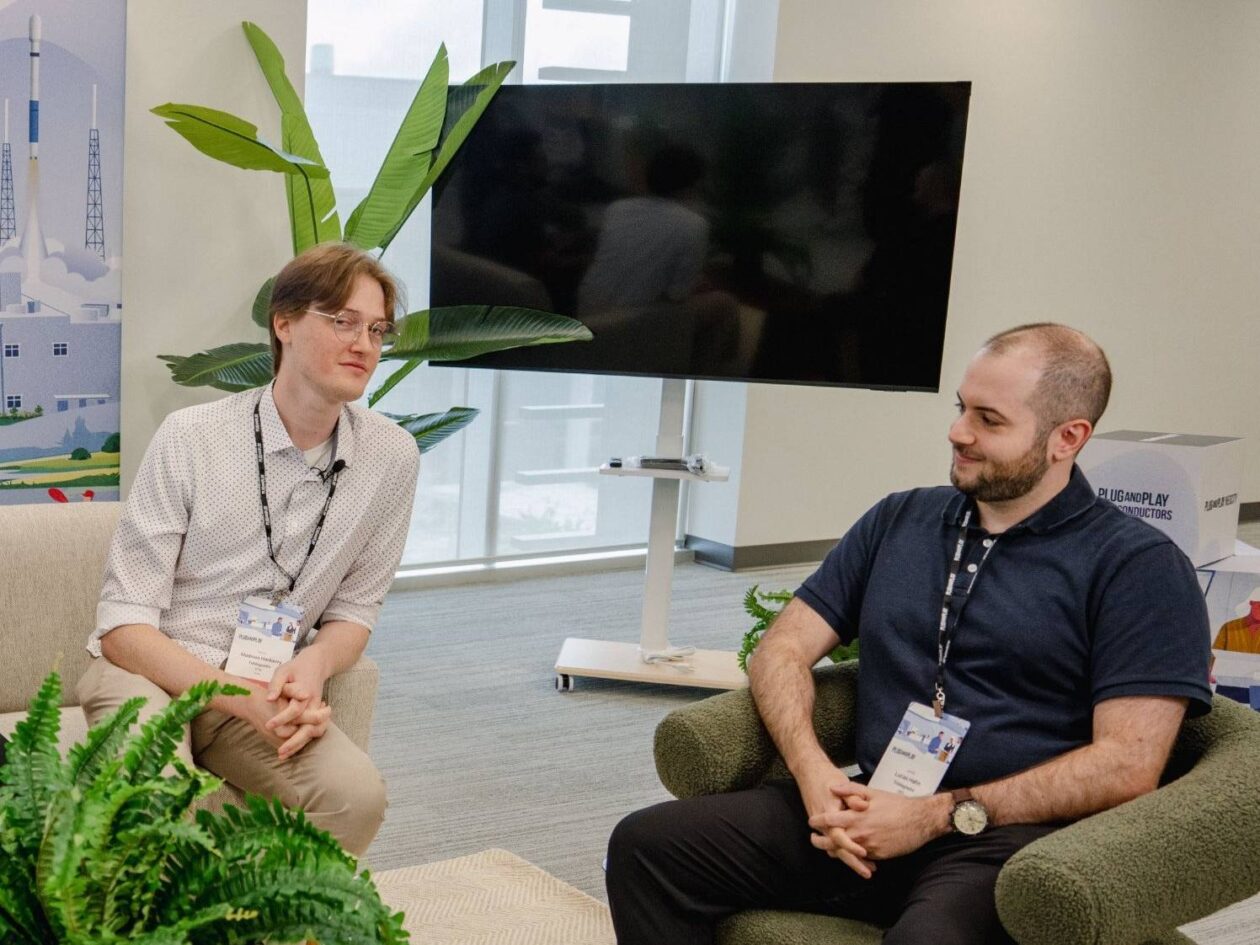
regional: A two-person Seattle startup lands $1M to reinvent
Seattle startup TriMagnetix has secured $1 million to develop semiconductor chips that consume 800 times less energy and are radiation-resistant. The two-person company, leveraging nanomagnetic technology, is targeting space applications and data centers. With new funding and key partnerships, TriMagnetix aims for commercial sales within a year.
%20102026%20top%20art%20SOURCE%20Govee.jpg)
in-depth: The Best Permanent Outdoor Lights (2026): Govee, Eufy
WIRED, a leading voice in technology journalism, has just released its updated guide for 2026 on the best permanent outdoor lights, spotlighting top contenders Govee, Eufy, and Cync. These innovative eave lights are

regional: ‘What is fusion?’ Helion Energy harnesses the power of
Helion Energy, the Everett-based fusion startup, gained mainstream attention this week after being featured as a clue on the popular game show "Jeopardy!". The $800 clue, part of a "Y Combinator" category, highlighted Helion's mission to build the first fusion power plant, bringing the concept of clean energy to a wider audience. CEO David Kirtley celebrated the "surreal" moment as a sign that reliable clean power is becoming more accessible.