
Google's Agentic AI Search: A Forced Evolution
Google is transforming its search engine by 2026 with agentic AI, offering conversational AI Mode, generative UIs, and custom apps. This shift aims for efficiency but de-emphasizes traditional links, raising concerns about information diversity despite Google's market dominance.
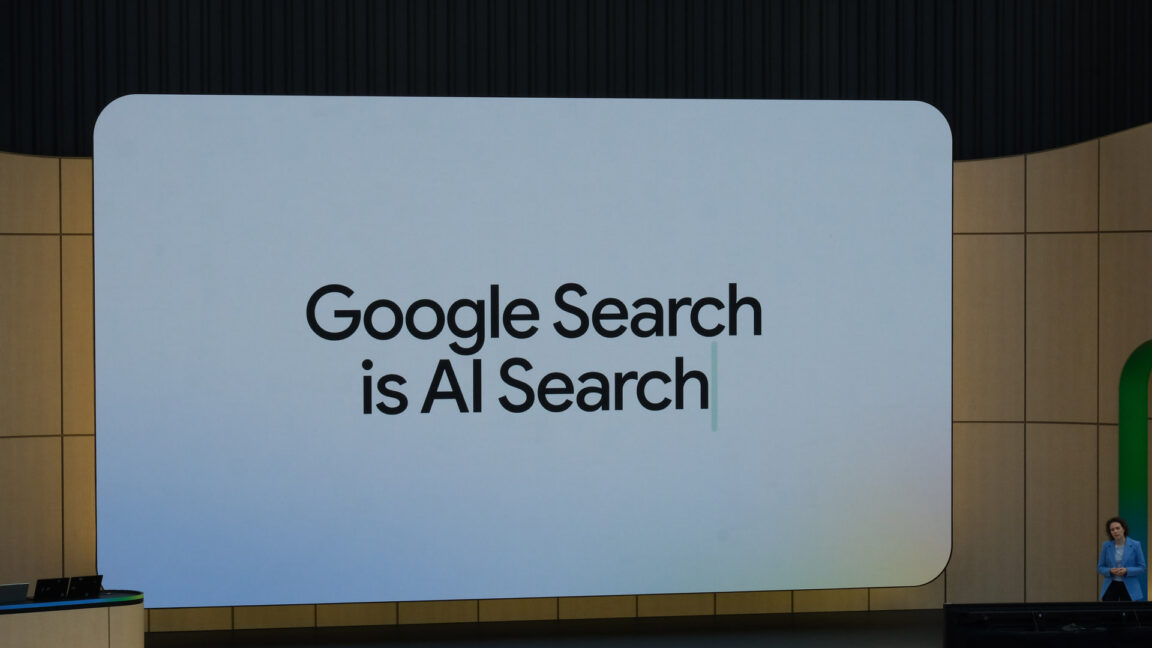
Google is aggressively steering its core search product into an AI-driven future, fundamentally altering how we discover information online. At I/O 2026, the company cemented its commitment, declaring "Google search is AI search." This isn't just an optional feature; it's the new default, driven by Google's unwavering belief that this is the path forward, regardless of user objections.
The Verdict
Google's agentic AI search, set to roll out in full force by 2026, represents a monumental shift. It promises unparalleled efficiency and personalized experiences through AI-generated overviews, conversational interactions, dynamic UIs, and even custom mini-apps. However, this transformation comes with significant caveats: the deliberate marginalization of traditional organic search results, a consolidation of information within Google's ecosystem, and a potential reduction in the diversity of content users encounter. While powerful and innovative, this move feels less like an evolution and more like a forced paradigm shift that users will largely have to accept.
Diving into the New Search Paradigm
The core of Google's remade search experience revolves around AI Mode and AI Overviews. AI Mode, which has seen its usage double every quarter to over a billion monthly users, is designed for conversational queries. Each follow-up question within this mode counts as a search, inflating Google's engagement metrics. The company actively nudges users towards AI Mode with prominent links and direct integrations, making it readily accessible without a paywall, unlike some of its other AI offerings.
AI Overviews, already a prominent feature, are now seamlessly integrated with AI Mode. Most searches will yield an AI Overview, and a new mobile-first feature (now expanding to desktop) allows users to transition directly from an Overview into a deeper AI Mode conversation. Crucially, Google's design places an AI Mode nudge at the bottom of these Overviews, often obscuring the top of the traditional organic search results. This design choice clearly signals Google's intent to deprioritize the classic "10 blue links," effectively relegating them to footnotes rather than the central search experience.
The search box itself has been redesigned, hailed by Google as the biggest change in 25 years. This new search box dynamically expands as you type and utilizes generative AI to anticipate your intent, offering smart autocomplete suggestions powered by Gemini's understanding of your profile.
Agentic AI: Beyond Blue Links
The true innovation, and perhaps the most significant departure from traditional search, lies in Google's agentic AI capabilities, powered by Gemini 3.5 Flash and a new "Antigravity" harness. This allows search to create entirely new interactive experiences:
- Generative UI: For standard search queries (AI Overviews or AI Mode), the AI can conjure "single-shot simulations" with interactive sliders, buttons, and other elements. Imagine asking about the golden ratio or black hole behavior and receiving a dynamic, explorable interface rather than just text.
- Custom Apps: Exclusive to AI Mode, this takes generative UI a step further. If your query suggests a need for a functional tool, Google Search can build a custom mini-app. For example, planning a family outing could result in an itinerary app complete with event suggestions, reviews, embedded maps, and calendar integration. These apps pull data from both Google's vast platform and the broader web. While early demos showed the underlying code being generated, Google is likely to hide this complexity for the general rollout, opting for a simplified user interface.
These generated apps aren't static; they can be customized with follow-up prompts and shared via links, allowing others to personalize them further. Google is also exploring the future possibility of manually modifying the app's code line by line, offering unprecedented flexibility.
User Experience: A Double-Edged Sword
Pros:
- Efficiency and Convenience: The conversational nature of AI Mode and the instant gratification of AI Overviews can quickly provide direct answers and rich summaries, reducing the need to click through multiple links.
- Personalization: Generative AI for autocomplete and custom app creation leverages Gemini's knowledge of the user, promising highly relevant and tailored experiences.
- Interactive Tools: Generative UIs and custom apps offer novel ways to interact with information, transforming passive search into active problem-solving or planning.
- Accessibility: AI Mode is free and widely available, ensuring broad adoption.
Cons:
- Marginalization of Organic Results: The deliberate design choice to push AI Overviews and AI Mode above or even obscure traditional links means users are less likely to encounter a diverse range of sources, potentially limiting exposure to niche content, independent publishers, or alternative viewpoints.
- Dependency on Google's AI: Users become increasingly reliant on Google's AI to interpret and synthesize information, raising concerns about potential biases, factual errors, or the suppression of certain perspectives.
- Loss of Serendipity: The highly guided, agentic experience might reduce the chance encounters with unexpected or tangential information that often occur during traditional web browsing.
- Information Consolidation: By generating answers and custom apps from across the web, Google effectively "swallows the internet whole," bringing external content into its own interface, which could further disincentivize direct website visits.
The Monolith's Rationale and the Competition
Google justifies these changes as a way to more efficiently extract information from webpages that have become "weighed down with extraneous text that forces you to scroll past more and more ads." While this is a genuine problem with current web content, it's a problem Google's own search ranking algorithms and ad-centric model have arguably contributed to over the years. Google's internal metrics, showing doubling AI Mode usage and continued market dominance, are presented as validation for its direction, dismissing "reasonable objections." Competitors like DuckDuckGo, Bing, and Brave are mentioned, but only to highlight their status as "little more than a rounding error" in the face of Google's overwhelming influence. The source doesn't provide enough detail on the AI features of these alternatives to offer a meaningful direct comparison table, as their impact on user habits and the web ecosystem is currently incomparable to Google's.
Recommendation
For most internet users, Google's agentic AI search will become the de facto standard. Resisting it completely will likely mean missing out on significant advancements in convenience and functionality. Embrace the new conversational search, experiment with the generative UI and custom app features – they genuinely offer powerful new ways to interact with information and accomplish tasks. However, remain critically aware of the trade-offs. If finding diverse sources, supporting independent websites, or digging deeper into a topic beyond an AI summary is important to you, make a conscious effort to scroll past the AI Overviews and explore the organic results when they are available. Google has decided this is the future of search, and we are indeed just along for the ride.
FAQ
Q: Will the traditional "blue links" disappear entirely?
A: While the source indicates a strong push towards AI Overviews and AI Mode, and a design that makes organic links feel like "footnotes," it does not state they will disappear entirely. Instead, they are being de-emphasized and moved further down the page, requiring more deliberate effort to access.
Q: Is this new AI search experience free?
A: Yes, the article explicitly states that "Everyone who uses Google search gets the full AI experience" without having to pay, unlike some of Google's other AI ventures.
Q: How will this impact the websites I usually visit?
A: The shift towards AI-generated summaries and custom apps means users may interact less directly with individual websites. This could lead to reduced traffic for many publishers, especially those who rely on search engine referrals, as Google aims to provide answers directly within its own interface rather than sending users away.
Related articles

Navigating Pixel vs. Galaxy: Understanding Exclusive Features Before
When considering a switch between Google Pixel and Samsung Galaxy phones, it's easy to assume that all Android flagships offer similar core features. However, as many users discover after making the leap, this isn't

Plug-in Solar Legalization: A Bright Step for Home Energy
The legalization of plug-in solar in 10 US states signals a major shift towards accessible home energy. This review covers the systems, legal status, savings potential, and crucial considerations for consumers.
Android 17 QPR2 Beta 7.1: The Performance Relief You've Been Waiting
Android 17 QPR2 Beta 7.1: Finally Fixing the QPR1 Performance Woes Verdict: Android 17 QPR2 Beta 7.1 is a crucial and highly anticipated software update for Google Pixel users, specifically targeting and resolving the

MapQuest's ALPR Feature: Navigating Surveillance with Intelligence
Quick Verdict MapQuest's latest "Surveillance" feature is a compelling and timely addition, offering users the ability to identify automated license plate reader (ALPR) cameras in their vicinity. While its data sourcing

"thegentlemanpervert": A Catastrophic Failure in Digital Ethics and
"thegentlemanpervert" review: An AI CSAM production and distribution operation, led by a NJ prosecutor, proved to be an absolute and catastrophic failure, resulting in felony charges and a stark warning about digital culpability.

regional: Etzioni on AI: The colorful and cranky language of the AI
AI researchers Oren Etzioni and Daniel S. Weld have released a new GeekWire glossary of over 35 non-technical AI terms, revealing a "cranky" vocabulary heavily focused on AI's problems and potential harms. They define terms like "AI slop," "deepfakes," and "brain rot," alongside their own coinages such as "AI slap," "promptatory," and "agentsomnia," noting a distinct lack of common phrases for AI's positive impacts.