
The post-search Google era begins: Search Engine — Key Details
Google is transitioning from a traditional search engine to an AI agent that proactively gathers information, fundamentally redefining the act of "googling." This shift, discussed on The Vergecast after Google I/O, raises profound questions about the future of the web itself and Google's identity in the AI era.

Google is fundamentally redefining its role in the digital world, transitioning from a user-initiated search engine to an autonomous AI agent. This profound shift, signaling the dawn of a "post-search Google era," was a central topic of discussion on The Vergecast, following key announcements at Google I/O.
On the May 22, 2026 episode of The Vergecast, co-hosts David Pierce and Nilay explored how Google's evolving strategy places artificial intelligence at the forefront of information retrieval. This transformation means the AI will proactively search for users, often without explicit prompting or even their direct knowledge, challenging the very notion of "googling" as a verb for active internet search.
The core question posed by this evolution is whether Google can still be accurately termed a "search engine" when so much of the actual information gathering happens behind the scenes, driven by AI. This proactive approach marks a significant departure from the traditional model where users explicitly type queries to find information.
Nilay, who attended Google I/O and had the opportunity to interview Google CEO Sundar Pichai, shared insights into the company's vision. The discussions highlighted the intricate ways search is undergoing transformation and underscored Google's profound confidence in its strategic position within the burgeoning AI ecosystem.
The implications of this shift extend far beyond just how users interact with Google. Pierce and Nilay delved into what this seismic change means for the broader future of the web itself. If AI agents become the primary navigators and consolidators of information, fundamental questions arise about the web's structure, relevance, and even its continued existence as we know it.
Google's move into a post-search era suggests a future where digital assistants and AI anticipate informational needs, potentially reshaping how content is consumed and created. This pivot reflects a broader industry trend towards intelligent automation, where AI not only answers questions but predicts them.
Beyond the transformative discussion on Google, The Vergecast episode also touched upon a diverse range of other breaking tech news. The hosts briefly covered the latest developments regarding the SpaceX IPO and the curious phenomenon of the "Trump Phone." They also analyzed the social media industry's often contradictory and confusing strategies for integrating artificial intelligence into their platforms.
In related news, The Vergecast itself announced a significant expansion, moving to a daily format beginning June 1st. This change aims to provide listeners with five episodes a week, promising more frequent insights and discussions on the rapidly evolving tech landscape.
As Google embarks on this uncharted territory, the tech world watches closely. The transition to an AI-driven, proactive information agent fundamentally alters the relationship between users, information, and the internet. The questions raised by The Vergecast signify the beginning of a crucial dialogue about control, awareness, and the very definition of digital knowledge in the AI age.
FAQ
Q: What is the core change Google is making?
A: Google is evolving from a user-prompted search engine to an AI agent that proactively finds and presents information, often without direct user involvement or even awareness.
Q: What are the major implications for the internet?
A: This shift raises fundamental questions about the future of the web, particularly whether it can continue to exist in its current form if AI agents are the primary navigators and information providers.
Q: Who discussed these developments?
A: David Pierce and Nilay discussed these changes on The Vergecast, following Nilay's attendance at Google I/O where he interviewed Google CEO Sundar Pichai.
Related articles

Tesla Unveils Thruster-Equipped Roadster, 2028 Production Targeted
Tesla has unveiled its second-generation Roadster, featuring cold-gas thrusters co-developed with SpaceX, enabling it to jump and flip. The electric sports car demonstrated 0-60mph in an astonishing 0.81 seconds, with production targeted for 2028. This highly anticipated reveal also serves as a key recruitment tool for Tesla's ambitious AI and robotics initiatives.

AI's Confidence vs. Formal Methods' Rigor: Design Flaws & Verification
While AI accelerates code generation, formal methods remain critical for ensuring system correctness. Languages like TLA+ and tools like Quint enable developers to model and verify system designs before coding, catching subtle flaws. Quint makes formal methods more accessible with developer-friendly syntax and executability. This approach is vital for verifying AI-generated code through trace validation and model-based testing, ensuring reliability against real-world data.

Amazon Prime Video Launches AI-Powered Prime 360 for NBA Coverage
Amazon Prime Video is elevating its NBA coverage with the introduction of Prime 360, an AI-powered replay system offering immersive, 'fly through' views of the action. Kicking off its second season, Prime Video also adds Yahoo fantasy integration and gains exclusive Eastern Conference Finals rights, expanding its tech-driven sports broadcast. The new features aim to deliver a unique and interactive viewing experience for basketball fans.
regional: A two-person Seattle startup lands $1M to reinvent
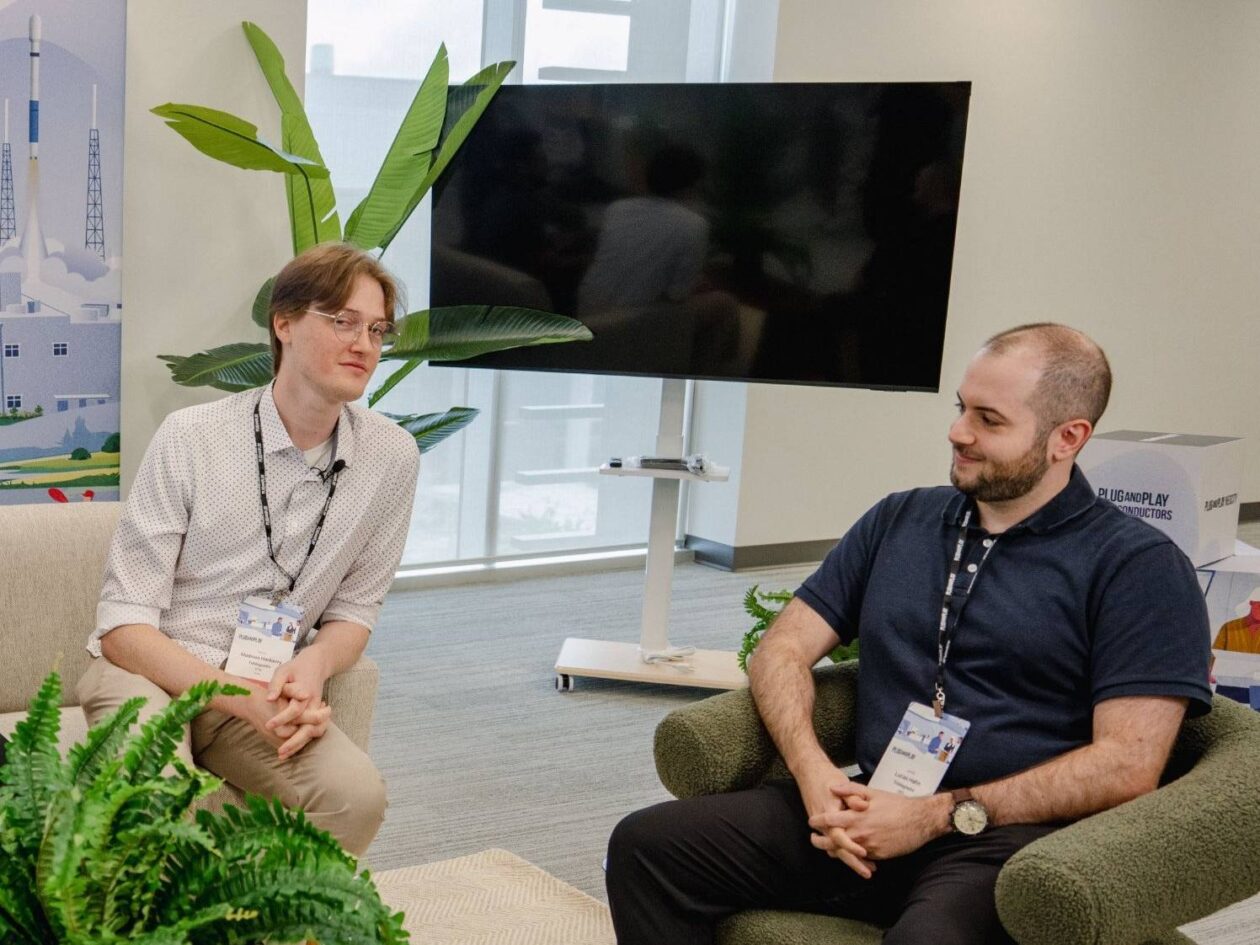
Seattle startup TriMagnetix has secured $1 million to develop semiconductor chips that consume 800 times less energy and are radiation-resistant. The two-person company, leveraging nanomagnetic technology, is targeting space applications and data centers. With new funding and key partnerships, TriMagnetix aims for commercial sales within a year.

Kojima Compares Divisive New Film 'Digger' to MGS2's Prescient Vision
Gaming icon Hideo Kojima has praised the divisive 2026 film *Digger*, drawing intriguing parallels to his own prophetic game, *Metal Gear Solid 2*. Both works, he explains, uniquely explore the dangers of misinformation and a fragmented digital reality, anxieties he shares with *Digger*'s director, Alejandro González Iñárritu.
%20102026%20top%20art%20SOURCE%20Govee.jpg)
in-depth: The Best Permanent Outdoor Lights (2026): Govee, Eufy
WIRED, a leading voice in technology journalism, has just released its updated guide for 2026 on the best permanent outdoor lights, spotlighting top contenders Govee, Eufy, and Cync. These innovative eave lights are