33 results found

The landscape of software development is rapidly evolving with the integration of AI agents, promising to streamline tasks from code generation to debugging. However, simply adding AI tools to individual developer
Java's extensive history is a key AI superpower, offering a stable foundation for agent-generated code and an unparalleled dataset for training AI models. Its mature ecosystem of libraries and agentic harnesses further enable developers to build robust, integrated AI applications. This positions Java as a powerful, reliable choice for future AI-driven software development.

Google has unveiled Gemini 3.8 Flash, a powerful AI model for agentic tasks, software development, and multi-step reasoning. Alongside it, Gemini 3.8 Flash Cyber focuses on autonomous vulnerability detection and patching, offering critical advancements for cybersecurity defenders.

The rise of AI agents is dramatically changing the landscape of software development. With code generation becoming increasingly inexpensive and fast, a common temptation emerges: simply give a model a high-level goal,

This blog post advocates for developers to write about topics they don't fully understand yet as a powerful learning strategy. By arguing a specific point, engaging in iterative writing, and leveraging feedback, developers can deepen their comprehension and foster clearer thinking. It addresses concerns about authority by emphasizing the value of a beginner's perspective and transparency.
OpenAI's head ethicist, Chloé Bakalar, reportedly left and was not replaced, sparking discussion on AI ethics oversight. The company states ethics are now "deeply embedded" across teams, rather than centralized. This shift comes amid recent AI safety incidents and a growing debate about AI's societal impact, underscoring critical implications for developers.
AI's rise brings "tokenmaxxing" – maximizing AI output – but this often misses real value. This piece explores why optimizing for raw AI generation triggers Goodhart's Law and advocates for measuring agentic outcomes like release speed and PR merges, transforming how we evaluate developer contributions, especially for junior talent.
The landscape of software development is undergoing a profound transformation, driven by the rapid advancements in artificial intelligence. As developers, we're not just integrating AI into our applications; we're

The role of a modern QA engineer extends far beyond simply finding bugs. With rapid development cycles and complex systems, QA engineers now proactively engage throughout the entire software development lifecycle, from requirement clarification to production issue investigation. They utilize diverse technical skills like API testing, SQL, and automation, focusing on preventing issues and ensuring quality is built into the product collaboratively.

The software development landscape is evolving beyond single-prompt LLMs to autonomous AI agents capable of complex, multi-step workflows. LangChain, with its extension LangGraph, provides the essential tools to build these sophisticated systems, enabling stateful, cyclical agent behaviors. Developers can implement advanced features like Human-in-the-Loop, RAG, and streaming responses, and deploy these agents using industry best practices.
In the rapidly evolving landscape of AI-assisted software development, the software orchestrating AI models, often called a "harness," is proving as critical as the models themselves. We’re reviewing a significant

Capital One has launched VulnHunter, an open-source AI tool designed to identify and fix software vulnerabilities proactively. This agentic AI scans source code using an "attacker-first" approach and a "falsification engine" to minimize false positives, providing targeted code fixes. The move reflects Capital One's commitment to collaborative defense against rising AI threats, especially after its significant 2019 data breach.
The landscape of software development is undergoing a profound transformation, largely driven by the rapid advancements in artificial intelligence. For many seasoned developers, this shift has prompted a re-evaluation
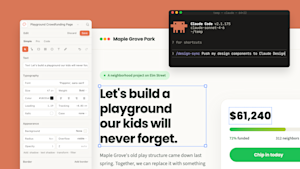
Anthropic has released a major overhaul of Claude Design, addressing its initial token-burning problem with shared usage limits and efficiency gains. The update also introduces design system imports for enterprise brand compliance and bidirectional integration with Claude Code to streamline the design-to-engineering workflow. This strategic move positions Claude Design as a critical component in Anthropic's broader vision to embed AI across the enterprise stack.

AI is pushing the cost of code generation to near zero, profoundly reshaping engineering leadership. This shift moves the bottleneck from coding speed to ideation and process, necessitating a re-evaluation of how teams measure effectiveness and collaborate. Engineering leaders must now prioritize customer value, foster cross-functional empathy, and emphasize system ownership over raw code output.

Microsoft has launched ASSERT, an open-source framework designed to simplify AI behavior testing. It enables developers to create comprehensive, application-specific evaluations using natural language descriptions, ensuring AI systems act as intended for particular products and services. The tool translates high-level goals into structured tests, generates scenarios, scores results, and logs execution paths.

Every software company champions speed. Roadmaps highlight velocity, leadership discussions center on reducing cycle time, and quarterly goals target faster execution. Yet, many organizations inadvertently adopt a
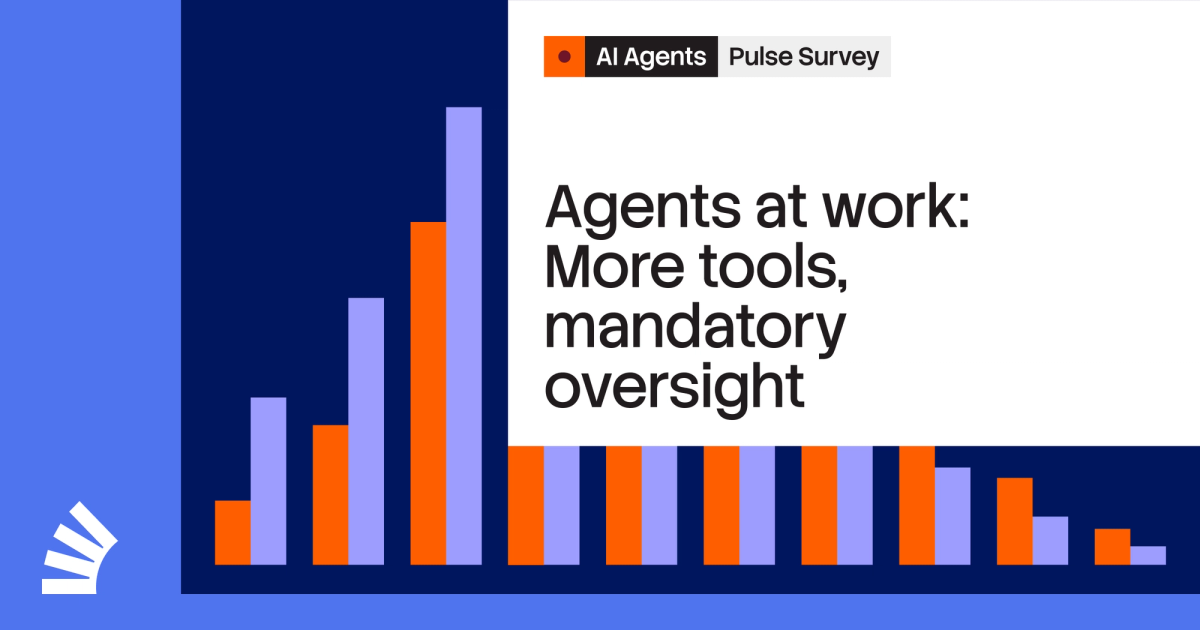
AI agent usage has nearly doubled, yet developers maintain a strong preference for human oversight. A recent survey reveals single-agent workflows are dominant, driven by concerns for accuracy and security, even as work quality improves. Fintech and media lead adoption, leveraging tools like GitHub Copilot and LangChain under careful monitoring.
The Ferrari Luce represents a significant engineering paradigm shift, blending traditional Ferrari performance with spaciousness and an electric power source. It features a radically new architecture, a sophisticated digital-physical UI/UX co-designed with LoveFrom, and advanced aerodynamics. Key innovations include a functional sound system that translates axle vibrations into driver feedback and long-term support for its high-voltage components, offering valuable lessons for complex system design in software development.
AI coding tools have fundamentally altered software development economics, making building code faster and cheaper than extensive planning. This shift has moved the bottleneck from execution to strategic judgment, requiring engineers and leaders to prioritize problem identification, design, and rapid iteration. Companies like Synthesia are pioneering new development models focused on speed of learning over sheer code output.
The world of artificial intelligence is experiencing unprecedented growth, profoundly impacting how we approach software development and, crucially, how we design the underlying hardware. At the heart of this evolution

Stanford's youngest instructor, Rachel An Fernandez, discusses the evolving tech landscape for developers. She emphasizes the continued importance of foundational skills like C++, offers tips on using AI without 'deskilling,' and implicitly highlights the necessity of data quality and automation for robust systems, drawing parallels with freeCodeCamp's extensive resources.

For years, the argument against introducing an interface or an abstract class in a codebase often boiled down to efficiency: "That's twice the code for the same thing." This perspective, especially prevalent in

Anthropic has launched its Claude Mythos Preview model, claiming it poses an unprecedented existential threat to cybersecurity by autonomously discovering vulnerabilities and developing exploits. Released initially to a select group via Project Glasswing, the AI’s ability to create complex "exploit chains" is forcing industry and government leaders to reconsider defensive strategies. Experts argue this signals a shift from reactive patching to a proactive "secure by design" approach in software development.

AI is breaking software org charts. Zencoder's PMs and designers now directly ship code, thanks to AI agents drastically cutting implementation costs. This "AI-first" shift eliminates bottlenecks, enabling rapid delivery and widespread ownership.
