
Modern QA: Beyond Bug-Finding to Proactive Quality Engineering
The role of a modern QA engineer extends far beyond simply finding bugs. With rapid development cycles and complex systems, QA engineers now proactively engage throughout the entire software development lifecycle, from requirement clarification to production issue investigation. They utilize diverse technical skills like API testing, SQL, and automation, focusing on preventing issues and ensuring quality is built into the product collaboratively.

Ask a developer what a Quality Assurance (QA) engineer does, and the most common response you'll likely hear is, "They test software and find bugs." While identifying defects is undeniably a crucial aspect of the role, this perception barely scratches the surface of what modern QA engineers contribute to a high-performing software team. The truth is, the QA profession has evolved dramatically, mirroring the rapid changes in software development itself.
A decade ago, software releases were often monolithic events, occurring a few times a year. QA typically served as the final gatekeeper, testing completed features before deployment. Today, with the prevalence of Agile methodologies, Continuous Integration (CI), and Continuous Delivery (CD), teams deploy updates weekly, daily, or even multiple times a day. Applications are increasingly complex, integrating cloud services, APIs, microservices, and mobile components. This accelerated pace and complexity demand a fundamental shift in how we approach quality.
The Shift to Proactive Quality Engineering
Modern QA engineers are embedded within the development lifecycle from its earliest stages. They move beyond reactive testing to proactive quality assurance, contributing long before the first line of code is written or the first test case designed. This means participating in sprint planning, scrutinizing user stories, clarifying acceptance criteria, and identifying potential risks. The goal is no longer just to find problems after the fact, but to help prevent them from occurring in the first place.
Consider the example of building an online banking feature for money transfers. A traditional QA approach might simply verify that the transfer succeeds once developed. A modern QA engineer, however, would engage much earlier, asking critical questions:
- What happens if the network connection drops during the transfer?
- How should the system handle insufficient funds?
- Can a transfer request be accidentally submitted multiple times?
- What's the fallback if the receiving bank's API is temporarily unavailable?
These questions are invaluable. They uncover edge cases and potential failure points that, if addressed during the design phase, are significantly less expensive to resolve than finding them in testing, or worse, in production. This proactive involvement embodies the shift from "testing quality in" to "building quality in" throughout the entire team.
Good Testing Starts Before Any Test Cases
A significant portion of a QA engineer's work involves requirement clarification. Developers, product owners, and business analysts may interpret requirements differently. A QA engineer acts as a bridge, ensuring a shared understanding across the team.
Take a seemingly simple requirement: "A user must create a password containing at least eight characters." A modern QA engineer wouldn't just stop at verifying length. They'd ask:
- Are spaces considered characters? Should leading/trailing spaces be trimmed?
- What's the maximum password length?
- Are specific character types (e.g., special, Unicode) required or forbidden?
- Will these rules apply consistently across web and mobile platforms?
- What specific error message should the user see?
These discussions prevent costly rework. Resolving an unclear requirement during a planning meeting might take minutes. Discovering the same ambiguity during testing or after deployment can lead to hours or days of investigation, fixes, and re-testing. Quality isn't just about verifying correctness; it's about ensuring the team builds the right product.
Beyond Just Automation: A Diverse Skillset
While job postings frequently highlight automation tools like Selenium, Playwright, or Cypress, it's a misconception that QA engineers spend their entire day scripting. Automation is a powerful tool for efficiency, especially for regression testing repetitive tasks, but it's not the sole definition of the role.
A typical week for a QA engineer is diverse:
- Requirement Review: Understanding new features.
- Test Scenario Design: Creating functional and edge-case tests.
- API Testing: Verifying service communication using tools like Postman or Bruno.
- Database Validation: Ensuring data accuracy with SQL queries.
- Automation: Building and maintaining automated regression tests.
- Production Issue Investigation: Analyzing and reproducing reported bugs.
- Collaboration: Working with developers on bug fixes.
- Exploratory Testing: Using human intuition and creativity to uncover unexpected issues.
Modern QA engineers employ a variety of testing types, not just UI testing. This includes API testing (for backend services), database testing (for data integrity), regression testing (for existing functionality), exploratory testing (for unknown issues), and performance testing (for scalability). The key is choosing the right approach for the right problem, combining multiple strategies to build comprehensive confidence in the software.
Essential Skills for Modern QA
While tools are important, foundational skills are paramount:
- Communication: Crucial for clarifying requirements, explaining defects, and team collaboration.
- Critical Thinking: Identifying edge cases, risks, and non-obvious scenarios.
- API Testing: Understanding and validating application-to-application communication.
- SQL: Essential for verifying data storage, updates, and retrieval.
- Test Automation: Proficiency in frameworks and scripting to improve efficiency.
- CI/CD Knowledge: Integrating testing seamlessly into modern delivery pipelines.
- Continuous Learning: Adapting to evolving technologies and practices.
These skills empower QA engineers to contribute across the entire software development lifecycle, making quality an intrinsic part of the process, rather than a final checklist item.
Common Misconceptions About QA
It's worth addressing some persistent myths:
-
Myth: QA engineers Only Find Bugs. Reality: They're involved in prevention, risk identification, test strategy, automation, validation across layers (API, DB), and collaborating to prevent issues.
-
Myth: Automation Will Replace QA Engineers. Reality: Automation handles repetitive tasks; humans are needed for critical thinking, requirement interpretation, user experience evaluation, and exploring unknown areas.
-
Myth: QA is Responsible for Quality. Reality: Quality is a shared responsibility of the entire team: developers, product owners, designers, DevOps, and QA all contribute.
-
Myth: Manual Testing is No Longer Useful. Reality: Manual testing, especially exploratory and usability testing, offers insights that automation cannot, complementing automated regression efforts.
-
Myth: QA is Easier than Software Development. Reality: Modern QA demands strong analytical, technical, and communication skills, requiring a deep understanding of software systems—it's different, not easier.
If You're Considering a Career in QA
For those looking to enter or advance in QA, focus on the fundamentals. Understand how software components interact: how web apps use APIs, how data persists in databases. Practice thinking like a user, asking "what if?" questions beyond the happy path. Gradually build technical skills in SQL, API testing, automation, version control, and CI/CD. The most impactful QA engineers are collaborative, communicate effectively, and are driven by continuous learning to help the entire team deliver superior software.
Wrapping Up
The role of a QA engineer has fundamentally transformed. It's no longer a post-development activity but a continuous, integrated effort focused on preventing problems, clarifying requirements, and ensuring reliable software delivery. Finding bugs remains important, but true success in modern QA comes from critical thinking, proactive engagement, and collaboration, building quality into every stage of the software lifecycle.
FAQ
Q: How does a modern QA engineer contribute to "shifting left" in the development process?
A: Shifting left means moving quality activities earlier in the SDLC. Modern QA engineers achieve this by participating in requirement reviews, sprint planning, and design discussions, asking probing questions to clarify acceptance criteria, identify risks, and uncover edge cases before development begins. This helps prevent defects rather than just finding them later.
Q: What's the balance between manual and automated testing in a modern QA workflow?
A: The two approaches are complementary. Automated testing is highly effective for repetitive, predictable tasks like regression testing, ensuring existing functionality isn't broken by new changes. Manual testing, particularly exploratory testing, is invaluable for uncovering unexpected issues, assessing usability, and evaluating complex scenarios that require human intuition and judgment. A modern QA engineer strategically combines both to achieve comprehensive test coverage.
Q: What are some key technical skills a software developer might expect a modern QA engineer to possess?
A: Beyond strong critical thinking and communication, developers often expect QA engineers to have technical proficiency in API testing (using tools like Postman/Bruno), SQL for database validation, familiarity with test automation frameworks (e.g., Selenium, Playwright, Cypress) and programming languages (e.g., Python, Java, JavaScript for scripting), and a basic understanding of CI/CD pipelines to integrate testing effectively.
Related articles

AI's Confidence vs. Formal Methods' Rigor: Design Flaws & Verification
While AI accelerates code generation, formal methods remain critical for ensuring system correctness. Languages like TLA+ and tools like Quint enable developers to model and verify system designs before coding, catching subtle flaws. Quint makes formal methods more accessible with developer-friendly syntax and executability. This approach is vital for verifying AI-generated code through trace validation and model-based testing, ensuring reliability against real-world data.

Ephemeral PR Preview Environments on GKE: A Deep Dive
Every development team eventually grapples with the limitations of shared staging environments. The familiar scenario: multiple features deployed simultaneously, database migrations clashing, and the phrase "it works on

Enterprise AI Beyond Chatbots: A Vision for Actionable Intelligence
Quick Verdict: Redefining Enterprise AI's Potential TechRadar Pro's opinion piece, "What it takes to move enterprise AI beyond the chatbot," delivers a refreshingly honest and vital perspective on the current state and
Secure Internal API Access for AI Agents with MCP
AI agents accessing internal APIs directly pose significant risks, including identity loss, unrestricted queries, and security bypasses. The Model Context Protocol (MCP) offers a solution by defining explicit tools. A secure architecture involves an MCP server wrapping the API with strict input validation, coupled with a gateway that handles authentication, rate limiting, and audit logging, ensuring safe and accountable access.
Beyond the Bugs: Conquering Studio Headaches in Indie Dev
This guide, part three in a series on running an indie studio, tackles the crucial but often overlooked aspect of dealing with non-development related issues. It introduces creating a shared 'studio backlog' for collective problems and using the IDS (Identify, Discuss, Solve) framework to address them constructively. The core message is to build powerful habits that keep studios from getting quietly derailed by lingering challenges.
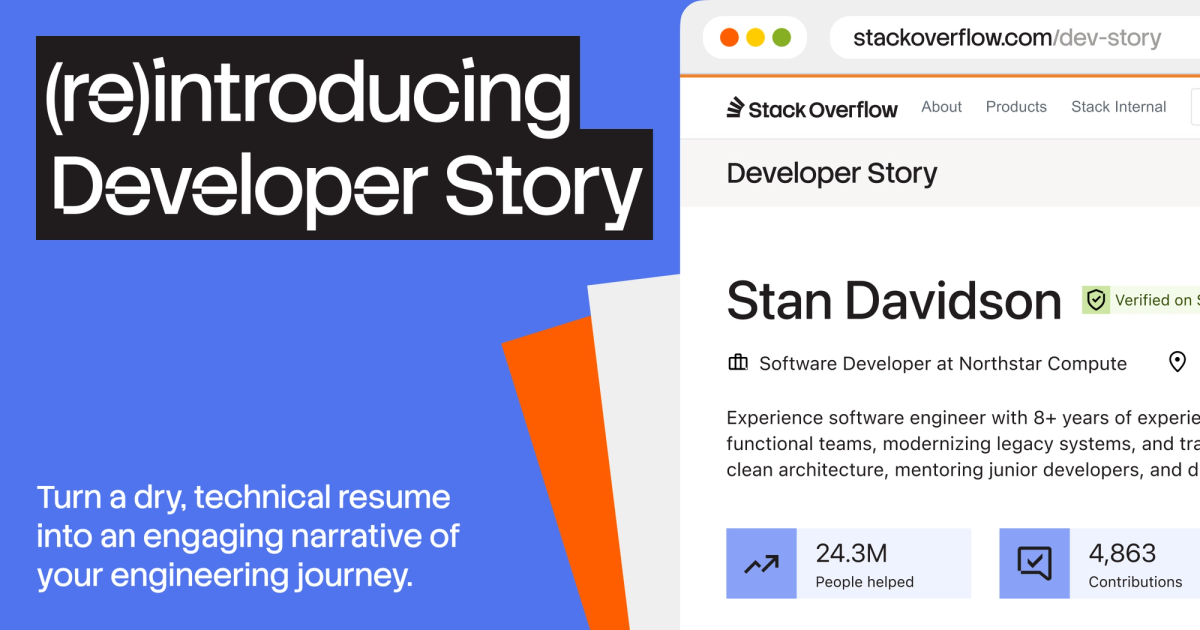
Beyond the Resume Noise: Developer Story Rethinks Tech Hiring
Stack Overflow is addressing the growing challenges in tech hiring, exacerbated by AI's influence leading to untrustworthy and generic resumes. Their solution, the re-introduced Developer Story, offers a platform for developers to authentically showcase their work, expertise, and impact through verifiable contributions and personal projects. This aims to provide hiring teams with more objective insights and help genuine talent stand out in a crowded market.