
AI Shifts Clean Code Economics: Why Abstraction Matters More Now
For years, the argument against introducing an interface or an abstract class in a codebase often boiled down to efficiency: "That's twice the code for the same thing." This perspective, especially prevalent in

For years, the argument against introducing an interface or an abstract class in a codebase often boiled down to efficiency: "That's twice the code for the same thing." This perspective, especially prevalent in communities valuing convention over configuration like Ruby on Rails, highlighted the overhead—more files, more indirection, more to maintain. It was a fair point when every line of code represented a deliberate keystroke and a tangible writing cost.
Then, AI happened. A recent conversation with a CEO crystallized this shift: "Abstract interfaces were challenging a few months ago just because it required twice as much code. But with AI, lines of code are free. The reason we still need such constructs is because at some point a human still needs to look at the code. Interfaces reduce the cognitive load." This profound insight flips the script: the cost of writing code has collapsed, but the cost of reading it remains high. This asymmetry fundamentally alters how we should approach abstraction and clean code practices.
Your Brain: The Ultimate Bottleneck
This isn't just a philosophical stance; it's rooted in neuroscience. Educational psychologist John Sweller's 1988 Cognitive Load Theory, applied extensively to computing education, explains that our brains manage three types of load: intrinsic (problem difficulty), extraneous (unnecessary noise like disorganized code), and germane (effort to build mental models). Our working memory is severely limited, typically handling only 2 to 6 "chunks" of information at a time—not files or classes, but distinct concepts.
Felienne Hermans, in The Programmer's Brain, argues that design patterns serve as crucial chunking aids. Recognizing a Strategy pattern, for instance, allows your brain to collapse an entire class hierarchy into a single cognitive unit. This isn't just an abstract idea of "cleanliness"; it's how human memory efficiently processes information. A 2021 fMRI study by Peitek and Siegmund further validated this, showing that semantic-level comprehension (understanding what code does) requires significantly less neural activation than bottom-up syntactic parsing (tracing how it does it). An interface, like UserRepository.findById(id), enables semantic understanding, compressing complex implementation details (SQL queries, error handling, connection logic) into a single, manageable chunk in working memory.
The Economics Have Flipped
The historical reluctance towards interfaces was primarily due to the associated writing cost. They required more boilerplate, more files, and more explicit declarations—factors that the dynamic typing movement and principles like DRY (Don't Repeat Yourself) sought to minimize.
However, AI tools like GitHub Copilot have dramatically altered this equation. A 2022 controlled study found that developers using Copilot completed tasks 55% faster. The boilerplate for an interface—extra files, type definitions, method signatures—can now be generated in seconds, effectively collapsing the writing cost to near zero. Crucially, the reading cost has not similarly decreased. Robert C. Martin's observation that developers spend ten times more time reading code than writing it is still relevant, supported by studies showing professionals spend 58% of their time on program comprehension. New developer onboarding often takes weeks, largely spent understanding existing systems.
Addy Osmani aptly terms this "comprehension debt": AI-generated code, while appearing clean and passing checks, can accumulate silently, eroding a team's understanding. This means that AI has minimized the cost of creating abstractions, while the cost of lacking them—in terms of human reading time, onboarding friction, and technical debt—remains high. The economic rationale for abstractions has unequivocally shifted.
The Data Backs It Up
Empirical data supports the dangers of unthinking AI code generation. GitClear's analysis of 211 million lines of code (2020-2024) revealed a doubling of code churn (reverted or updated within two weeks) in AI-assisted projects, a rise in copy-pasted blocks (from 8.3% to 12.3%), and a drop in refactoring-associated changes (from 25% to under 10%). They likened AI-generated code to an "itinerant contributor, prone to violate the DRY-ness of the repos visited."
A 2025 METR study showed an even starker reality: experienced open-source developers predicted being 24% faster with AI, perceived being 20% faster, but were actually 19% slower. This perception gap highlights the illusion of productivity. Furthermore, an Anthropic study found AI-assisted groups completed tasks at the same speed but scored 17% lower on comprehension quizzes and showed significant declines in debugging ability. As Kent Beck noted, "The value of 90% of my skills just dropped to $0. The leverage for the remaining 10% went up 1000x"—implying that high-level design and abstraction skills are now paramount.
The Contrarian Case (And Why It Actually Agrees)
Some smart developers have raised valid concerns about abstraction. Casey Muratori, in "Clean Code, Horrible Performance," demonstrated that polymorphism can introduce significant performance penalties in hot paths. Dan Abramov's "Goodbye, Clean Code" highlighted the pitfalls of premature abstraction, and Sandi Metz famously stated, "Duplication is far cheaper than the wrong abstraction." Rich Hickey, in "Simple Made Easy," distinguishes between simple (unintertwined) and easy (familiar), arguing against abstractions that complect (braid concerns together).
However, these arguments aren't against abstraction itself, but against bad or premature abstraction. Muratori's point is valid for performance-critical sections, not every service layer. Abramov and Metz warn against abstracting before understanding the domain. Hickey advocates for the right abstractions that genuinely decompose complexity. The irony is that AI makes addressing these concerns easier: you can generate explicit, unabstracted code, let patterns emerge, and then use AI to handle the mechanical refactoring into well-chosen abstractions. The cost of "duplicate first, abstract later" has dropped to near zero, removing a major barrier to getting abstractions right.
What This Means for You
If you're using AI tools for coding, the temptation to ship functional, AI-generated code and move on is strong. But "it works" is now the baseline. The critical question has shifted to: can the next developer (or future you) understand this code quickly? Interfaces and other abstractions are not merely aesthetic preferences; they are powerful compression algorithms for human cognition, enabling your brain to operate at a semantic level. With AI having effectively eliminated the boilerplate cost, there's no longer a strong economic argument to skip these foundational practices. The underlying principles of clean code remain, but the excuses for neglecting them have vanished.
FAQ
Q: How does Cognitive Load Theory directly relate to code interfaces?
A: Cognitive Load Theory helps explain that interfaces reduce extraneous cognitive load by presenting a high-level, semantic view of functionality. Instead of holding all the low-level implementation details (syntactic parsing) in working memory, an interface allows a developer's brain to chunk complex operations into a simpler, more manageable unit, freeing up mental capacity for understanding the problem domain (germane load).
Q: If AI makes writing code so fast, why are studies showing developers are sometimes slower overall with AI assistance?
A: This apparent paradox arises from "comprehension debt." While AI speeds up code generation, it doesn't automatically improve code comprehension or quality for humans. Studies indicate that developers may feel productive generating code quickly, but this can lead to increased code churn, less refactoring, and lower overall understanding of the codebase. This accumulated debt in comprehension and maintainability ultimately slows down future development, debugging, and onboarding efforts.
Q: Does the argument for interfaces still hold for performance-critical code where polymorphism might introduce overhead?
A: Yes, but with nuance. The arguments against abstraction in performance-critical hot paths (like those by Casey Muratori) are valid. However, these are specific scenarios, not applicable to an entire codebase. For most application layers, the cognitive benefits of interfaces far outweigh minor performance overheads. Furthermore, AI tools can facilitate an iterative approach: start with a less-abstracted, highly performant version if needed, and then introduce well-considered abstractions later where appropriate, leveraging AI for the mechanical refactoring to minimize the cost and risk of premature abstraction.
Related articles

AI's Impact on Malware Detection: Next-Gen Protection Deep Dive
The landscape of cybersecurity has transformed dramatically. Gone are the days when a simple virus attached itself to a file, easily quarantined by an antivirus scanner. Today, malware is sophisticated, multifaceted,
Pixel Connectivity: Battery Drain, Not Data Speed, Is the Real
Google's Pixel series has consistently offered a compelling Android experience, often earning a spot on recommendation lists for its clean software and camera prowess. However, a recurring shadow has loomed over the

AI Cybersecurity: The Perpetual Cat and Mouse Game
In the rapidly evolving digital landscape, the interplay between artificial intelligence and cybersecurity has created a dynamic, ceaseless challenge—a true cat and mouse game. AI is not merely a tool for defense; it's

How to Choose and Maximize Your Bissell Pet Carpet Cleaner Deal
Dealing with unexpected pet messes or persistent carpet stains can be a real headache. Whether it’s muddy paw prints, accidental spills, or allergens from pet dander, keeping carpets clean and fresh is an ongoing

OpenAI's Bubeck Denies Credit Stripping, Apologizes Amidst
OpenAI's Sébastien Bubeck denies attempting to strip Anthropic mathematician Levent Alpöge of credit for his work on the Navier-Stokes problem, apologizing for a remark made during contentious private discussions. OpenAI CEO Sam Altman backed Bubeck, but Alpöge and his collaborator, Tristan Buckmaster, present a conflicting account of events. The dispute also raises questions about OpenAI's data handling policies, as the mathematicians claim to have used OpenAI's Codex tool during their research.
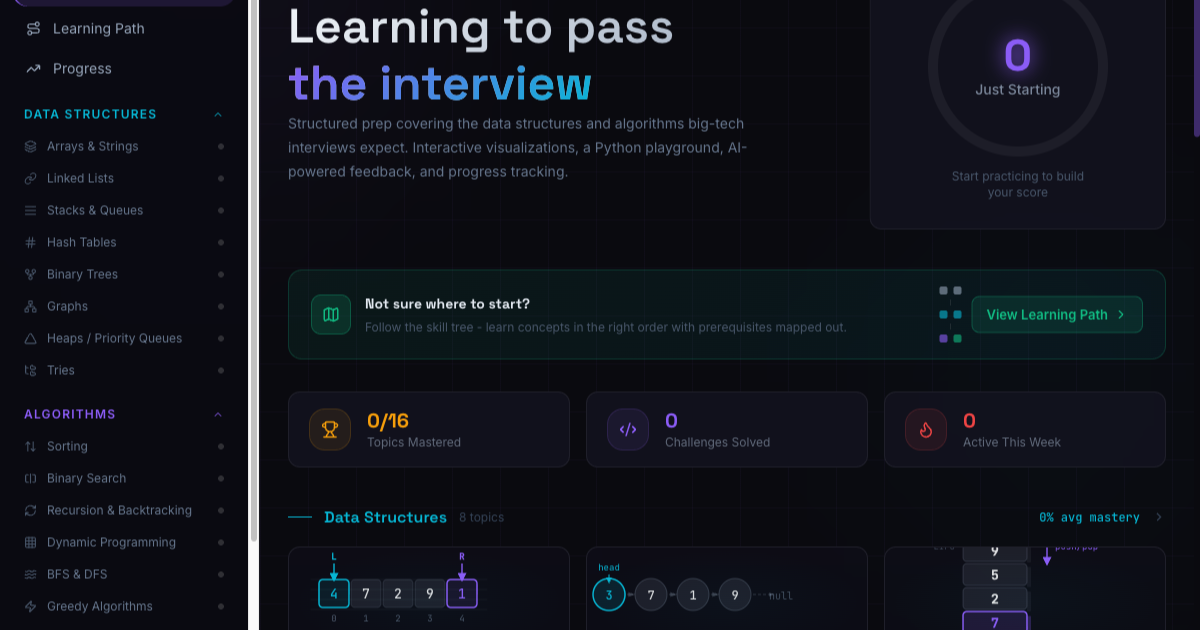
Learningto/Pass: Free, AI-Powered Interview Prep for Developers
Landing a role at a top-tier tech company often hinges on mastering complex data structures and algorithms, coupled with a solid grasp of system design. The problem for many aspiring software developers is that quality