25 results found

The Pentagon's decades-long neglect of its computer networks has led to a critical national security risk, now amplified by AI. Adversaries are using advanced AI to exploit these aging systems, leading to a tenfold increase in zero-day vulnerabilities. Military leaders acknowledge the peril, signaling an urgent shift in priorities.

The U.S. military has disabled advertising tracking on all government-issued devices for troops across its branches, including smartphones and computers. This action follows intelligence reports of foreign adversaries exploiting commercial location data to target U.S. service members in critical areas like the Middle East.

The U.S. Justice Department has sided with OpenAI and Microsoft in a copyright lawsuit filed by The New York Times, arguing that training AI models on journalistic content doesn't violate copyright law. This intervention highlights the government's belief that a thriving domestic AI industry is crucial for national security, setting the stage for a landmark decision that could redefine intellectual property rights in the age of artificial intelligence.

AI firm Anthropic secured a federal court victory today, overturning the Trump administration's blacklisting that labeled it a national security and supply chain risk. The judge ruled the government's actions were illegal, restoring Anthropic's ability to engage with federal contracts and military partners.

The Trump administration has launched a new program allowing private firms to conduct international cyberattacks against foreign criminal networks under federal oversight. This marks a significant shift in U.S. cybersecurity strategy, aiming to leverage private sector capabilities. Experts, however, express concerns about the difficulty in identifying targets, the legal risks for operators, and the potential for collateral damage to innocent infrastructure.

Tesla is reportedly considering selling its entire China business to clear the path for a potential merger with Elon Musk's aerospace company, SpaceX. This strategic move aims to circumvent national security regulations tied to SpaceX's defense contractor status, which could be complicated by Tesla's deep ties in China. The divestiture would be a major concession, as China is a critical market and manufacturing hub for the EV giant.

Chinese AI firms Moonshot and Alibaba have unveiled new frontier models, Kimi K3 and Qwen3.8, challenging US dominance by claiming they rival OpenAI and Anthropic's top offerings. Their open-source strategy marks a significant shift, intensifying the global AI race with implications for national security and economic power.

The Pentagon has frozen permitting for 155 wind projects across 24 states for nearly a year, citing concerns that drones can hide within wind farms. This impacts 44 gigawatts of capacity and has cost developers $2 billion. The wind industry claims the freeze is politically motivated and has filed a lawsuit.

The Trump administration has ordered Anthropic to take its advanced AI models, Fable 5 and Mythos 5, offline due to unspecified “national security concerns.” This move follows reports of Amazon researchers bypassing Fable 5's guardrails. While cybersecurity experts deem the ban dangerous, some speculate it could inadvertently boost Anthropic's image, positioning its models as uniquely powerful.

The White House last Friday ordered AI giant Anthropic to immediately restrict the export of its powerful AI models, Fable and Mythos, citing unspecified national security concerns. This directive led Anthropic to
Nearly 100 prominent cybersecurity experts have signed an open letter condemning the US government's ban on Anthropic's Fable 5 and Mythos 5 AI models. They argue the move disarms defenders, creates market uncertainty, and risks America's AI leadership without justifiable cause, potentially benefiting adversaries more than protecting national security.

Anthropic's Fable 5 and Mythos 5 AI models were abruptly shut down by a US Commerce Department directive over national security concerns regarding a potential 'jailbreak.' Anthropic disputes the severity, warning of industry-wide impacts.
President Trump signed an executive order Tuesday, establishing voluntary government oversight for new AI models. This reverses his prior hands-off approach, balancing innovation with national security by asking companies for a 30-day review.
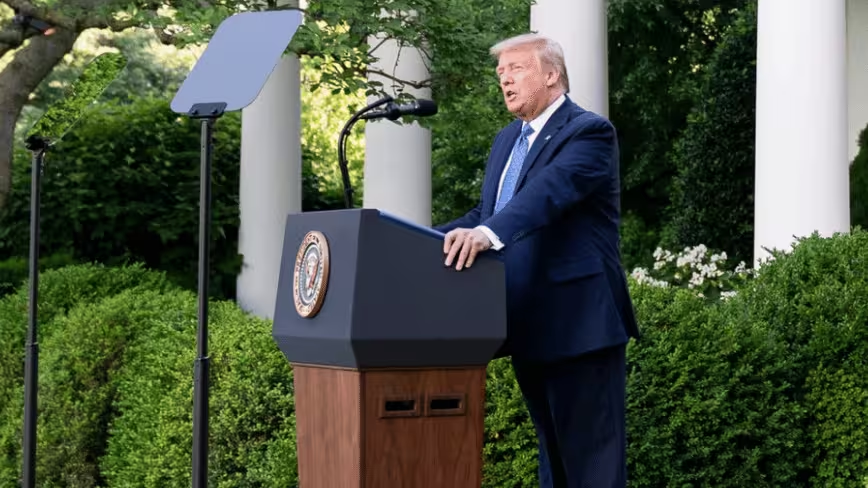
An intense internal power struggle within the Trump administration has stalled US federal AI regulation, leaving a policy vacuum after Anthropic's Mythos model revealed critical cybersecurity risks. Factions within the Commerce Department, intelligence agencies, and pro-industry groups are locked in a "knife fight" over who gets to evaluate and oversee advanced AI systems. This paralysis follows the abrupt cancellation of a landmark executive order and the unexplained withdrawal of AI testing announcements.

FCC's unanimous vote to ban all Chinese and Hong Kong labs from certifying electronics for sale in the U.S. due to national security concerns will affect 75% of devices, potentially raising consumer prices and causing supply chain shifts.

The National Security Agency (NSA) is reportedly utilizing Anthropic's highly restricted Mythos Preview AI model, a development that emerges despite the Department of Defense (DoD) having previously designated Anthropic

Anthropic CEO met White House Chief of Staff over national security concerns about the Mythos AI model. It automates cyberattacks, prompting urgent government assessment.

In a significant move that reverberated through the tech industry, artificial intelligence company Anthropic filed a lawsuit against the Trump administration on Monday, March 9, 2026. The lawsuit, lodged in a federal

AI firm Anthropic plans to challenge the DOD's recent "supply chain risk" designation in court, calling it "legally unsound." This follows a dispute over AI control, with Anthropic refusing use for mass surveillance or autonomous weapons, while the Pentagon seeks unrestricted access for lawful purposes. The designation could bar Anthropic from military contracts.
The US government is reportedly considering forcing Tencent to divest its major gaming investments, including stakes in Epic Games and Riot Games. Citing national security concerns over data collection, this ongoing investigation could significantly reshape the global gaming industry.

The Pentagon has designated AI developer Anthropic as a "Supply-Chain Risk to National Security" after the company refused to allow its AI for mass domestic surveillance or autonomous weapons. This follows President Trump's directive to cease federal use of Anthropic products, which the company vows to challenge legally. OpenAI, initially supporting Anthropic's stance, swiftly secured a deal with the Pentagon to fill the void, claiming to uphold similar ethical principles.

South Korea has conditionally approved Google to export high-precision geographic information, finally enabling full Google Maps services like real-time navigation. This decision reverses a decade-long restriction based on national security concerns, opening the door for tourists and residents to use comprehensive Google Maps while introducing strict data security protocols. Seoul aims to boost tourism and strengthen its domestic geospatial industry, despite potential ripples in the local map market.

The Pentagon is demanding access to Anthropic's AI technology and threatening to invoke the Defense Production Act if the company does not comply, according to Washington Post Technology. This move highlights escalating government interest in private sector AI for national security and poses a significant challenge for the tech firm, bringing to the forefront issues of forced tech sharing and government authority.
Anthropic has accused Chinese AI labs DeepSeek, Moonshot AI, and MiniMax of \
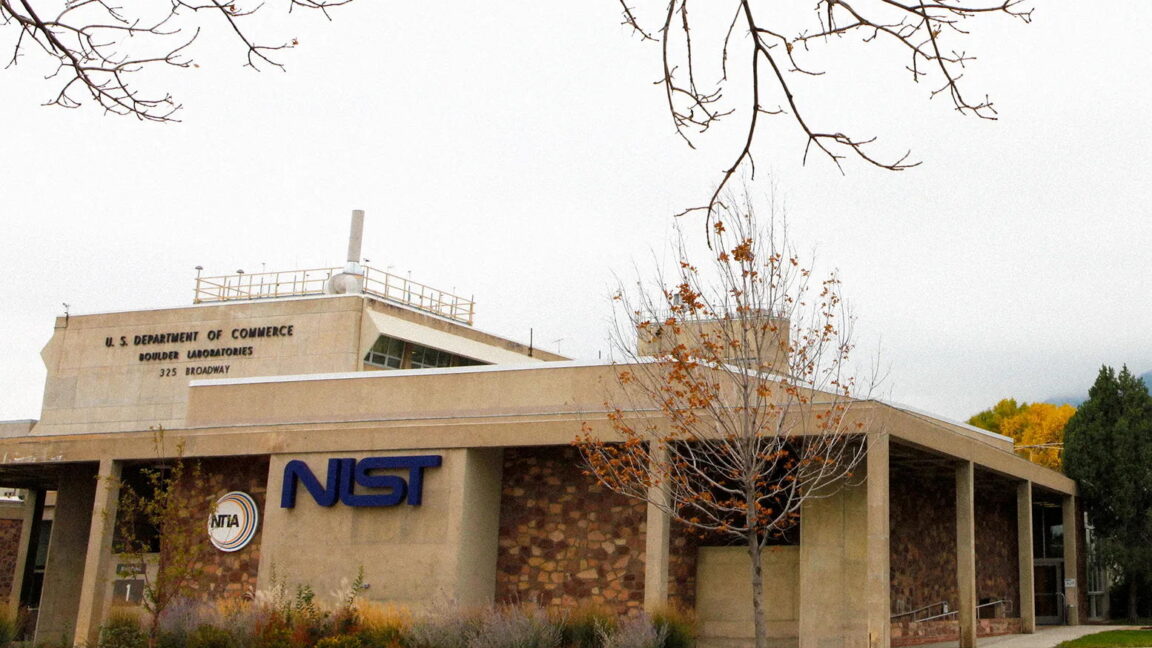
Noncitizen personnel at a National Institute of Standards and Technology (NIST) lab recently had their after-hours access revoked. This change restricts their ability to work at the government research facility outside of standard operational times. The specific reasons for this policy shift and its broader implications for scientific research or national security protocols are not detailed in the available information.
