
US Government Eyes Tencent's Gaming Empire: Divestment Looms
The US government is reportedly considering forcing Tencent to divest its major gaming investments, including stakes in Epic Games and Riot Games. Citing national security concerns over data collection, this ongoing investigation could significantly reshape the global gaming industry.
US Government Eyes Tencent's Gaming Empire: Divestment Looms?
Alright, gamers, buckle up! Major news from Washington D.C. could shake up the gaming world. Chinese tech giant Tencent, with massive stakes in studios behind Fortnite, League of Legends, and Clash of Clans, is reportedly facing renewed pressure from the US government to divest some gaming investments. This isn't just business as usual; it’s a high-stakes saga involving national security, player data privacy, and Tencent's global influence. Let’s dive into what this could mean for your favorite games and the studios behind them.
The Data Dilemma: National Security Concerns
At the heart of this unfolding drama is a lengthy investigation by the Committee on Foreign Investment in the United States (CFIUS), surprisingly initiated under the Biden administration. The core concern? The potential for Tencent's extensive gaming investments to grant it access to a vast trove of data on millions of American players. Officials have raised flags about player statistics, in-game behaviors, and communication logs, fearing this aggregated information could constitute a "significant intelligence collection source." While the US Treasury initially sought to address these worries through data protection measures, the fundamental concern over data privacy and national security continues to fuel the current debate over forced divestment.
Tencent's Gaming Juggernaut: A Portfolio Under Pressure
To grasp the tremors this news could send through the industry, appreciate Tencent's colossal footprint. They hold a substantial 28% stake in Epic Games (Fortnite) and outright own Riot Games (League of Legends, Valorant) and Turtle Rock Studios (Back 4 Blood). Their international portfolio is equally impressive, including Finnish mobile powerhouse Supercell (Clash of Clans), singled out for its massive US user base. Other owned studios encompass Sumo Digital, Funcom, Klei Entertainment, and Yager. Furthermore, Tencent maintains strategic minority stakes in developers like Ubisoft, Techland (Dying Light), Krafton (PUBG), Remedy Entertainment (Control), and Paradox Interactive (Cities: Skylines). This isn't just a list; it's a testament to Tencent's deep intertwining with modern gaming.
Washington's Tug-of-War: Biden to Trump
Navigating this issue has been anything but smooth in Washington. Early on, CFIUS agencies couldn't agree on a unified approach. While some Biden-era officials pushed for forced divestment, the US Treasury initially preferred crafting data protection protocols. Tencent later found itself on a Pentagon blacklist of companies with alleged ties to the Chinese military, a connection it strongly denies. Now, under the Trump administration, the issue has roared back with renewed intensity. Known for its aggressive stance on Chinese-owned corporations, the White House has a history of demanding divestitures, notably compelling TikTok to sell its US operations. The recent, albeit quickly retracted, inclusion of Alibaba and BYD on an updated Pentagon blacklist further highlights this administration's willingness to act swiftly and decisively, keeping the gaming world on edge.
What's at Stake for Gamers? Uncertainty Ahead
So, what does this high-stakes political debate mean for us, the players? If the US government ultimately mandates divestment, it ushers in significant uncertainty for some of the biggest names in gaming. A change in ownership for companies like Riot, Epic, or Supercell could lead to new corporate directions, shifts in development priorities, or even temporary instability for the studios themselves. While your favorite games won't just disappear overnight, the long-term impact on live-service updates, new game development cycles, and even studio culture could be substantial. It's a stark reminder that even our digital escapes are not immune to the complex dance of global economics and national policy.
The Road Ahead: Awaiting the Verdict
The debate over Tencent's gaming investments is far from over. The Trump White House is actively weighing its options, with a scheduled cabinet meeting recently postponed, underscoring the delicate balance required, especially ahead of Donald Trump’s upcoming visit to China. Whether the administration will lean towards divestment, or if a more nuanced data protection approach prevails, remains the burning question. For the gaming community and the industry at large, the coming weeks and months will be crucial, as we await a decision that could fundamentally reshape parts of the global gaming landscape.
FAQ
Q: Why is the US government concerned about Tencent's gaming investments?
A: The primary concerns revolve around data collection and privacy. US officials worry that Tencent's ownership stakes could grant it access to data on millions of American players, potentially serving as an intelligence collection source. There are also reported, though denied by Tencent, connections to the Chinese military.
Q: Which major gaming companies does Tencent have stakes in that are being scrutinized?
A: Tencent holds significant stakes in many major gaming companies. This includes a 28% stake in Epic Games (Fortnite), outright ownership of Riot Games (League of Legends) and Turtle Rock Studios (Back 4 Blood), and ownership of Supercell (Clash of Clans). They also have minority stakes in firms like Ubisoft, Techland, Krafton, Remedy, and Paradox.
Q: What are the potential outcomes of this investigation?
A: The US government could compel Tencent to divest its investments in certain gaming companies, similar to how it handled TikTok. Alternatively, the US Treasury had previously explored implementing robust data protection measures to address concerns without forcing divestment. The final decision is currently under debate within the Trump administration.
Related articles

TCG Pocket Responds: A Much-Needed Pace Shift for Pokémon Fans
Pokémon TCG Pocket is rolling out a major update for its second anniversary, primarily addressing player concerns about overwhelming content releases by shifting to a six-week set schedule. This aims to curb player decline and improve overall engagement by giving trainers more time to collect and strategize. The update also adds new collection methods, improved deck-building features, and enhanced trading functionality.

Kojima Compares Divisive New Film 'Digger' to MGS2's Prescient Vision
Gaming icon Hideo Kojima has praised the divisive 2026 film *Digger*, drawing intriguing parallels to his own prophetic game, *Metal Gear Solid 2*. Both works, he explains, uniquely explore the dangers of misinformation and a fragmented digital reality, anxieties he shares with *Digger*'s director, Alejandro González Iñárritu.

Ubisoft Proposes German Studio Workforce Reduction Amidst
Ubisoft is planning a voluntary departure program for about 100 employees across its Düsseldorf, Berlin, and Mainz studios in Germany. This move is part of a larger, ongoing cost-reduction and restructuring effort by the publisher, aiming to better position its studios for future projects.

TGS 2026: These Forward-Looking Cosplays Are Already Living in the
Tokyo Game Show 2026 showcased incredible cosplay, with many fans embodying characters from unreleased games like *Blast Blade* and *Mononoke No Kuni*. This gallery highlights the community's foresight, alongside debut *Palworld* cosplay and refreshed takes on classics. It’s a testament to the passion that brings gaming's future to life.

Beyond the Bugs: Conquering Studio Headaches in Indie Dev
This guide, part three in a series on running an indie studio, tackles the crucial but often overlooked aspect of dealing with non-development related issues. It introduces creating a shared 'studio backlog' for collective problems and using the IDS (Identify, Discuss, Solve) framework to address them constructively. The core message is to build powerful habits that keep studios from getting quietly derailed by lingering challenges.
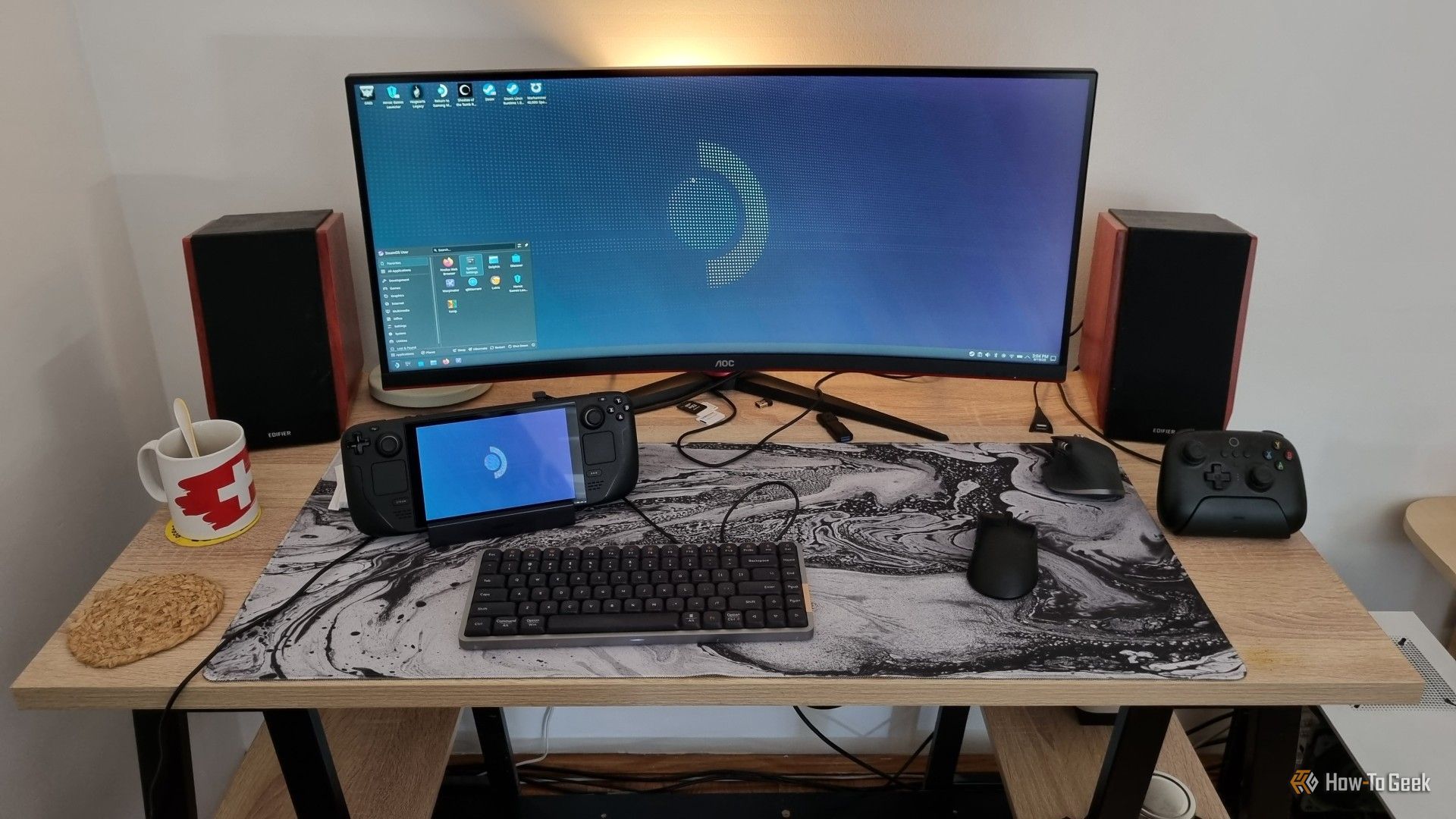
How to Understand Why the Steam Deck's GPU is Falling Behind
The Valve Steam Deck revolutionized portable PC gaming, bringing a vast library of games to your hands. However, technology moves fast, and even great designs can show their age. This guide will help you understand why