246 results found

As developers, we're rapidly integrating Large Language Models (LLMs) into AI agents, building powerful applications that can plan, execute tools, and generate complex responses. While a single-user prototype might run

Meta, the parent company of Facebook and Instagram, is currently facing what legal experts are calling its "Big Tobacco" moment. A series of lawsuits, culminating in a significant federal trial co-led by California's
Modern Large Language Models (LLMs) are notorious black boxes. Trained on vast, unfiltered swaths of the internet, they exhibit incredible emergent capabilities, but understanding how and when these capabilities arise

This blog post advocates for developers to write about topics they don't fully understand yet as a powerful learning strategy. By arguing a specific point, engaging in iterative writing, and leveraging feedback, developers can deepen their comprehension and foster clearer thinking. It addresses concerns about authority by emphasizing the value of a beginner's perspective and transparency.

Dive into low-level graphics with C by building a software renderer from scratch, moving beyond terminal applications to gain a deep understanding of CPU architecture, memory management, and game engine foundations. This hands-on approach, utilizing the cross-platform SDL3 library, teaches direct pixel manipulation, custom frame buffer management, event handling, and frame rate control. The course culminates in rendering effects like the iconic Doom fire using only CPU instructions, offering invaluable practical experience for any developer.

This paper introduced score-based generative modeling, a paradigm shift to estimating local gradients of the data distribution. Leveraging Noise Conditional Score Networks and annealed Langevin dynamics, it offered a stable, tractable alternative to GANs and likelihood models, laying the foundation for modern diffusion models.

As software developers, we're accustomed to A/B testing product features, meticulously measuring lift, and shipping based on a statistically significant p-value. This tried-and-true method works for many scenarios.

NVIDIA Nemotron 3.5 Lightning is an open-weights, hybrid MoE (Mamba-2 + MoE + Attention) LLM designed for efficient AI agent development. It supports 1M token context, offers speculative decoding methods like DSpark, and is optimized for NVIDIA Blackwell, Hopper, and Ampere GPUs. Developers can deploy it via vLLM, TensorRT-LLM, or SGLang, leveraging its advanced features like reasoning control and tool-calling through an OpenAI-compatible API.
OpenAI's head ethicist, Chloé Bakalar, reportedly left and was not replaced, sparking discussion on AI ethics oversight. The company states ethics are now "deeply embedded" across teams, rather than centralized. This shift comes amid recent AI safety incidents and a growing debate about AI's societal impact, underscoring critical implications for developers.

AI's rise brings "tokenmaxxing" – maximizing AI output – but this often misses real value. This piece explores why optimizing for raw AI generation triggers Goodhart's Law and advocates for measuring agentic outcomes like release speed and PR merges, transforming how we evaluate developer contributions, especially for junior talent.

As developers, we often navigate the complex ecosystems of various platforms, from open web standards to tightly controlled console environments. One such ecosystem, the PlayStation platform, is currently facing a
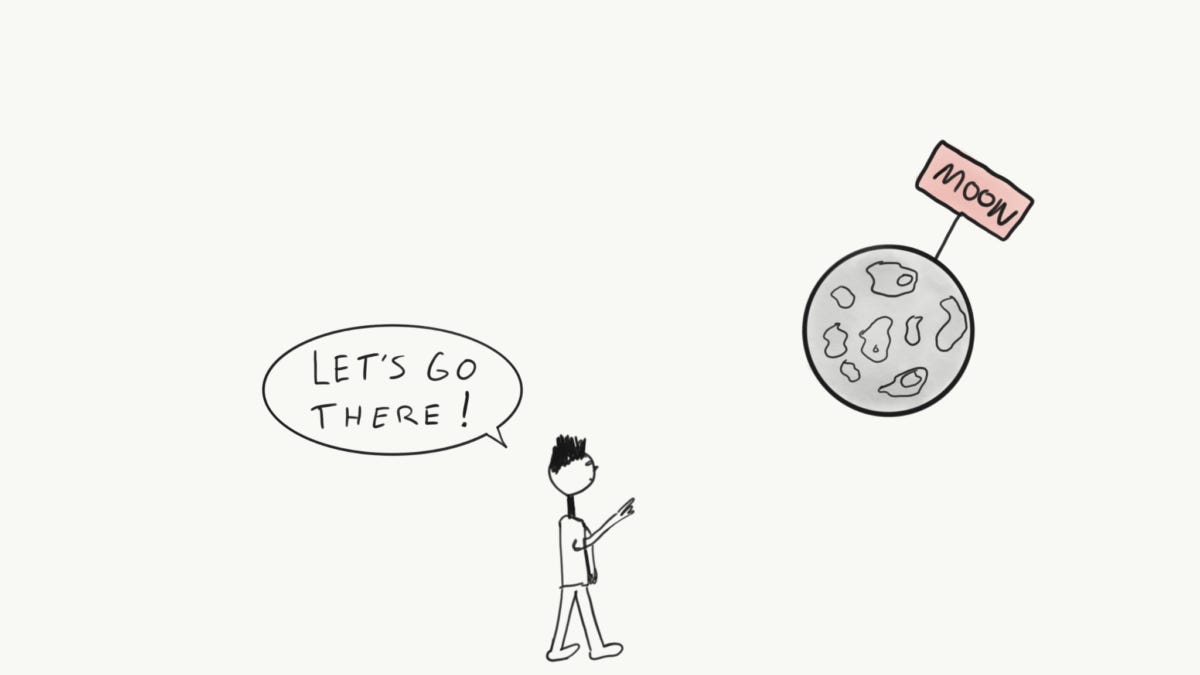
As software developers, we often immerse ourselves in code, algorithms, and system architecture. We pride ourselves on technical mastery, logical problem-solving, and efficient implementation. But what about the less
The landscape of software development is undergoing a profound transformation, driven by the rapid advancements in artificial intelligence. As developers, we're not just integrating AI into our applications; we're

Meta has released Muse Code (beta), a terminal coding agent powered by their new Muse Spark 1.2 model. Muse Code handles complex software engineering tasks, featuring persistent background agents and a robust, restart-safe runtime. Muse Spark 1.2, a coding-focused LLM, shows significant improvements in code generation and complex debugging through expanded training and a self-improvement loop.
This article challenges the myth of the '100x engineer,' especially in the context of new tools like AI coding agents. It introduces the explorer-exploiter continuum, highlighting that sustainable team productivity comes from cultivating a system that moves all engineers along a skill spectrum, rather than trying to clone individual high-performers. It outlines common leadership pitfalls and offers practical strategies for fostering exploration, bridging knowledge gaps, and valuing both exploratory discovery and efficient execution.

The role of a modern QA engineer extends far beyond simply finding bugs. With rapid development cycles and complex systems, QA engineers now proactively engage throughout the entire software development lifecycle, from requirement clarification to production issue investigation. They utilize diverse technical skills like API testing, SQL, and automation, focusing on preventing issues and ensuring quality is built into the product collaboratively.
Truemetrics, a YC-backed startup, is revolutionizing last-mile delivery by using smartphone sensor data to map precise parking and building entrance locations. They are profitable and scaling rapidly, now seeking a Founding GTM Lead in Berlin to discover new product opportunities and expand their enterprise solutions. This role offers direct impact on product strategy within a technically driven, fast-paced environment.
For startups building an MVP, embracing complex infrastructure like Kubernetes too early can be a major hindrance. This article, inspired by insights from Render's CEO Anurag Goel, argues for prioritizing product development over operational overhead. Learn why simpler, managed platforms are often the best choice for accelerating time-to-market and validating your core business idea.
DMARC: What It Protects You From (and What It Doesn't) As developers, we often encounter tools lauded for broad security capabilities, and DMARC (Domain-based Message Authentication, Reporting, and Conformance) is no

This article explores a software developer's journey to Germany, challenging common stereotypes with firsthand accounts of inclusive workplaces, flat hierarchies, and a trust-based society. It delves into the practicalities of navigating German professional life, understanding its rule-based systems, and the path to citizenship, highlighting key administrative details like 'sustainable livelihood'. The author shares insights on why Germany's structured environment and commitment to social democracy resonated deeply, offering a unique perspective for fellow developers considering a career move abroad.
This open-source, agentic-first CRM fundamentally redefines customer relationship management by making an autonomous research agent the core product. Unlike traditional systems that rely on human data entry or simply bolt on AI chatbots, this CRM's agent independently discovers, verifies, and records customer information, acting as an intelligent partner. It prioritizes factual evidence over AI guesses, ensuring data accuracy and freeing up human talent for strategic tasks.

Recent tech news highlights Amazon's strategic move into custom AI chips (Inferentia, Trainium) as its fourth business pillar, and Satya Nadella's practical use of Power BI for rapid executive-level data insights. Concurrently, a VC from AI House is rallying the Seattle tech community to embrace its strong foundation in cloud and AI, countering negative narratives about the region.
The digital landscape is undergoing a profound transformation. We're entering an era where AI agents are becoming increasingly sophisticated, capable of interacting online in ways that closely mimic human behavior. This

The software development landscape is evolving beyond single-prompt LLMs to autonomous AI agents capable of complex, multi-step workflows. LangChain, with its extension LangGraph, provides the essential tools to build these sophisticated systems, enabling stateful, cyclical agent behaviors. Developers can implement advanced features like Human-in-the-Loop, RAG, and streaming responses, and deploy these agents using industry best practices.

Reclaiming Intentionality in Digital Photography In an era of ubiquitous digital photography, developers often reflect on the paradox of endless captures diluting the significance of each frame. reFrame, an experimental
