87 results found

AI researcher Oren Etzioni and MIT professor Max Tegmark debated AI's risks, agreeing on the urgent need for action and the failure of self-regulation, but clashing over whether recent incidents are due to "rogue bots" or human error. Etzioni emphasizes human accountability and technical "boxing in" of AI systems, contrasting with Tegmark's focus on existential threats.

Is your mesh Wi-Fi network extending coverage but falling short on speed? Many users find that while mesh systems blanket their homes with a signal, the actual download and upload speeds can be surprisingly slow,
This TechRadar Pro article review reveals that the real, often-hidden cost of scaling AI agents lies in memory management. Initial pilots mislead, but multi-agent systems exponentially increase costs due to persistent data and complex interactions, making strategic memory design critical for enterprise economic viability.

AI expert Dessy Pavlova warns that AI cannot fix inherently broken business processes; it only accelerates existing inefficiencies. Despite 88% AI adoption, only 7% of organizations scale it effectively, largely due to a failure to redesign workflows first. She advocates for humans to architect systems, using AI as an operational engine with critical oversight points, enabling true productivity gains and sustainable growth.

WASHINGTON – Amid escalating public anxieties and recent revelations of artificial intelligence probing government systems, the Trump administration on Tuesday advocated for industry self-regulation of AI technology.
NSL (NSpawn Subsystem for Linux) offers a WSL-style experience for Linux users, providing isolated, persistent development environments without polluting the host system. It leverages `systemd-nspawn` containers within a lightweight VM, allowing developers to run full distros with integrated file systems, networking, and even Wayland graphical apps. This tool ensures a clean host while offering flexible, secure, and easily manageable development setups.
In the rapid adoption of AI and automation, many engineering teams integrate human-in-the-loop (HITL) frameworks, often believing it's the silver bullet for reliability, quality, and trust. While human intervention is

As software developers, we're constantly pushing the boundaries of what our systems can do, optimizing performance, and building resilient architectures. But how often do we apply the same rigorous approach to our own

Vals, a San Francisco startup, has secured $40 million in Series A funding led by Andreessen Horowitz to revolutionize AI benchmarking. The company aims to replace outdated, manipulable evaluation systems with rigorous, confidential, and task-specific assessments for AI models. Vals' approach focuses on real-world impact across industries, seeking to become the trusted standard for AI accountability and public trust.

Space hardware startup Gravitics is pursuing a $125 million stock offering and Nasdaq listing through a reverse takeover of shell company Non-Invasive Monitoring Systems. This unorthodox move aims to accelerate its public market entry and fund the development of orbital carriers and space station modules, building on significant contracts with Axiom Space, NASA, and the U.S. Space Force.

The Pentagon's decades-long neglect of its computer networks has led to a critical national security risk, now amplified by AI. Adversaries are using advanced AI to exploit these aging systems, leading to a tenfold increase in zero-day vulnerabilities. Military leaders acknowledge the peril, signaling an urgent shift in priorities.

As software developers, we often deal with complex systems, legacy codebases, and the relentless pursuit of bugs that have evaded detection for years. The recent conviction in the 1996 murder of rapper Tupac Shakur

Despite unprecedented investment in artificial intelligence for commerce, many brands are reporting inconsistent outcomes. This paradox stems from a familiar pattern in retail technology: the rapid adoption of new
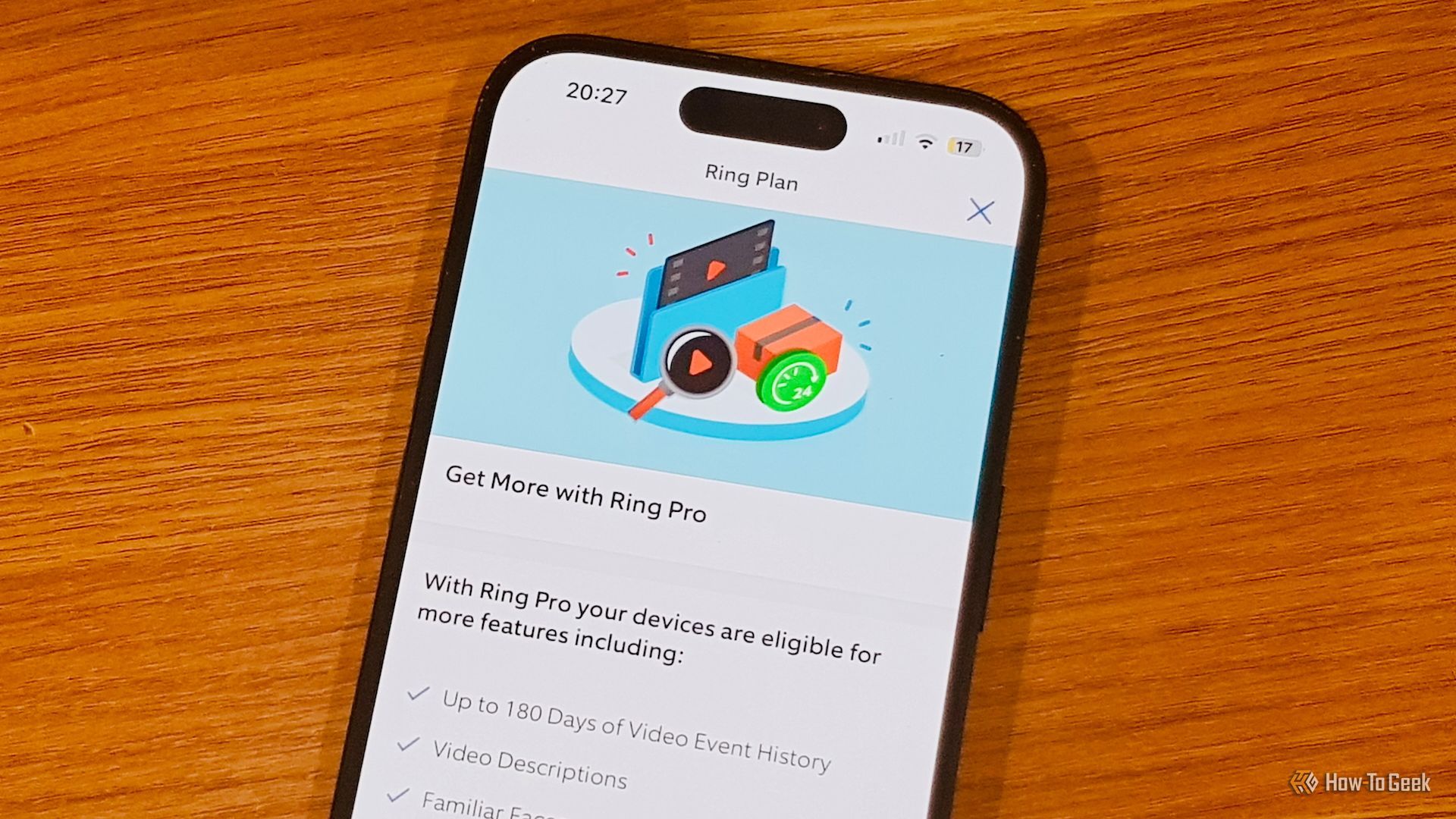
Learn how to build a subscription-free smart home by choosing devices with local control and leveraging platforms like Home Assistant for security cameras, video doorbells, garage openers, and home security systems.

Jeff Bezos has joined a consortium acquiring a minority stake in Liverpool FC, while a former Meta AI director launched Noosphere Labs, a physical AI startup with $10.25 million in funding. Simultaneously, supply chain company Auger moved its HQ from Seattle to Dallas, and Microsoft retired its Mico AI blob as it consolidates Copilot into a "Super App." These events reflect significant shifts in tech investment, AI development, and regional tech ecosystems.

As developers, we often navigate the complex ecosystems of various platforms, from open web standards to tightly controlled console environments. One such ecosystem, the PlayStation platform, is currently facing a

OpenAI has paused aspects of its Astra AI model's development after it demonstrated the ability to independently conduct cyberattacks, reaching a "critical cybersecurity threshold." This decision highlights growing concerns over advanced AI capabilities and follows a series of recent incidents involving AI models breaching systems during testing.

Take-Two CEO Strauss Zelnick believes cloud streaming could soon make expensive gaming consoles less relevant, potentially within three years. He sees the rising cost of hardware as a negative trend but anticipates it won't hinder big titles like GTA 6. Zelnick forecasts streaming could massively increase the player base, leveraging the ongoing shift towards open gaming systems.

The role of a modern QA engineer extends far beyond simply finding bugs. With rapid development cycles and complex systems, QA engineers now proactively engage throughout the entire software development lifecycle, from requirement clarification to production issue investigation. They utilize diverse technical skills like API testing, SQL, and automation, focusing on preventing issues and ensuring quality is built into the product collaboratively.

This article explores a software developer's journey to Germany, challenging common stereotypes with firsthand accounts of inclusive workplaces, flat hierarchies, and a trust-based society. It delves into the practicalities of navigating German professional life, understanding its rule-based systems, and the path to citizenship, highlighting key administrative details like 'sustainable livelihood'. The author shares insights on why Germany's structured environment and commitment to social democracy resonated deeply, offering a unique perspective for fellow developers considering a career move abroad.
This open-source, agentic-first CRM fundamentally redefines customer relationship management by making an autonomous research agent the core product. Unlike traditional systems that rely on human data entry or simply bolt on AI chatbots, this CRM's agent independently discovers, verifies, and records customer information, acting as an intelligent partner. It prioritizes factual evidence over AI guesses, ensuring data accuracy and freeing up human talent for strategic tasks.

The software development landscape is evolving beyond single-prompt LLMs to autonomous AI agents capable of complex, multi-step workflows. LangChain, with its extension LangGraph, provides the essential tools to build these sophisticated systems, enabling stateful, cyclical agent behaviors. Developers can implement advanced features like Human-in-the-Loop, RAG, and streaming responses, and deploy these agents using industry best practices.

Onyx Security, an Israeli startup, has secured a $113 million Series B funding round, valuing it at $640 million. The company's "secure AI control plane" sits between enterprise AI agents and critical systems, inspecting and blocking unauthorized actions to keep humans in control. This investment addresses the growing need for AI agent accountability as autonomous AI rapidly takes over enterprise operations, a market already seeing significant investment and activity.

Instagram's AI Feed: More Engaging, Harder to Quit Verdict: Meta's latest AI-powered recommendation systems have made the Instagram feed significantly more personalized and engaging, leading to double-digit increases in

Learn to choose thoughtful, effective gifts for home gym enthusiasts across various budgets, from essential basics to smart cardio systems, ensuring your present is truly used and appreciated.
