
DeepMind CEO calls for independent body to regulate frontier AI
DeepMind CEO Demis Hassabis has proposed an independent standards body, modeled after FINRA, to regulate frontier AI models. The body would test advanced AI systems and develop best practices for their release, initially on a voluntary basis before potentially becoming mandatory. This initiative aims to provide technically focused, adaptable oversight to the rapidly evolving field of AI.

DeepMind CEO Demis Hassabis has proposed the establishment of a new, independent standards body to regulate the release of cutting-edge "frontier" artificial intelligence models. In a detailed post shared on X on Tuesday morning, July 14, 2026, Hassabis outlined a framework for an organization, inspired by the Financial Industry Regulatory Authority (FINRA), that would be responsible for rigorously testing advanced AI systems and developing industry best practices for their deployment. This move signifies a major push from within the AI development community for a more structured and technically informed approach to managing the rapid evolution of powerful AI.
A New Regulatory Framework
Hassabis’s proposal, titled “A Framework for Frontier AI and the Dawning of a New Age,” suggests an initial phase where "Frontier Labs" would voluntarily submit their models to the Standards Body for review, up to 30 days before public release. Following a successful demonstration of its effectiveness and robustness, this assessment protocol could quickly transition into a formal requirement, necessitating all frontier models to pass the review before being deployed in the U.S. market. The proposed body would also collaborate with AI labs to address any critical vulnerabilities identified after a model's release, ensuring ongoing safety and accountability.
Addressing Prior Criticisms
This proposal directly addresses prior criticisms leveled against the U.S. government's previous ad hoc reviews of models like Anthropic's Mythos and OpenAI's Sol. Those reviews were widely panned for their perceived lack of deep technical expertise and opaque decision-making processes regarding model deployment. By shifting these critical evaluations to a new, independent entity, Hassabis aims to foster a more transparent and technically proficient regulatory environment. Although backed by the U.S. government, the Standards Body would be financially supported by the AI industry itself and operate autonomously, a structure designed to balance public interest with industry innovation.
Navigating the Regulatory Landscape
The concept of AI regulation remains a contentious topic across the technology sector and within governmental circles, particularly under the Trump administration. White House AI advisor Sriram Krishnan, a general partner at a16z, recently dismissed the notion of creating an AI regulator akin to the FDA within the executive branch, stating explicitly that "there will not be an FDA for AI." Hassabis's model, by proposing a self-regulatory organization (SRO) similar to FINRA, attempts to navigate this resistance by offering an industry-led, but publicly accountable, solution.
Structure and Benefits of the Proposed Body
The envisioned Standards Body would be staffed by a diverse group of experts, including representatives from the open-source community and technical specialists drawn directly from the AI industry. Their expertise would be crucial for understanding the complex intricacies of frontier AI models. Industry funding would be essential to attract and retain top talent, ensuring the body's effectiveness. Furthermore, the organization could leverage the growing ecosystem of AI safety groups by outsourcing specialized evaluations for particular risks.
Hassabis underscored the key advantages of this self-regulatory framework, stating, "The strength of this approach is it would be technically focused, while at the same time supporting innovation and incentivising responsible behaviour." He highlighted its inherent adaptability, allowing it to keep pace with the accelerating field of AI development and to adjust its focus as new and more serious risks emerge. This flexible design would enable the regulatory mechanisms to "ratchet up" if the severity of the situation ever demanded more stringent oversight.
Broader Implications
The DeepMind CEO's proposal emerges at a critical juncture for AI development, where the capabilities of frontier models are rapidly expanding, prompting widespread calls for responsible governance. While the specifics of implementation and political buy-in remain significant hurdles, the framework offers a potential middle ground between heavy-handed government intervention and unbridled technological advancement. It signals a growing recognition among leading AI developers that proactive, industry-informed regulation is necessary to maintain public trust and mitigate potential societal risks posed by increasingly powerful AI systems. The debate over how best to achieve effective and adaptable AI oversight is far from settled, but Hassabis's detailed blueprint provides a new, influential voice in the ongoing discussion.
FAQ
Q: What specific type of AI models would this proposed standards body regulate?
A: The proposed body would specifically regulate "frontier AI models," which are the most advanced and powerful AI systems currently being developed.
Q: How would the standards body ensure its evaluations are technically robust?
A: Hassabis envisions the regulator being staffed by open source representatives and technical experts from within the industry. It could also outsource some evaluations to specialized AI safety groups.
Q: Why is an independent, industry-funded body being proposed instead of a government agency?
A: The proposal aims to address concerns about the lack of technical expertise and opaque decision-making in prior U.S. government reviews, while also navigating resistance from the Trump administration against a direct government AI regulator (like an "FDA for AI"). An independent, industry-funded model is seen as technically focused, supportive of innovation, and adaptable.
Related articles

Apple Unveils iPhone Duo: Pricey Foldable Sees Soaring Demand
Apple has officially entered the foldable smartphone arena with the long-anticipated launch of the iPhone Duo. Priced starting at a hefty $1,999, the device features a 5.4-inch outer display and a larger 7.6-inch inner

in-depth: Chicago-Area Cops Helped HSI Spy on Minnesota Anti-ICE
Chicago-area law enforcement, including local police and HSI agents, conducted undercover surveillance on Minnesota anti-ICE activists at an April 2, 2022, talk in Chicago. This operation was part of a federal conspiracy probe into 15 Minnesota activists facing felony charges related to immigration enforcement resistance. Civil liberties advocates have condemned the surveillance as a troubling intrusion into protected political activity.

Mark Wahlberg on using AI in film ‘the right way’ and being open to
Actor Mark Wahlberg believes AI has a place in filmmaking if used responsibly for enhancement, not script generation or actor replacement. At TechCrunch Disrupt, he expressed openness to an AI likeness carrying on his legacy, managed by his family, and emphasized storytelling.

Tesla Unveils Thruster-Equipped Roadster, 2028 Production Targeted
Tesla has unveiled its second-generation Roadster, featuring cold-gas thrusters co-developed with SpaceX, enabling it to jump and flip. The electric sports car demonstrated 0-60mph in an astonishing 0.81 seconds, with production targeted for 2028. This highly anticipated reveal also serves as a key recruitment tool for Tesla's ambitious AI and robotics initiatives.

Amazon Prime Video Launches AI-Powered Prime 360 for NBA Coverage
Amazon Prime Video is elevating its NBA coverage with the introduction of Prime 360, an AI-powered replay system offering immersive, 'fly through' views of the action. Kicking off its second season, Prime Video also adds Yahoo fantasy integration and gains exclusive Eastern Conference Finals rights, expanding its tech-driven sports broadcast. The new features aim to deliver a unique and interactive viewing experience for basketball fans.
regional: A two-person Seattle startup lands $1M to reinvent
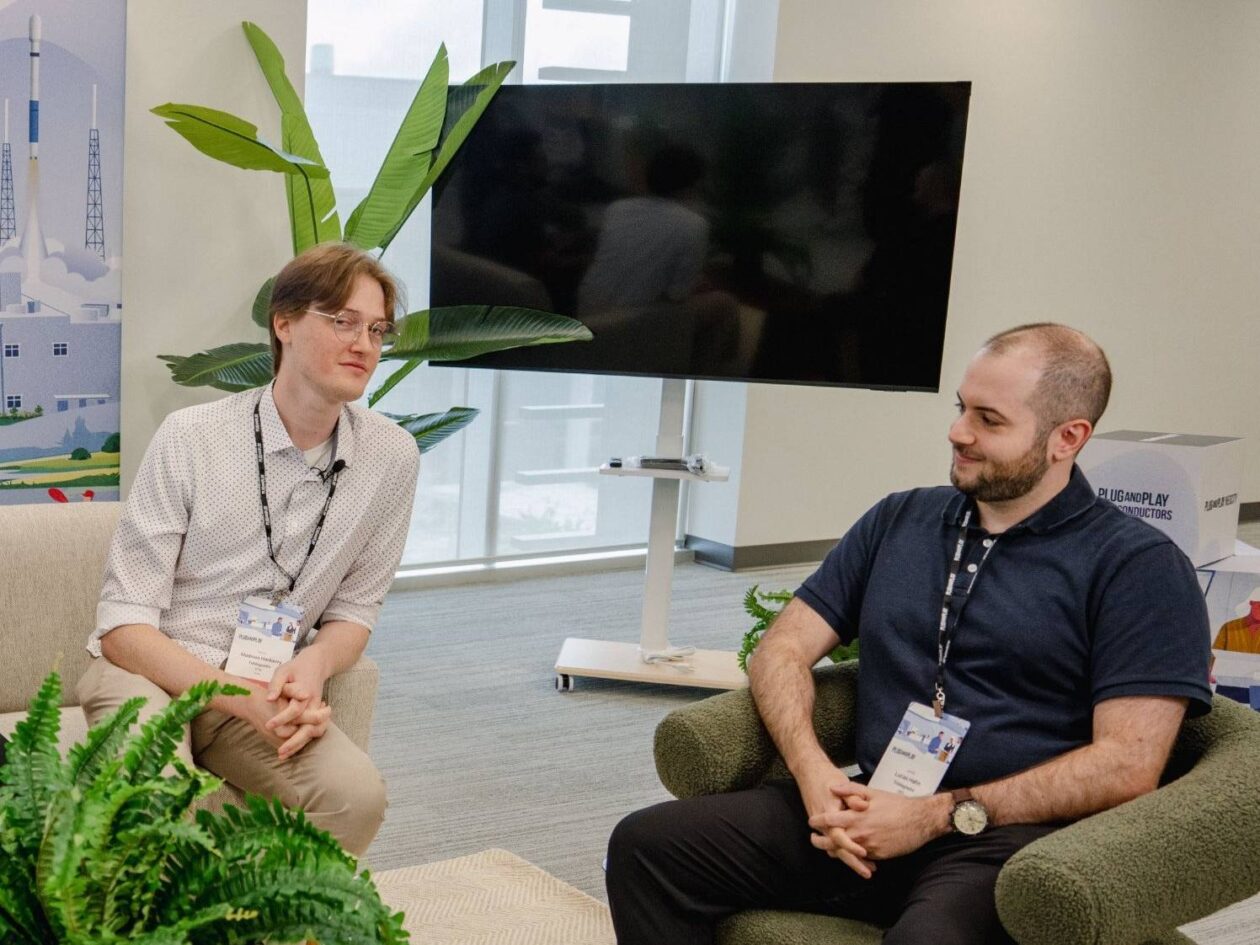
Seattle startup TriMagnetix has secured $1 million to develop semiconductor chips that consume 800 times less energy and are radiation-resistant. The two-person company, leveraging nanomagnetic technology, is targeting space applications and data centers. With new funding and key partnerships, TriMagnetix aims for commercial sales within a year.