47 results found

Learn to build a functional Android app in under 30 minutes using AI code assistants like Claude Code, Codex, or Antigravity, without writing any code. This guide provides step-by-step instructions, essential prerequisites, and tips for prompt engineering to bring your app ideas to life quickly.
In the rapid adoption of AI and automation, many engineering teams integrate human-in-the-loop (HITL) frameworks, often believing it's the silver bullet for reliability, quality, and trust. While human intervention is

Quick Verdict RatHat is a deeply concerning new AI-powered malware targeting Android devices, representing a significant escalation in mobile cyber threats. While its infection vectors rely on common social engineering

Nvidia CEO Jensen Huang firmly opposes new AI regulation, stating that AI safety is an engineering challenge solvable by developers and market forces. Speaking at Dreamforce, Huang argued existing laws and corporate responsibility are sufficient, while critics point to past tech failures and AI's potential for harm as reasons for caution.

Goldman Sachs has opened a new engineering hub in Bellevue, Washington, focused on AI and cloud transformation, set to house over 125 engineers. This marks the financial giant's first dedicated engineering space in the Pacific Northwest, reinforcing its commitment to technological advancement.
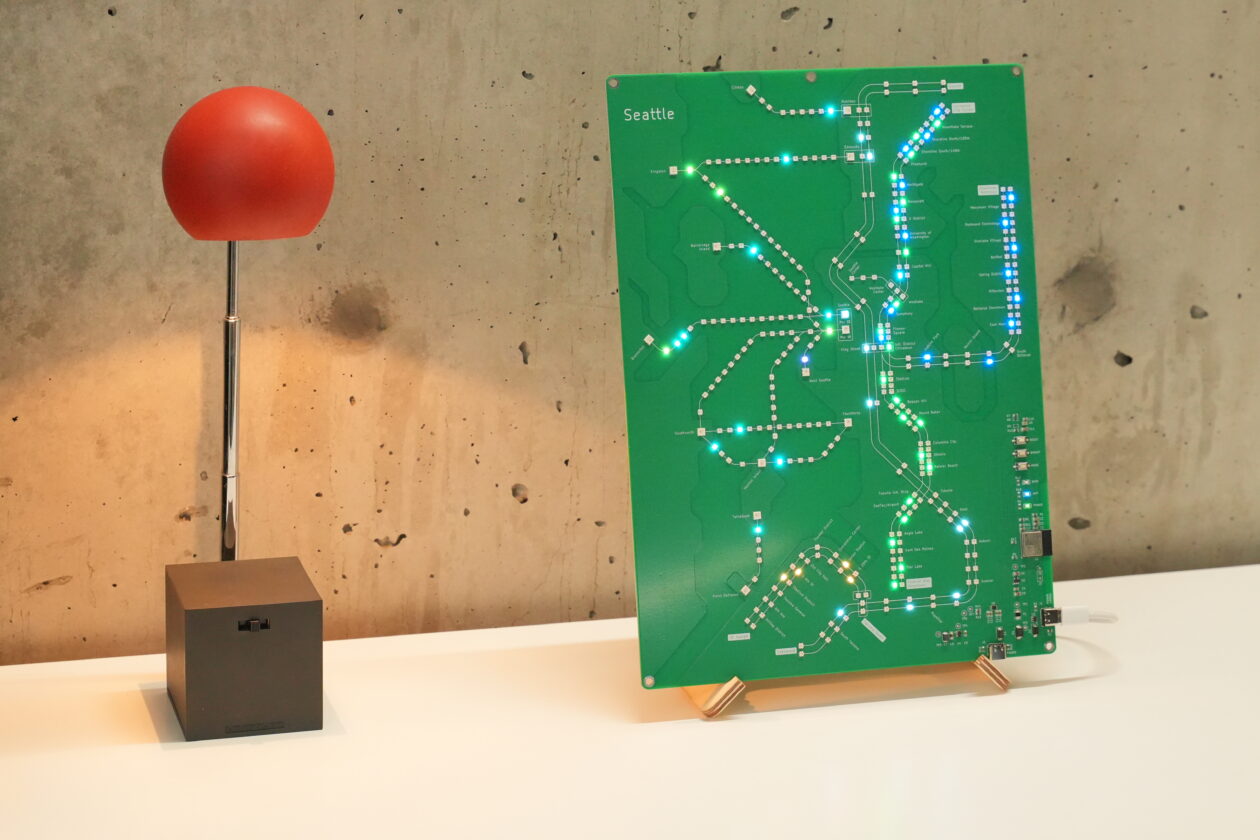
Software engineer Michael Benedict, recently laid off from Amazon, transformed a personal gift into "Seattle Transit Live." This innovative LED circuit board map tracks real-time movement of Puget Sound-area trains, ferries, and water taxis. The $219 open-source device has garnered significant interest, quickly selling out initial production runs.
Jane Street's challenges are known for their ability to nerd-snipe developers, and their ASIC reverse engineering puzzle was no exception. This post dives into a developer's journey through a month-long rabbit hole,

TrueFoundry releases TrueForge, an open-source AI agent harness promising 30-75% cost savings over Claude Managed Agents. Leveraging context engineering, TrueForge offers enterprises greater control and efficiency. While the harness is free, it complements TrueFoundry's commercial AI Gateway, which provides centralized governance for diverse AI workloads.

Meta, the parent company of Facebook and Instagram, is currently facing what legal experts are calling its "Big Tobacco" moment. A series of lawsuits, culminating in a significant federal trial co-led by California's

Seattle-based Overland AI, a developer of autonomous ground vehicles for the U.S. military, has opened a new office in Burlingame, California. This strategic move aims to tap into the Bay Area's premier AI and robotics talent, notably reversing the long-standing trend of Silicon Valley companies establishing engineering hubs in the Pacific Northwest.

Meta has released Muse Code (beta), a terminal coding agent powered by their new Muse Spark 1.2 model. Muse Code handles complex software engineering tasks, featuring persistent background agents and a robust, restart-safe runtime. Muse Spark 1.2, a coding-focused LLM, shows significant improvements in code generation and complex debugging through expanded training and a self-improvement loop.

The role of a modern QA engineer extends far beyond simply finding bugs. With rapid development cycles and complex systems, QA engineers now proactively engage throughout the entire software development lifecycle, from requirement clarification to production issue investigation. They utilize diverse technical skills like API testing, SQL, and automation, focusing on preventing issues and ensuring quality is built into the product collaboratively.

This article explores a software developer's journey to Germany, challenging common stereotypes with firsthand accounts of inclusive workplaces, flat hierarchies, and a trust-based society. It delves into the practicalities of navigating German professional life, understanding its rule-based systems, and the path to citizenship, highlighting key administrative details like 'sustainable livelihood'. The author shares insights on why Germany's structured environment and commitment to social democracy resonated deeply, offering a unique perspective for fellow developers considering a career move abroad.
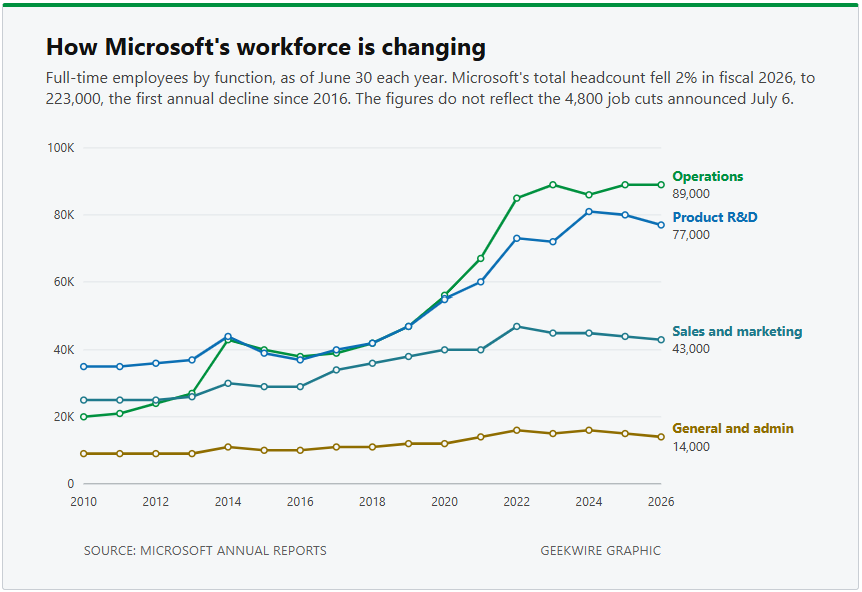
Microsoft's total headcount dropped for the first time in a decade, fueled by a second consecutive decline in R&D roles, despite record revenue growth. This strategic shift reflects the company's adaptation to the AI era, including significant investments in AI infrastructure and a reallocation of engineering talent to customer-facing roles.

AI agents are frequently giving confidently wrong answers, not due to issues with the AI models or context retrieval, but because of fundamental problems in data engineering. Stale, incomplete, or inconsistent data is being fed to AI systems, which lack proper validation mechanisms, leading to invisible failures that appear functional but provide erroneous information. The solution lies in implementing comprehensive data observability, focusing on correctness, freshness, consistency, and lineage.

Applied Computing, a London-based startup, has secured $20 million in Series A funding to advance its foundation AI model, Orbital, for the oil, gas, and petrochemical industry. Orbital aims to integrate disparate data sources—sensor readings, engineering data, and physics models—to provide real-time operational insights, drastically reducing investigation times and enhancing efficiency. The company plans to use the capital for international expansion, hiring, and new client deployments, building on its rapid growth and strategic partnerships with industry giants like KBR.

California-based K2 Space, a rapidly growing player in the aerospace sector, has announced the opening of a new satellite engineering office in the Seattle area, with Bellevue being the targeted location. The move,

Ford has rehired 350 veteran engineers, including some former employees, after its AI and automated quality control systems failed to deliver desired product quality. Executives admitted that relying solely on AI was a "mistake," prompting a shift back to human expertise to identify flaws and train younger staff. This strategic pivot has already resulted in substantial cost savings from reduced warranty claims and helped Ford achieve a top ranking in initial quality surveys.
This article explores the reverse engineering of IBM's MCGA gate arrays, the 72X8300 Memory Controller and 72X8205 Video Formatter. It details newly discovered, previously undocumented features like genlock capabilities, various clock controls, and manufacturing test registers. These insights offer significant value for hardware enthusiasts, preservationists, and emulator developers seeking a deeper understanding of vintage IBM PC graphics hardware.

This article, drawing from Charity Majors' insights, guides engineering leaders on how to avoid authoritarian pitfalls. It stresses that true leadership is about winning at business through effective operation, not just people management, while fostering humane values. Aspiring directors must cultivate business acumen and build high-performing teams by driving continuous improvement, ultimately earning their leadership privilege through excellence.
Anthropic has released a major overhaul of Claude Design, addressing its initial token-burning problem with shared usage limits and efficiency gains. The update also introduces design system imports for enterprise brand compliance and bidirectional integration with Claude Code to streamline the design-to-engineering workflow. This strategic move positions Claude Design as a critical component in Anthropic's broader vision to embed AI across the enterprise stack.

Apple has clarified that its revamped Siri AI will not serve as an "AI girlfriend" or romantic partner. Craig Federighi, Apple's Senior VP of Software Engineering, stated that Siri is designed purely for utility, helping users complete tasks and gain information, in contrast to other chatbots that focus on engagement and sycophancy. This strategic decision underscores Apple's commitment to user privacy and a functional, boundary-respecting AI experience.

AI is pushing the cost of code generation to near zero, profoundly reshaping engineering leadership. This shift moves the bottleneck from coding speed to ideation and process, necessitating a re-evaluation of how teams measure effectiveness and collaborate. Engineering leaders must now prioritize customer value, foster cross-functional empathy, and emphasize system ownership over raw code output.

Mercedes-Benz has launched large-scale production of its electric axial flux motors in Berlin-Marienfelde, marking a major technological leap for EVs. These compact, high-performance motors are critical for the new Mercedes-AMG GT 4-door Coupé, demonstrating exceptional power density and efficiency. The manufacturing process showcases advanced precision engineering, integrating AI for quality control and complex automation to overcome intricate production challenges.

LLM-based Multi-Agent (LLM-MA) systems automate complex software tasks, but their token consumption, and thus costs, are poorly understood. New research analyzing the ChatDev framework with GPT-5 reveals that the iterative Code Review stage consumes a striking 59.4% of tokens, with input tokens making up 53.9% of total consumption. This indicates that the primary cost in agentic software engineering lies in refinement and verification, not initial generation, offering crucial insights for cost prediction and workflow optimization.
