59 results found

Fellow developers, the quest for faster, more cost-effective LLM inference just took a significant leap forward. DeepSeek, known for its open-source contributions, has unveiled DSpark, a new framework designed to

Shopify has developed a resilient AI stack featuring an LLM proxy for automatic failover between AI providers and a sophisticated distillation pipeline for creating specialized, cost-effective models. This strategy ensures continuous AI operations, avoids vendor lock-in, and significantly boosts efficiency and accuracy across its platform.

Sakana AI has launched Marlin, an "ultra deep research" agent designed for enterprise clients. Operating as a "Virtual CSO," Marlin conducts self-governing reasoning for up to eight hours to deliver comprehensive, 100+ page strategy reports. Powered by Adaptive Branching Monte Carlo Tree Search (AB-MCTS) and a multi-LLM architecture, it focuses on deep, vetted analysis over quick generation, backed by strict data privacy policies and significant venture capital.
As developers, we embrace new tools that promise to accelerate our work. AI-assisted development, leveraging powerful Large Language Models (LLMs), quickly became a game-changer. However, many of us, myself included,

LLM-based Multi-Agent (LLM-MA) systems automate complex software tasks, but their token consumption, and thus costs, are poorly understood. New research analyzing the ChatDev framework with GPT-5 reveals that the iterative Code Review stage consumes a striking 59.4% of tokens, with input tokens making up 53.9% of total consumption. This indicates that the primary cost in agentic software engineering lies in refinement and verification, not initial generation, offering crucial insights for cost prediction and workflow optimization.

Square Enix has announced `Final Fantasy VII Revelation`, the concluding installment of its remake trilogy, set for a Spring 2027 release on PC, PS5, Xbox Series X/S, and Nintendo Switch 2. The game promises an expansive open world, playable Vincent and Cid, airship travel, and a climactic confrontation with Sephiroth, bringing the legendary saga to its epic conclusion.

InstructGPT, introduced in OpenAI's 2022 paper, revolutionized LLM development by shifting focus from raw capability to alignment. It fine-tuned GPT-3 using Reinforcement Learning from Human Feedback (RLHF) to make models more helpful, honest, and harmless. This multi-stage pipeline, involving supervised fine-tuning, reward model training, and PPO, taught LLMs to follow human instructions consistently, leading to the foundation of modern conversational AI like ChatGPT.
This article explores how a 10-year-old Intel Xeon E5-2620 v4 server with 128 GB DDR3 RAM and no GPU can run a modern LLM like Gemma 4 26B-A4B at reading speed. It highlights that LLM inference is often memory-bound and showcases deep optimization techniques using `ik_llama.cpp`, including speculative decoding, CPU-aware MoE routing, advanced memory management, and specialized attention kernels. The success demonstrates that granular software control can unlock significant performance on older, abundant-RAM hardware.

LLMs & Falsehoods: When Warnings Don't Stick Verdict: A Critical Flaw in AI Learning New research reveals a concerning "negation neglect" in large language models (LLMs), indicating a profound challenge in how these

Building a Retrieval Augmented Generation (RAG) system often begins with exciting prototypes, quickly demonstrating the power of injecting external knowledge into large language models (LLMs). However, the journey from

Winners of the 2026 Commonwealth Short Story Prize face widespread AI allegations, sparking a debate on literary integrity. A regional winner's story was flagged by experts and AI detection tools for exhibiting hallmarks of AI-generated text. The Commonwealth Foundation acknowledges the claims, promising transparency while defending its judging process.

Graph-Enhanced RAG: Solving LLM Context Gaps in Production In a significant evolution for large language model (LLM) deployment, a new architectural pattern is emerging that promises to resolve critical context
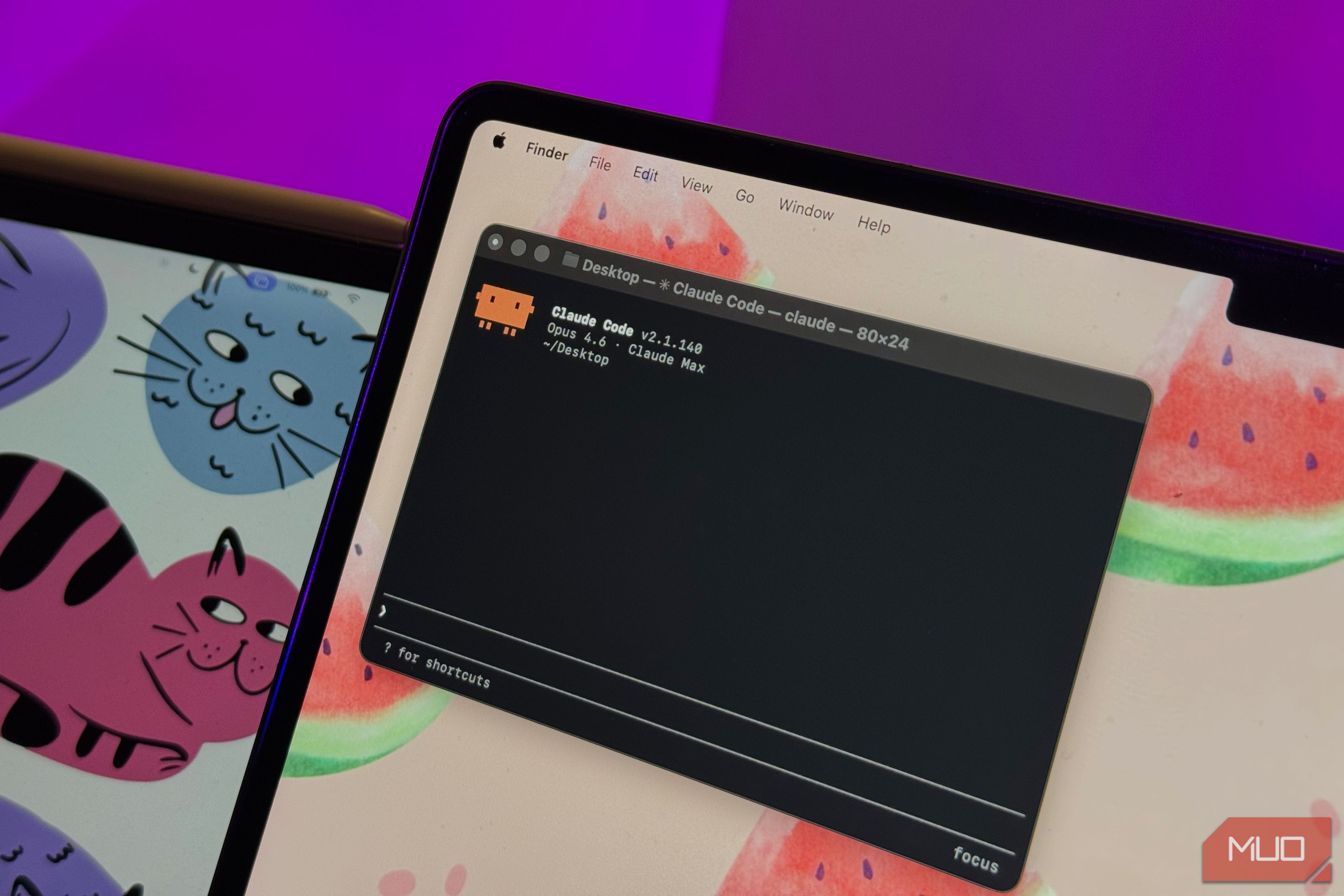
Learn to choose the best LLM for debugging JavaScript by understanding how Claude, ChatGPT, and Gemini perform on complex bugs, emphasizing accuracy over speed to fix root causes efficiently.
Δ-Mem is a lightweight memory mechanism that augments frozen LLM backbones with a compact online state. It uses a fixed-size state matrix, updated by delta-rule learning, to generate low-rank corrections for attention computation during generation. This approach significantly improves performance on memory-heavy tasks without costly context expansion or full model fine-tuning.

The rapid evolution of AI has created a dense lexicon, leaving many confused. This guide demystifies key terms like LLMs, AI agents, and hallucinations, providing a foundational understanding. Grasping this language is crucial for navigating AI's transformative impact and future.

Quick Verdict Sony is aggressively embracing AI in its game development pipeline, promising a surge in game releases, faster creation cycles, and more diverse content. While the efficiency gains are impressive, raising

MCP (Model Context Protocol) is a new standard that acts as a standardized bridge, enabling secure and efficient connections between large language models (LLMs) and external, private enterprise data sources. It addresses the complexity of traditional API integrations by standardizing data formats for AI, making agentic workflows more scalable and effective. MCP ensures LLMs have the crucial internal context needed for practical enterprise applications.

AI dictation apps have made significant strides, leveraging advanced LLMs and speech-to-text models to offer high accuracy and intelligent formatting. TechCrunch has ranked the top AI-powered dictation apps of 2025, highlighting tools like Wispr Flow, Willow, and Monologue for their innovative features, privacy options, and productivity enhancements. These apps are transforming how users interact with technology, making voice input a powerful alternative to typing.

xAI has launched Grok 4.3, its new large language model, featuring "always-on reasoning" and advanced agentic capabilities. The model arrives with an aggressively low API pricing strategy ($1.25/$2.50 per million input/output tokens) and a sophisticated voice cloning suite called Custom Voices. While excelling in specialized legal and financial tasks, Grok 4.3 presents a complex trade-off between cost efficiency, deep reasoning, and general consistency for enterprise users.

Every product experimentation team eventually confronts a common challenge when launching new features, especially those leveraging Large Language Models (LLMs): the 'Opt-In Trap'. Imagine shipping a new AI assistant

Context Hub (`chub`) addresses LLM limitations by providing coding agents with curated, versioned documentation and skills via a CLI, augmented by local annotations and maintainer feedback. This article explores `chub`'s workflow and content model, then demonstrates building a companion relevance engine. This engine uses an additive reranking layer with extracted signals to significantly improve search accuracy for shorthand queries without altering `chub`'s core design.

This article details how to build a secure AI-powered pull request reviewer using JavaScript, Claude, and GitHub Actions. It focuses on critical security aspects like sanitizing untrusted diff input, validating probabilistic LLM output with Zod, and employing fail-closed mechanisms to ensure robustness and prevent vulnerabilities.

This article details setting up Ollama with Gemma 4 26B on an Apple Silicon Mac mini for an always-ready local LLM environment. It covers installation, model pulling, and advanced configurations like auto-starting Ollama, preloading the model using `launchd` agents, and keeping models loaded indefinitely with `OLLAMA_KEEP_ALIVE` to leverage fast inference on Apple Silicon. Practical takeaways emphasize the benefits for developer workflows and memory management considerations.

IndexCache, a novel sparse attention optimizer by Tsinghua University and Z.ai, dramatically accelerates long-context AI models. It cuts up to 75% redundant computation, delivering up to 1.82x faster inference and significant cost savings.

This guide details building a reliable personal financial assistant using the Model Context Protocol (MCP) and a "Narrator" architectural pattern. By separating deterministic data computation in Python from LLM narration, the system ensures factual accuracy, reduces hallucinations, and provides auditable, data-backed financial insights. It covers MCP client wrappers, budget enforcement, simple request parsing, and precise metric calculation.
