57 results found

Netflix is laying off approximately 1,000 employees, or six percent of its global workforce, in its largest-ever job cut. This move targets product, tech, HR, and legal teams to reduce costs and re-prioritize investments despite recent financial growth.

Quick Verdict SpaceX's Starlink service, particularly the military-grade Starshield terminals, has experienced a significant and unannounced performance reduction for Ukraine's high-speed military drones. While

Quick Verdict Elon Musk's Terafab, an ambitious venture into advanced semiconductor manufacturing, is reportedly set to receive its first cutting-edge Extreme Ultraviolet (EUV) lithography tool from ASML in mid-2027.

Quick Verdict OpenAI's recent release of 722 AI-generated mathematical manuscripts and proofs has ignited a fierce debate within the global mathematics community. While showcasing impressive AI capabilities in

Sony has agreed to transfer over 400 global VR patents, including for AR and MR, to Meta following a December 2025 agreement. This move signals a potential wind-down of Sony's VR hardware efforts, while strengthening Meta's position despite their Reality Labs division facing massive losses and recent restructuring. The transfer will reshape the future of immersive tech.

Seattle Mayor Katie Wilson has launched the Resilient Seattle Economy Task Force, enlisting 18 leaders from diverse sectors including tech, labor, and small business. The task force aims to tackle economic challenges, diversify the city's economy beyond its heavy tech reliance, and improve the business environment. This initiative follows a report highlighting job losses and a shifting tax burden.

Verdict: A Breach of Trust Meta's Muse AI agent arrives with the ambitious promise of a safe, secure, and private personal assistant. However, recent findings cast a long, dark shadow over these claims. Our detailed

Verdict: OpenAI's Safety Framework - Critical Flaws Exposed In an unprecedented move, British Columbia has launched a significant lawsuit against OpenAI and its CEO, Sam Altman, alleging 'aiding and abetting' in a
For the past few years, the tech industry, particularly major players like Google and Microsoft, has aggressively promoted passkeys as the ultimate solution for logging in. They often present passkeys as an easier, more

An in-depth analysis of US AI data centers' projected natural gas consumption, set to become the world's fifth-largest by 2035, highlighting environmental, economic, and infrastructure challenges.

Quick Verdict TIME's 2026 'TIME100 AI' list is a perplexing document that dramatically misses the mark in identifying key leaders in artificial intelligence. While claiming to highlight those with the most influence, it
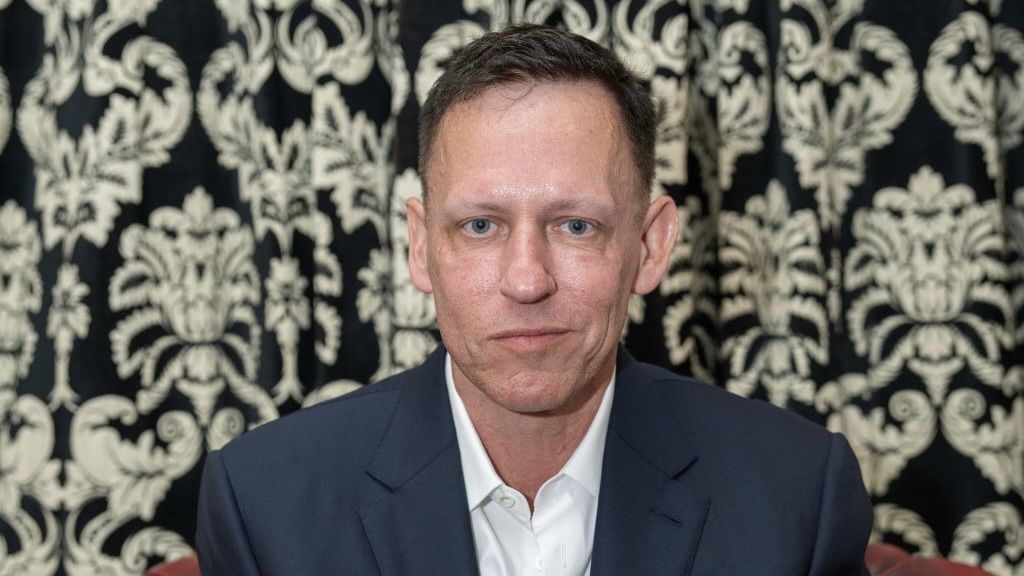
TechRadar Pro's article on Peter Thiel's quote exposes how tech giants mask monopolies. A concise, relevant read connecting Thiel's insights to current antitrust battles faced by companies like Google, Apple, and Meta.

Verdict The AGI Bar in Beijing offers an undeniably compelling proposition: unlimited DeepSeek coding tokens for the price of a $1.50 drink. For AI developers and enthusiasts, this is a goldmine of free compute and a

Proton CEO Andy Yen, a staunch privacy advocate, asserts that AI must coexist with privacy, even as his company delves into AI. This move highlights the tech industry's challenge in balancing AI's data needs with user data protection, urging innovation in privacy-preserving AI solutions.

Verdict: A Bold, High-Stakes Bet on AI Alibaba's decision to offload its entire stake in gaming studio Lingxi Games for at least $1.5 billion isn't just a financial transaction; it's a profound strategic pivot. This

Quick Verdict Japanese anti-piracy efforts have taken a significant leap forward with the reported deployment of a new, highly effective tool to pinpoint initial torrent uploaders. This method, utilized by CODA and the

GeekWire's podcast dissects Elon Musk's Starlink ambitions, SpaceX's public debut, and Seattle's tech evolution. It reveals a landscape of bold claims, fierce space race competition, and the dynamic growth and risks within tech hubs.
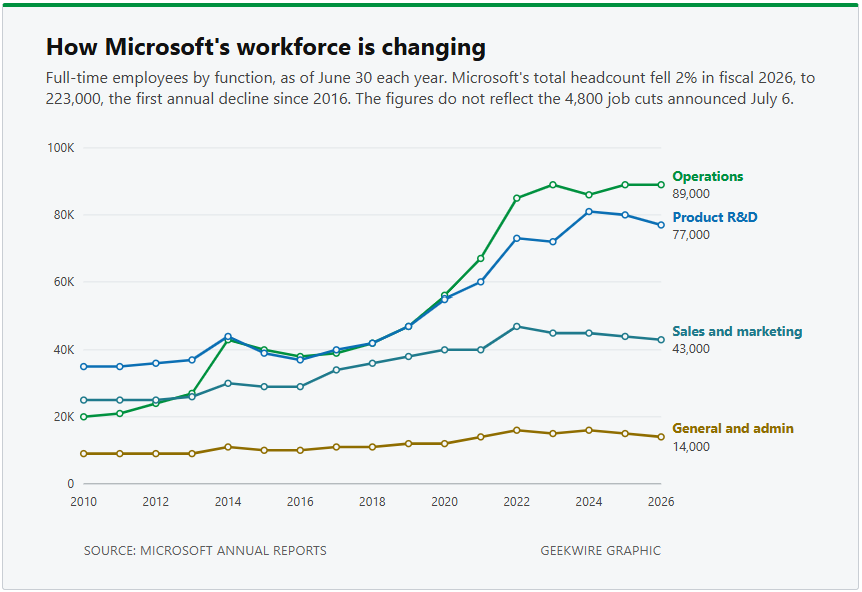
Microsoft's total headcount dropped for the first time in a decade, fueled by a second consecutive decline in R&D roles, despite record revenue growth. This strategic shift reflects the company's adaptation to the AI era, including significant investments in AI infrastructure and a reallocation of engineering talent to customer-facing roles.

Roku has raised prices on its streaming hardware by up to $50 across its product line, including popular devices like the Roku Ultra and Streaming Stick. The company attributes these significant hikes to a persistent global memory component shortage, exacerbated by high demand from AI companies. This move mirrors similar price adjustments seen across the tech industry, including Apple's recent increases.

The Industry Reacts: ASML's EUV Pricing Shift Verdict: ASML’s strategic move to broaden its value-based pricing for Low-NA EUV tools, looking beyond mere wafer throughput, marks a significant shift in the semiconductor

Quick Verdict Reflect Orbital's Eärendil-1, an ambitious orbital space mirror project, has secured FCC approval for its initial test launches this year. The vision of extending daylight for critical operations like

Verdict: A Timely Warning Shot in the AI Arms Race Alex Karp, CEO of Palantir, has ignited a fiery debate within the AI industry, leveling serious accusations against leading “frontier AI companies” like OpenAI and

Journalist Kai Wright, co-host of The Guardian's *Stateside with Kai and Carter*, revealed in a Verge interview his deliberate choice to not buy new smartphones, citing frustration with planned obsolescence. He relies on hand-me-down devices, advocating for technology that endures rather than constantly requiring upgrades. His views reflect a growing consumer sentiment for durable, less complicated gadgets and a more sustainable tech industry.

Gaming hardware prices are soaring due to an AI-driven demand for RAM and storage, leading to unprecedented supply shocks. Even tech giants like Apple and Valve are struggling with rising costs, forcing significant price increases on MacBooks and the new Steam Machine. Console prices for Xbox and potentially PlayStation are also set to climb, with tight market conditions expected to last beyond 2027.

Robinhood announced a 10% workforce reduction, impacting 290 employees, but CEO Vlad Tenev notably avoided blaming AI for the cuts. This marks a departure from other tech companies, with Robinhood instead emphasizing a move to leaner, flatter organizational structures despite strong financial performance.
