
TIME's 2026 AI List: Baffling Omissions & Questionable Inclusions
Quick Verdict TIME's 2026 'TIME100 AI' list is a perplexing document that dramatically misses the mark in identifying key leaders in artificial intelligence. While claiming to highlight those with the most influence, it
Quick Verdict
TIME's 2026 'TIME100 AI' list is a perplexing document that dramatically misses the mark in identifying key leaders in artificial intelligence. While claiming to highlight those with the most influence, it inexplicably snubs foundational figures like Nvidia CEO Jensen Huang and AMD CEO Lisa Su, whose companies are at the very core of the AI revolution. Instead, it features an odd assortment of celebrities and politicians, making it a source of confusion rather than clarity for anyone genuinely interested in the architects of AI. This list is, frankly, bewildering and offers little value for those seeking genuine insight into the AI landscape.
The Unfathomable Omissions: Huang and Su Absent
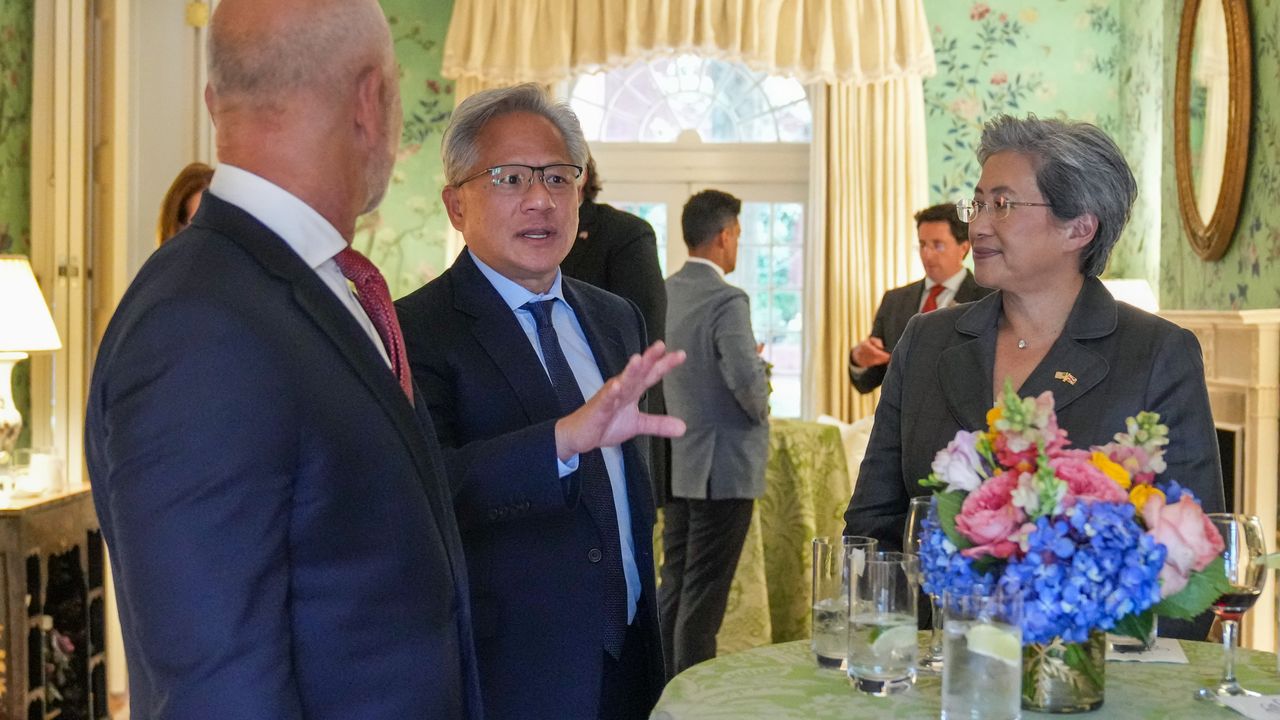
The most glaring and frankly shocking aspect of TIME's 2026 AI list is the absence of Jensen Huang, the CEO of Nvidia, and Lisa Su, the CEO of AMD. To put this in perspective, Nvidia, under Huang's leadership, is the undisputed powerhouse providing the GPU infrastructure essential for training virtually all advanced AI models. The source content highlights Nvidia's staggering financial performance, reporting a second-quarter revenue of $96.2 billion, with $89 billion stemming from data centers alone — a monumental 117% year-over-year increase. Furthermore, Nvidia achieved a historic milestone by becoming the first company to exceed a $5 trillion market capitalization and recorded a phenomenal $57 billion quarter shortly thereafter. Huang himself was previously recognized by TIME as an "Architect of AI" and even a joint "Person of the Year" in 2025, appearing on every previous edition of the TIME100 AI list. His impact on the industry is not just significant; it is foundational.
Similarly, Lisa Su, at the helm of AMD, a direct competitor in the high-performance computing and AI accelerator space, is also conspicuously missing. Her contributions have been recognized by TIME previously, naming her their 2024 CEO of the Year, including her on the 2024 AI list, the main TIME100 in 2025, and among December's Architects of AI. Her consistent presence and leadership in a crucial segment of the AI hardware market make her omission equally baffling. The narrative of AI's development simply cannot be told accurately without acknowledging the hardware giants that enable it, yet TIME has somehow managed to do exactly that.
The Unexpected Architects: Celebrities and the Singular Representative
Replacing these titans of tech are, incredibly, figures like Paris Hilton, Ben Affleck, and Senator Bernie Sanders. While these individuals are prominent in their respective fields, their direct influence on the technical development or strategic direction of artificial intelligence, as understood by the tech industry, is not elucidated by the source material, nor is it immediately apparent. Their inclusion as 'Architects of AI' feels less like a thoughtful recognition of influence and more like a grab for mainstream attention, undermining the gravitas a list of this nature should possess.
Nvidia, despite its colossal impact, finds its sole representation in Josh Parker, the company's head of sustainability. While sustainability in AI data centers is an increasingly critical issue, and Parker's profile appropriately focuses on concerns like energy and water consumption, Nvidia's tripling of Scope 3 emissions, and the shift to liquid cooling for the Rubin platform, his inclusion as the only Nvidia representative, overshadowing its CEO, sends a confusing message about what TIME considers 'AI leadership.' Parker’s statement that "Nvidia is at the center of the AI revolution" underscores the irony of his CEO's absence.
Dissecting the Criteria and User Experience
TIME editor-in-chief Sam Jacobs stated that the selection for the 2026 list aimed to represent "key storylines and who, in our opinion, are having the most influence in driving these developments." Judged by this very criterion, the list fails spectacularly. How can the primary drivers of AI development – the individuals leading the companies that design and manufacture the very silicon upon which AI models are trained and executed – be deemed less influential than celebrities or politicians whose connection to AI is, at best, tangential? The exclusion of other historically recognized figures like Mark Zuckerberg, Demis Hassabis, Sundar Pichai, and Satya Nadella further compounds the impression that this year's list prioritized novelty or a different, less technical definition of 'influence' over concrete impact.
For a consumer seeking to understand the true landscape of AI leadership, this list offers a deeply unsatisfying and misleading experience. It alienates tech enthusiasts and industry professionals who are well aware of the real movers and shakers. Instead of providing authoritative insights, it prompts head-scratching and questions about the selection process's integrity. While some relevant figures from other tech companies were included (e.g., CEOs of Broadcom, Micron, Cerebras, CoreWeave), the omission of Huang and Su fundamentally compromises the list's credibility.
Pros and Cons of the TIME100 AI List (2026 Edition)
Pros:
- Broader Definition of Influence: Potentially attempts to broaden the discussion around AI beyond just technical innovators to include social, ethical, or environmental aspects (as seen with Nvidia's sustainability head).
- Spotlight on New Entrants: The list does feature other, arguably deserving, leaders from critical sectors like HBM suppliers, GPU cloud providers, and rival accelerator developers, offering some diversity in recognized roles.
Cons:
- Critical Omissions: The egregious snub of Jensen Huang and Lisa Su, widely acknowledged as pivotal figures in AI hardware, severely undermines the list's authority and relevance.
- Questionable Inclusions: The presence of celebrities and politicians with unclear direct contributions to AI development dilutes the list's focus and purpose.
- Inconsistent with Past Selections: TIME's own history of recognizing Huang and Su in previous AI and 'Person of the Year' lists makes this year's exclusions baffling and suggests a lack of consistent criteria.
- Damaged Credibility: For those in the tech industry or deeply invested in AI, the list sacrifices accuracy for what appears to be mainstream appeal or a misinterpretation of 'influence.'
- Misleading Narrative: It fails to accurately represent the individuals and organizations truly driving the core advancements and infrastructure of artificial intelligence.
Comparison to Previous TIME AI Lists
This year's TIME100 AI list stands in stark contrast to previous editions, particularly regarding its treatment of Jensen Huang and Lisa Su. In prior years, both Huang and Su were consistently recognized for their significant roles. Huang was not only a recurring fixture on the TIME100 AI but also an "Architect of AI" and a joint "Person of the Year" in 2025. Su also boasted a strong track record, being named 2024 CEO of the Year, and appearing on the 2024 AI list, the main TIME100 in 2025, and among December's Architects of AI. The shift from consistent inclusion to complete omission suggests a dramatic and unforeshadowed change in editorial philosophy or selection criteria that is not well-justified by the stated aim of recognizing those with the most influence. Previous lists, by including these industry stalwarts, offered a more credible and representative view of AI leadership. This 2026 iteration, by jettisoning core industry leaders, effectively diminishes its own historical integrity and analytical value.
Buying Recommendation (as a Source of Information)
As an experienced tech reviewer, my recommendation regarding TIME's 2026 'TIME100 AI' list as a reliable source of information for AI leadership is to approach it with extreme skepticism. If your goal is to gain an accurate understanding of the individuals truly shaping and driving the artificial intelligence industry, this list is fundamentally flawed and actively misleading. Do not rely on it as an authoritative guide. For serious insights into AI, its architects, and its underlying technology, you are far better off consulting specialized tech publications, academic journals, or industry analyses that prioritize expertise and demonstrable impact over celebrity recognition. In essence, while it might spark conversation, it will not inform your understanding of who truly leads in AI.
Conclusion
TIME's 2026 'TIME100 AI' list is a baffling misstep in its attempt to highlight the most influential figures in artificial intelligence. By omitting industry giants like Jensen Huang and Lisa Su, whose companies are central to the very existence of modern AI, and instead featuring personalities whose connection to the field is tenuous, the list sacrifices credibility for what seems to be a misguided pursuit of broader appeal. It fails its own stated criteria of identifying those with the most influence and provides a confusing, rather than insightful, overview of the AI landscape. For anyone genuinely invested in understanding the technological and strategic forces behind AI, this list is best ignored in favor of more specialized and accurate sources.
FAQ
Q: Why are Jensen Huang and Lisa Su considered so important to AI?
A: Jensen Huang, as CEO of Nvidia, leads the company that produces the graphics processing units (GPUs) essential for training and running most advanced AI models. His company's massive revenue and market capitalization underscore its foundational role. Lisa Su, CEO of AMD, leads a competing company also crucial in high-performance computing and AI accelerators, consistently pushing innovation in the hardware space.
Q: What does TIME's selection criteria typically aim for in these lists?
A: According to editor-in-chief Sam Jacobs, the selection for the TIME100 AI list is meant to highlight "key storylines and who, in our opinion, are having the most influence in driving these developments." The 2026 list, however, seems to apply this criterion inconsistently, leading to the omission of core industry leaders and the inclusion of figures with less direct AI influence.
Q: Should I trust this list for understanding the top AI leaders?
A: Based on the significant omissions of industry pioneers and the inclusion of individuals with less direct relevance to AI development, this particular iteration of TIME's list is highly unreliable for identifying top AI leaders. It is advisable to consult more specialized tech and industry publications for a credible and accurate perspective on who is truly shaping the field of artificial intelligence.
Related articles
Android 17 QPR2 Beta 7.1: The Performance Relief You've Been Waiting
Android 17 QPR2 Beta 7.1: Finally Fixing the QPR1 Performance Woes Verdict: Android 17 QPR2 Beta 7.1 is a crucial and highly anticipated software update for Google Pixel users, specifically targeting and resolving the

DJI Solo Video Setups: Smart Choices for Lone Creators
This review delves into DJI's recommended solo video setups, highlighting the Osmo Pocket 3 Creator Combo as a top pick for its integrated camera, gimbal, and mic. It also covers stabilizers like the Osmo Mobile 8 and RS 4, and the DJI Mic Mini series for enhanced audio, providing honest pros, cons, and clear buying advice.
TCG Pocket Responds: A Much-Needed Pace Shift for Pokémon Fans
Pokémon TCG Pocket is rolling out a major update for its second anniversary, primarily addressing player concerns about overwhelming content releases by shifting to a six-week set schedule. This aims to curb player decline and improve overall engagement by giving trainers more time to collect and strategize. The update also adds new collection methods, improved deck-building features, and enhanced trading functionality.

Ars Technica's Rocket Report: Your Essential Space Industry Briefing
Quick Verdict Ars Technica's Rocket Report, presented by veteran space reporter Stephen Clark, offers an invaluable and meticulously organized weekly (or similar frequency, implied by "Edition 9.15") digest of the most

Apple iPhone Duo: A Daring Debut with Notable Compromises
Apple's highly anticipated iPhone Duo, priced at $2,000, has gone on pre-order. While hailed as "Apple's most exciting device in a decade" for its innovative foldable design and immersive display, it comes with significant drawbacks like the absence of FaceID and a premium camera.
KDE Plasma 6.8: A Future-Focused 30th Anniversary Update
Quick Verdict KDE Plasma 6.8, arriving as the "30th Anniversary Edition," is a pivotal release that decisively pushes the desktop environment into the future. With a definitive farewell to native X11 sessions and a