
Sony Passes VR Torch: Meta Snaps Up Over 400 Patents in Major Shake-Up
Sony has agreed to transfer over 400 global VR patents, including for AR and MR, to Meta following a December 2025 agreement. This move signals a potential wind-down of Sony's VR hardware efforts, while strengthening Meta's position despite their Reality Labs division facing massive losses and recent restructuring. The transfer will reshape the future of immersive tech.
Sony Passes VR Torch: Meta Snaps Up Over 400 Patents in Major Shake-Up
Well, gamers, get ready for a seismic shift in the virtual reality landscape! In a move that’s sending ripples across the industry, Sony has officially agreed to transfer over 400 of its global VR patents to Meta. This isn't just a handful of niche ideas; we’re talking about a massive collection of intellectual property covering virtual reality, augmented reality, mixed reality, and head-mounted display systems, with 180 of those patents specifically filed in the US. The agreement was penned back in December 2025, and more than 40 of these patents have already changed hands between June and September of this year.
For those of us who’ve been following the VR space, particularly PlayStation’s journey, this feels like a definitive moment. It signals a major strategic pivot for both tech giants – a potential wind-down of Sony’s direct hardware involvement in VR, and a significant consolidation of power for Meta as it doubles down on its long-term, albeit costly, metaverse ambitions. Let's dive into what this means for the future of virtual reality and, more importantly, for us, the players.
The PSVR Dream: A Fading Horizon?
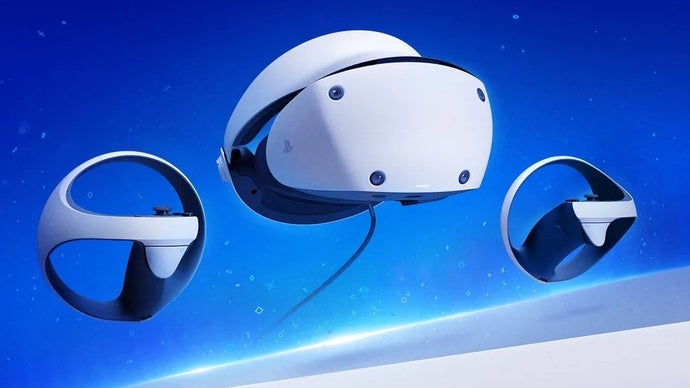
Sony’s PlayStation VR journey has been an interesting one. The original PSVR offered a compelling entry point into console VR, and its successor, the PSVR 2, launched with considerable fanfare. Arriving in February 2023 with a price tag of $549.99 (or $599.99 bundled with the impressive Horizon Call of the Mountain), the PSVR 2 boasted some serious tech improvements. It saw respectable early adoption, moving nearly 600,000 units in its first six weeks – an acceleration over its predecessor. Sony even extended its reach by adding PC support via an adapter in 2024, opening the ecosystem to a wider audience.
Yet, despite these efforts and a couple of solid first-party showcases like Horizon Call of the Mountain and Firewall Ultra, the broader software support seemed to struggle to gain significant momentum. Now, with the patent transfer, the writing appears to be on the wall. This move comes hot on the heels of Sony’s announcement that it will skip the Consumer Electronics Show (CES) in 2027 – a first since the event began in 1967. Their stated reason, a focus on “entertainment, intellectual property, and technology geared to support creators,” sounds suspiciously like a strategic retreat from the costly and fiercely competitive VR hardware market. It’s hard not to feel a pang of disappointment for those who invested in the PSVR 2, hoping for a vibrant future that now seems increasingly uncertain.
Meta's Reality Labs: A Costly but Unyielding Pursuit
On the other side of this patent transfer stands Meta, a company that has unequivocally thrown its immense resources behind the metaverse and, by extension, virtual and augmented reality. Mark Zuckerberg’s vision has seen Meta’s Reality Labs division pour billions into R&D, but it hasn’t been without significant financial pain. In fiscal year 2025 alone, Reality Labs reported a staggering loss of $19.2 billion. That’s a lot of zeros, even for a company as large as Meta!
These losses have led to some tough decisions within Meta, including a 10% reduction in staff earlier this year and the closure of three VR studios: Twisted Pixel Games, Sanzaru Games, and Armature Studio. Further layoffs hit the division in March, and the company even discontinued its Metaverse platform Quest VR (Horizon Worlds) to pivot its focus to mobile experiences.
Despite these setbacks and strategic adjustments, Meta is clearly not giving up on its long-term vision. The company recently announced a shift from its current VR headsets to the more advanced VR Glasses, slated for a Spring 2027 launch at a premium price of $1,299.99. Crucially, these new glasses will have Unity support from day one, aiming to attract developers and content creators to their new platform. Acquiring Sony's extensive VR patent portfolio at this juncture serves to solidify Meta's position, providing them with a wealth of existing innovations and a strong defensive stance against future competition as they push forward with their next-gen hardware.
What These Patents Mean for the Future of Immersive Tech
So, what does it mean when one tech titan hands over hundreds of patents to another, especially in a cutting-edge field like VR? For Meta, it’s a massive win. These patents aren’t just abstract legal documents; they represent years of Sony’s research, development, and innovation in areas like head-mounted display technology, spatial audio, haptic feedback, and potentially even eye-tracking or advanced display techniques. Acquiring them provides Meta with an even stronger foundation for its future VR and AR devices, including their upcoming VR Glasses. It could accelerate their development, reduce R&D costs by leveraging existing solutions, and, critically, strengthen their legal position against potential infringement claims, allowing them more freedom to operate and innovate.
For the VR industry as a whole, it’s a mixed bag. On one hand, a dominant player like Meta, armed with a vast patent library, could drive significant advancements and standardization, potentially leading to more polished and widely adopted VR experiences. On the other hand, it reduces the diversity of major players in the hardware space. With Sony seemingly stepping back from direct competition, the landscape becomes less varied, which can sometimes stifle innovation or lead to less competitive pricing in the long run. We’re left wondering if other big tech companies will step up to fill the void, or if Meta will truly become the undisputed king of consumer VR hardware.
A Strategic Retreat or a Calculated Play?
Sony’s decision to offload these patents and skip CES 2027 feels like a calculated retreat rather than an outright surrender. While they might be stepping back from directly competing in the VR hardware arms race, their stated focus on “entertainment, intellectual property, and technology geared to support creators” suggests they might be shifting to a content-first strategy. Perhaps they see more value in developing immersive games and experiences that can be platform-agnostic, or licensed out, rather than bearing the heavy costs and risks of developing and marketing proprietary VR hardware.
For Meta, this acquisition is a bold double-down. Despite the immense financial losses, the company remains committed to its long-term vision of the metaverse. By absorbing Sony's innovations, Meta can consolidate its technical lead, streamline its R&D, and solidify its future product roadmap. It’s a high-stakes gamble, but with hundreds of new patents in their arsenal, they're certainly giving themselves the best possible chance to succeed.
Shifting Sands in the Metaverse
The transfer of Sony’s VR patents to Meta marks a pivotal moment, reshaping the competitive landscape of immersive technology. While it suggests a significant scaling back of Sony's direct involvement in VR hardware, it empowers Meta to accelerate its ambitious plans for VR Glasses and the broader metaverse. For gamers, this could mean a more consolidated, perhaps less diverse, but potentially more refined VR ecosystem in the coming years. Only time will tell if Meta’s costly pursuit pays off and if Sony’s pivot allows them to find new avenues for their creative prowess in the burgeoning world of immersive entertainment. The future of virtual reality just got a whole lot more interesting.
FAQ
Q: What exactly did Sony agree to transfer to Meta?
A: Sony agreed to transfer 419 global VR patents to Meta, with 180 of these patents specifically filed in the US. The patents cover a wide range of immersive technologies, including virtual reality, augmented reality, mixed reality, and head-mounted display systems.
Q: Does this mean the PSVR 2 is being discontinued?
A: While Sony hasn't made an explicit statement about discontinuing the PSVR 2, the transfer of a significant portion of its VR patent portfolio to Meta, alongside the decision to skip CES 2027 (a first for the company), strongly indicates a strategic pivot away from direct VR hardware development. It suggests Sony is winding down its current hardware efforts in this space.
Q: What is the financial state of Meta's VR/AR division?
A: Meta's VR/AR Reality Labs division has faced substantial financial challenges, reporting significant losses of $19.2 billion in fiscal year 2025. This has led to staff reductions, studio closures, and a shift in focus within the division.
Related articles

DJI Solo Video Setups: Smart Choices for Lone Creators
This review delves into DJI's recommended solo video setups, highlighting the Osmo Pocket 3 Creator Combo as a top pick for its integrated camera, gimbal, and mic. It also covers stabilizers like the Osmo Mobile 8 and RS 4, and the DJI Mic Mini series for enhanced audio, providing honest pros, cons, and clear buying advice.

in-depth: Chicago-Area Cops Helped HSI Spy on Minnesota Anti-ICE
Chicago-area law enforcement, including local police and HSI agents, conducted undercover surveillance on Minnesota anti-ICE activists at an April 2, 2022, talk in Chicago. This operation was part of a federal conspiracy probe into 15 Minnesota activists facing felony charges related to immigration enforcement resistance. Civil liberties advocates have condemned the surveillance as a troubling intrusion into protected political activity.

TCG Pocket Responds: A Much-Needed Pace Shift for Pokémon Fans
Pokémon TCG Pocket is rolling out a major update for its second anniversary, primarily addressing player concerns about overwhelming content releases by shifting to a six-week set schedule. This aims to curb player decline and improve overall engagement by giving trainers more time to collect and strategize. The update also adds new collection methods, improved deck-building features, and enhanced trading functionality.

Amazon Prime Video Launches AI-Powered Prime 360 for NBA Coverage
Amazon Prime Video is elevating its NBA coverage with the introduction of Prime 360, an AI-powered replay system offering immersive, 'fly through' views of the action. Kicking off its second season, Prime Video also adds Yahoo fantasy integration and gains exclusive Eastern Conference Finals rights, expanding its tech-driven sports broadcast. The new features aim to deliver a unique and interactive viewing experience for basketball fans.

Kojima Compares Divisive New Film 'Digger' to MGS2's Prescient Vision
Gaming icon Hideo Kojima has praised the divisive 2026 film *Digger*, drawing intriguing parallels to his own prophetic game, *Metal Gear Solid 2*. Both works, he explains, uniquely explore the dangers of misinformation and a fragmented digital reality, anxieties he shares with *Digger*'s director, Alejandro González Iñárritu.

Ubisoft Proposes German Studio Workforce Reduction Amidst
Ubisoft is planning a voluntary departure program for about 100 employees across its Düsseldorf, Berlin, and Mainz studios in Germany. This move is part of a larger, ongoing cost-reduction and restructuring effort by the publisher, aiming to better position its studios for future projects.