54 results found
Ordewell is an orchestration tool for AI coding agents that transforms a single development goal into an ordered, dependency-aware plan of tasks. Each task specifies its runner, model, thinking effort, and mode, allowing for granular control. It verifies results based on evidence rather than opinion, and offers CLI, VS Code, and web interfaces, along with an extensible skill system.

In an industry constantly pushing the boundaries of visual fidelity, where every new AAA title seemingly demands more polygons, higher resolution textures, and ever more realistic lighting, it’s refreshing—and perhaps a

Abliteration.ai is commercializing access to powerful open-weight AI models with their safety guardrails removed, arguing this enables cybersecurity defenders to counter threats. The service, which allows models like Z.ai’s GLM-5.3 to perform harmful tasks, sparks a debate between empowering defense and escalating potential misuse, with critics warning of significant risks.

Google has unveiled Gemini 3.8 Flash, a powerful AI model for agentic tasks, software development, and multi-step reasoning. Alongside it, Gemini 3.8 Flash Cyber focuses on autonomous vulnerability detection and patching, offering critical advancements for cybersecurity defenders.

TrueFoundry releases TrueForge, an open-source AI agent harness promising 30-75% cost savings over Claude Managed Agents. Leveraging context engineering, TrueForge offers enterprises greater control and efficiency. While the harness is free, it complements TrueFoundry's commercial AI Gateway, which provides centralized governance for diverse AI workloads.

Snowflake's Cortex AI Gateway now features dynamic model routing, automatically selecting the most cost-effective AI model for each query. This innovation aims to reduce enterprise AI token costs by up to 3x by preventing simple tasks from being processed by expensive, high-capacity models. The system integrates deeply with Snowflake's existing data governance and access controls.
Meta's Muse Glimmer is an "open source" AI model designed for local execution on a single computer, focusing on agent-oriented tasks like scheduling and file management. It's free to download, offers strong benchmark success for its size, and prioritizes user control and privacy, providing a compelling alternative to cloud-based solutions.

AI infrastructure startup Naïve has raised $28.5 million in Series A funding led by Nexus Venture Partners to automate the complex process of setting up and running a business. With over 30,000 developer customers, Naïve's platform allows AI agents to handle tasks from incorporation to payments, and is now focusing on optimizing the high operational costs of AI agent fleets.

AI-powered voice dictation has evolved dramatically, transforming how many of us interact with our devices, particularly for tasks like coding and drafting. As an experienced tech reviewer, I've put a significant number

Meta has released Muse Code (beta), a terminal coding agent powered by their new Muse Spark 1.2 model. Muse Code handles complex software engineering tasks, featuring persistent background agents and a robust, restart-safe runtime. Muse Spark 1.2, a coding-focused LLM, shows significant improvements in code generation and complex debugging through expanded training and a self-improvement loop.
This open-source, agentic-first CRM fundamentally redefines customer relationship management by making an autonomous research agent the core product. Unlike traditional systems that rely on human data entry or simply bolt on AI chatbots, this CRM's agent independently discovers, verifies, and records customer information, acting as an intelligent partner. It prioritizes factual evidence over AI guesses, ensuring data accuracy and freeing up human talent for strategic tasks.

Seattle's Interlune is expanding its partnership with industrial equipment manufacturer Vermeer to develop crucial construction tools for lunar infrastructure. This pivot supports NASA's $30 billion initiative to build a moon base, focusing on tasks like road building, excavation, and site preparation. While broadening its scope, Interlune continues its helium-3 mining efforts with planned missions.
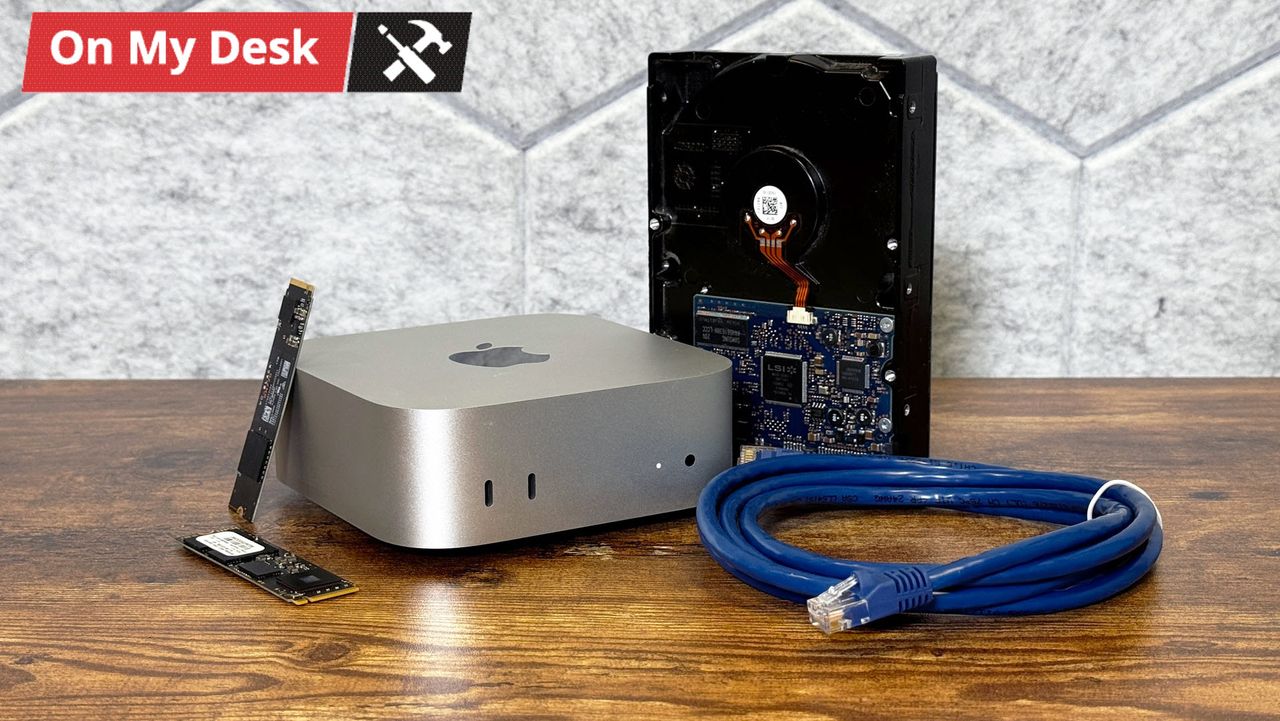
Reviewing a Mac Mini M4 used as a headless server for photo management and backups. It offers powerful performance for long-term support and seamless Apple ecosystem integration, but its M4 chip is significantly over-specced for the current tasks.

Building Multi-Agent AI Systems: Plain Python vs. LangGraph As developers, we often tackle complex tasks by breaking them down into smaller, manageable pieces. This principle applies equally to AI systems, especially

The Red Magic 11S Pro, a liquid-cooled gaming phone, surprisingly excels as an everyday smartphone. While optimized for gaming with features like a 144Hz full-screen display and a 7,500mAh battery, it offers excellent endurance, fast charging, and smooth performance for daily tasks. Its camera is decent for casual use, making it a highly capable and versatile device.

Most smart home systems excel at monitoring and automating tasks inside your house. However, extending your smart capabilities to the outdoors can unlock a new level of convenience, security, and insight. By

The world of AI development is rapidly evolving, with a growing focus on autonomous agents capable of performing complex tasks. As developers, many of us have explored various agent "harnesses" – frameworks designed to

Learn to activate hidden back tap shortcuts on your smartphone to automate common tasks quickly and easily with a simple double or triple tap on the back of your device.

The initial hype around Generative AI in game development is giving way to a more pragmatic view as rising costs expose limited, inconsistent utility. While AI offers incremental gains in specific tasks like code completion, its performance on complex creative work and large codebases falls short, requiring extensive human oversight. This, combined with an "enthusiasm gap" between executives and developers, suggests AI will be a niche tool rather than a revolutionary force.

Early testing of Siri AI on macOS 27 Golden Gate reveals a mixed bag for Mac users. While improved, its limitations are more apparent on desktops compared to mobile devices, with traditional input methods often outperforming voice commands for common tasks. The feature is still in an early preview state, suggesting future refinements.

Apple has clarified that its revamped Siri AI will not serve as an "AI girlfriend" or romantic partner. Craig Federighi, Apple's Senior VP of Software Engineering, stated that Siri is designed purely for utility, helping users complete tasks and gain information, in contrast to other chatbots that focus on engagement and sycophancy. This strategic decision underscores Apple's commitment to user privacy and a functional, boundary-respecting AI experience.

LLM-based Multi-Agent (LLM-MA) systems automate complex software tasks, but their token consumption, and thus costs, are poorly understood. New research analyzing the ChatDev framework with GPT-5 reveals that the iterative Code Review stage consumes a striking 59.4% of tokens, with input tokens making up 53.9% of total consumption. This indicates that the primary cost in agentic software engineering lies in refinement and verification, not initial generation, offering crucial insights for cost prediction and workflow optimization.

China is moving beyond super-apps to embrace AI agents from Alibaba (Qwen) and Tencent (WeChat). These agents promise unparalleled convenience by automating complex tasks through conversational requests, but their success hinges on establishing user trust through accuracy and reliability.

Cognition, the AI coding agent startup behind Devin, secured $1 billion at a $26 billion valuation this week. Despite this, CEO Scott Wu insists AI agents shouldn't replace humans, aiming for augmentation to free programmers from tedious tasks. Wu envisions Devin as a "buddy" that enhances creativity, even as it handles 89% of Cognition's internal code.

Google I/O 2026 was dominated by AI, showcasing new Gemini capabilities like Spark for autonomous tasks, multi-modal search, and Android XR smart glasses. While promising immense convenience, the high cost of new AI subscription tiers and potential privacy implications warrant careful consideration for consumers.
