
Thief Dev Asks: 'Why Do We Need More Graphics?' Challenging AAA
In an industry constantly pushing the boundaries of visual fidelity, where every new AAA title seemingly demands more polygons, higher resolution textures, and ever more realistic lighting, it’s refreshing—and perhaps a

In an industry constantly pushing the boundaries of visual fidelity, where every new AAA title seemingly demands more polygons, higher resolution textures, and ever more realistic lighting, it’s refreshing—and perhaps a little provocative—to hear a veteran voice question the relentless graphical arms race. Randy Smith Evergreen, a seasoned designer known for his work on the foundational Thief series, isn't convinced that games, especially immersive sims, need to chase after ultra-realistic visuals and the astronomical budgets that come with them. He's asking a simple yet profound question: "Why do we need more graphics?"
Smith Evergreen recently shared his insights in an interview with PC Gamer, stirring up a conversation that many in the enthusiast community have been having for years. His core argument? That a significant portion of the gaming world, particularly the burgeoning indie scene, should prioritize "high-quality content" and innovative gameplay over "enormous production budgets" driven by the quest for photographic realism.
The Thief Legacy: Proof That Less Can Be More
It’s a perspective rooted in experience. Smith Evergreen recalls that the original Thief game, a title that profoundly influenced the immersive sim genre, was made for a modest $3 million. He posits that, with today's readily available off-the-shelf digital assets, a similar game could be created for even less. This stands in stark contrast to the modern AAA landscape, where budgets routinely soar into the hundreds of millions.
For immersive sims in particular, Smith Evergreen suggests studios should target a budget between "about three to $10 million." His rationale is pragmatic: he doubts there's a sufficiently large audience to financially sustain a massive, $250 million-plus immersive sim. Instead, he believes a well-crafted, smaller title, built by a dedicated team of "knowledgeable and passionate devs who work fast," could achieve comparable sales figures to a super-expensive counterpart. "It’s not clear to me that the $3-million Thief or Deus Ex- style immersive sim that you want to make in the year 2026 is going to sell disproportionately different amounts of copies than the $250-million one that comes out of a big studio," he noted.
Beyond Pixel Perfection: Establishing The Vibe
Smith Evergreen's viewpoint isn't a rejection of good art direction or visual appeal, but rather a questioning of the necessity of hyper-realism beyond a certain point. He brings up a potent example: "I remember back when Alan Wake came out," he told PC Gamer. "I was like, ‘OK, this is relatively photoreal. I know 100 percent that I’m on a ferry. I see that I’m going to an island in the Pacific Northwest. Why do we need more graphics?’ Because they just cost a ton."
His point is clear: once visuals effectively establish the game's atmosphere and clearly convey essential information to the player, additional graphical bells and whistles often add more to the development cost than to the player's core experience. For immersive sims, which thrive on player agency, environmental storytelling, and intricate systems, this argument holds particular weight. While stunning vistas and intricate detail are always welcome, are they truly necessary for what makes an immersive sim compelling? Smith Evergreen isn't so sure.
Indie's Ascendancy: The FTL Factor
This philosophy finds strong resonance in the indie space. Smith Evergreen cites FTL: Faster Than Light as a prime example of a game that eschewed cutting-edge graphics for exceptional gameplay and creativity. He described it as a "cheap, fast, scrappy game that just had amazing gameplay and great creativity." And for good reason – FTL remains a beloved classic, proving that a modest visual presentation can still deliver an incredibly deep and memorable experience. This, he asserts, is the direction many games, particularly indies, should be heading: "high-quality content, but not enormous production budgets."
A Call for Substance Over Spectacle
Smith Evergreen's comments serve as a critical reminder to the gaming industry: while impressive visuals can certainly draw initial attention, they are rarely the sole determinant of a game's lasting impact or commercial success. The current trend of ever-increasing graphical demands leads to ballooning budgets, extended development cycles, and often, significant crunch for developers. By questioning the fundamental need for "more graphics," he encourages a shift back to prioritizing innovative design, compelling systems, and creative content that truly engages players, rather than merely dazzling their eyes.
His perspective isn't about shunning graphical progress entirely, but rather about strategic application. It's about understanding that there's a point of diminishing returns, especially when the costs become prohibitive and the audience might not expand proportionally. For both aspiring indie developers and established studios, this is a powerful argument for focusing on what truly matters: making great games, regardless of whether they push the absolute bleeding edge of visual technology.
FAQ
Q: Who is Randy Smith Evergreen? A: Randy Smith Evergreen is a veteran game designer primarily known for his significant contributions to the development of the iconic Thief franchise, a series widely regarded as a pioneer in the immersive sim genre.
Q: What is an "immersive sim"? A: An immersive sim is a genre of video game characterized by its emphasis on player choice, emergent gameplay, and intricate systems that allow for multiple solutions to problems. These games often encourage exploration, stealth, and using the environment creatively, exemplified by titles like Thief, Deus Ex, and Dishonored.
Q: Is Smith Evergreen suggesting that all games should have low-fidelity graphics? A: Not exactly. Smith Evergreen argues that there's a point where graphical fidelity becomes "good enough" to establish mood and convey information. Beyond that, the escalating costs often outweigh the benefits to the core gameplay experience, especially for specific genres like immersive sims or for indie studios. He emphasizes prioritizing "high-quality content" and gameplay over simply chasing hyper-realistic visuals.
Related articles
OnePlus 16 Preview: A Gaming Powerhouse (If You Can Get It)
OnePlus 16 Preview: A Gaming Powerhouse (If You Can Get It) The Verdict The upcoming OnePlus 16, though still shrouded in leaks and rumors, is shaping up to be a formidable contender in the mobile gaming arena. Boasting
Rockstar and Union Square Off: The Tribunal Has Begun
Rockstar Games and the IWGB union have presented their opening arguments in an employment tribunal concerning the dismissal of 34 staff members. Rockstar cites gross misconduct and confidential information leaks, while the union alleges the firings were due to union activities, including claims of an internal mole. This high-stakes legal battle highlights significant issues for worker rights and studio practices in the gaming industry.

King Charles Convenes AI Summit Amid Escalating Existential Warnings
King Charles III is hosting a crucial AI summit in Scotland this week, gathering top industry leaders, government officials, and ethical advisers. The meeting comes amid escalating warnings from AI insiders, including fears of an "existential threat" to humanity, underscoring the urgent need for responsible development and regulation of artificial intelligence.
Farewell, Quill: Polyarc Games Closes Its Doors After 12 Years
In a somber announcement that has rippled through the gaming community, Polyarc Games, the acclaimed studio behind the enchanting Moss VR series, has confirmed its closure after nearly 12 years of operation. It's a
iPhone Liquid Glass Adjustment in iOS 27: Finally in Control
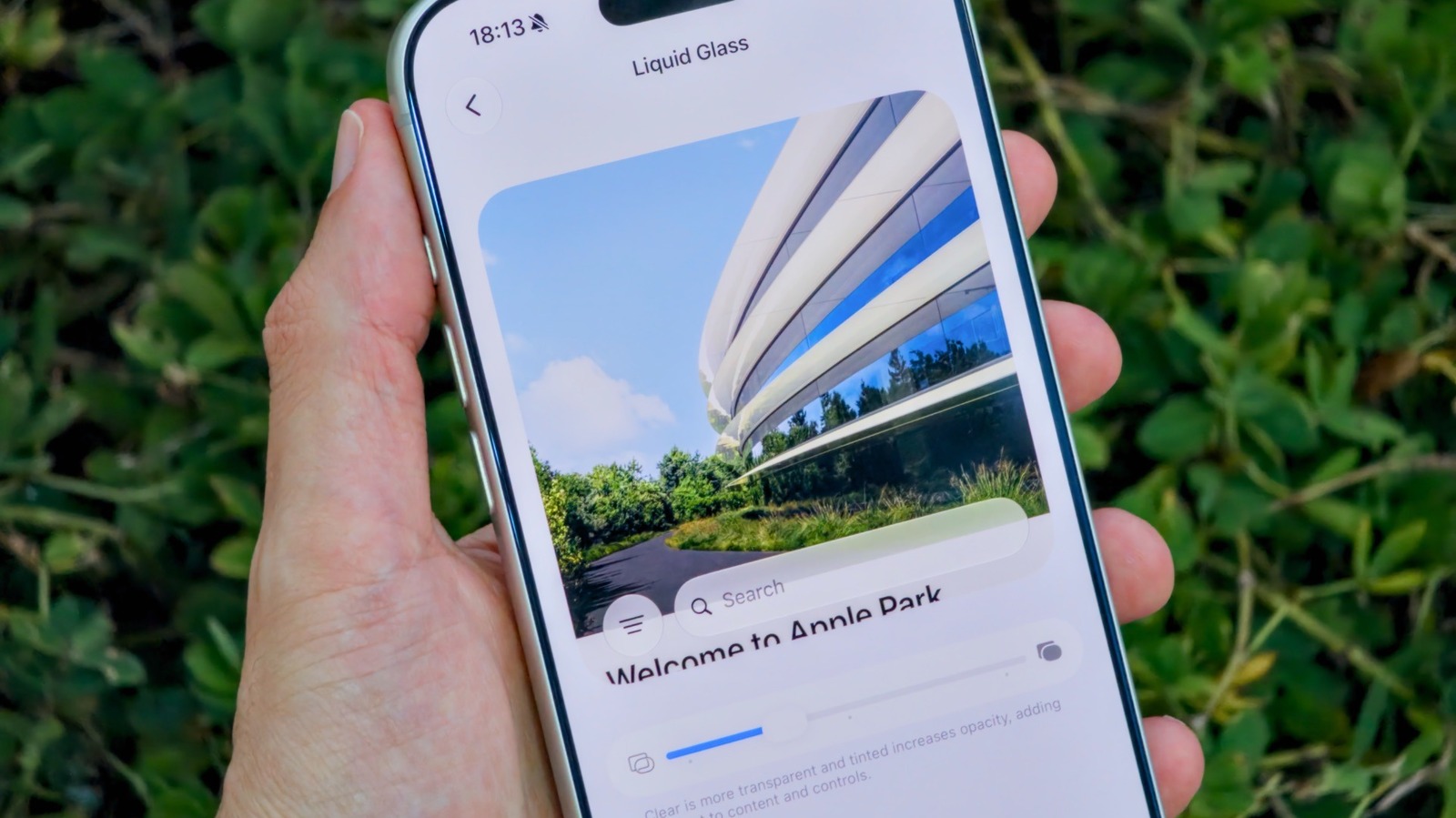
iOS 27 introduces a much-needed slider to adjust the controversial Liquid Glass effect on iPhones, providing users with granular control over opacity and contrast. This update, compatible with iPhone 11 and newer, addresses long-standing readability concerns and enhances user customization.
The Party's Back! Tales from '85 Unleashes Season 2 on Netflix
Stranger Things: Tales from '85, the animated spin-off, returns to Netflix on September 17th with 10 new episodes. Set between seasons 2 and 3 of the original live-action series, Season 2 sees The Party facing ghostly apparitions and strange creatures around Valentine's Day. While it received mixed reactions initially, it retains the 80s vibe and core characters.