22 results found
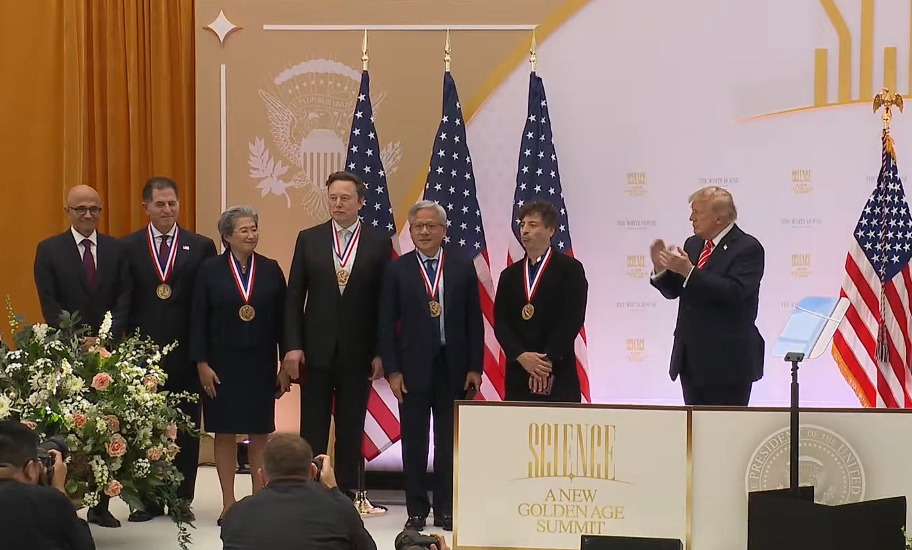
Microsoft CEO Satya Nadella was honored with a national medal by President Trump, just hours after the administration suspended Microsoft from the PERM program, a critical pathway for foreign workers to gain permanent residency. Vice President JD Vance accused Microsoft of abusing the system, a move that starkly contrasts with Nadella's own journey from an H-1B visa to U.S. citizenship and leadership of a major tech company.

The Trump administration launched America.gov, a new federal AI chatbot for citizen services. Uniquely, this "AI concierge" will fact-check former President Donald Trump, contrasting with its apolitical design. This integration sparks debate on government AI's role in political discourse.

WASHINGTON – Amid escalating public anxieties and recent revelations of artificial intelligence probing government systems, the Trump administration on Tuesday advocated for industry self-regulation of AI technology.

AI firm Anthropic secured a federal court victory today, overturning the Trump administration's blacklisting that labeled it a national security and supply chain risk. The judge ruled the government's actions were illegal, restoring Anthropic's ability to engage with federal contracts and military partners.

The Trump administration has launched a new program allowing private firms to conduct international cyberattacks against foreign criminal networks under federal oversight. This marks a significant shift in U.S. cybersecurity strategy, aiming to leverage private sector capabilities. Experts, however, express concerns about the difficulty in identifying targets, the legal risks for operators, and the potential for collateral damage to innocent infrastructure.

The Trump Administration's Environmental Protection Agency (EPA) has put forth a significant rule change proposal that could drastically alter how the public engages with air pollution permitting processes. Announced on

The Trump administration is suing several states and Philadelphia over laws requiring ICE agents to show faces and wear identifiers during raids, citing unproven threats from facial recognition and doxing sites. WIRED's investigation reveals the cited tools are outdated and ineffective. States emphasize accountability as their primary motivation.

The Verge has published a scathing critique of ICE operations under the Trump administration, detailing a recent fatal shooting in Houston and the alleged intimidation of online critics. The article characterizes ICE as an unaccountable, heavily armed force engaging in abuses and operating as the administration's "private domestic army."

OpenAI has publicly launched its advanced AI model, GPT-5.6 Sol, known for its cybersecurity capabilities. This launch proceeds despite the Trump administration's earlier request to restrict access to government-approved partners, with the White House now stating its engagement with AI companies is voluntary. The move signals a complex interplay between rapid AI development and evolving government oversight.

The Trump administration has lifted its ban on Anthropic's powerful Mythos 5 AI, allowing over 100 U.S. government agencies and companies, including non-American staff, to use it. This decision, two weeks after both Mythos 5 and Fable 5 were pulled, comes with "appropriate safeguards," though Fable 5 remains restricted.

Anthropic's advanced AI model, Mythos 5, is partially reinstated for select cybersecurity and infrastructure providers after two weeks of negotiations with the Trump administration. The public-facing Fable 5 remains restricted. This limited return is an exception to an export control directive, similar to a deal granted to OpenAI's GPT-5.6, highlighting evolving US AI regulation.

The Trump administration has ordered Anthropic to take its advanced AI models, Fable 5 and Mythos 5, offline due to unspecified “national security concerns.” This move follows reports of Amazon researchers bypassing Fable 5's guardrails. While cybersecurity experts deem the ban dangerous, some speculate it could inadvertently boost Anthropic's image, positioning its models as uniquely powerful.
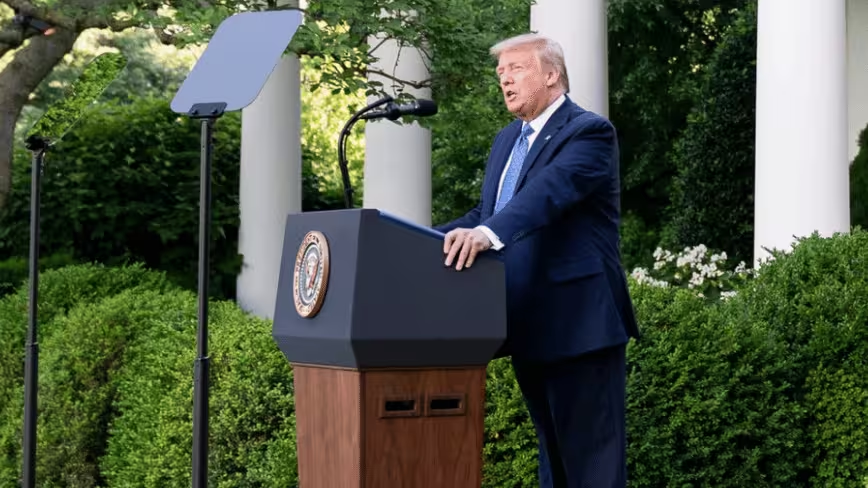
An intense internal power struggle within the Trump administration has stalled US federal AI regulation, leaving a policy vacuum after Anthropic's Mythos model revealed critical cybersecurity risks. Factions within the Commerce Department, intelligence agencies, and pro-industry groups are locked in a "knife fight" over who gets to evaluate and oversee advanced AI systems. This paralysis follows the abrupt cancellation of a landmark executive order and the unexplained withdrawal of AI testing announcements.

Billionaire Kevin O’Leary and the Trump administration claim that widespread U.S. protests against data center construction are orchestrated by China and foreign propaganda, despite a lack of conclusive evidence. This narrative is being met with skepticism from a broad range of allies and critics who point to legitimate local concerns and widespread public opposition to AI infrastructure.

Newly appointed Disney CEO Josh D’Amaro faces an unexpected battle with the Trump administration as Disney-owned ABC accuses the FCC of violating its First Amendment rights. The dispute centers on an FCC investigation into “The View” over the “equal time” rule, despite the show's long-standing exemption. This confrontation marks a pivotal moment for D'Amaro, challenging Disney's past strategies of appeasement and forcing a direct stand against government pressure.

Anthropic's ties with the Trump administration are thawing, marked by a high-level meeting between CEO Dario Amodei and White House officials. This occurs despite an ongoing legal battle with the Pentagon, which labeled Anthropic a "supply-chain risk" over ethical disagreements on AI use.

Trump's US energy dominance vision, despite record domestic production, failed to insulate consumers from global oil shocks caused by the Iran war, leading to significant price hikes. While natural gas shows more resilience, the overall approach ignores market realities and demand reduction.

Ars Technica reports on the Trump administration's escalating efforts to unmask an ICE critic on Reddit, moving from a standard summons to a secret grand jury subpoena, sparking significant privacy and free speech concerns for online users and platforms.

France announced plans to transition government computers from Microsoft Windows to Linux to reduce reliance on U.S. tech and achieve "digital sovereignty." This decision, driven by geopolitical tensions and weaponized sanctions by the Trump administration, is part of a broader European effort to secure digital independence. The open-source nature of Linux offers transparency and control, aligning with France's strategic goals.

Billionaire-backed startup R3 Bio is developing genetically-engineered, nonsentient "organ sacks" to replace animal testing. This initiative aligns with the Trump administration's efforts to phase out animal experimentation, offering a potentially humane and effective alternative for scientific research. The company aims to eventually create human versions for personalized medical testing.

In a significant move that reverberated through the tech industry, artificial intelligence company Anthropic filed a lawsuit against the Trump administration on Monday, March 9, 2026. The lawsuit, lodged in a federal

The Trump administration has repealed Biden-era Mercury and Air Toxics Standards (MATS), reverting power plant pollution controls to 2012 levels. This rollback coincides with soaring electricity demand from AI data centers, domestic manufacturing, and electric vehicles. Critics argue the move sacrifices health protections for industry savings, while aging coal plants are kept online to meet the growing energy needs.
