
Trump's Energy Dominance Vision: Flailing Under Geopolitical Shock
Trump's US energy dominance vision, despite record domestic production, failed to insulate consumers from global oil shocks caused by the Iran war, leading to significant price hikes. While natural gas shows more resilience, the overall approach ignores market realities and demand reduction.
Verdict
President Trump's vision for US energy dominance, while boasting record domestic oil and gas production, has demonstrably failed to insulate American consumers from the harsh realities of global energy market disruptions. Despite assurances of self-sufficiency, recent geopolitical events, particularly the conflict with Iran, reveal a deep-seated vulnerability that translates directly into significant economic burden for households and businesses across the nation. This approach prioritizes production over strategic demand reduction and robust international cooperation, leaving the US tethered to volatile global prices.
The Vision Unpacked: Grand Promises, Global Realities
At its core, Trump's energy vision asserts that the United States, as the world's largest oil and gas producer, possesses enough domestic fuel to remain impervious to international market chaos. This perspective suggests that the nation needs nothing from external sources, even from critical chokepoints like the Strait of Hormuz. However, the practical application of this vision has been starkly different from the rhetoric.
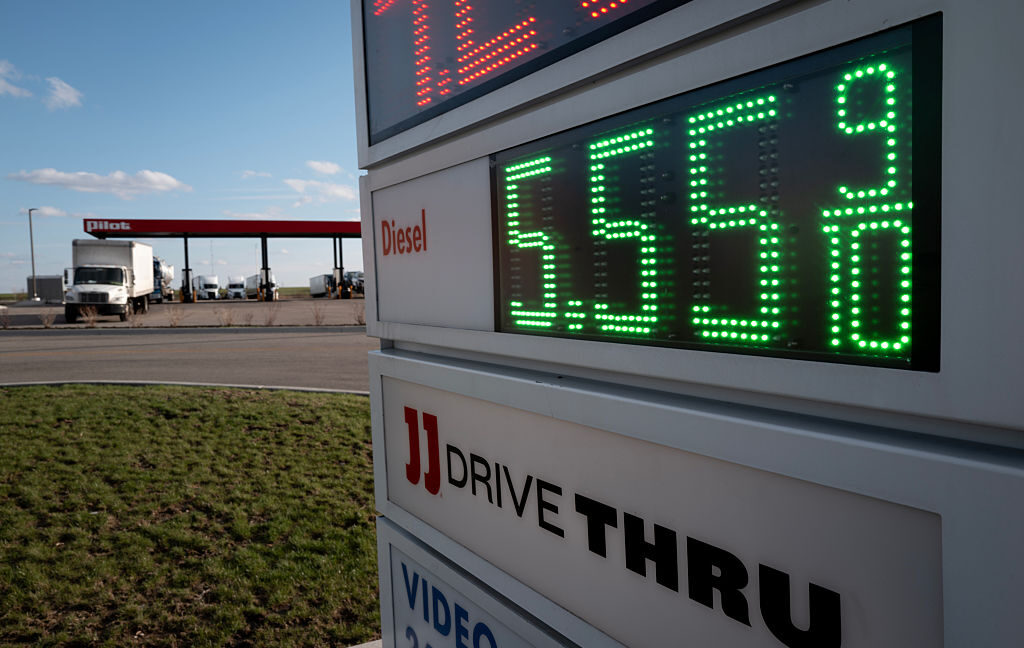
Following the attack on Iran and the subsequent disruption in the Strait of Hormuz, US households paid an estimated $8.4 billion more for gasoline in just one month. Gasoline prices surged past $4 per gallon for the first time in four years, with some regions, like the West Coast, experiencing averages over $5.40. This directly contradicts the notion of the US being unaffected by global supply issues.
Key Details and Performance:
- Oil Production vs. Consumption: While US crude oil production has indeed reached record highs, approximately 13 million barrels per day (bpd), the nation's appetite for petroleum products far exceeds this, consuming around 20 million bpd. The gap is covered by imports, totaling 6.1 million bpd last year, with a notable percentage originating from the Persian Gulf. This highlights a fundamental reliance that the vision overlooks.
- Refinery Needs: A crucial detail often missed is that US refineries, particularly on the Gulf Coast and in California, are configured to process specific types of crude oil—often heavier, lower-quality 'heavy, sour crude' which was cheaper and abundant decades ago. The domestic fracking boom, however, largely yields 'light, sweet crude.' This mismatch necessitates continued imports of certain crude types, making the US deeply integrated into a global trade network where higher-quality domestic crude is often swapped for required imported varieties.
- Price Volatility: The immediate aftermath of the Iran conflict saw global crude oil prices (Brent) spike from around $60 at the start of the year to $103 per barrel in March, with projections to reach $115 before a potential decline. US oil prices (West Texas Intermediate) followed a similar trajectory. This directly demonstrates that despite record domestic output, US consumers compete in the same global market and are subject to the same price mechanisms.
Natural Gas: A Glimmer of Insulation
In contrast to oil, the US natural gas market presents a brighter picture regarding insulation from global shocks. The domestic natural gas market is less integrated internationally, and the US boasts an abundant supply. Consequently, American consumers have not experienced shortages or significant price spikes in natural gas due to the Iran conflict.
Globally, however, the situation is dire. Asia, heavily reliant on liquefied natural gas (LNG) from the Persian Gulf (80-90% of its supply), faced a full-blown crisis, with gas rationing in India, reduced work weeks in the Philippines, and university closures in Bangladesh. The Strait of Hormuz closure stranded tankers, and missile strikes severely damaged Qatar's Ras Laffan LNG terminal, potentially crippling 17% of its capacity for up to five years. While the US aims to expand its LNG export capacity, existing terminals are at full utilization, and building new, complex facilities takes years, limiting its immediate global impact.
This insulation in natural gas is often unnoticed by American consumers, as other factors like utility capital build-out, data center demands, and climate resilience efforts are simultaneously driving up electricity prices, making it harder to discern the relative stability of natural gas costs.
The Overlooked Alternative: Clean Energy and True Security
The article implicitly highlights an alternative path to energy security through the lens of clean energy. While not a central tenet of Trump's vision, the conflict underscores the strategic advantages of reducing fossil fuel dependence. China, for instance, has demonstrated a degree of resilience by leveraging its leadership in clean energy technology. With over half of new car sales being electric vehicles, China has reportedly displaced about 1.7 million bpd of oil consumption—roughly 10% of its total petroleum use. This strategic pivot towards EVs and domestic clean energy infrastructure provides a buffer against global oil price shocks.
Experts also warn that while transitioning to clean energy may reduce reliance on fossil fuels, it introduces new geopolitical vulnerabilities, as seen with China's weaponization of rare-earth element exports. This suggests that the solution is not merely a shift in energy source but also requires robust international cooperation and a broader strategy of reducing overall energy demand.
Design Flaws and User Experience Impact
From a design perspective, Trump's energy dominance vision suffers from a critical flaw: it prioritizes raw production figures over the intricate realities of global supply chains and diversified energy needs. It creates a narrative of invulnerability that simply doesn't hold up when faced with real-world market dynamics.
The user experience for American consumers has been overwhelmingly negative concerning oil. Skyrocketing gasoline, diesel, and jet fuel prices have had a tangible impact, increasing household expenses, raising costs for goods and food (due to higher trucking costs), and leading to flight cancellations by airlines facing billions in additional fuel expenses. This direct impact on daily life underscores the disconnect between the presented vision and the lived experience.
Pros and Cons
Pros:
- Record Domestic Production: The US has achieved unprecedented levels of domestic oil and gas extraction.
- Natural Gas Insulation: The domestic natural gas market is largely shielded from global price shocks, providing stability for electricity generation.
Cons:
- Failure to Insulate from Oil Shocks: Despite high production, US consumers are deeply affected by global oil price volatility.
- Significant Economic Burden: The vision has led to billions in additional costs for American households and businesses.
- Ignores Refinery Realities: Fails to account for the specific crude oil requirements of US refineries, necessitating imports.
- Lack of Demand-Side Strategy: The focus on supply overlooks the potential for energy independence through demand reduction.
- Infrastructure Vulnerabilities: Regional infrastructure limitations (e.g., West Coast) exacerbate price spikes.
Buying Recommendation
For any nation considering an energy strategy akin to "Trump's vision for US energy dominance," our recommendation is to proceed with extreme caution and significant modifications. While maximizing domestic production offers a degree of resource security, it is insufficient to truly insulate a major global consumer from market shocks. A truly robust and sustainable energy strategy must encompass several critical elements:
- Demand Reduction: Actively pursue policies that dramatically reduce overall oil consumption through efficiency improvements and promotion of electric vehicles and public transit.
- Infrastructure Modernization: Invest in flexible refinery capabilities and resilient regional supply chains to better utilize diverse crude types and reduce regional dependencies.
- Clean Energy Acceleration: Aggressively transition to clean energy sources not just for climate goals, but as a fundamental pillar of national security to diversify away from volatile fossil fuel markets.
- International Cooperation: Recognize the interconnectedness of global energy markets and foster strong international alliances to manage supply disruptions and develop shared energy security frameworks.
Without these complementary strategies, a production-heavy "dominance" vision will likely continue to leave consumers vulnerable to the next geopolitical tremor.
FAQ
Q: Does record US oil production mean we are truly energy independent?
A: While the US produces a record amount of oil and exports more crude and petroleum products than it imports, it is not truly independent. The nation still imports significant amounts of crude oil to meet specific refinery needs and remains deeply integrated into the global market. This means US consumers pay global prices, making them vulnerable to international supply shocks.
Q: Why did the Iran conflict impact US gasoline prices so much if the US doesn't rely on Iran's oil?
A: The impact stems from the global nature of the oil market. The Strait of Hormuz is a critical chokepoint for 20% of the world's oil and LNG. Disruptions there affect global supply, driving up the international price of crude. Since the US is part of this global market, even if it doesn't directly import from Iran, it still competes for the same internationally priced oil, leading to higher prices at the pump.
Q: What is the best way for the US to achieve true energy security and independence?
A: According to experts, true energy security involves more than just maximizing production. It requires a multi-pronged approach: dramatically reducing demand for oil through efficiency and clean energy adoption, investing in flexible energy infrastructure, and fostering international cooperation to manage shared vulnerabilities. Diversifying energy sources and reducing overall consumption are seen as key to reducing susceptibility to global geopolitical risks.
Related articles
Android 17 QPR2 Beta 7.1: The Performance Relief You've Been Waiting
Android 17 QPR2 Beta 7.1: Finally Fixing the QPR1 Performance Woes Verdict: Android 17 QPR2 Beta 7.1 is a crucial and highly anticipated software update for Google Pixel users, specifically targeting and resolving the

DJI Solo Video Setups: Smart Choices for Lone Creators
This review delves into DJI's recommended solo video setups, highlighting the Osmo Pocket 3 Creator Combo as a top pick for its integrated camera, gimbal, and mic. It also covers stabilizers like the Osmo Mobile 8 and RS 4, and the DJI Mic Mini series for enhanced audio, providing honest pros, cons, and clear buying advice.

in-depth: Chicago-Area Cops Helped HSI Spy on Minnesota Anti-ICE
Chicago-area law enforcement, including local police and HSI agents, conducted undercover surveillance on Minnesota anti-ICE activists at an April 2, 2022, talk in Chicago. This operation was part of a federal conspiracy probe into 15 Minnesota activists facing felony charges related to immigration enforcement resistance. Civil liberties advocates have condemned the surveillance as a troubling intrusion into protected political activity.

Ars Technica's Rocket Report: Your Essential Space Industry Briefing
Quick Verdict Ars Technica's Rocket Report, presented by veteran space reporter Stephen Clark, offers an invaluable and meticulously organized weekly (or similar frequency, implied by "Edition 9.15") digest of the most

Apple iPhone Duo: A Daring Debut with Notable Compromises
Apple's highly anticipated iPhone Duo, priced at $2,000, has gone on pre-order. While hailed as "Apple's most exciting device in a decade" for its innovative foldable design and immersive display, it comes with significant drawbacks like the absence of FaceID and a premium camera.

KDE Plasma 6.8: A Future-Focused 30th Anniversary Update
Quick Verdict KDE Plasma 6.8, arriving as the "30th Anniversary Edition," is a pivotal release that decisively pushes the desktop environment into the future. With a definitive farewell to native X11 sessions and a