
policy: AI firm Anthropic wins case challenging Pentagon
AI firm Anthropic secured a federal court victory today, overturning the Trump administration's blacklisting that labeled it a national security and supply chain risk. The judge ruled the government's actions were illegal, restoring Anthropic's ability to engage with federal contracts and military partners.

Artificial intelligence powerhouse Anthropic has successfully overturned a major government blacklisting, with a federal judge ruling today that the Trump administration illegally branded the company a national security and supply chain risk. The landmark decision, delivered on August 27, 2026, restores Anthropic's ability to conduct business with the entire U.S. government and its military contractors, ending a contentious ban that had been in place since earlier this year.
Judicial Intervention Halts Blacklisting
The federal court's ruling marks a significant victory for Anthropic, the developer behind the prominent Claude chatbot. The judge found that government officials had acted illegally in labeling the San Francisco-based AI company as a "supply chain risk," a designation that had effectively shut Anthropic out of lucrative federal contracts and partnerships across the defense sector. This judicial intervention underscores the increasing scrutiny on governmental processes when dealing with critical emerging technologies like artificial intelligence.
The blacklisting, initiated by the Trump administration, had been a substantial blow to Anthropic's operational scope, preventing it from engaging in any federal dealings. Such a broad prohibition could have stifled growth and innovation for the rapidly expanding AI firm, known for its focus on AI safety and development. The court's decision not only clears Anthropic's name but also opens doors for potential collaborations within the public sector that were previously off-limits.
Background of a Contentious Ban
The dispute began earlier this year when the Trump administration designated Anthropic as a "national security risk," an action that triggered the widespread government and military contractor ban. While the specifics of the administration's rationale for this classification were not detailed in the court's public announcement, the impact was immediate and severe, cutting Anthropic off from a vast market. Companies branded with such labels face immense hurdles, often struggling to regain trust and access to vital government contracts.
Anthropic's legal challenge contended that the blacklisting was unfounded and lacked proper legal justification, directly questioning the government's authority and methods in assessing perceived national security threats from technology companies. The federal judge's agreement with Anthropic's position signals a critical examination of how the executive branch utilizes such powerful designations, especially when impacting cutting-edge industries.
Implications for Tech and Government Procurement
This ruling carries substantial implications beyond Anthropic, potentially setting a precedent for other technology firms operating in sensitive sectors. It reinforces the principle that government agencies must adhere to legal frameworks and provide adequate justification when imposing severe restrictions on private companies. For the burgeoning artificial intelligence industry, which often finds itself at the intersection of innovation and national security concerns, the decision provides a degree of legal clarity and protection against arbitrary governmental actions.
The reversal of the Pentagon's blacklisting could encourage greater dialogue and more transparent procedures between government bodies and private tech developers. It highlights the importance of due process, even when national security is invoked, ensuring that companies have avenues to challenge designations that could threaten their very existence in certain markets. The ability of an AI firm to successfully contest such a powerful governmental decision is a testament to the evolving legal landscape surrounding artificial intelligence and its integration into national infrastructure.
Anthropic's victory may also prompt federal agencies to reassess their internal protocols for evaluating technology firms, particularly those whose innovations are deemed critical for defense and intelligence. The outcome suggests a need for robust, legally sound frameworks for assessing "supply chain risks" and "national security risks" in an era of rapid technological advancement and increasing geopolitical competition. For Anthropic, the path is now clear to re-engage with government opportunities, potentially integrating its advanced AI capabilities, like the Claude chatbot, into various federal initiatives.
FAQ
Q: What was the core of the federal judge's ruling regarding Anthropic?
A: A federal judge ruled that the Trump administration illegally labeled AI firm Anthropic as a "national security risk" and "supply chain risk." This decision overturned the government-wide blacklisting of the company.
Q: What immediate impact does this ruling have on Anthropic?
A: The ruling immediately lifts the ban, allowing Anthropic to resume doing business with the entire U.S. government and military contractors, from which it had been blocked since earlier this year.
Q: Why is this decision significant for the broader technology industry?
A: This decision sets a precedent by demonstrating that technology companies can successfully challenge governmental blacklistings based on national security concerns, emphasizing the importance of legal justification and due process even in sensitive areas. It may lead to more transparent procedures for evaluating tech firms in critical sectors.
Related articles
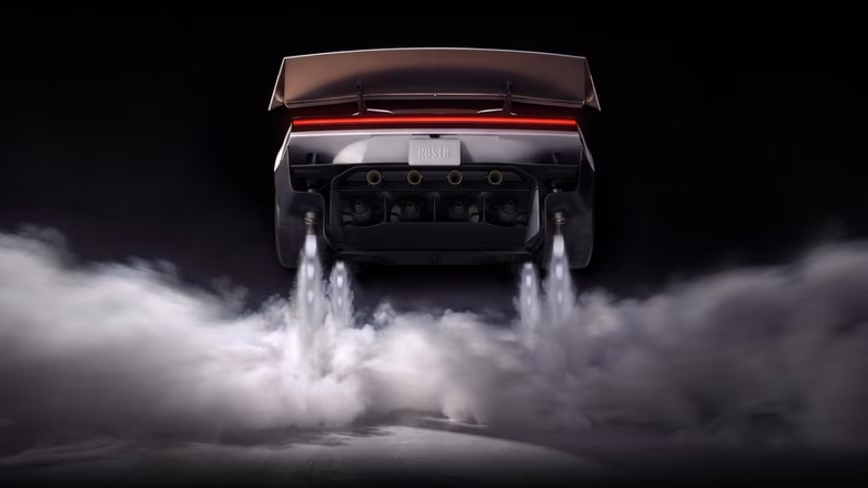
Tesla Unveils Thruster-Equipped Roadster, 2028 Production Targeted
Tesla has unveiled its second-generation Roadster, featuring cold-gas thrusters co-developed with SpaceX, enabling it to jump and flip. The electric sports car demonstrated 0-60mph in an astonishing 0.81 seconds, with production targeted for 2028. This highly anticipated reveal also serves as a key recruitment tool for Tesla's ambitious AI and robotics initiatives.

AI's Confidence vs. Formal Methods' Rigor: Design Flaws & Verification
While AI accelerates code generation, formal methods remain critical for ensuring system correctness. Languages like TLA+ and tools like Quint enable developers to model and verify system designs before coding, catching subtle flaws. Quint makes formal methods more accessible with developer-friendly syntax and executability. This approach is vital for verifying AI-generated code through trace validation and model-based testing, ensuring reliability against real-world data.

Amazon Prime Video Launches AI-Powered Prime 360 for NBA Coverage
Amazon Prime Video is elevating its NBA coverage with the introduction of Prime 360, an AI-powered replay system offering immersive, 'fly through' views of the action. Kicking off its second season, Prime Video also adds Yahoo fantasy integration and gains exclusive Eastern Conference Finals rights, expanding its tech-driven sports broadcast. The new features aim to deliver a unique and interactive viewing experience for basketball fans.
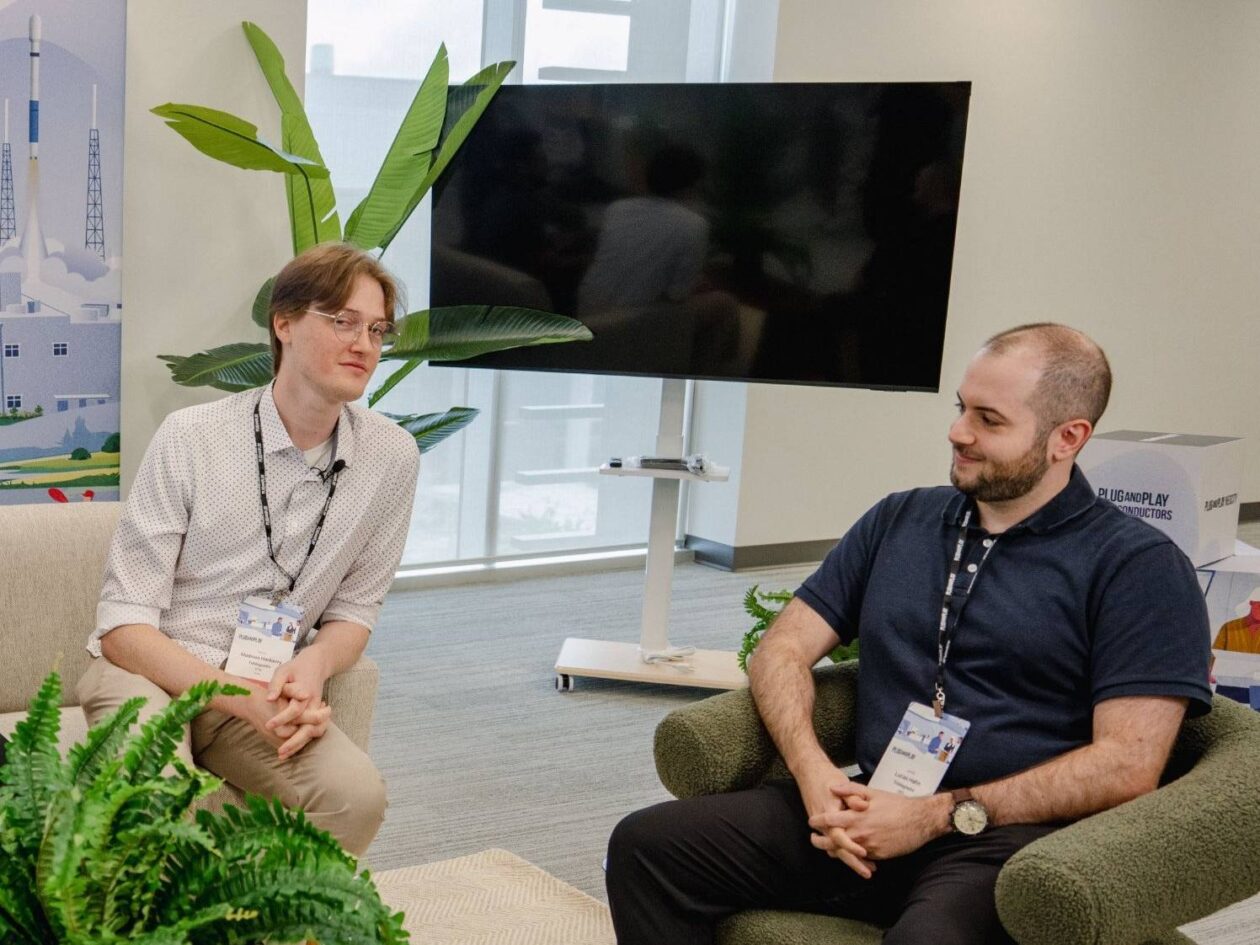
regional: A two-person Seattle startup lands $1M to reinvent
Seattle startup TriMagnetix has secured $1 million to develop semiconductor chips that consume 800 times less energy and are radiation-resistant. The two-person company, leveraging nanomagnetic technology, is targeting space applications and data centers. With new funding and key partnerships, TriMagnetix aims for commercial sales within a year.

Kojima Compares Divisive New Film 'Digger' to MGS2's Prescient Vision
Gaming icon Hideo Kojima has praised the divisive 2026 film *Digger*, drawing intriguing parallels to his own prophetic game, *Metal Gear Solid 2*. Both works, he explains, uniquely explore the dangers of misinformation and a fragmented digital reality, anxieties he shares with *Digger*'s director, Alejandro González Iñárritu.
%20102026%20top%20art%20SOURCE%20Govee.jpg)
in-depth: The Best Permanent Outdoor Lights (2026): Govee, Eufy
WIRED, a leading voice in technology journalism, has just released its updated guide for 2026 on the best permanent outdoor lights, spotlighting top contenders Govee, Eufy, and Cync. These innovative eave lights are