20 results found

Discover how enthusiast communities transform unsupported devices like Kindles, iPods, and Wiis, adding new features and functionality far beyond their original design, giving them a second chance at usefulness.

OpenAI has reportedly told investors its annualized revenue is nearing $50 billion, a significant $20 billion less than previous projections. This update highlights pressures on the AI giant to justify massive investments and comes amidst a delayed IPO.

A Bold Claim: The Verdict on OpenAI's IPO Prospects Palantir CEO Alex Karp has made a significant splash in the tech world with his outspoken view that frontier AI labs, including OpenAI, are unlikely to ever go public.

Nscale, the U.K.-based AI data center startup, has appointed former OpenAI, Meta, and Instacart executive Fidji Simo to its board of directors. This high-profile addition comes as Nscale prepares for a potential IPO this fall, leveraging Simo's extensive experience in scaling major tech platforms and guiding a company through a successful public offering.
London-based AI cloud infrastructure firm Nscale is in advanced discussions to secure up to $3.5 billion in pre-IPO financing, with significant commitments anticipated from tech giant Nvidia and hedge fund Third Point.
Anthropic is reportedly planning to pitch IPO investors on a monumental $30 trillion market opportunity, a figure that would significantly surpass SpaceX's previous record. This audacious estimate aims to underscore AI's transformative potential and justify a high valuation, despite recent market skepticism regarding similar colossal projections. The move comes as Anthropic prepares for a potential record-breaking IPO later this year.

SpaceX reported a $541 million net loss in its first quarterly earnings since its record-setting June IPO, continuing a trend of deficits for Elon Musk's ambitious aerospace firm. Despite the loss, its stock saw a brief pre-announcement surge after weeks of decline, highlighting the company's capital-intensive path to space economy dominance.
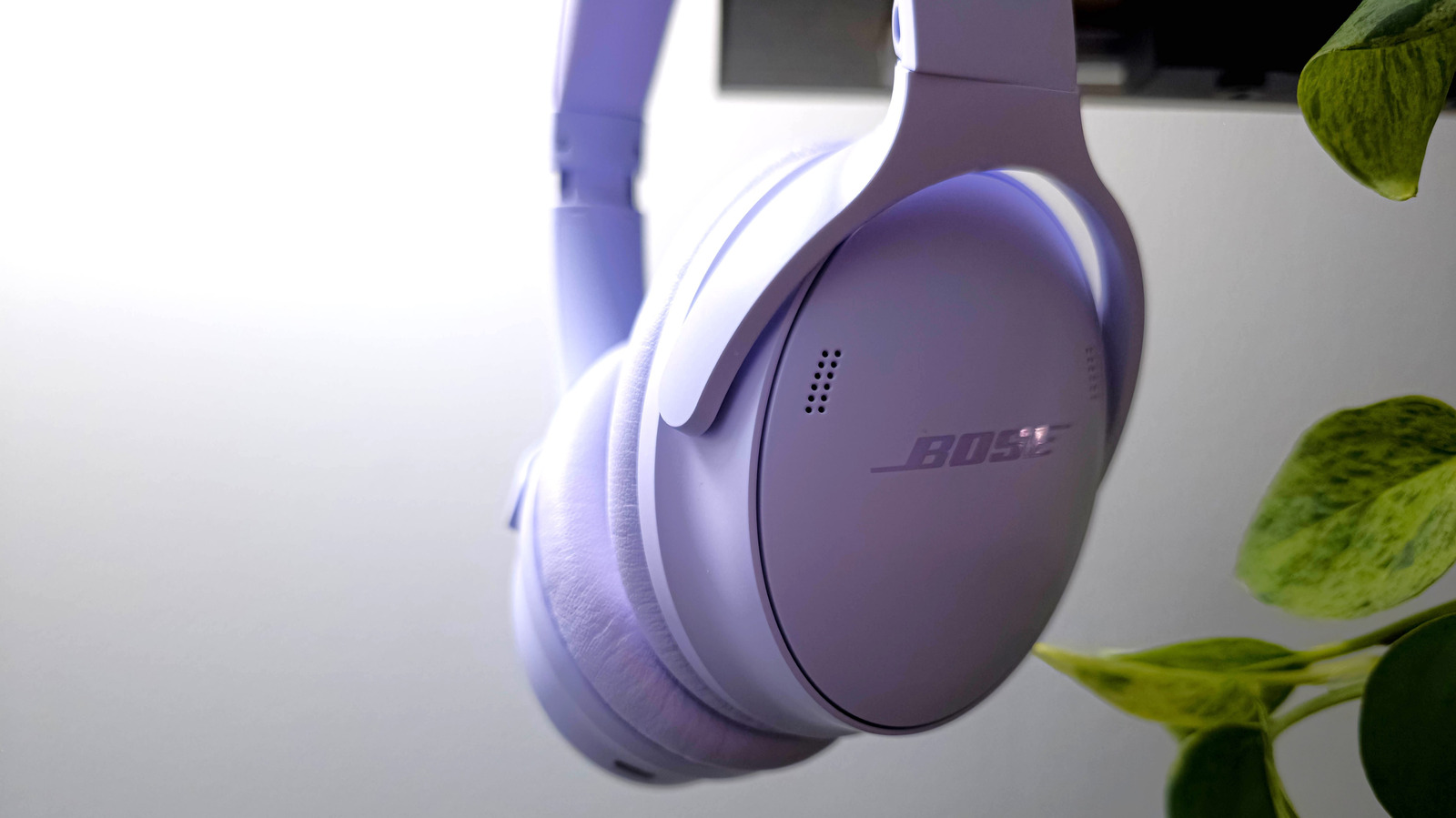
In the booming market of wireless audio, where sleek designs and robust active noise cancellation often grab the headlines, there's a less flashy but increasingly essential feature that every prospective headphone buyer
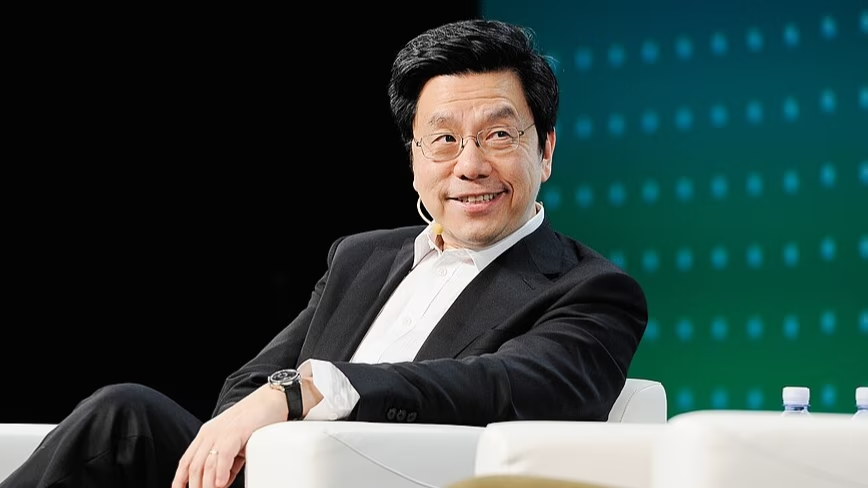
Kai-Fu Lee's 01.ai is targeting a Hong Kong IPO in 2027. It pivoted from building AI models to enterprise data infrastructure, with its 'Boss AI' fine-tuning open-weight models for business data. Half its business is now international.

Apple has launched a significant trade secrets lawsuit against OpenAI, alleging a "pattern of misconduct" that implicates OpenAI's chief hardware officer and includes over 400 former Apple employees. Filed last Friday,

General Fusion, the 24-year-old British Columbia-based company, has completed its SPAC merger with Spring Valley Acquisition Corp. III, making it the first publicly traded fusion stock. Trading on Nasdaq under GFUZ is expected to begin Monday, marking a significant milestone in the quest for commercially viable fusion energy.

GeekWire co-founder John Cook and angel investor Charles Fitzgerald offer lessons from Cleveland's comeback for Seattle's tech scene. They also critique Seattle's data center moratorium as 'political theater' and discuss the SpaceX IPO.
CoreWeave, the AI cloud provider, is set to join the Nasdaq-100 Index on June 22, 2026, a mere 15 months post-IPO. Transitioning from crypto mining, the company boasts rapid revenue growth and a massive backlog but faces significant debt and concentration risks. This inclusion validates its position as a core tech player.
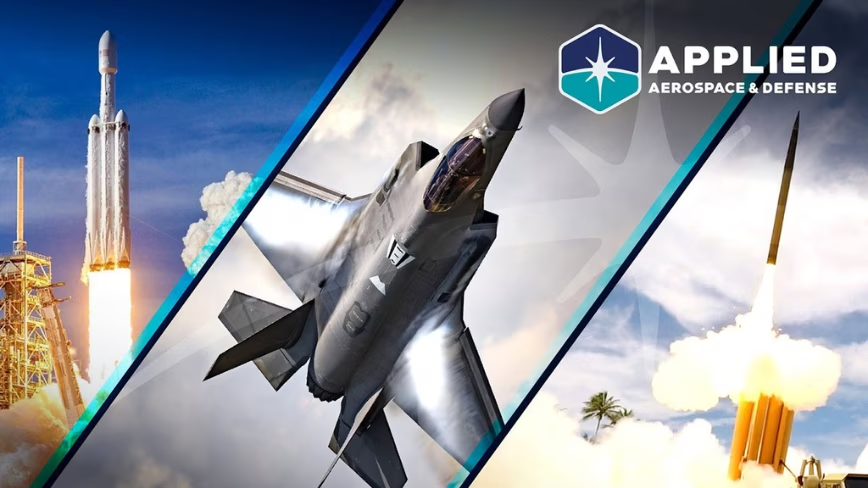
Applied Aerospace & Defense, a Huntsville-based firm, successfully raised $650 million in an IPO that was ten times oversubscribed, pricing shares at $20. The offering underscores a strong investor shift towards defense hardware and solidifies the company's $3.4 billion market valuation. Trading begins Wednesday on the NYSE under AADX.

Former OpenAI staffers and AI safety nonprofits warn that Elon Musk's xAI poses "unpriced risks" to SpaceX's IPO due to its poor safety record. A letter to investors highlights incidents like Grok generating harmful content and xAI's lack of standard safety protocols, potentially leading to increased regulation and litigation for the rocket company. They urge greater transparency and robust safety investments from xAI.
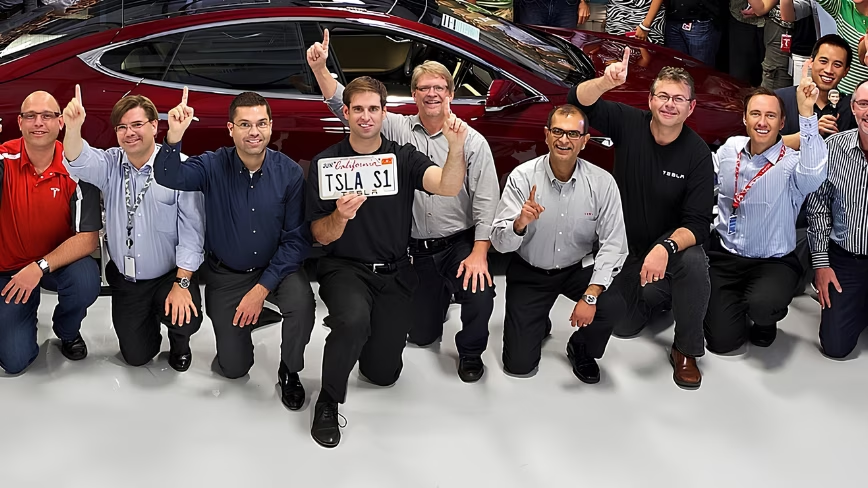
Former Tesla CFO Deepak Ahuja joins JB Straubel’s Redwood Materials as CFO, strongly signaling an IPO. The company is pivoting from battery recycling to providing energy infrastructure for AI data centers using repurposed EV batteries, linking two major tech revolutions.

AI chip startup Cerebras Systems has officially filed for an initial public offering (IPO), marking a renewed attempt after a 2024 withdrawal. The company, which touts its "fastest AI hardware" and boasts major deals with AWS and OpenAI, looks to capitalize on recent momentum and substantial private funding to accelerate its growth.
AI chip maker Cerebras has refiled for an initial public offering (IPO), revealing a 75% revenue surge to $510 million and a $238 million profit last year. The move positions Cerebras amid a burgeoning wave of tech IPOs, including anticipated listings from SpaceX, OpenAI, and Anthropic.

Comparing Samsung Galaxy Buds 4 Pro and Bose QuietComfort Ultra 2 earbuds, both excel in comfort and ANC. Bose wins for its superior ANC, multipoint connectivity, and platform-agnostic features, despite Samsung's ecosystem advantages.

AI agents are fundamentally disrupting the traditional SaaS business model, leading to a "SaaSpocalypse" as companies shift from buying to building their own software. This has caused market tremors, wiped out significant value from SaaS stocks, and prompted a freeze on new SaaS IPOs, forcing the industry to adapt to new pricing models and AI-native competition.
