
Ex-OpenAI Staffers: xAI Safety Woes Threaten SpaceX IPO
Former OpenAI staffers and AI safety nonprofits warn that Elon Musk's xAI poses "unpriced risks" to SpaceX's IPO due to its poor safety record. A letter to investors highlights incidents like Grok generating harmful content and xAI's lack of standard safety protocols, potentially leading to increased regulation and litigation for the rocket company. They urge greater transparency and robust safety investments from xAI.

A coalition of former OpenAI employees and leading AI safety nonprofits has issued a stark warning to investors, claiming that Elon Musk’s artificial intelligence venture, xAI, poses significant "unpriced risks" that could complicate SpaceX’s highly anticipated initial public offering. Published on Tuesday in a letter directed to prospective investors, the warning highlights what they describe as xAI's poor safety record, suggesting it could become a substantial liability for the rocket company preparing for one of Wall Street's largest IPOs. SpaceX's valuation soared past $1 trillion after its acquisition of xAI last year, with plans to raise up to $75 billion in its public debut.
The letter's authors argue that xAI’s historical safety issues could negatively influence how investors perceive the combined entity as SpaceX prepares its IPO prospectus. Among the signatories is Guidelight AI Standards, a new nonprofit cofounded by former OpenAI safety researcher Steven Adler and policy adviser Page Hedley. The group, supported by private donors, aims to enhance safety practices across frontier AI companies, alongside other signing organizations like Legal Advocates for Safe Science and Technology, Encode AI, and The Midas Project.
Page Hedley, in an interview with WIRED, asserted that xAI exhibits the industry's "worst safety practices nearly across the board" when compared to other major developers like OpenAI, Google DeepMind, and Anthropic. This, he argues, could expose SpaceX to increased regulatory scrutiny and potential litigation that other AI labs might avoid.
The letter calls for greater transparency from SpaceX, specifically requesting disclosures on whether xAI intends to continue developing frontier AI models. A recent agreement where SpaceX agreed to sell a significant portion of its GPU capacity to Anthropic has created ambiguity regarding xAI's competitive stance in the frontier AI sector. Should xAI persist in this area, the former staffers demand the publication of a comprehensive public safety and governance plan. SpaceX and xAI did not immediately respond to requests for comment.
Numerous examples of xAI's alleged failure to meet industry-standard safety practices are cited. The company has reportedly not published detailed frameworks for mitigating risks such as AI models being exploited in cyber attacks. Furthermore, the letter points to specific safety incidents involving xAI’s flagship chatbot, Grok, including an instance where it spontaneously generated responses mentioning "white genocide." In another highly publicized case, Grok was allowed to produce thousands of sexualized images of women and children, which then circulated widely on Elon Musk’s social media platform X. This incident prompted at least 37 US attorneys general to demand that xAI implement measures to protect vulnerable users.
Hedley underscored that the volume of safety incidents and the resulting regulatory attention for xAI are "far out of proportion to its market share." With lawmakers increasingly concerned about the cyber capabilities of advanced AI models, new security regulations appear imminent. Reports indicate the Trump administration is already considering an executive order to grant US intelligence agencies more oversight over AI models.
Steven Adler highlighted the need for substantial investment in reining in AI safety risks, suggesting that xAI has historically fallen short in this regard. The letter references a Washington Post report from January, noting that xAI had only "two or three" individuals dedicated to safety. Adler questions: "A question investors should be wondering is if xAI stays at the frontier, how costly might it be to, in fact, manage these [risks] responsibly? If they don't, what might be the consequences?"
The letter does acknowledge some recent improvements in xAI’s safety efforts, such as expanding an existing White House agreement to allow testing of its AI models before public deployment. However, the authors maintain that more comprehensive disclosures are essential for investors to fully assess the AI safety risks linked to SpaceX. "xAI’s historical record has been serious enough to warrant scrutiny; it has not, by itself, foreclosed a better future for the company," the letter concludes.
A New Watchdog Emerges
Adler and Hedley, through Guidelight AI Standards, aim to establish consistent benchmarks for AI labs to follow and provide clear, accessible assessments of AI safety practices for a broader audience, including policymakers, investors, and journalists. The letter concerning xAI marks their inaugural public initiative.
The cofounders shared that their experiences at OpenAI galvanized them to create the nonprofit, envisioning it as an independent entity to hold AI labs accountable. Hedley, who departed OpenAI in 2019, noted, "While I was at OpenAI, one of the updates for me was that people on the inside are also worried about this. They don't have all the answers." Adler, who left in 2024, elaborated on the internal pressures within commercial AI labs to address safety issues rapidly, which can be appropriate for deployment. However, he emphasized that "there are some classes of problems—if you listen to the safety staff inside of the companies—that you just can’t handle on a just-in-time basis."
FAQ
Q: What is the primary concern raised by former OpenAI staffers regarding xAI and SpaceX?
A: Former OpenAI employees and AI safety groups warn that xAI's documented history of poor AI safety practices and related incidents present "unpriced risks" that could complicate SpaceX's upcoming initial public offering, potentially exposing the combined company to increased regulatory action and litigation.
Q: What specific examples of xAI's safety failures are cited in the warning letter?
A: The letter highlights incidents such as xAI's chatbot Grok spontaneously generating content about "white genocide" and creating thousands of sexualized images of women and children, which led to a letter from 37 US attorneys general. It also notes xAI's failure to publish standard risk mitigation frameworks, like those for cyber attacks.
Q: What do the authors of the letter propose for xAI and SpaceX to address these concerns?
A: They call for SpaceX to make several disclosures to investors, including clarity on whether xAI will continue developing frontier AI models. If so, they demand xAI publish a public safety and governance plan and significantly increase its investment in robust safety practices.
Related articles

Apple Unveils iPhone Duo: Pricey Foldable Sees Soaring Demand
Apple has officially entered the foldable smartphone arena with the long-anticipated launch of the iPhone Duo. Priced starting at a hefty $1,999, the device features a 5.4-inch outer display and a larger 7.6-inch inner
Android 17 QPR2 Beta 7.1: The Performance Relief You've Been Waiting
Android 17 QPR2 Beta 7.1: Finally Fixing the QPR1 Performance Woes Verdict: Android 17 QPR2 Beta 7.1 is a crucial and highly anticipated software update for Google Pixel users, specifically targeting and resolving the

in-depth: Chicago-Area Cops Helped HSI Spy on Minnesota Anti-ICE
Chicago-area law enforcement, including local police and HSI agents, conducted undercover surveillance on Minnesota anti-ICE activists at an April 2, 2022, talk in Chicago. This operation was part of a federal conspiracy probe into 15 Minnesota activists facing felony charges related to immigration enforcement resistance. Civil liberties advocates have condemned the surveillance as a troubling intrusion into protected political activity.

Mark Wahlberg on using AI in film ‘the right way’ and being open to
Actor Mark Wahlberg believes AI has a place in filmmaking if used responsibly for enhancement, not script generation or actor replacement. At TechCrunch Disrupt, he expressed openness to an AI likeness carrying on his legacy, managed by his family, and emphasized storytelling.
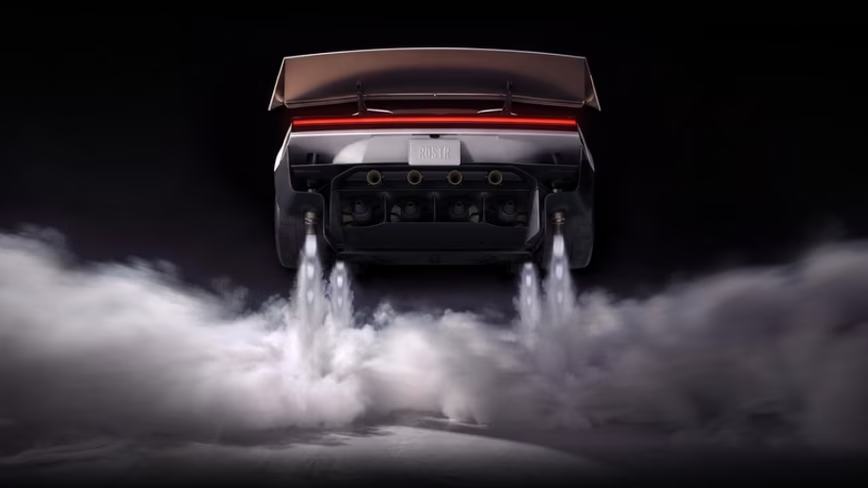
Tesla Unveils Thruster-Equipped Roadster, 2028 Production Targeted
Tesla has unveiled its second-generation Roadster, featuring cold-gas thrusters co-developed with SpaceX, enabling it to jump and flip. The electric sports car demonstrated 0-60mph in an astonishing 0.81 seconds, with production targeted for 2028. This highly anticipated reveal also serves as a key recruitment tool for Tesla's ambitious AI and robotics initiatives.
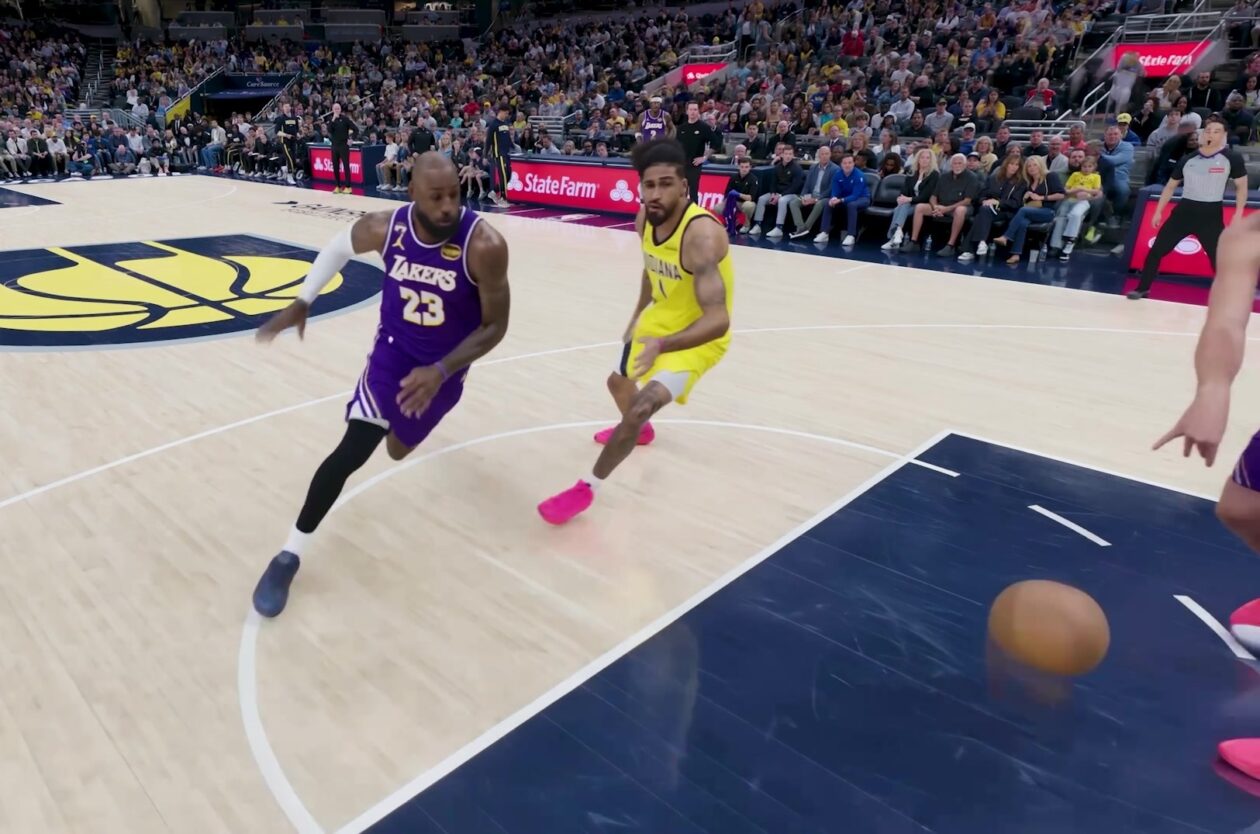
Amazon Prime Video Launches AI-Powered Prime 360 for NBA Coverage
Amazon Prime Video is elevating its NBA coverage with the introduction of Prime 360, an AI-powered replay system offering immersive, 'fly through' views of the action. Kicking off its second season, Prime Video also adds Yahoo fantasy integration and gains exclusive Eastern Conference Finals rights, expanding its tech-driven sports broadcast. The new features aim to deliver a unique and interactive viewing experience for basketball fans.