
Apple Slaps OpenAI with Trade Secrets Lawsuit Amid IPO Rumors
Apple has launched a significant trade secrets lawsuit against OpenAI, alleging a "pattern of misconduct" that implicates OpenAI's chief hardware officer and includes over 400 former Apple employees. Filed last Friday,

Apple has launched a significant trade secrets lawsuit against OpenAI, alleging a "pattern of misconduct" that implicates OpenAI's chief hardware officer and includes over 400 former Apple employees. Filed last Friday, this legal challenge emerges at a critical juncture for OpenAI, which is reportedly considering an initial public offering (IPO) as early as later this year, making the timing particularly unfavorable for the burgeoning AI powerhouse.
The complaint filed by Apple describes extensive alleged misappropriation of proprietary information, reaching the highest echelons of OpenAI’s hardware division. The sheer volume of former Apple staff now employed by OpenAI – more than 400 individuals – forms a central part of Apple's allegations, suggesting a deliberate strategy to leverage confidential knowledge. OpenAI's public response to these serious claims has, thus far, been cautiously worded and non-committal.
The implications of this lawsuit extend beyond the courtroom, casting a shadow over OpenAI’s ambitious plans. With reports circulating about a potential IPO in the near future, a high-profile legal battle with a tech titan like Apple could significantly complicate fundraising efforts, investor sentiment, and overall market valuation. Furthermore, the allegations touch directly upon OpenAI's hardware aspirations, an area where the company has shown increasing interest, and where any perceived reliance on stolen trade secrets could derail progress.
This legal development also underscores a broader industry concern regarding data trust and intellectual property in the rapidly evolving AI landscape. Microsoft CEO Satya Nadella recently issued a stern warning to enterprises, cautioning against indiscriminately entrusting their sensitive data to AI development labs. This sentiment resonates with the ongoing debate about the security and ethical implications of AI models, particularly concerning how training data is sourced and protected.
The discussion around data integrity has also brought renewed attention to the role of open-source AI, which some proponents suggest could offer a more transparent and trustworthy alternative to proprietary systems. Concurrently, the emerging role of "forward-deployed engineers" (FDEs) is reshaping the engagement model between AI labs and their corporate clients, aiming to bridge the gap between complex AI technologies and specific enterprise needs, potentially offering more direct oversight of data handling.
Beyond the Apple-OpenAI drama, the tech world saw other notable developments this week. Venture capital firm General Catalyst made headlines by committing a substantial $1 billion customer value fund to IM8, a health drink startup co-founded by David Beckham. This unusual investment structure highlights novel approaches to funding in competitive markets.
In the realm of AI innovation, a former OpenAI researcher, Miles Wang, is reportedly in discussions to launch a new drug-discovery startup. The venture is seeking $200 million in funding and is already valued at an impressive $2 billion, demonstrating continued strong investor confidence in AI's potential across diverse sectors, despite the current legal turbulence affecting one of its leading players.
OpenAI now faces a complex challenge: defending itself against a formidable opponent known for protecting its intellectual property, all while navigating its strategic roadmap for hardware and public listing. The outcome of this lawsuit could set important precedents for how talent and proprietary knowledge are handled across the fiercely competitive AI industry.
FAQ
Q: What are the primary allegations in Apple's lawsuit against OpenAI?
A: Apple's lawsuit alleges a pattern of trade secret misconduct by OpenAI, specifically highlighting the involvement of OpenAI's chief hardware officer and the employment of more than 400 former Apple employees, suggesting unauthorized use of proprietary information.
Q: Why is the timing of this lawsuit particularly bad for OpenAI?
A: The lawsuit comes as OpenAI is reportedly eyeing an initial public offering (IPO) as early as later this year. A major legal battle with Apple could negatively impact investor confidence, valuation, and its timeline for going public, as well as complicate its emerging hardware ambitions.
Q: How does this lawsuit relate to broader concerns about data trust in AI?
A: The lawsuit underscores industry-wide concerns about intellectual property and data handling in AI. It follows warnings from figures like Microsoft CEO Satya Nadella about enterprises sharing sensitive data with AI labs, prompting discussions on the need for greater transparency and security, with open-source AI being presented as one potential solution.
Related articles

Apple Unveils iPhone Duo: Pricey Foldable Sees Soaring Demand
Apple has officially entered the foldable smartphone arena with the long-anticipated launch of the iPhone Duo. Priced starting at a hefty $1,999, the device features a 5.4-inch outer display and a larger 7.6-inch inner
Android 17 QPR2 Beta 7.1: The Performance Relief You've Been Waiting
Android 17 QPR2 Beta 7.1: Finally Fixing the QPR1 Performance Woes Verdict: Android 17 QPR2 Beta 7.1 is a crucial and highly anticipated software update for Google Pixel users, specifically targeting and resolving the

in-depth: Chicago-Area Cops Helped HSI Spy on Minnesota Anti-ICE
Chicago-area law enforcement, including local police and HSI agents, conducted undercover surveillance on Minnesota anti-ICE activists at an April 2, 2022, talk in Chicago. This operation was part of a federal conspiracy probe into 15 Minnesota activists facing felony charges related to immigration enforcement resistance. Civil liberties advocates have condemned the surveillance as a troubling intrusion into protected political activity.

TCG Pocket Responds: A Much-Needed Pace Shift for Pokémon Fans
Pokémon TCG Pocket is rolling out a major update for its second anniversary, primarily addressing player concerns about overwhelming content releases by shifting to a six-week set schedule. This aims to curb player decline and improve overall engagement by giving trainers more time to collect and strategize. The update also adds new collection methods, improved deck-building features, and enhanced trading functionality.

Mark Wahlberg on using AI in film ‘the right way’ and being open to
Actor Mark Wahlberg believes AI has a place in filmmaking if used responsibly for enhancement, not script generation or actor replacement. At TechCrunch Disrupt, he expressed openness to an AI likeness carrying on his legacy, managed by his family, and emphasized storytelling.
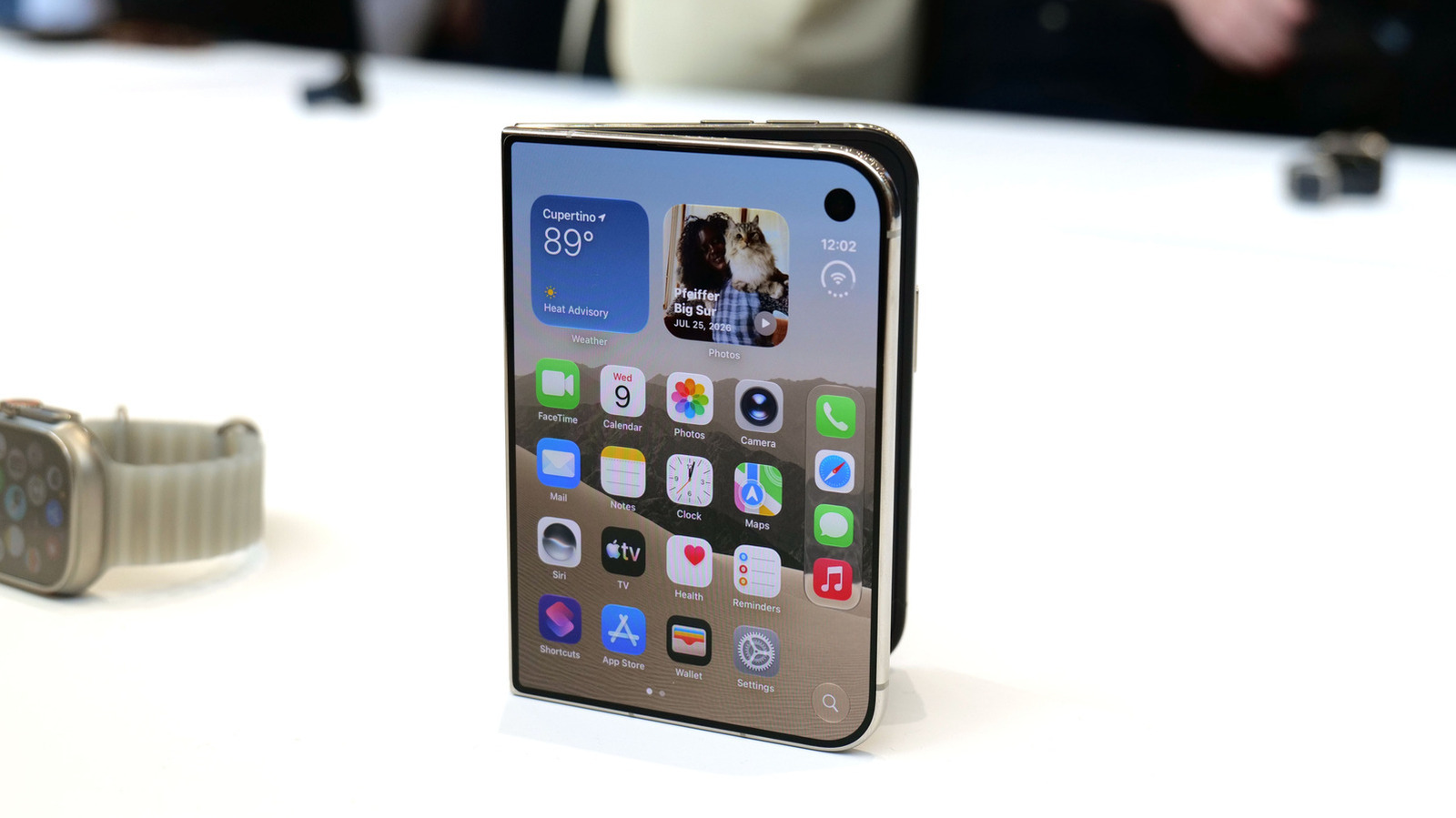
Apple iPhone Duo: A Daring Debut with Notable Compromises
Apple's highly anticipated iPhone Duo, priced at $2,000, has gone on pre-order. While hailed as "Apple's most exciting device in a decade" for its innovative foldable design and immersive display, it comes with significant drawbacks like the absence of FaceID and a premium camera.