
Tesla IPO Architect Joins Redwood Materials as Battery Firm Pivots to
Former Tesla CFO Deepak Ahuja joins JB Straubel’s Redwood Materials as CFO, strongly signaling an IPO. The company is pivoting from battery recycling to providing energy infrastructure for AI data centers using repurposed EV batteries, linking two major tech revolutions.
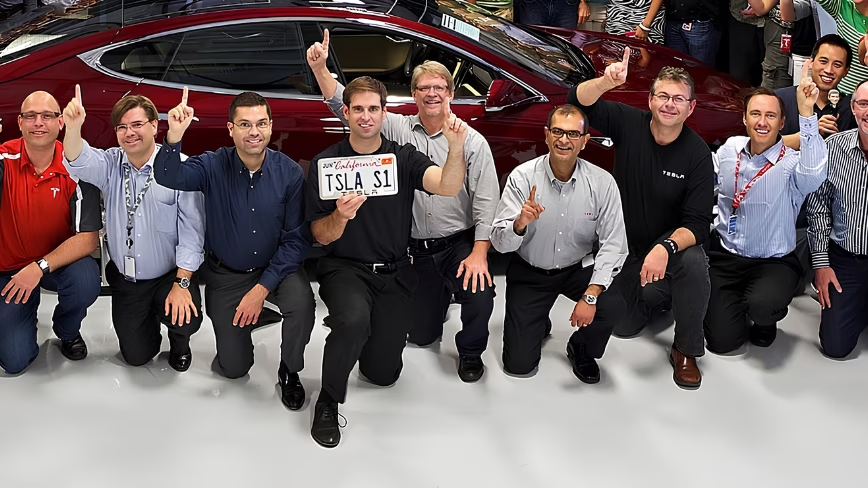
Deepak Ahuja, the chief financial officer who led Tesla's 2010 public offering, has joined JB Straubel's Redwood Materials as CFO. This key hire aligns with Redwood's strategic pivot from primarily battery recycling to a significant energy infrastructure provider, focused on powering AI data centers with repurposed electric vehicle (EV) batteries. The move strongly suggests the $6 billion startup, founded by Tesla's former CTO, is gearing up for its own initial public offering.
The Reunion and Strategic Shift
Ahuja and Straubel share a decade-long history at Tesla, where Ahuja served two terms as CFO and Straubel was co-founder and CTO, instrumental in defining the company’s battery architecture. Ahuja cited his deep respect for Straubel as a key reason for joining. His appointment follows Redwood’s recent restructuring, including workforce reductions and a strategic refocus towards energy storage, making the timing particularly noteworthy.
In June 2025, Redwood launched Redwood Energy, repurposing retired EV batteries for grid-scale energy storage. Its first client, AI data center operator Crusoe, partnered to create the world's largest second-life battery deployment and North America's largest microgrid: 12 megawatts (MW) and 63 megawatt-hours (MWh), powered by solar and repurposed EV batteries, achieving 99.2% operational availability. This led to a March 2026 expansion, increasing compute capacity sevenfold.
Redwood targets deploying 20 gigawatt-hours (GWh) of grid-scale storage by 2028, aiming to be North America's largest provider. This initiative uses future end-of-life U.S. EV batteries—an estimated 350 GWh—to address AI data center energy demands, projected to consume 12% of American electricity by 2028.
Restructuring and Funding Pave the Way
Ahuja's arrival follows recent workforce reductions, including about 10% (135 employees) and an earlier 5% trim, plus departures of senior operational leaders like COO Chris Lister. CEO JB Straubel explained these changes, attributing them to over-expansion and aiming to reduce management layers while refocusing on energy storage.
Despite this, Redwood secured substantial capital: a $425 million Series E round in January 2026 (led by Eclipse, with Google and Nvidia’s NVentures participating) and a previous $350 million raise. Total equity capital is about $2 billion, supplemented by a $2 billion U.S. Department of Energy loan. This pattern—raising capital, internal restructuring, and hiring a public-company veteran CFO—strongly suggests preparations for an IPO are underway.
Financial Health and Market Position
Redwood Materials is valued over $6 billion, generating $200 million in run-rate revenue in 2024 across three business lines: battery recycling for critical mineral recovery, anode/cathode production from recovered materials, and Redwood Energy. The company operates a 175-acre campus in Reno, Nevada, and plans a second facility near Charleston, South Carolina. Each site is designed for 100 GWh of electrode material production, enough for over one million EVs. Total capital cost is estimated at $7 billion, with the DOE loan supporting the Nevada expansion. This vertical integration, controlling new battery materials and old battery energy, makes the business highly defensible and attractive to public markets.
The IPO Signal and Broader Implications
Ahuja’s appointment is the clearest indication yet of Straubel’s intent for a public offering. The energy infrastructure sector is fertile ground for IPOs, echoing the 2007 cleantech boom. Redwood’s blend of hardware assets, government backing, and a new AI infrastructure revenue stream positions it favorably for premium public market valuation. Straubel, still on Tesla’s board, now leads a company managing end-of-life EV battery value, redirecting it into AI power. Nvidia's investment via NVentures further signals that energy storage is seen as integral to the AI infrastructure stack.
While Ahuja cautiously terms IPO discussions “too early,” his expertise and Redwood's profound strategic evolution speak volumes. The company, initially built on recycling batteries from the electric vehicle revolution, is now proactively constructing the energy backbone for the rapidly expanding AI era, strategically bridging two profound technological transformations.
FAQ
Q: Why is Deepak Ahuja's appointment significant for Redwood Materials?
A: Ahuja previously served as the CFO who successfully took Tesla public in 2010. His recruitment by Redwood, following a major strategic pivot and internal restructuring, is a strong indicator that the company is preparing for its own initial public offering.
Q: How is Redwood Materials adapting its core business strategy?
A: Although maintaining its robust battery recycling operations, Redwood has significantly expanded into energy infrastructure through its Redwood Energy division. This new focus involves repurposing retired electric vehicle batteries into grid-scale storage systems specifically designed to power high-demand AI data centers.
Q: What is Redwood Materials' current valuation and future outlook?
A: Redwood Materials holds a valuation exceeding $6 billion, with $200 million in run-rate revenue reported for 2024. The company is actively scaling its operations, planning to deploy 20 gigawatt-hours of grid-scale storage by 2028 and developing massive production facilities, signaling ambitious growth in both battery materials and energy solutions.
Related articles

Apple Unveils iPhone Duo: Pricey Foldable Sees Soaring Demand
Apple has officially entered the foldable smartphone arena with the long-anticipated launch of the iPhone Duo. Priced starting at a hefty $1,999, the device features a 5.4-inch outer display and a larger 7.6-inch inner

in-depth: Chicago-Area Cops Helped HSI Spy on Minnesota Anti-ICE
Chicago-area law enforcement, including local police and HSI agents, conducted undercover surveillance on Minnesota anti-ICE activists at an April 2, 2022, talk in Chicago. This operation was part of a federal conspiracy probe into 15 Minnesota activists facing felony charges related to immigration enforcement resistance. Civil liberties advocates have condemned the surveillance as a troubling intrusion into protected political activity.

Mark Wahlberg on using AI in film ‘the right way’ and being open to
Actor Mark Wahlberg believes AI has a place in filmmaking if used responsibly for enhancement, not script generation or actor replacement. At TechCrunch Disrupt, he expressed openness to an AI likeness carrying on his legacy, managed by his family, and emphasized storytelling.

Tesla Unveils Thruster-Equipped Roadster, 2028 Production Targeted
Tesla has unveiled its second-generation Roadster, featuring cold-gas thrusters co-developed with SpaceX, enabling it to jump and flip. The electric sports car demonstrated 0-60mph in an astonishing 0.81 seconds, with production targeted for 2028. This highly anticipated reveal also serves as a key recruitment tool for Tesla's ambitious AI and robotics initiatives.

Amazon Prime Video Launches AI-Powered Prime 360 for NBA Coverage
Amazon Prime Video is elevating its NBA coverage with the introduction of Prime 360, an AI-powered replay system offering immersive, 'fly through' views of the action. Kicking off its second season, Prime Video also adds Yahoo fantasy integration and gains exclusive Eastern Conference Finals rights, expanding its tech-driven sports broadcast. The new features aim to deliver a unique and interactive viewing experience for basketball fans.
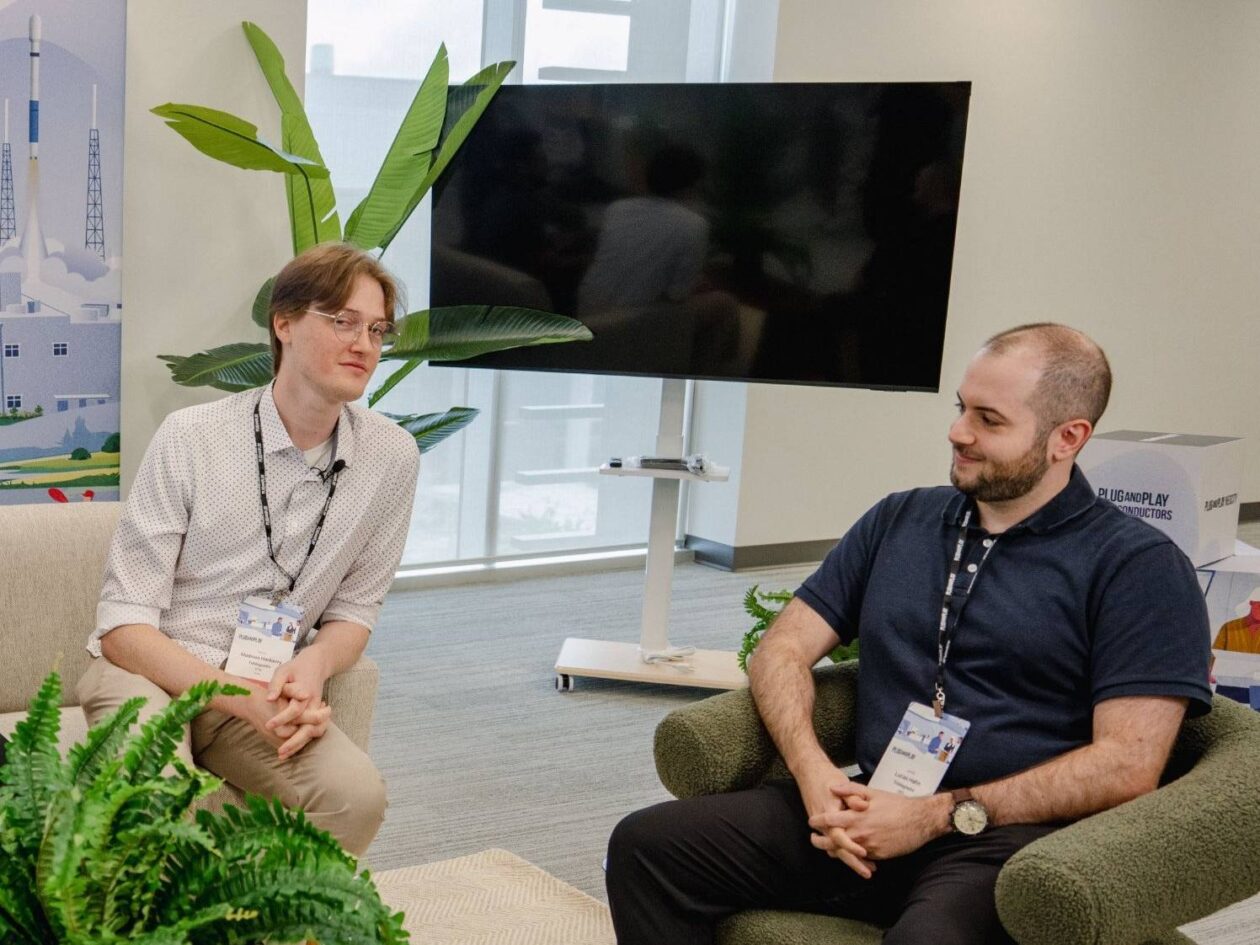
regional: A two-person Seattle startup lands $1M to reinvent
Seattle startup TriMagnetix has secured $1 million to develop semiconductor chips that consume 800 times less energy and are radiation-resistant. The two-person company, leveraging nanomagnetic technology, is targeting space applications and data centers. With new funding and key partnerships, TriMagnetix aims for commercial sales within a year.