74 results found

Fora, the innovative AI-powered travel agency, has officially joined the ranks of billion-dollar companies, announcing a $60 million Series D funding round that solidifies its unicorn status. The capital injection, led
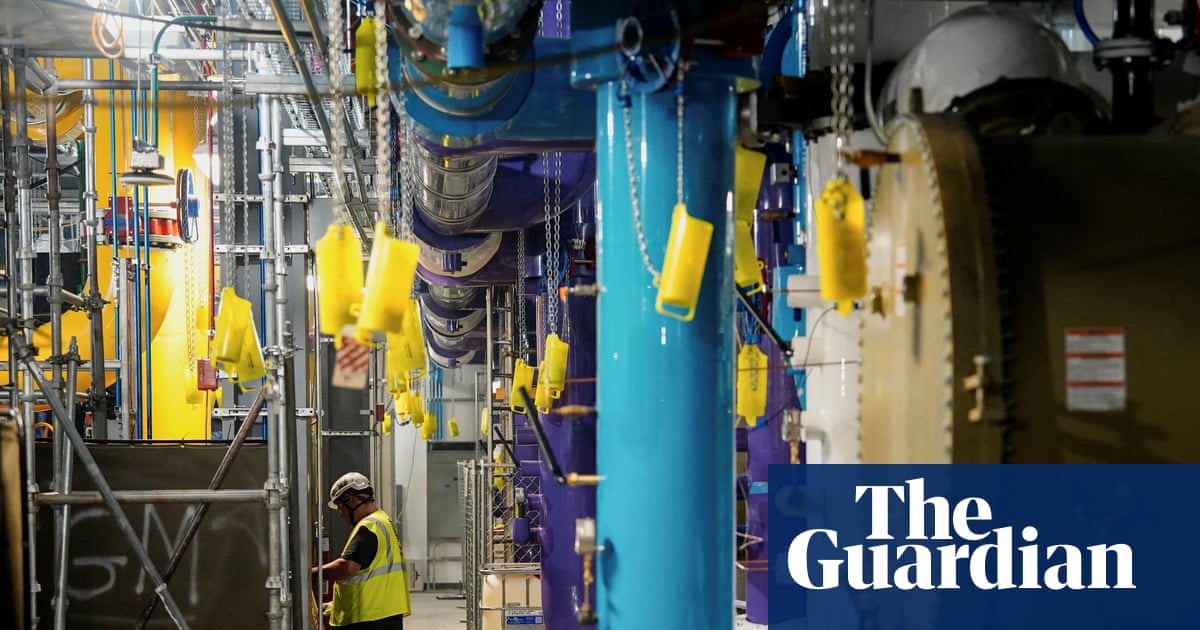
The rapid expansion of cloud services and AI, driven by companies like Microsoft, Amazon, and Google, is causing a significant surge in their carbon emissions. This article explores the scale of this environmental impact, detailing the recent increases and the challenges it poses to their sustainability goals. We examine why this boom is affecting climate ambitions and what developers should consider for a more sustainable future.

OpenAI is making a strategic pivot, hiring a dedicated product manager to develop ChatGPT experiences for families, caregivers, and older adults. This move signals the company's intent to embed its AI deeper into daily household life, acknowledging a broadening user demographic and the increasing importance of age-appropriate safety features. Experts view this as a maturation of AI platforms, mirroring the evolution of major tech companies.

New York-based investment firm Subversive ETFs has filed with the SEC to launch two novel “Ex-Elon” exchange-traded funds (ETFs), offering investors a mechanism to track major market indexes while intentionally

Hugging Face CEO Clem Delangue explains why companies are abandoning proprietary AI APIs for open-source models. Driven by escalating costs and a desire for greater control, this shift highlights a critical moment in AI development and competition. This move fosters decentralization and broadens access to advanced AI tools.

OpenAI has publicly launched its advanced AI model, GPT-5.6 Sol, known for its cybersecurity capabilities. This launch proceeds despite the Trump administration's earlier request to restrict access to government-approved partners, with the White House now stating its engagement with AI companies is voluntary. The move signals a complex interplay between rapid AI development and evolving government oversight.

A Box survey of 1,640 IT decision-makers reveals a rapid surge in enterprise AI maturity, with leading-edge companies achieving significantly higher ROI. Key factors driving this success include robust content access, formal governance frameworks, and flexible multi-model platforms, distinguishing high performers from those with ad hoc AI approaches.

AI costs are skyrocketing, forcing companies to adopt unconventional methods to save money. A new 'Caveman' plugin instructs advanced AI models to communicate in curt, simplified language, cutting token usage by 65%. This ironic shift from human-like AI to primal grunts highlights the industry's struggle for profitability.

Verdict: A Timely Warning Shot in the AI Arms Race Alex Karp, CEO of Palantir, has ignited a fiery debate within the AI industry, leveling serious accusations against leading “frontier AI companies” like OpenAI and

Wayve, the UK-based self-driving AI startup, has initiated an $85 million employee tender offer at an $8.5 billion valuation, allowing staff to sell vested equity. This move reflects a growing trend among AI companies using such offers for talent retention, supported by eager investors betting on continued high growth. Wayve plans robotaxi pilots with Uber this year and Nissan integration by 2027.

Waymo and Uber have quietly ended their nearly three-year robotaxi partnership in Phoenix, Arizona, as confirmed by both companies. The pilot program concluded in May 2026, reaching its contracted end date. Uber is seeking a new AV partner in Phoenix, while Waymo has re-absorbed the vehicles into its own fleet.

The Trump administration has lifted its ban on Anthropic's powerful Mythos 5 AI, allowing over 100 U.S. government agencies and companies, including non-American staff, to use it. This decision, two weeks after both Mythos 5 and Fable 5 were pulled, comes with "appropriate safeguards," though Fable 5 remains restricted.
Quick Verdict The unexpected and tragic passing of Claude Guillemot, a co-founder of Ubisoft, marks a significant moment for one of the world's largest entertainment companies. While the direct operational impact on

AI video startup Higgsfield has launched Supercomputer 2.0, an autonomous agent framework for enterprise marketing. Built on NVIDIA technology, it claims adoption by 78 percent of Fortune 500 companies, aiming to automate full campaign lifecycles. The company also produced an AI-generated feature film in 14 days.

Robinhood announced a 10% workforce reduction, impacting 290 employees, but CEO Vlad Tenev notably avoided blaming AI for the cuts. This marks a departure from other tech companies, with Robinhood instead emphasizing a move to leaner, flatter organizational structures despite strong financial performance.

Michael Ronis, founder of Janbrook Partners, argues that while AI offers powerful efficiencies in recruitment, companies risk costly turnover by prioritizing automation over human judgment. He emphasizes that AI excels at data processing but lacks the ability to assess crucial elements like cultural fit, candidate motivation, and interpersonal dynamics. Ronis advocates for a complementary model where AI enhances research, allowing human recruiters to focus on essential relationship-building and nuanced evaluation.

Google has slashed the price of its budget AI Plus subscription to $4.99/month and doubled storage to 400GB for U.S. consumers. This aggressive move signals an escalating price war in the AI market, potentially commoditizing AI infrastructure and challenging valuations for companies like OpenAI and Anthropic.

TechCrunch's Startup Battlefield is returning to Sydney, Australia, on August 19, 2026, in partnership with Stripe. Ten startups will pitch, with the winner securing automatic entry to TechCrunch Disrupt's Startup Battlefield 200 in San Francisco. This return follows the highly successful 2017 event, which launched companies like HealthMatch and FluroSat (now Regrow Agriculture) to raise over $85 million combined and foster a vibrant Australian tech ecosystem.
President Trump signed an executive order Tuesday, establishing voluntary government oversight for new AI models. This reverses his prior hands-off approach, balancing innovation with national security by asking companies for a 30-day review.

President Trump has signed an executive order creating a voluntary framework for AI companies to share advanced models with the federal government before release. This initiative aims to bolster secure innovation and protect critical infrastructure, reflecting a shift from the administration's previous hands-off approach to AI safety. Companies opting for pre-release review may receive confidentiality protections.
As fellow developers, we’re constantly scanning the landscape for companies pushing the boundaries, especially in the rapidly evolving AI space. Great Question, a Y Combinator W21 alumnus, has caught our eye with an

Neil Lindsay is stepping down as SVP of Amazon Health Services after five years, succeeded by telehealth veteran Dr. Roy Schoenberg. Concurrently, Avalara co-founder Scott McFarlane is resigning as CEO, with Hugo Sarrazin taking the top executive role. These significant leadership changes mark new eras for two prominent tech companies and their respective ventures.

Blue Origin's New Glenn rocket is set to return to flight, launching 48 Amazon Leo satellites after FAA clearance. This mission marks a significant step for both Jeff Bezos-founded companies, especially after New Glenn's recent launch failure, and will bolster Amazon's rapidly expanding satellite broadband constellation.
AI startups in the Bay Area are investing heavily in high-production hype videos for social media, exemplified by Daydream Lab's $80,000 *Alice in Wonderland* themed ad for its $15 million funding round. This trend, fueled by venture capital and intense competition, aims to attract attention and recruit talent, with companies consciously choosing traditional video production to maintain professionalism.

Google Cloud COO Francis de Souza advises companies to adopt a proactive, platform-centric approach to AI security, emphasizing integration from the start and defense at machine speed. However, Google itself has recently faced significant security challenges, including developers incurring five-figure bills from unauthorized Gemini API usage due to silent key scope expansions and delayed key revocation times.
