71 results found

Anthropic's Fable 5 AI model sets a new record in freelance work automation with a 16.1% success rate on the RLI, demonstrating rapid advancement. While impressive, it won't replace human freelancers yet due to limitations in judgment and complex task management.

The Trump administration has lifted its ban on Anthropic's powerful Mythos 5 AI, allowing over 100 U.S. government agencies and companies, including non-American staff, to use it. This decision, two weeks after both Mythos 5 and Fable 5 were pulled, comes with "appropriate safeguards," though Fable 5 remains restricted.

Anthropic's advanced AI model, Mythos 5, is partially reinstated for select cybersecurity and infrastructure providers after two weeks of negotiations with the Trump administration. The public-facing Fable 5 remains restricted. This limited return is an exception to an export control directive, similar to a deal granted to OpenAI's GPT-5.6, highlighting evolving US AI regulation.

The Trump administration has ordered Anthropic to take its advanced AI models, Fable 5 and Mythos 5, offline due to unspecified “national security concerns.” This move follows reports of Amazon researchers bypassing Fable 5's guardrails. While cybersecurity experts deem the ban dangerous, some speculate it could inadvertently boost Anthropic's image, positioning its models as uniquely powerful.

In a significant development shaking the artificial intelligence landscape, Anthropic has taken its two newest and most powerful AI models, including the notable Claude Fable, offline. This decision comes in compliance

The White House last Friday ordered AI giant Anthropic to immediately restrict the export of its powerful AI models, Fable and Mythos, citing unspecified national security concerns. This directive led Anthropic to
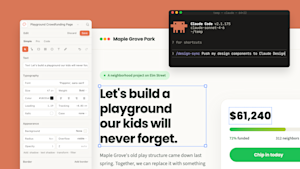
Anthropic has released a major overhaul of Claude Design, addressing its initial token-burning problem with shared usage limits and efficiency gains. The update also introduces design system imports for enterprise brand compliance and bidirectional integration with Claude Code to streamline the design-to-engineering workflow. This strategic move positions Claude Design as a critical component in Anthropic's broader vision to embed AI across the enterprise stack.

Nearly 100 prominent cybersecurity experts have signed an open letter condemning the US government's ban on Anthropic's Fable 5 and Mythos 5 AI models. They argue the move disarms defenders, creates market uncertainty, and risks America's AI leadership without justifiable cause, potentially benefiting adversaries more than protecting national security.

Anthropic's recent decision to suspend access to its newest AI models, Fable 5 and Mythos 5, for all foreign nationals following a U.S. government directive has sent ripples across the global technology industry. In
Anthropic's Fable 5 and Mythos 5 AI models were abruptly shut down by a US Commerce Department directive over national security concerns regarding a potential 'jailbreak.' Anthropic disputes the severity, warning of industry-wide impacts.
Anthropic CEO Dario Amodei is pushing for FAA-style regulation of powerful AI models, citing public safety concerns amid rapidly advancing AI capabilities and potential misuses. This call for oversight, backed by new policy frameworks and $350 million in funding, suggests future operational, regulatory, and workforce constraints for enterprises. Key implications include potential deployment holds for frontier models, elevating AI cybersecurity to critical infrastructure status, and the need for proactive strategies to manage structural labor displacement.

Google has slashed the price of its budget AI Plus subscription to $4.99/month and doubled storage to 400GB for U.S. consumers. This aggressive move signals an escalating price war in the AI market, potentially commoditizing AI infrastructure and challenging valuations for companies like OpenAI and Anthropic.
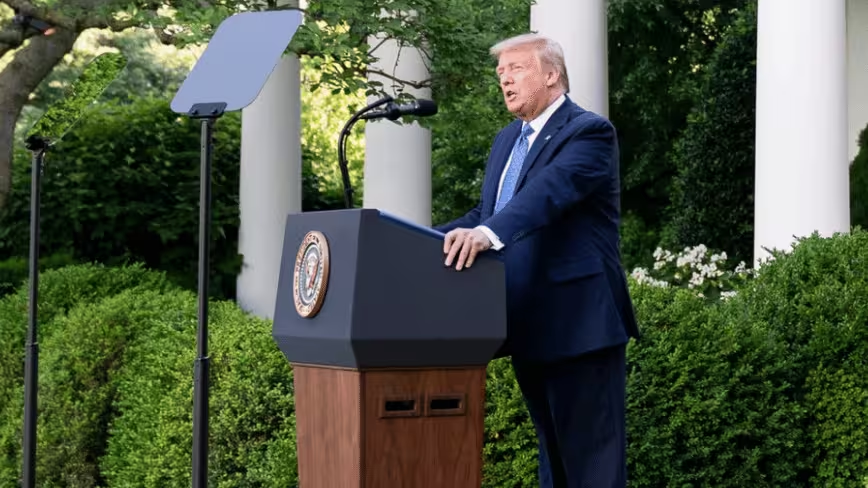
An intense internal power struggle within the Trump administration has stalled US federal AI regulation, leaving a policy vacuum after Anthropic's Mythos model revealed critical cybersecurity risks. Factions within the Commerce Department, intelligence agencies, and pro-industry groups are locked in a "knife fight" over who gets to evaluate and oversee advanced AI systems. This paralysis follows the abrupt cancellation of a landmark executive order and the unexplained withdrawal of AI testing announcements.

Anthropic will pay xAI $1.25 billion monthly for compute, securing 300 megawatts from xAI’s Colossus 1 data center. Revealed in a SpaceX SEC filing, this $40+ billion deal through May 2029 helps xAI monetize overbuilt capacity, likely due to Grok's declining usage, and positions it as a 'neocloud' provider in the competitive AI market.

Anthropic announced Monday it has acquired Stainless, a dev tools startup whose SDK automation software is widely used by rivals like OpenAI, Google, and Cloudflare. This strategic acquisition will see Anthropic wind down Stainless's hosted products, granting it exclusive access to critical technology for building AI agents and impacting competitors.

OpenAI has announced the integration of its advanced AI coding tool, Codex, directly into the ChatGPT mobile application. This significant update empowers developers to monitor and manage their coding workflows remotely

Anthropic's new `/goals` feature for Claude Code revolutionizes AI agent reliability by separating task execution from goal evaluation. This prevents agents from prematurely ending tasks, using a dedicated evaluator model to ensure specified conditions are fully met before declaring completion. The innovation offers a more robust, auditable approach to AI agent deployment.
In an unconventional move highlighting the burgeoning value of artificial intelligence stakes, a Bay Area investment banker is offering his sprawling 13-acre Mill Valley property in exchange for equity in AI powerhouse

Verdict: A Game-Changer for Software Security Mozilla’s recent announcement regarding Anthropic’s Mythos Preview model marks a significant inflection point in the ongoing battle for cybersecurity. By proactively

The National Security Agency (NSA) is reportedly utilizing Anthropic's highly restricted Mythos Preview AI model, a development that emerges despite the Department of Defense (DoD) having previously designated Anthropic

Anthropic's ties with the Trump administration are thawing, marked by a high-level meeting between CEO Dario Amodei and White House officials. This occurs despite an ongoing legal battle with the Pentagon, which labeled Anthropic a "supply-chain risk" over ethical disagreements on AI use.

Anthropic CEO met White House Chief of Staff over national security concerns about the Mythos AI model. It automates cyberattacks, prompting urgent government assessment.
AI chip maker Cerebras has refiled for an initial public offering (IPO), revealing a 75% revenue surge to $510 million and a $238 million profit last year. The move positions Cerebras amid a burgeoning wave of tech IPOs, including anticipated listings from SpaceX, OpenAI, and Anthropic.
In a significant move reshaping the landscape of AI-powered visual creation, Canva and Anthropic have unveiled Claude Design, a new Anthropic Labs product that seamlessly integrates Canva's robust Design Engine directly

AI firm Anthropic, valued at $380 billion, recently met with Christian leaders in San Francisco for guidance on building a moral chatbot, an unprecedented move in Silicon Valley. This rare consultation highlights the complex ethical questions surrounding advanced AI, including its potential spiritual dimensions.
