
Canva Becomes Design Layer Inside Claude with Anthropic Partnership
In a significant move reshaping the landscape of AI-powered visual creation, Canva and Anthropic have unveiled Claude Design, a new Anthropic Labs product that seamlessly integrates Canva's robust Design Engine directly
In a significant move reshaping the landscape of AI-powered visual creation, Canva and Anthropic have unveiled Claude Design, a new Anthropic Labs product that seamlessly integrates Canva's robust Design Engine directly into Claude. This partnership allows users to generate fully editable, on-brand visuals from simple text descriptions within a Claude conversation, eliminating the need to open Canva separately. The announcement, timed with Canva's launch of its expansive Canva AI 2.0 initiative, positions Canva as the foundational design infrastructure for conversational AI.
Claude Design, powered by Claude Opus 4.7, marks a deepened two-year collaboration between the two tech giants. It is currently available as a research preview for Claude Pro, Max, Team, and Enterprise subscribers. Designs generated within Claude can be exported in various formats, including PDFs, URLs, and PowerPoint files, or sent directly to Canva for further editing and collaboration within its familiar drag-and-drop editor.
Unlocking Visual Creation for Everyone
This innovative integration is particularly aimed at non-designers who frequently need visual assets. This includes founders crafting pitch decks, product managers sketching interface mockups, and marketing teams developing one-pagers. Users simply articulate their visual requirements in a Claude chat, and the system intelligently produces a structured, laid-out design that incorporates brand elements from the outset.
For enterprise clients, Claude Design offers a commercially compelling feature: the ability to automatically read a company's codebase and design files. This allows the system to apply a firm's precise design system—including fonts, colors, layout standards, and brand governance rules—to every project, ensuring consistency without manual oversight. This automation addresses a significant pain point for organizations with distributed teams striving for brand uniformity.
Furthermore, Canva is enhancing its capabilities with HTML importing, enabling users to bring interactive content generated by Claude or other AI tools directly into the Canva editor for refinement and publication. This bridges the gap between AI outputs, often presented as code or static images, and Canva's dynamic, collaborative editing environment, which serves 265 million monthly active users.
Canva AI 2.0: A Paradigm Shift
The Anthropic collaboration is part of Canva's broader strategic overhaul, Canva AI 2.0, which the company hails as its most extensive product launch to date. This update signals a fundamental shift, transforming Canva from a design platform with AI tools into an AI platform with design tools. It introduces several groundbreaking features designed to streamline the creative workflow.
Key advancements include conversational design, where users describe ideas and receive fully editable outputs; agentic orchestration, which allows a single prompt to generate an entire campaign across multiple formats; and object-based intelligence, ensuring that changes to one design element do not inadvertently affect others. These are not mere incremental updates but represent a significant architectural rethinking of Canva's platform.
Six new intelligent workflows integrate Canva with popular external tools such as Slack, Gmail, Google Drive, Calendar, Notion, Zoom, and HubSpot. This connectivity empowers Canva AI to perform tasks like generating meeting summaries from Zoom transcripts, creating personalized sales materials from customer emails, and compiling company newsletters from Slack activity. These connectors evolve Canva into an automated content production system, leveraging an organization's existing communication and data streams.
Canva AI 2.0 is being rolled out initially as a research preview, accessible to the first one million users who discover it on the Canva homepage, with a wider release planned in the coming weeks.
Strategic Benefits and Market Positioning
The partnership offers clear advantages to both parties. For Anthropic, the integration provides Claude with a crucial visual output capability, a missing piece in its otherwise text-native interface. This makes Claude significantly more valuable for generating presentations, social media assets, and marketing materials—areas that constitute a substantial portion of enterprise knowledge work.
For Canva, this collaboration solidifies its position as the default design backend for conversational AI. The success of Claude Design means every visual asset created through Claude funnels users into Canva’s ecosystem for editing, collaboration, and publishing. This strategy mirrors Canva's successful approach in browser-based design: becoming the essential tool for exporting and refining creative work.
Canva's ambitious AI strategy is underpinned by robust financial performance. The company reported $3.5 billion in annual revenue in 2025, an increase from $2.8 billion the previous year, with monthly active users growing from 180 million to 265 million. Its valuation reached $42 billion in August 2025, up from $32 billion in October 2024. This growth trajectory has also seen Canva acquire Simtheory, an agentic AI infrastructure company, and Ortto, a marketing automation platform, reinforcing its transformation into an end-to-end work platform.
The Future of AI Design
While the partnership presents a significant opportunity, Canva faces the long-term challenge of advanced AI-native design tools potentially bypassing its platform entirely. If future AI models, like GPT-5, can generate production-ready visuals without an intermediary design engine, Canva's role as the editing and collaboration layer could diminish.
Canva's strategic bet is that the inherent complexity of design and the critical importance of brand governance will continue to necessitate a dedicated design platform, even as AI handles more creative generation. By embedding itself within Claude, Canva ensures that regardless of where users initiate their design process, they ultimately leverage Canva's capabilities. For now, Claude Design's outputs are suitable for internal use and mockups, but human refinement is still required for high-quality, production-grade assets—a gap that Canva is poised to fill. The ongoing question remains how long this window of opportunity will last as AI design capabilities rapidly advance.
FAQ
Q: What is Claude Design?
A: Claude Design is a new Anthropic Labs product, powered by Claude Opus 4.7, that integrates Canva's Design Engine. It allows users to generate fully editable, on-brand visual content directly from text descriptions within the Claude AI interface, without needing to open Canva separately.
Q: How does this partnership benefit Anthropic and Canva?
A: For Anthropic, it provides Claude with a crucial visual output capability, making it more versatile for tasks requiring designed content. For Canva, it positions the company as the foundational design layer for conversational AI, funneling users into its ecosystem for further editing and collaboration, reinforcing its role as a core design platform.
Q: What is Canva AI 2.0?
A: Canva AI 2.0 is a major product launch that transforms Canva from a design platform with AI tools into an AI platform with design tools. It introduces conversational design, agentic orchestration, object-based intelligence, and integrations with external tools like Slack and Zoom, aiming to automate content production workflows.
Related articles

Apple Unveils iPhone Duo: Pricey Foldable Sees Soaring Demand
Apple has officially entered the foldable smartphone arena with the long-anticipated launch of the iPhone Duo. Priced starting at a hefty $1,999, the device features a 5.4-inch outer display and a larger 7.6-inch inner

in-depth: Chicago-Area Cops Helped HSI Spy on Minnesota Anti-ICE
Chicago-area law enforcement, including local police and HSI agents, conducted undercover surveillance on Minnesota anti-ICE activists at an April 2, 2022, talk in Chicago. This operation was part of a federal conspiracy probe into 15 Minnesota activists facing felony charges related to immigration enforcement resistance. Civil liberties advocates have condemned the surveillance as a troubling intrusion into protected political activity.
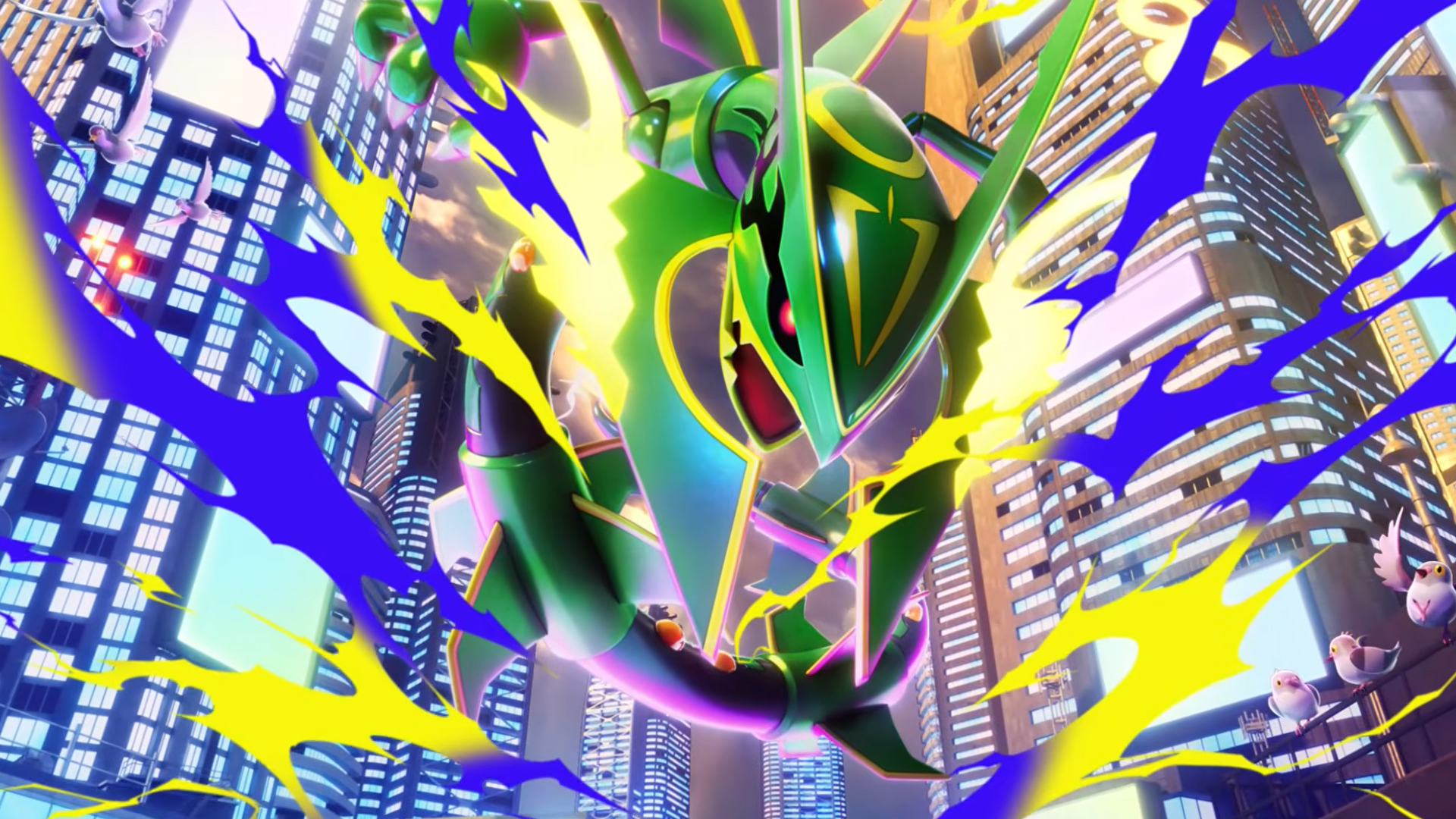
TCG Pocket Responds: A Much-Needed Pace Shift for Pokémon Fans
Pokémon TCG Pocket is rolling out a major update for its second anniversary, primarily addressing player concerns about overwhelming content releases by shifting to a six-week set schedule. This aims to curb player decline and improve overall engagement by giving trainers more time to collect and strategize. The update also adds new collection methods, improved deck-building features, and enhanced trading functionality.

Mark Wahlberg on using AI in film ‘the right way’ and being open to
Actor Mark Wahlberg believes AI has a place in filmmaking if used responsibly for enhancement, not script generation or actor replacement. At TechCrunch Disrupt, he expressed openness to an AI likeness carrying on his legacy, managed by his family, and emphasized storytelling.

Apple iPhone Duo: A Daring Debut with Notable Compromises
Apple's highly anticipated iPhone Duo, priced at $2,000, has gone on pre-order. While hailed as "Apple's most exciting device in a decade" for its innovative foldable design and immersive display, it comes with significant drawbacks like the absence of FaceID and a premium camera.
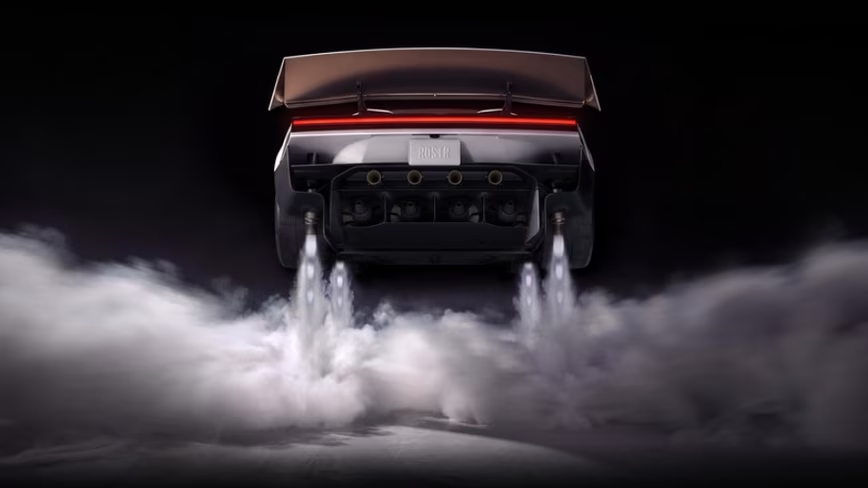
Tesla Unveils Thruster-Equipped Roadster, 2028 Production Targeted
Tesla has unveiled its second-generation Roadster, featuring cold-gas thrusters co-developed with SpaceX, enabling it to jump and flip. The electric sports car demonstrated 0-60mph in an astonishing 0.81 seconds, with production targeted for 2028. This highly anticipated reveal also serves as a key recruitment tool for Tesla's ambitious AI and robotics initiatives.