
Project Helix: Xbox Blurs the PC/Console Line
Quick Verdict Microsoft's Project Helix, the codename for the next-generation Xbox, signals an incredibly ambitious shift in the gaming landscape. By promising to run both traditional Xbox titles and a vast library of

Quick Verdict
Microsoft's Project Helix, the codename for the next-generation Xbox, signals an incredibly ambitious shift in the gaming landscape. By promising to run both traditional Xbox titles and a vast library of PC games, it aims to deliver a hybrid experience that could fundamentally redefine console gaming. This vision of merging console simplicity with PC flexibility is genuinely exciting. However, with crucial details like specifications, pricing, and a release date completely under wraps, Project Helix currently exists as a compelling concept rather than a tangible product. Gamers should temper their excitement with patience as we await concrete information.
Introduction: The Dawn of Project Helix
The future of gaming recently got a tantalizing preview as Microsoft Gaming CEO Asha Sharma officially unveiled the codename for the next Xbox console: Project Helix. Through a post on X (formerly Twitter), Sharma not only affirmed Microsoft's enduring commitment to the console market but also hinted at a strategy that could radically reshape it. This isn't just about launching a more powerful machine; Project Helix is poised to introduce a groundbreaking approach, challenging the long-established divide between console and PC gaming.
A Hybrid Horizon: Bridging Xbox and PC
The most impactful revelation regarding Project Helix is its stated capability to support both Xbox and PC games. Sharma’s announcement emphasized the system's aim to “lead in performance and play your Xbox and PC games,” suggesting a truly hybrid gaming device. For quite some time, Microsoft has been steadily closing the gap between its console offerings and its Windows PC ecosystem, exemplified by initiatives like Xbox Play Anywhere. This program allows users to purchase a digital game once and play it across both platforms. Project Helix, however, signifies a monumental leap beyond this.
This isn't merely about sharing a game library; it's about a single hardware platform engineered to natively operate two distinct gaming environments. Imagine the unparalleled convenience for gamers seeking the straightforward, plug-and-play nature of a console, combined with access to the expansive and diverse catalog of PC titles, potentially including those from various digital storefronts beyond Microsoft's own. Should Microsoft fulfill this promise, Project Helix could effectively eliminate the need for many consumers to choose between owning a console and a dedicated gaming PC. It offers a unified experience, potentially bringing the best attributes of both worlds together. This could particularly resonate with players who feel constrained by console exclusives or those who wish to delve into PC-specific genres, mods, and titles without the often substantial investment required for a separate gaming rig.
Performance Promises (and Questions)
Microsoft’s CEO explicitly stated that Project Helix will “lead in performance.” While a common assertion for any new generation console, this claim carries significant weight given the console's ambition to run PC games. PC gaming frequently demands high-end hardware to render the latest titles at optimal frame rates and resolutions, especially with the continuous evolution of graphics technology. For Project Helix to genuinely deliver on this, it would require a substantial advancement in its internal components.
However, without any disclosed specifications—no details on the central processing unit, graphics processing unit architecture, memory, or storage solutions—the promise of “leading in performance” remains purely speculative. Will this level of performance be achievable at a price point that remains competitive with traditional consoles? Will it offer the upgradeability typically found in PCs, or will it remain a fixed hardware platform like current consoles? These are critical questions that directly influence the feasibility and overall appeal of its hybrid design, as the successful execution of running PC games will depend heavily on robust, uncompromised hardware.
User Experience: A Glimpse into the Future
The user experience for Project Helix is arguably its most fascinating, yet currently undefined, aspect. If the console genuinely supports both Xbox and PC games, how will the interface manage this duality? Will users seamlessly switch between an Xbox-style dashboard and a Windows-like environment? Or will PC games simply be integrated and accessible through an enhanced Xbox interface? Microsoft’s ongoing efforts to integrate Windows and Xbox suggest a desire for a cohesive experience, but merging two distinct platforms with potentially disparate ecosystems (e.g., Steam, Epic Games Store on PC) presents a considerable technical and user experience challenge.
The potential benefits for gamers are vast: a singular device for all gaming needs, potentially simplifying living room setups, reducing costs compared to acquiring both a console and a gaming PC, and offering unprecedented access to a broader game library. Nevertheless, this also raises questions about potential compromises. Could the console's operating system become encumbered by the complexities typically associated with a full PC operating system? Will PC game compatibility be comprehensive, or limited to specific launchers or types of games? The fluidity, intuitiveness, and seamlessness of this hybrid interface will be paramount to Project Helix’s ultimate success.
The Good, The Bad, and The Unknown
Pros:
- Hybrid Gaming: The ability to play both Xbox and PC games on a single device is a potentially revolutionary feature, offering unparalleled game library access and flexibility.
- Consolidated Setup: Could simplify home entertainment by replacing two devices (console + PC) with one, appealing to gamers seeking minimalism.
- Performance Focus: The explicit commitment to "lead in performance" suggests a powerful machine, crucial for a seamless hybrid experience.
- Deepened Ecosystem Integration: Further blurs the lines between console and PC, building on existing Xbox Play Anywhere, offering a more unified Microsoft gaming experience.
Cons:
- Lack of Concrete Details: All critical information—specifications, pricing, and release date—is missing, preventing any real assessment of its value or capabilities.
- Technical Challenges: Merging two distinct gaming platforms into one cohesive, high-performing experience is complex, raising questions about potential compromises.
- Compatibility Concerns: The extent of PC game compatibility with various launchers, system requirements, and configurations remains unconfirmed.
- Potential High Price: To "lead in performance" and run PC games effectively, the hardware could be significantly more expensive than traditional consoles, potentially offsetting some perceived cost savings.
Competition and the Shifting Landscape
Project Helix stands as an intriguing proposition within the current gaming landscape. While the source content doesn't detail specific rival consoles or PCs, it implicitly positions Project Helix as a direct challenge to both dedicated gaming consoles and custom-built gaming PCs. The concept of a console capable of running PC games fundamentally disrupts the traditional segmentation of the market. Instead of solely targeting the "console gamer," Microsoft appears to be aiming for a broader demographic, including those who previously opted for PC gaming due to its open ecosystem and wider game selection.
This strategic move could compel competitors to re-evaluate their own development paths. If Project Helix successfully delivers a compelling PC-like experience within a console form factor, it might make dedicated gaming PCs a less appealing choice for casual to mid-range PC gamers who prioritize convenience and a lower barrier to entry. However, high-end PC enthusiasts will likely continue to value the extensive customization, upgradeability, and bleeding-edge performance that only a purpose-built PC can offer. The true "competition" for Project Helix may not be a single rival device, but rather the entire gaming ecosystem it seeks to disrupt and integrate.
Buying Recommendation
Based on the extremely limited information currently available, Project Helix presents a fascinating concept with immense potential, but it is far too early to offer a definitive buying recommendation. The vision of a console that seamlessly integrates Xbox and PC gaming is undeniably compelling, promising unparalleled flexibility and access to diverse game libraries. However, without crucial specifics such as technical specifications, pricing, and a firm release date, any purchasing decision would be premature and purely speculative.
For now, we strongly advise interested gamers to monitor future announcements, particularly those expected at the upcoming Game Developers Conference (GDC). Wait for concrete data on the console's performance capabilities, its full scope of game compatibility, details on its user interface, and, most importantly, its price point. Project Helix could either herald a groundbreaking evolution in home gaming or prove to be an ambitious concept that faces significant hurdles in execution or cost. Patience, for now, is paramount.
FAQ
Q: What is Project Helix? A: Project Helix is the codename for Microsoft’s next-generation Xbox console. Its most notable announced feature is its ability to play both traditional Xbox games and PC games on a single system, aiming to offer a truly hybrid gaming experience.
Q: What are the key features announced for Project Helix? A: The primary key feature is its dual compatibility with Xbox and PC games, along with a stated commitment to "lead in performance." It's designed to represent a significant step in blurring the lines between console and PC gaming, building on Microsoft's existing ecosystem integration.
Q: When will more details about Project Helix be revealed? A: Microsoft Gaming CEO Asha Sharma indicated that more information about Project Helix will be shared soon, specifically at the upcoming Game Developers Conference (GDC). As of the announcement, specific hardware specifications, pricing, and a release window remain undisclosed.
Related articles

Wolverine Player Breaks Free, Uncovers Insomniac's Unseen World
A dedicated Wolverine player has uncovered a fascinating glitch, allowing them to break free from the game's linear levels and explore its larger, unfinished world. This gives fans a rare peek into Insomniac's development process and the potential scope of Logan's adventure, offering insights into hidden environmental details and behind-the-scenes 'video game magic'.
Community Fibre 8.5Gbps: UK's Fastest, But Pricey Fibre
Quick Verdict Community Fibre has just launched the UK's fastest residential internet connection, boasting an incredible 8.5Gbps (8,200Mbps) symmetrical full fibre service. It's a technical marvel, delivering speeds
Turn Your Old PC into a Homelab: 6 Beginner Self-Hosting Projects
Breathe New Life into Your Old PC with Self-Hosting Don't let that dusty old laptop or desktop gather cobwebs! While it might not keep up with today's demanding software, an older PC often has more than enough power to

Anthropic Claude Merger: Unified AI for Enhanced Productivity
Anthropic Claude Merger: The Verdict Anthropic is making a bold move, consolidating its previously distinct AI tools — Claude chat and Claude Cowork — into a single, more intuitive “all-powerful Claude.” This strategic

September Pixel Drop: Small Update, Big Convenience
Google's September 2026 Pixel Drop brings enhanced one-tap calling/messaging via VIPs widget and expanded on-device scam protection for text messages, making communication safer and faster for Pixel 6 and newer users.
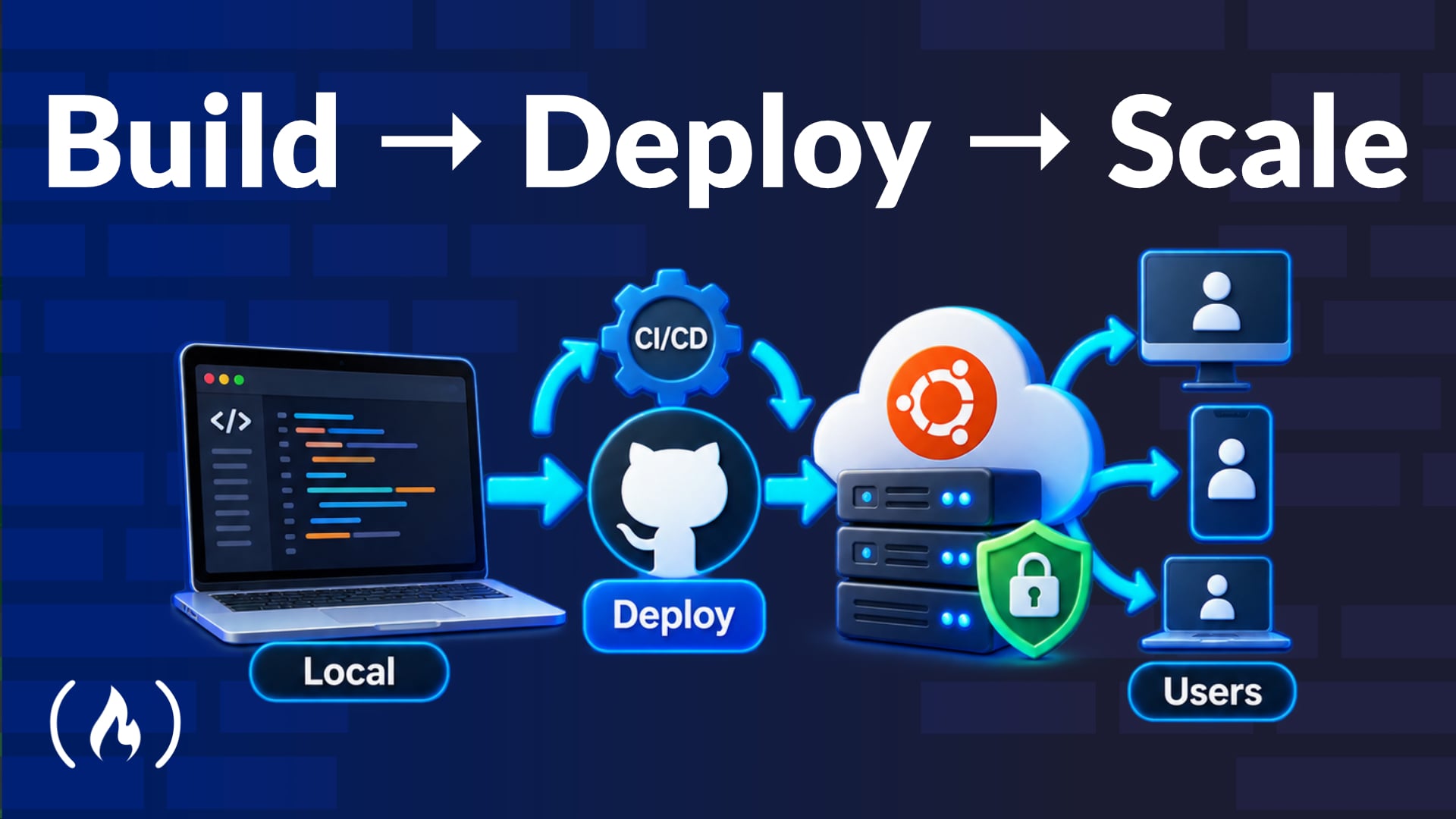
Mastering Full-Stack Deployment: Secure, Automate, Go Live
This article highlights a comprehensive freeCodeCamp.org course on deploying, securing, and automating full-stack web applications. It covers crucial steps from server provisioning and foundational security with UFW and Fail2Ban, to application runtime setup, data management, global access via Nginx and Cloudflare, and robust CI/CD pipelines with GitHub Actions. The course emphasizes a hands-on approach, integrating continuous security testing and observability, culminating in a production-ready application.