
Microsoft Data Centers Slash Water Use by 90% Amid Public Scrutiny
Microsoft has dramatically cut water consumption in its data centers by 90% since its earliest facilities, achieving a 0.27 liters per kilowatt-hour rate last year. The company also announced it is globally water positive for the first time, replenishing more water than it withdraws. These efforts come as public concern grows over data center environmental impacts, leading to similar initiatives from Amazon and Google.

Microsoft announced Wednesday a significant leap in water conservation across its data centers, revealing a 90% reduction in water consumption intensity compared to its initial facilities from the early 2000s. The tech giant's revelation, shared as public concern over the environmental impact of large-scale computing infrastructure escalates, also marks a crucial milestone: for the first time, Microsoft has replenished more fresh water globally than it withdrew from its operations.
This achievement positions Microsoft at 0.27 liters per kilowatt-hour for its data centers last year, a rate approximately three times more efficient than the industry average. The announcement comes amidst a wave of similar disclosures from other major tech players, including Amazon and Google, who are also making efforts and pledges to address their water footprint as communities nationwide voice protests and implement moratoriums on new data center construction. Local concerns extend beyond water to significant energy consumption that can impact utility rates and generate noise complaints.
Facing increased scrutiny, Microsoft initiated its Community-First AI Infrastructure initiative earlier this year, committing to cover its full electricity costs and decline local tax incentives. The company recently backed the federal Ratepayer Protection Act, a measure aimed at mitigating the utility bill impacts of data centers, though it had previously opposed similar legislation in Washington state.
Judy Priest, CTO of Cloud Operations & Innovation, and Steve Solomon, vice president of Datacenter Engineering, affirmed Microsoft's unwavering commitment to water protection in a recent blog post. They highlighted ongoing advancements in data center innovations designed to minimize water use intensity while simultaneously supporting the escalating demands of cloud and AI services.
Cooling massive data centers, which generate substantial heat, requires sophisticated strategies. These typically involve a mix of fans, evaporative cooling, air conditioning, and direct liquid cooling. Each method presents trade-offs; for instance, air conditioning is more electricity-intensive but uses less water, while evaporative cooling conserves energy but consumes more water.
Microsoft's strategy to drastically cut water use includes several key approaches:
- Optimized Cooling: Primarily utilizing fans for cooling, with evaporative cooling activated only when outside temperatures surpass 85 degrees Fahrenheit.
- Chip-Level Efficiency: Employing direct liquid cooling at the chip level, which involves recirculating water directly through the system.
- Continuous Auditing: Regularly auditing data centers to verify optimal operation and maximum water conservation.
- Resourceful Water Use: Expanding the incorporation of recycled, reused, or non-potable water sources.
Comparisons across the industry can be complex due to varying reporting methodologies. Microsoft's reported liters-per-kilowatt-hour figure specifically pertains to data centers it owns. In contrast, Amazon's equivalent metric encompasses both its proprietary and leased computing facilities, making direct comparisons nuanced.
While Microsoft's overarching 2030 goal of being water positive is calculated on a global scale—meaning water saved in one region could offset usage in another—its Community-First AI Infrastructure initiative specifically pledges to replenish more water than it consumes in each individual district where it operates AI data centers. This localized approach aligns with the strategies adopted by Amazon and Google, though Amazon's replenishment target focuses exclusively on its data centers, not its entire operational footprint.
Globally, data centers represent a relatively small portion of industrial water usage, accounting for approximately 0.5% of the total, a fact Amazon recently underscored. To put Microsoft's total water withdrawal into perspective, the company used 2.7 billion gallons across all its data centers and other operations in fiscal year 2024. In comparison, Seattle Public Utilities delivers roughly 43 billion gallons annually to 1.6 million people within its service area, illustrating the scale of municipal water provision versus industrial consumption.
As the demand for cloud computing and AI capabilities continues its rapid ascent, the pressure on tech companies to demonstrate sustainable practices will only intensify. Microsoft's recent disclosures and strategic initiatives highlight an industry-wide pivot toward greater environmental accountability, balancing innovation with responsible resource management.
FAQ
Q: How much water has Microsoft reduced in its data centers since its earliest facilities?
A: Microsoft has reduced the water consumption rate in its data centers by 90% compared to its earliest facilities, established in the early 2000s.
Q: What does it mean for Microsoft to be "water positive"?
A: Being "water positive" means that Microsoft replenishes more fresh water to the environment than it withdraws from its operations. The company announced it achieved this globally for the first time and aims to sustain this by 2030.
Q: Why is data center water usage a growing concern for communities?
A: Communities are increasingly concerned about data center water usage due to its impact on local water supplies, especially in arid regions. Additionally, energy consumption by data centers can increase utility rates, and their operations can lead to noise complaints. This has prompted protests and moratoriums on new data center construction in various locations.
Related articles

Apple Unveils iPhone Duo: Pricey Foldable Sees Soaring Demand
Apple has officially entered the foldable smartphone arena with the long-anticipated launch of the iPhone Duo. Priced starting at a hefty $1,999, the device features a 5.4-inch outer display and a larger 7.6-inch inner

in-depth: Chicago-Area Cops Helped HSI Spy on Minnesota Anti-ICE
Chicago-area law enforcement, including local police and HSI agents, conducted undercover surveillance on Minnesota anti-ICE activists at an April 2, 2022, talk in Chicago. This operation was part of a federal conspiracy probe into 15 Minnesota activists facing felony charges related to immigration enforcement resistance. Civil liberties advocates have condemned the surveillance as a troubling intrusion into protected political activity.
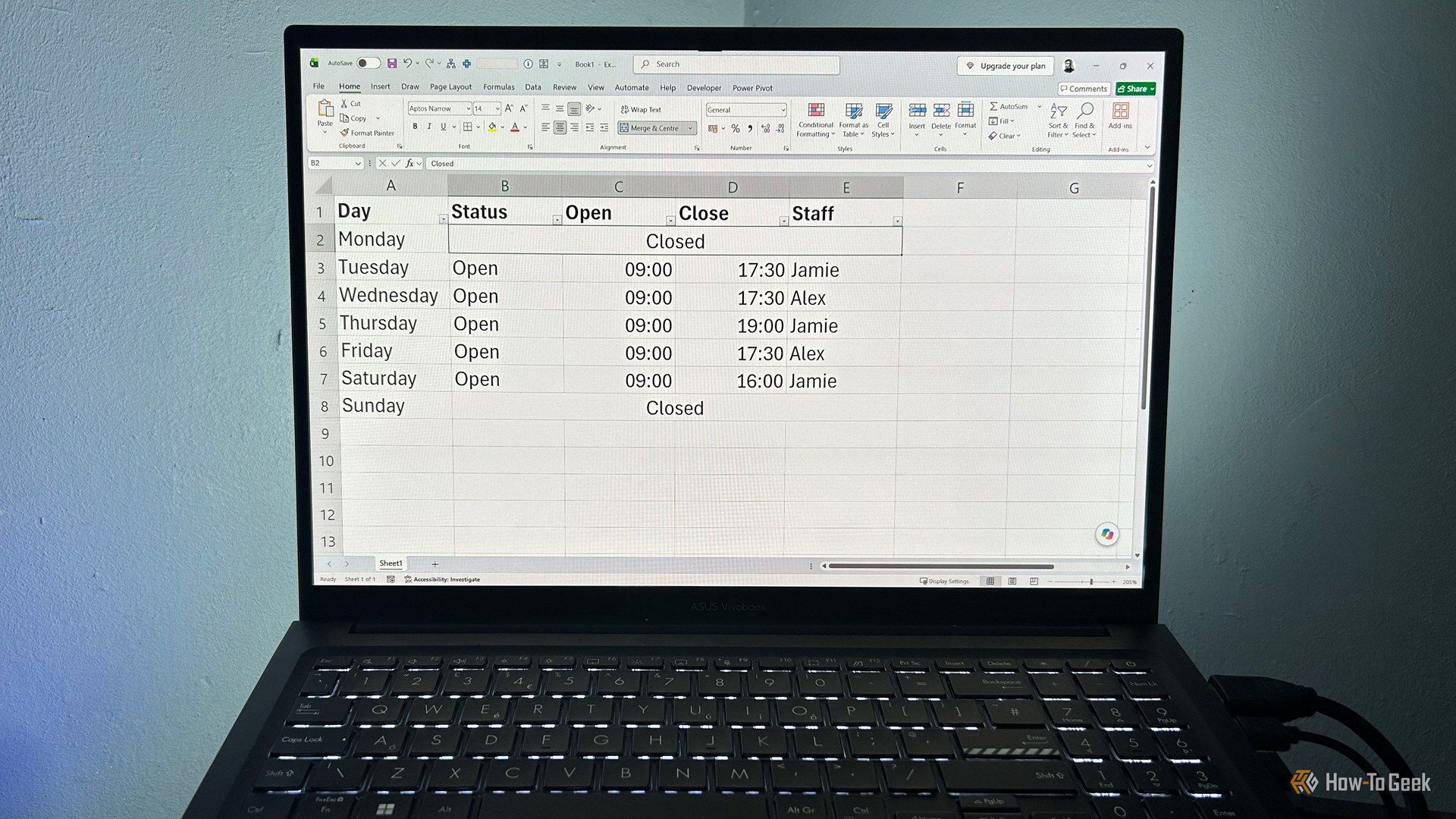
Ditch Merge & Center: The Better Way to Align Text in Excel
Learn to use Excel's "Center Across Selection" to align text across cells without merging, avoiding common data manipulation issues. This guide provides steps to utilize this newly accessible feature and add it to your Quick Access Toolbar.

Mark Wahlberg on using AI in film ‘the right way’ and being open to
Actor Mark Wahlberg believes AI has a place in filmmaking if used responsibly for enhancement, not script generation or actor replacement. At TechCrunch Disrupt, he expressed openness to an AI likeness carrying on his legacy, managed by his family, and emphasized storytelling.

Tesla Unveils Thruster-Equipped Roadster, 2028 Production Targeted
Tesla has unveiled its second-generation Roadster, featuring cold-gas thrusters co-developed with SpaceX, enabling it to jump and flip. The electric sports car demonstrated 0-60mph in an astonishing 0.81 seconds, with production targeted for 2028. This highly anticipated reveal also serves as a key recruitment tool for Tesla's ambitious AI and robotics initiatives.

AI's Confidence vs. Formal Methods' Rigor: Design Flaws & Verification
While AI accelerates code generation, formal methods remain critical for ensuring system correctness. Languages like TLA+ and tools like Quint enable developers to model and verify system designs before coding, catching subtle flaws. Quint makes formal methods more accessible with developer-friendly syntax and executability. This approach is vital for verifying AI-generated code through trace validation and model-based testing, ensuring reliability against real-world data.