
Meta MTIA Chips: Ambitious AI Inference Strategy Under Review
Quick Verdict: Meta's Bold Leap into In-House AI Silicon Meta is making a substantial play in the artificial intelligence landscape with the announcement of four successive generations of its in-house Meta Training and
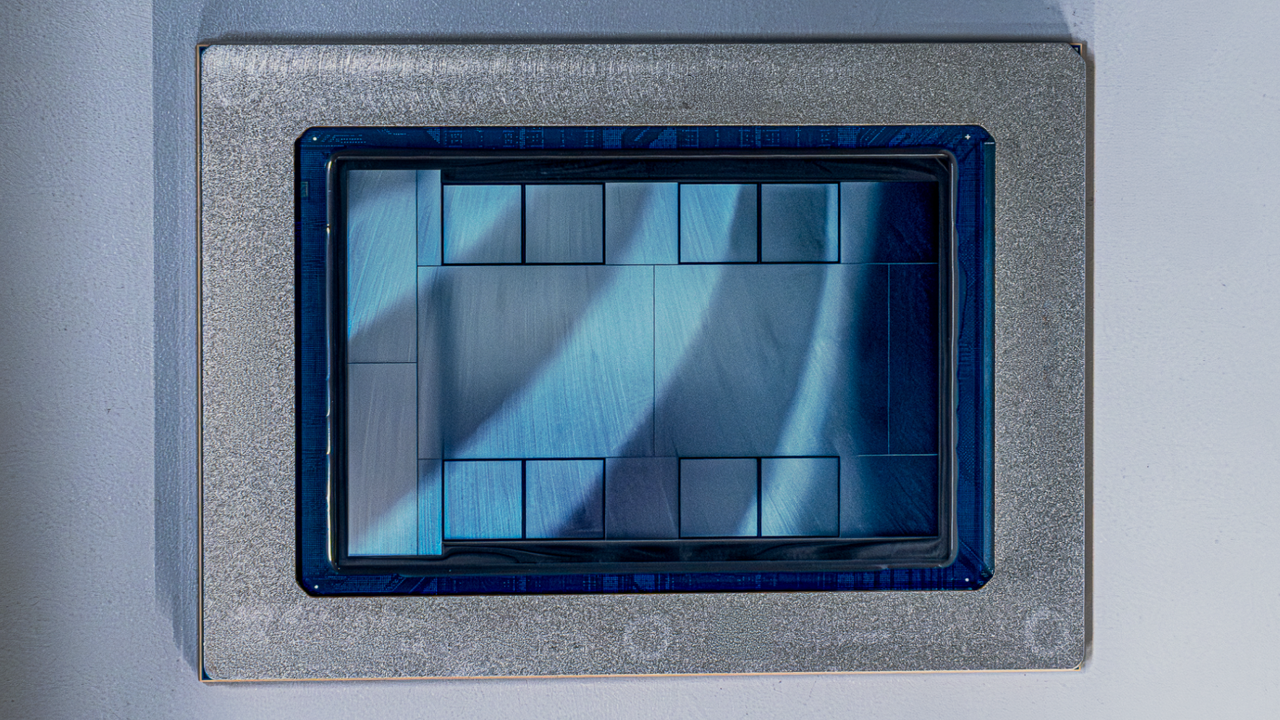
Quick Verdict: Meta's Bold Leap into In-House AI Silicon
Meta is making a substantial play in the artificial intelligence landscape with the announcement of four successive generations of its in-house Meta Training and Inference Accelerator (MTIA) chips. Developed in collaboration with Broadcom, these chips, slated for deployment over the next two years, mark a significant strategic shift. With an aggressive six-month development cadence, an "inference-first" focus, and a commitment to seamless integration within existing infrastructure, Meta is clearly aiming to take greater control over its rapidly expanding AI operations. This initiative is a clear signal of Meta's intent to reduce its reliance on external hardware providers like Nvidia, positioning the MTIA series as a crucial component of its long-term AI strategy.
A Deep Dive into Meta's MTIA Strategy
Meta's approach to its MTIA silicon is defined by speed, specialization, and integration. The company has articulated a "competitive strategy" rooted in rapid, iterative development, targeting a six-month cycle for new chip generations – a pace considerably quicker than the industry's typical one-to-two-year refresh. This rapid iteration is a cornerstone of their strategy, enabling them to quickly adapt to evolving AI demands.
The Cadence and Focus: Inference First
The central tenet of the MTIA chips is their "inference-first" focus. While the initial MTIA 300 chip does include 'R&R Training' in its workload focus, the subsequent MTIA 400, 450, and 500 generations are explicitly designed for 'General AI Inference' and 'AI Inference.' This specialization allows Meta to tailor hardware and software to optimize the execution of trained AI models, which is critical for supporting the vast scale of AI-driven features across its applications, from organic content to advertisements.
Technical Specifications at a Glance
The announced lineup showcases a clear progression in performance and capability across the four generations. Here's a breakdown of the key specifications:
| Feature | MTIA 300 | MTIA 400 | MTIA 450 | MTIA 500 |
|---|---|---|---|---|
| Workload Focus | R&R Training | General AI Inference | AI Inference | AI Inference |
| Module TDP | 800 W | 1,200 W | 1,400 W | 1,700 W |
| HBM Bandwidth | 6.1 TB/s | 9.2 TB/s | 18.4 TB/s | 27.6 TB/s |
| HBM Capacity | 216 GB | 288 GB | 288 GB | 384-512 GB |
| MX4 Performance | - | 12 PFLOPS | 21 PFLOPS | 30 PFLOPS |
| FP8/MX8 Performance | 1.2 PFLOPS | 6 PFLOPS | 7 PFLOPS | 10 PFLOPS |
| BF16 Performance | 0.6 PFLOPS | 3 PFLOPS | 3.5 PFLOPS | 5 PFLOPS |
As the generations advance, we see significant increases in power consumption (TDP) but also substantial jumps in High Bandwidth Memory (HBM) performance and capacity, which are critical for AI workloads. The MTIA 500, for instance, boasts 27.6 TB/s of HBM Bandwidth and up to 512 GB of HBM Capacity, offering immense data throughput. Performance metrics across various precision levels (MX4, FP8/MX8, BF16) also show a strong upward trend, indicating a robust scaling strategy.
Designed for Seamless Integration and Performance
A key element of Meta's plan is the modularity and frictionless adoption of these chips. The MTIA 400, 450, and 500 generations are designed to use the same chassis, rack, and network infrastructure. This means new chip generations can be "dropped into the existing physical footprint for easy interchange," simplifying upgrades and reducing deployment friction. This modularity is a direct contributor to Meta's accelerated six-month chip cadence.
Beyond hardware, the software stack is engineered for compatibility and ease of use. It runs natively on PyTorch, vLLM, and Triton, and supports torch.compile and torch.export. This comprehensive support allows production models to be deployed simultaneously on both existing GPUs and the new MTIA chips without requiring MTIA-specific rewrites, a significant advantage for a company with Meta's scale.
The chips also incorporate hardware acceleration for critical AI operations like FlashAttention and mixture-of-experts (MoE) feed-forward network computation. Furthermore, they utilize custom low-precision data types co-designed for inference, such as MX4, which the MTIA 450 supports, delivering six times the MX4 FLOPs of FP16/BF16. This mixed low-precision computation is designed to avoid the software overhead typically associated with data type conversion, further optimizing efficiency.
User Experience & Deployment (from Meta's Perspective)
For Meta, the "user experience" of these chips revolves around efficiency, scalability, and ease of deployment. The ability to deploy new generations into existing infrastructure with minimal disruption is paramount. The software stack's compatibility with standard AI frameworks like PyTorch means their AI engineers don't face a steep learning curve or extensive code refactoring, which is a major win for productivity. Meta has already demonstrated the practical efficacy of this strategy, having deployed "hundreds of thousands" of MTIA chips across its applications for inference tasks related to organic content and advertisements.
The Strategic Play: Why In-House?
Meta's venture into custom silicon is fundamentally a strategic maneuver to gain greater control over its AI infrastructure and reduce dependence on third-party vendors, most notably Nvidia, which currently dominates the AI chip market. This initiative comes hot on the heels of Meta disclosing a substantial $100 billion AI infrastructure agreement with AMD, underscoring a broader, multi-faceted effort to diversify its hardware suppliers across different parts of its AI stack. By developing MTIA chips internally, Meta aims to keep inference workloads, which represent a significant portion of its AI compute needs, at its core, ensuring tailored performance, potentially lower long-term costs, and a more resilient supply chain. It’s about customizability and control, allowing Meta to innovate on hardware that precisely matches its unique software requirements and scale.
Pros and Cons for Meta
For an organization like Meta, the MTIA chip program presents a clear set of advantages, alongside inherent challenges.
Pros:
- Rapid Innovation & Specialization: The six-month development cadence allows Meta to iterate quickly, adapting to the fast-evolving demands of AI. The inference-first focus means highly optimized performance for their core workloads.
- Reduced Vendor Dependence: By developing in-house, Meta gains greater control over its hardware supply chain and reduces its reliance on dominant external providers, fostering strategic independence.
- Cost Efficiency (Long-term): While initial R&D is significant, custom silicon can lead to better cost-per-inference and improved power efficiency at Meta's immense scale, avoiding premium pricing from external suppliers.
- Seamless Integration: The modular design and compatible software stack (PyTorch, vLLM, Triton) minimize deployment friction and engineering effort, allowing new chips to drop into existing infrastructure without extensive rewrites.
- Performance Optimization: Hardware acceleration for features like FlashAttention and MoE, alongside custom low-precision data types, directly translates to better performance and efficiency for Meta's specific AI models.
Cons:
- Significant Investment: Developing custom chips requires substantial capital expenditure in R&D, design, and manufacturing partnerships (like Broadcom).
- Resource Commitment: Diverts engineering talent and resources that could otherwise be allocated to software or other areas.
- Dependency on Partner: While reducing reliance on one vendor, it creates a new dependency on Broadcom for development and manufacturing expertise.
- Focus Limitation: By optimizing heavily for inference, there might be less flexibility for other types of AI workloads if Meta's strategy shifts significantly, though the MTIA 300 does offer some training capability.
The Verdict: A Smart Bet for Meta's AI Future
Meta's MTIA chip initiative is a bold, necessary, and well-executed strategic move. In an era where AI capabilities are increasingly tied to specialized hardware, controlling the underlying silicon offers immense advantages in terms of performance, cost, and strategic autonomy. The rapid development cycle and the laser focus on inference demonstrate a clear understanding of Meta's operational needs at scale. While it's a monumental undertaking, the potential for optimized performance, reduced operational costs, and greater control over its AI destiny makes this a crucial investment in Meta's future. This isn't just about building chips; it's about building the foundational infrastructure for Meta's next decade of AI-driven innovation.
FAQ
Q: What is the primary focus of Meta's new MTIA chips?
A: The primary focus for the majority of the new MTIA chip generations (MTIA 400, 450, 500) is General AI Inference, with the initial MTIA 300 also supporting 'R&R Training' workloads.
Q: How quickly will Meta release new generations of MTIA chips?
A: Meta plans for a rapid, roughly six-month cadence for new MTIA chip generations, which is significantly faster than the typical one-to-two-year industry cycle.
Q: How will the MTIA chips integrate with Meta's existing AI infrastructure?
A: The MTIA chips are designed for frictionless adoption, using the same chassis, rack, and network infrastructure for the 400, 450, and 500 generations, allowing them to drop into the existing physical footprint. Their software stack also runs natively on PyTorch, vLLM, and Triton, supporting deployment without MTIA-specific code rewrites.
Related articles

Crystal Lake Series on Peacock: A Deep Dive into Horror's Past
Crystal Lake Series Review: A Deep Dive into Horror's Past Verdict: Is Crystal Lake Worth the Dive? The long-awaited Friday the 13th prequel, Crystal Lake, is finally arriving on Peacock, promising a fresh, in-depth

StarCraft Returns in 2030 as Open-World Shooter
Blizzard Entertainment announced a new StarCraft game, an open-world shooter, set to release in 2030. Unveiled at BlizzCon by VP Dan Hay, this marks the series' return after over a decade and a significant genre shift from its real-time strategy roots. The cinematic trailer showcased a gritty human-Zerg conflict, with many fans hoping for a traditional RTS follow-up.
Google's AI Branding Fix: A Clearer Vision for Gemini
This article critiques Google's fragmented AI branding, proposing a unified 'Gemini Intelligence' system to simplify user experience and strengthen Gemini's identity.

Chuwi UniBox AI495 Pro Review: A Mini AI Powerhouse
Chuwi's UniBox AI495 Pro review: A powerful mini workstation with 192GB RAM and an AMD Ryzen AI chip for local LLM processing, packed into a compact, Mac Pro-esque design.

Nscale Adds Former OpenAI Exec Fidji Simo to Board Ahead of IPO
Nscale, the U.K.-based AI data center startup, has appointed former OpenAI, Meta, and Instacart executive Fidji Simo to its board of directors. This high-profile addition comes as Nscale prepares for a potential IPO this fall, leveraging Simo's extensive experience in scaling major tech platforms and guiding a company through a successful public offering.
Pixel Connectivity: Battery Drain, Not Data Speed, Is the Real
Google's Pixel series has consistently offered a compelling Android experience, often earning a spot on recommendation lists for its clean software and camera prowess. However, a recurring shadow has loomed over the