
Decentralized Social Networks: Japan's Yakult Lady Loneliness Combat
Japan, a nation at the forefront of global demographic shifts, faces a significant societal challenge: a rapidly aging population combined with an alarming rise in isolation and loneliness. Nearly 30% of its populace is
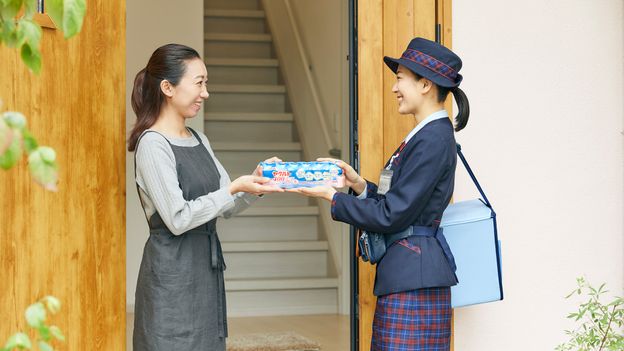
Japan, a nation at the forefront of global demographic shifts, faces a significant societal challenge: a rapidly aging population combined with an alarming rise in isolation and loneliness. Nearly 30% of its populace is now over 65, and with shrinking families and the decline of traditional multi-generational households, the concept of kodokushi, or "lonely death," has become a grim reality, with thousands dying unnoticed annually. This deepening crisis has even led to the appointment of a "Minister of Loneliness" to address the issue at a national level.
Yet, amidst these top-down governmental initiatives, a remarkable, grassroots "human system" has organically evolved over decades, providing a vital, distributed social safety net: the Yakult Lady network. Far more than mere delivery personnel, these women have become an integral part of community life, combating isolation one probiotic drink delivery at a time.
The Yakult Lady System: An Unintentional Social Protocol
The story of the Yakult Lady system begins not with social engineering, but with a marketing challenge. Launched in 1935 by Dr. Minoru Shirota, Yakult, a fermented milk drink containing the beneficial bacteria Lactobacillus casei Shirota, struggled for initial public acceptance. The idea of ingesting "bacteria" for health was counter-intuitive at the time. To educate consumers and drive sales, the company needed direct, door-to-door engagement.
Due to labor shortages, local distributors began hiring women from their communities. These women proved exceptionally effective, particularly with female household decision-makers, and their existing community familiarity fostered crucial trust. This accidental success led to the formal establishment of the "Women's Delivery Sales Network" in 1963, now known as the Yakult Lady system.
Today, over 31,000 Yakult Ladies operate across Japan, with nearly 50,000 more globally. Most are self-employed, offering a flexible work model that appeals to women balancing family responsibilities. Dressed in their distinctive blue uniforms, they navigate neighborhoods on bikes, motorbikes, or by car, making multiple deliveries daily. This widespread, distributed network forms the backbone of the system's reach and resilience.
More Than a Delivery: The 'Watcher' Role
The core functionality of the Yakult Lady system extends far beyond product delivery. The scheduled, routine nature of the visits – often weekly to the same customers for years – builds strong interpersonal connections. For many elderly individuals living alone, like an 83-year-old customer who has received visits from Satoko Furuhata for 25 years, these appointments become treasured "energy charging days," eagerly anticipated moments of human connection and conversation about daily life, family, and local news.
This consistent interaction enables Yakult Ladies to adopt a critical "watcher" role. As Asuka Mochida, a Yakult Lady from Gunma Prefecture, puts it, "We are watchers in a sense, people who look out for others. We notice small changes in health or lifestyle." If a customer fails to answer the door or exhibits subtle changes, these vigilant women may alert family members or seek assistance. This informal monitoring capability transforms a commercial delivery route into a vital component of community care, embodying Japan's cultural emphasis on looking out for one's neighbors.
The Holistic Health Feedback Loop
The Yakult product itself, with its focus on gut health, subtly reinforces the system's broader health benefits. Dr. Shirota's foundational research highlighted the importance of beneficial bacteria in preventing disease. Modern microbiome science further elucidates a fascinating connection between gut health and social well-being: stress and chronic loneliness can negatively impact gut microbiome diversity. The theory suggests a low-grade stress response from loneliness contributes to this degradation.
Conversely, the regular, positive social interaction provided by Yakult Ladies can mitigate this stress, indirectly supporting overall health, including gut health. As Furuhata's 83-year-old customer attests, it's "not just the drink... receiving Mrs. Furuhata's visits [is also] important to my health routine." This creates a powerful, self-reinforcing feedback loop: the product promotes physical health, while its delivery mechanism fosters mental and social health, which in turn can positively influence physical health outcomes.
System Attributes: Scalability and Resilience
From a systems engineering perspective, the Yakult Lady network demonstrates impressive scalability and resilience:
- Distributed Architecture: With thousands of self-employed agents, the system is highly decentralized, reducing single points of failure and allowing for localized adaptation. New routes and agents can be added incrementally, scaling with demand and community needs.
- Low Barrier to Entry/High Adaptability: The self-employment model attracts individuals seeking flexible work, ensuring a continuous influx of personnel. This flexibility also allows agents to adapt their schedules around personal commitments, enhancing job satisfaction and retention.
- Organic Feature Evolution: What began as a sales strategy organically evolved into a social support system. This "feature creep" was not designed but emerged from genuine human need and interaction, making it inherently sustainable and needs-driven.
- Human-Centric Protocol: The "protocol" for interaction emphasizes genuine smiles, positive energy, active listening, and attentiveness to small changes. These soft skills are critical for establishing trust and effectively performing the "watcher" function, making the system robust against the emotional complexities of human connection.
While not designed as a public health intervention, the Yakult Lady system exemplifies how existing commercial infrastructure, when infused with human connection and community responsibility, can yield profound social benefits. It's a testament to the power of simple, consistent human interaction to address complex societal challenges, offering a valuable model for architects of distributed social solutions.
FAQ
Q: How does the Yakult Lady system ensure consistent quality of interaction across a distributed network?
A: The system relies heavily on the individual traits and learned behaviors of the Yakult Ladies, emphasizing attributes like a genuine smile, positive energy, active listening, and keen observation skills. While not a rigid technical protocol, these expectations form a consistent human-centric approach, fostering trust and rapport essential for their dual role of delivery and social support.
Q: What makes this human-centric system particularly resilient against the challenge of increasing loneliness?
A: Its resilience stems from its distributed, grassroots nature and the deep integration of its agents within local communities. The self-employed model offers flexibility, attracting a continuous workforce. More importantly, the system's ability to organically evolve beyond its initial commercial purpose into a vital social safety net, providing consistent, personalized human connection, makes it adaptable and responsive to a fundamental human need that often goes unmet by more formal structures.
Q: Can the "watcher" functionality of the Yakult Ladies be considered a form of informal, distributed monitoring?
A: Yes, absolutely. The Yakult Ladies act as informal, distributed sensors within communities. Through their routine visits and personal interactions, they are uniquely positioned to detect subtle changes in their customers' health, routines, or living conditions. This provides a valuable, low-overhead monitoring layer that can trigger alerts to family members or other support systems, effectively contributing to a broader community safety net without formal surveillance mechanisms.
Related articles

AI's Impact on Malware Detection: Next-Gen Protection Deep Dive
The landscape of cybersecurity has transformed dramatically. Gone are the days when a simple virus attached itself to a file, easily quarantined by an antivirus scanner. Today, malware is sophisticated, multifaceted,

AI Cybersecurity: The Perpetual Cat and Mouse Game
In the rapidly evolving digital landscape, the interplay between artificial intelligence and cybersecurity has created a dynamic, ceaseless challenge—a true cat and mouse game. AI is not merely a tool for defense; it's
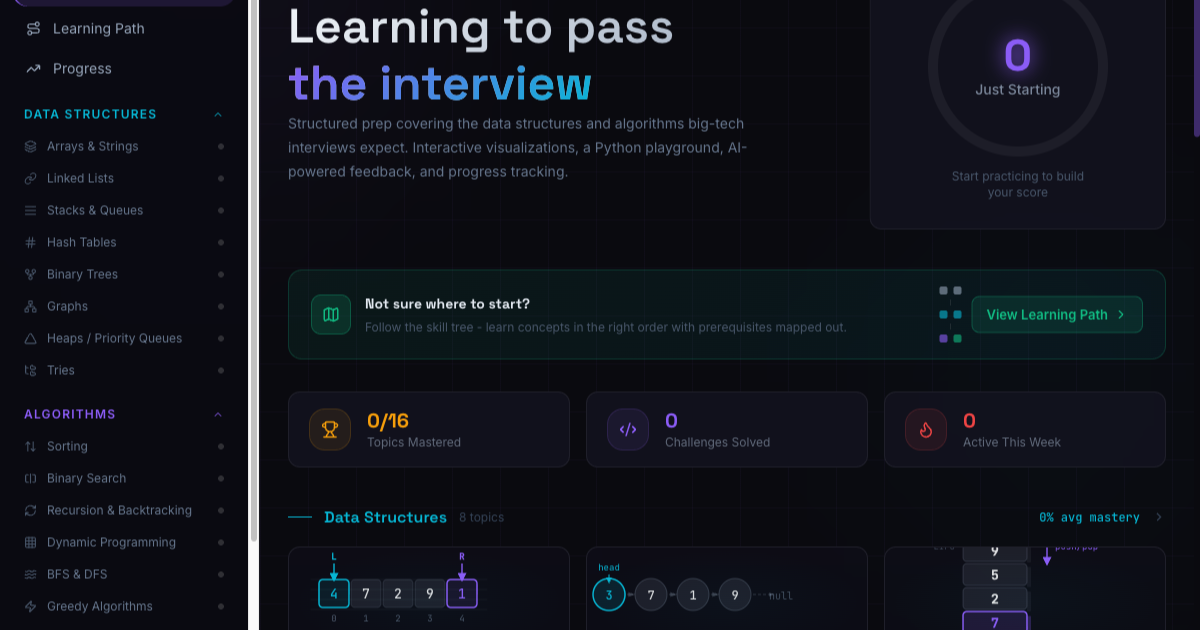
Learningto/Pass: Free, AI-Powered Interview Prep for Developers
Landing a role at a top-tier tech company often hinges on mastering complex data structures and algorithms, coupled with a solid grasp of system design. The problem for many aspiring software developers is that quality
The Composite Design Pattern: Unifying Individual Objects and Groups
As software engineers, we frequently encounter scenarios where we need to manage collections of objects that can be either individual entities or groups containing other entities. Think of a file system with files and
Java's Secret Weapon: How Age Powers Its AI Future
Java's extensive history is a key AI superpower, offering a stable foundation for agent-generated code and an unparalleled dataset for training AI models. Its mature ecosystem of libraries and agentic harnesses further enable developers to build robust, integrated AI applications. This positions Java as a powerful, reliable choice for future AI-driven software development.
Scaling FinTech Operations: AI's Role in Code, SDLC, & UX
In the rapidly evolving landscape of financial technology, ensuring both security and efficiency at scale is paramount. As AI increasingly permeates critical infrastructure, developers working in FinTech face unique