37 results found

Java's extensive history is a key AI superpower, offering a stable foundation for agent-generated code and an unparalleled dataset for training AI models. Its mature ecosystem of libraries and agentic harnesses further enable developers to build robust, integrated AI applications. This positions Java as a powerful, reliable choice for future AI-driven software development.

Meta is offering a significant 95% discount on its new Muse Spark AI model for users who agree to share their prompts and outputs for future model training. This strategy aims to gather crucial data for improving agentic AI tools, following the company's past data acquisition challenges. The move also intensifies competition among AI developers, introducing a new value exchange for user data.
As senior developers, we’ve invested years honing our craft, accumulating invaluable experience in architecture, best practices, and avoiding pitfalls. The rise of AI-assisted development has introduced a new paradigm,

Google has unveiled Gemini 3.8 Flash, a powerful AI model for agentic tasks, software development, and multi-step reasoning. Alongside it, Gemini 3.8 Flash Cyber focuses on autonomous vulnerability detection and patching, offering critical advancements for cybersecurity defenders.

The rise of AI agents is dramatically changing the landscape of software development. With code generation becoming increasingly inexpensive and fast, a common temptation emerges: simply give a model a high-level goal,
AI's rise brings "tokenmaxxing" – maximizing AI output – but this often misses real value. This piece explores why optimizing for raw AI generation triggers Goodhart's Law and advocates for measuring agentic outcomes like release speed and PR merges, transforming how we evaluate developer contributions, especially for junior talent.

Meta has released Muse Code (beta), a terminal coding agent powered by their new Muse Spark 1.2 model. Muse Code handles complex software engineering tasks, featuring persistent background agents and a robust, restart-safe runtime. Muse Spark 1.2, a coding-focused LLM, shows significant improvements in code generation and complex debugging through expanded training and a self-improvement loop.
This open-source, agentic-first CRM fundamentally redefines customer relationship management by making an autonomous research agent the core product. Unlike traditional systems that rely on human data entry or simply bolt on AI chatbots, this CRM's agent independently discovers, verifies, and records customer information, acting as an intelligent partner. It prioritizes factual evidence over AI guesses, ensuring data accuracy and freeing up human talent for strategic tasks.
The digital landscape is undergoing a profound transformation. We're entering an era where AI agents are becoming increasingly sophisticated, capable of interacting online in ways that closely mimic human behavior. This

The software development landscape is evolving beyond single-prompt LLMs to autonomous AI agents capable of complex, multi-step workflows. LangChain, with its extension LangGraph, provides the essential tools to build these sophisticated systems, enabling stateful, cyclical agent behaviors. Developers can implement advanced features like Human-in-the-Loop, RAG, and streaming responses, and deploy these agents using industry best practices.

San Francisco-based startup Poolside announced the release of Laguna S 2.1 on July 21, 2026, a 118-billion-parameter open-weight model engineered for agentic coding. The company positions this new model as a crucial

Capital One has launched VulnHunter, an open-source AI tool designed to identify and fix software vulnerabilities proactively. This agentic AI scans source code using an "attacker-first" approach and a "falsification engine" to minimize false positives, providing targeted code fixes. The move reflects Capital One's commitment to collaborative defense against rising AI threats, especially after its significant 2019 data breach.

Expedia Group, leveraging years of AI experience, has unveiled a comprehensive framework of principles to ensure its AI systems deliver value, operate safely, and scale responsibly. This strategy includes "Agentic Release" tollgates, designed to govern the development and deployment of autonomous AI agents across its platforms. The framework focuses on outcomes, system design, and establishing trust and accountability.

Liquid AI, founded by former MIT computer scientists, today launched LFM2.5-230M, its smallest AI language model yet. This 230-million-parameter foundation model is explicitly designed for on-device agentic workflows,

KPMG has pulled its report, "Redefining excellence in the age of agentic AI," after organizations cited within it denied the accuracy of its claims regarding their AI usage. Inaccuracies were attributed to AI hallucinations, implying KPMG used AI to write the report about AI. This follows a similar incident last month with EY.

Pool, a new AI-powered iOS app, transforms cluttered camera rolls into organized, actionable archives by categorizing screenshots and linking them to original sources. Developed by Maxime Junique and Piet Terheyden, the app uses advanced AI to help users rediscover forgotten information, from recipes to product recommendations. Having secured over $2 million in pre-seed funding, Pool is also planning a future agentic AI personal assistant app.
Apple has introduced a groundbreaking architecture at WWDC26 for on-device AI, overcoming the long-standing DRAM memory limit. Its new AFM 3 Core Advanced model stores 20 billion parameters in NAND flash, using a unique Instruction-Following Pruning (IFP) method to dynamically load expert modules into DRAM. This innovation significantly boosts local AI capabilities for agentic workloads.

LLM-based Multi-Agent (LLM-MA) systems automate complex software tasks, but their token consumption, and thus costs, are poorly understood. New research analyzing the ChatDev framework with GPT-5 reveals that the iterative Code Review stage consumes a striking 59.4% of tokens, with input tokens making up 53.9% of total consumption. This indicates that the primary cost in agentic software engineering lies in refinement and verification, not initial generation, offering crucial insights for cost prediction and workflow optimization.
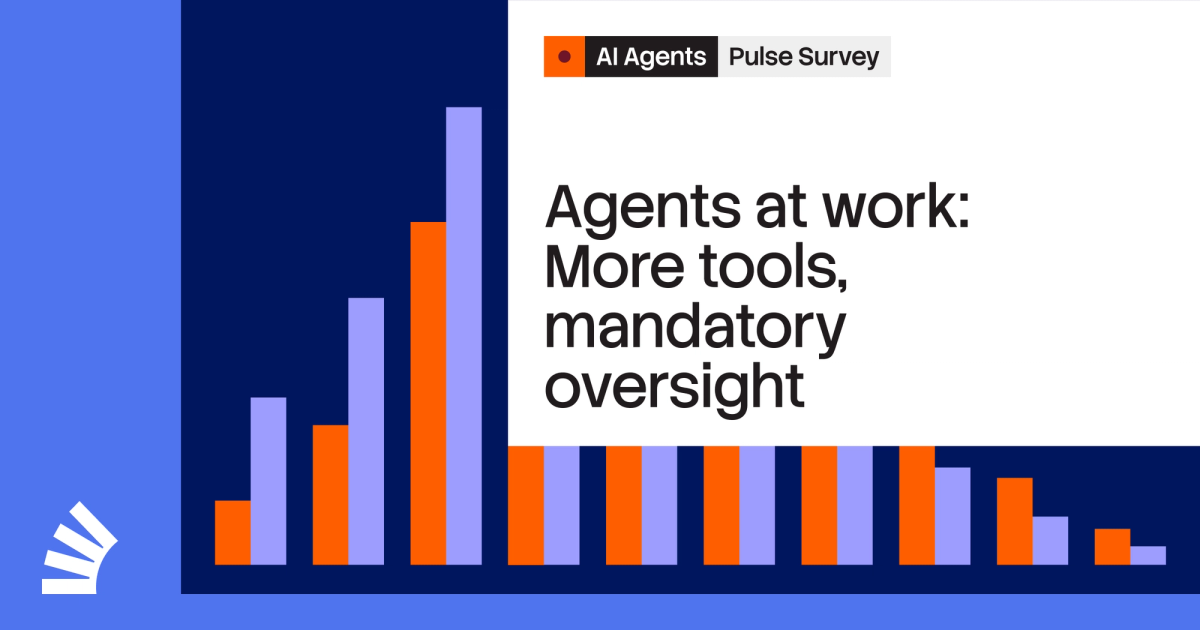
AI agent usage has nearly doubled, yet developers maintain a strong preference for human oversight. A recent survey reveals single-agent workflows are dominant, driven by concerns for accuracy and security, even as work quality improves. Fintech and media lead adoption, leveraging tools like GitHub Copilot and LangChain under careful monitoring.
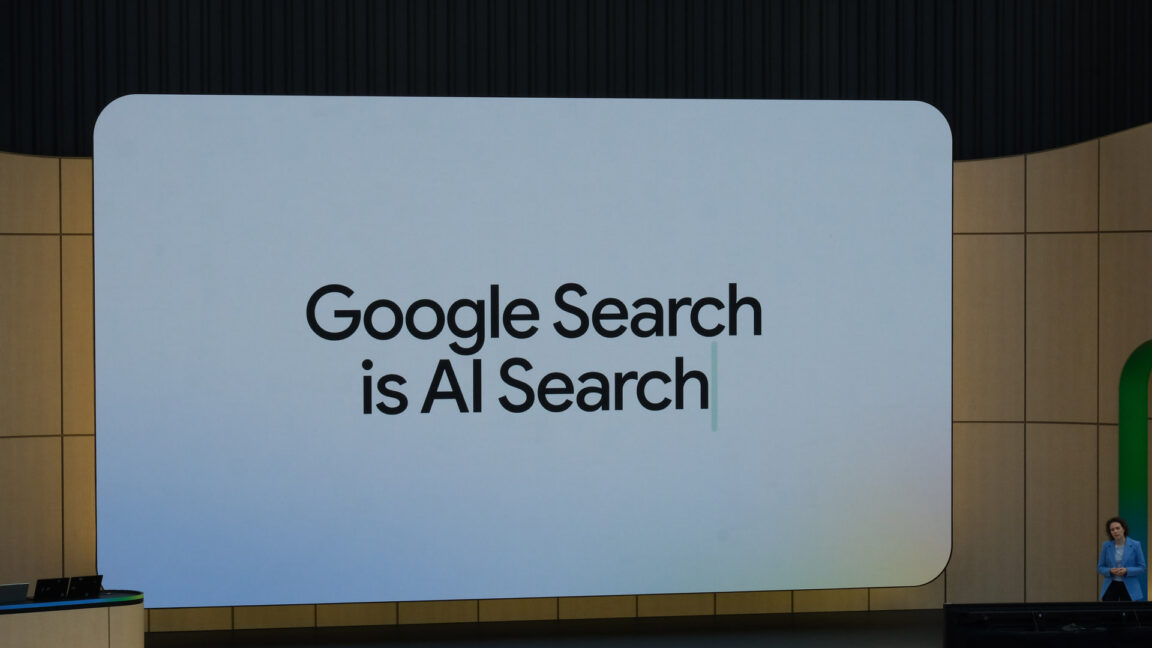
Google is transforming its search engine by 2026 with agentic AI, offering conversational AI Mode, generative UIs, and custom apps. This shift aims for efficiency but de-emphasizes traditional links, raising concerns about information diversity despite Google's market dominance.

Manus AI introduces a paradigm shift from basic chatbots to intelligent agents capable of autonomously executing complex, multi-step tasks within an isolated cloud environment. This guide explores its capabilities, including web browsing, code execution, and real-site interaction, empowering developers to build sophisticated automated workflows.

Amazon has integrated its unified Alexa for Shopping AI assistant directly into its main search bar for US customers. This move consolidates the Rufus chatbot and Alexa+ functionalities, providing conversational answers, comparisons, and automated shopping tasks as agentic commerce intensifies. The strategic shift aims to defend Amazon's advertising business against competing AI agents.

Amazon has launched "Alexa for Shopping," unifying its Rufus e-commerce chatbot with the Alexa+ assistant to create a seamless AI-powered shopping experience across its platforms. This move directly challenges rival AI assistants like ChatGPT and Gemini by offering enhanced personalization, agentic AI features, and integrated functionalities for a more efficient buying process. The new service, which retires the Rufus name from the interface, will roll out in the U.S. soon, aiming to keep customers within Amazon's ecosystem.

MCP (Model Context Protocol) is a new standard that acts as a standardized bridge, enabling secure and efficient connections between large language models (LLMs) and external, private enterprise data sources. It addresses the complexity of traditional API integrations by standardizing data formats for AI, making agentic workflows more scalable and effective. MCP ensures LLMs have the crucial internal context needed for practical enterprise applications.

xAI has launched Grok 4.3, its new large language model, featuring "always-on reasoning" and advanced agentic capabilities. The model arrives with an aggressively low API pricing strategy ($1.25/$2.50 per million input/output tokens) and a sophisticated voice cloning suite called Custom Voices. While excelling in specialized legal and financial tasks, Grok 4.3 presents a complex trade-off between cost efficiency, deep reasoning, and general consistency for enterprise users.
