7 results found

OnePlus, and parent company Oppo, are reportedly exiting the US and European markets, with an announcement due shortly. This follows months of rumors and signals a major shift in the Western smartphone landscape.

Waymo's ambitious plan to roll out driverless cars in four additional major cities this year signals a significant step forward for autonomous technology, though specific details remain under wraps.
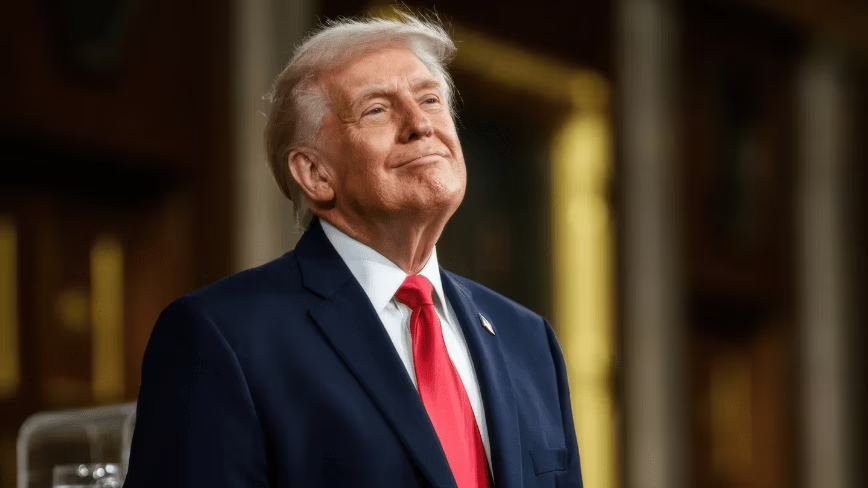
Former President Donald Trump has threatened a 100% tariff on any country taxing US tech firms with digital services taxes, just a day after the EU ratified a trade deal. Brussels defiantly stated taxation is its sovereign right and will not back down. This sets up a major international standoff over digital taxation, challenging Europe's years-long efforts to regulate tech giants and impacting future trade relations.
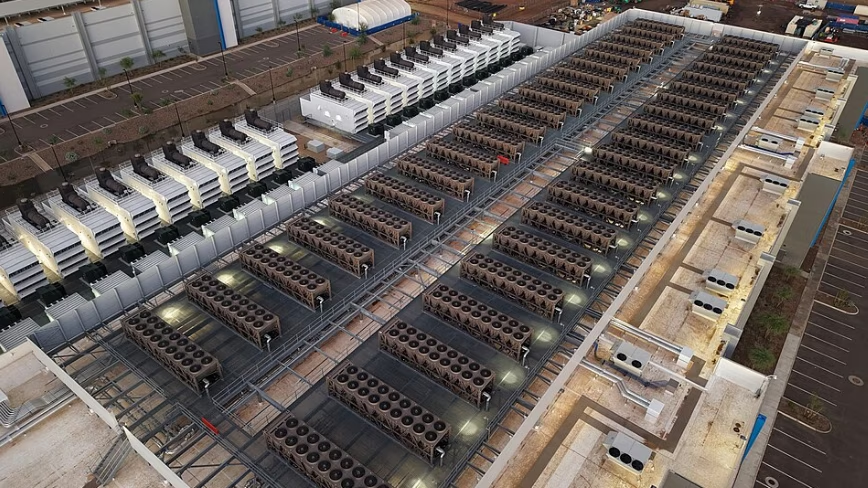
Grassroots opposition groups successfully blocked or delayed 75 data center projects worth $130 billion across the US in Q1 2026, matching the total disruptions for all of 2025. Driven by concerns over electricity, water, and noise, the number of anti-data center groups has doubled to 833 nationwide, profoundly impacting the AI industry's expansion plans amid shifting public opinion and legislative action.
The intersection of international politics, data governance, and cloud infrastructure has recently taken a concerning turn for European developers and organizations. Recent reports indicate that major US tech firms,

France announced plans to transition government computers from Microsoft Windows to Linux to reduce reliance on U.S. tech and achieve "digital sovereignty." This decision, driven by geopolitical tensions and weaponized sanctions by the Trump administration, is part of a broader European effort to secure digital independence. The open-source nature of Linux offers transparency and control, aligning with France's strategic goals.

Super Micro co-founder Yih-Shyan ‘Wally’ Liaw and two others face federal charges for a $2.5 billion scheme to smuggle advanced Nvidia AI servers to China, circumventing US export controls. The alleged operation involved using dummy servers and swapping serial numbers to deceive auditors. This case exposes significant vulnerabilities in US tech export policies and raises questions about corporate compliance amidst escalating chip trade tensions.
