
Super Micro Co-Founder Charged in $2.5B AI Server Smuggling Scheme
Super Micro co-founder Yih-Shyan ‘Wally’ Liaw and two others face federal charges for a $2.5 billion scheme to smuggle advanced Nvidia AI servers to China, circumventing US export controls. The alleged operation involved using dummy servers and swapping serial numbers to deceive auditors. This case exposes significant vulnerabilities in US tech export policies and raises questions about corporate compliance amidst escalating chip trade tensions.
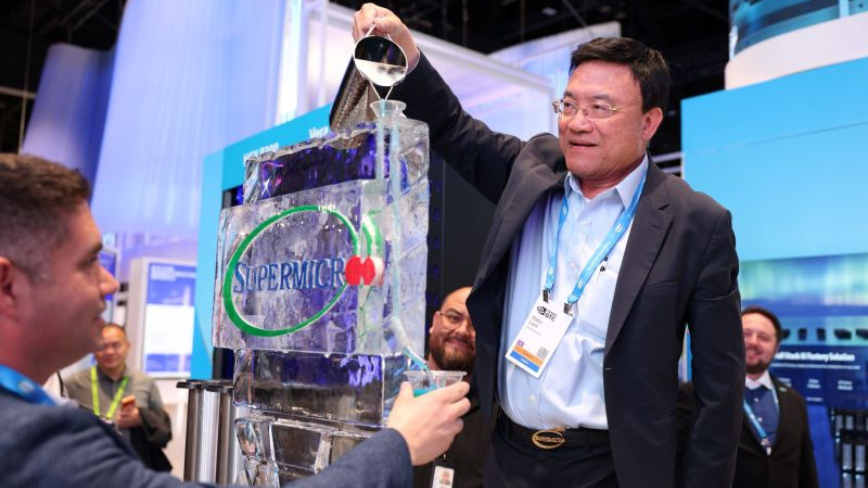
The façade of America’s semiconductor export controls was laid bare this week with the unsealing of a federal indictment against three individuals, including Super Micro Computer co-founder Yih-Shyan ‘Wally’ Liaw. The charges allege a sophisticated, multi-billion-dollar scheme between 2024 and 2025 to illicitly divert advanced AI servers, equipped with Nvidia’s cutting-edge accelerator chips, from the United States to customers in China. This elaborate operation, which prosecutors claim involved swapping serial numbers and staging non-functional “dummy” machines in Southeast Asian warehouses, exposes the critical vulnerabilities in the US strategy to restrict China’s access to high-end AI technology.
The indictment, unsealed on March 19, 2026, paints a vivid picture of the alleged deception. At its heart was a front company in Southeast Asia, where real servers, destined for China, were repackaged into unmarked boxes. Simultaneously, non-functional replica servers had their serial number stickers meticulously removed using a hair dryer and reapplied from the legitimate machines, preparing them to face auditors and inspectors. This intricate ruse reportedly allowed Liaw, 71, along with Super Micro Taiwan General Manager Ruei-Tsang ‘Steven’ Chang, 53, and contractor Ting-Wei ‘Willy’ Sun, 44, to orchestrate the smuggling of approximately $2.5 billion worth of hardware. During a peak period in spring 2025, a staggering $510 million in servers allegedly made the journey to China. Liaw and Sun have been arrested, while Chang remains a fugitive.
Super Micro, a publicly traded company based in San Jose, has distanced itself from the alleged actions of its executives. The company announced it placed Liaw and Chang on administrative leave and terminated its relationship with Sun, stating its cooperation with investigators and its commitment to a “robust compliance programme.” However, prosecutors detailed how the conspirators used encrypted messaging to coordinate orders, shipping destinations, and, crucially, methods to hide the scheme from Super Micro’s own compliance team. Internal audits and even a US Department of Commerce inspection were allegedly circumvented with staged props and a reportedly complicit auditor. The charges against the trio include conspiracy to violate the Export Controls Reform Act, conspiracy to smuggle goods from the United States, and conspiracy to defraud the government, carrying a combined maximum sentence of 30 years in prison.
A Known Vulnerability Exploited
The transshipment route through Southeast Asia, central to this alleged scheme, is far from a novel discovery. For years, US trade analysts, think tanks, and even the Department of Commerce have highlighted these countries — including Malaysia, Singapore, Vietnam, and Thailand — as lacking the robust enforcement infrastructure or political will to effectively monitor re-exports. Prior incidents reinforce this pattern: Vietnamese authorities intercepted thousands of falsely labeled shipments traced to Chinese factories, and Malaysian tech hubs were flagged for similar rerouting. Chinese AI labs, like DeepSeek, have been accused of setting up "ghost" data centers in the region as a facade. A Financial Times investigation previously estimated that China managed to secure approximately $1 billion in advanced AI processors shortly after the last major tightening of US export controls. These instances underscore that the current export control framework, largely reliant on declared end-use and intermediary compliance, struggles against the immense financial incentives to bypass regulations.
Super Micro's Troubled Past
The involvement of Super Micro, even indirectly, aligns with a troubling regulatory history that suggests systemic issues rather than isolated incidents. The company was temporarily delisted from Nasdaq in 2018 for failing to file financial statements and later paid a $17.5 million fine to the Securities and Exchange Commission in 2020 for "widespread accounting violations," including over $200 million in improperly recognized revenue. Significantly, Wally Liaw, now facing federal charges, had resigned during this period, only to return as a consultant in 2021, a senior vice president in 2022, and rejoined the board of directors in late 2023. More recently, in 2024, a Hindenburg Research report alleged fresh accounting irregularities and violations of export controls, leading to the resignation of auditor Ernst & Young. Despite these repeated controversies, Super Micro has maintained its position in the S&P 500, reporting a staggering $12.7 billion in revenue for its most recent quarter. This pattern raises serious questions about the effectiveness of its corporate governance and compliance mechanisms.
Policy in Flux and Unresolved Challenges
The timing of this indictment introduces a layer of political irony. While the Justice Department prosecutes alleged smugglers, the Trump administration has been subtly relaxing some of the very export control measures that made these shipments illegal. In December 2025, the White House signaled a willingness to permit sales of certain chips directly to approved Chinese customers. January 2026 saw the Bureau of Industry and Security issue revised licensing rules, shifting from a presumption of denial to a case-by-case review for exports of earlier-generation AI hardware to mainland China. Furthermore, the "Affiliates Rule," designed to prevent circumvention via Chinese subsidiaries, was suspended for a year almost immediately after its introduction. This creates a complex policy landscape: are these indictments a robust enforcement of existing rules, or a selective display of toughness while the underlying policy quietly softens?
Congress, however, remains keenly focused on the issue. The Bureau of Industry and Security received a 23% budget increase for fiscal year 2026, with bipartisan support explicitly earmarked for semiconductor enforcement, and several members of Congress have pushed for greater legislative oversight of export licensing decisions. Yet, the core architectural challenge persists. Export controls that primarily rely on the point of sale, declared end-use, and the internal compliance of companies — a system demonstrably vulnerable to deception with a simple hair dryer and a rented warehouse — are fundamentally ill-equipped for the monumental economic incentives at play in the global chip war. The alleged $2.5 billion scheme underscores that the "honor system" has been stretched far beyond its breaking point. As the indictment reveals, while auditors are still "on their way," the real hardware is likely already deployed in data centers across China, training advanced AI models and narrowing the technological gap the controls were designed to maintain.
FAQ
Q: Who has been charged in connection with the alleged server smuggling scheme?
A: Yih-Shyan ‘Wally’ Liaw, co-founder and Senior Vice President of Business Development at Super Micro Computer; Ruei-Tsang ‘Steven’ Chang, general manager of the company’s Taiwan office; and Ting-Wei ‘Willy’ Sun, a contractor, have been charged. Liaw and Sun were arrested, while Chang remains a fugitive.
Q: How did the alleged conspirators attempt to circumvent US export controls?
A: They allegedly used a front company in Southeast Asia to reroute advanced AI servers to China. This involved repackaging real servers, then using "dummy" servers with swapped serial number stickers to pass inspections and audits by both Super Micro's compliance team and the US Department of Commerce.
Q: What are the broader implications of this case for US policy on technology exports to China?
A: The case highlights systemic vulnerabilities in US export controls, which rely heavily on declared end-use and intermediary compliance. It also creates a complex situation as the Justice Department prosecutes these charges while the Trump administration has simultaneously begun to relax some restrictions on chip sales to China, raising questions about the consistency and effectiveness of the overall strategy.
Related articles

Apple Unveils iPhone Duo: Pricey Foldable Sees Soaring Demand
Apple has officially entered the foldable smartphone arena with the long-anticipated launch of the iPhone Duo. Priced starting at a hefty $1,999, the device features a 5.4-inch outer display and a larger 7.6-inch inner

in-depth: Chicago-Area Cops Helped HSI Spy on Minnesota Anti-ICE
Chicago-area law enforcement, including local police and HSI agents, conducted undercover surveillance on Minnesota anti-ICE activists at an April 2, 2022, talk in Chicago. This operation was part of a federal conspiracy probe into 15 Minnesota activists facing felony charges related to immigration enforcement resistance. Civil liberties advocates have condemned the surveillance as a troubling intrusion into protected political activity.

Mark Wahlberg on using AI in film ‘the right way’ and being open to
Actor Mark Wahlberg believes AI has a place in filmmaking if used responsibly for enhancement, not script generation or actor replacement. At TechCrunch Disrupt, he expressed openness to an AI likeness carrying on his legacy, managed by his family, and emphasized storytelling.

Tesla Unveils Thruster-Equipped Roadster, 2028 Production Targeted
Tesla has unveiled its second-generation Roadster, featuring cold-gas thrusters co-developed with SpaceX, enabling it to jump and flip. The electric sports car demonstrated 0-60mph in an astonishing 0.81 seconds, with production targeted for 2028. This highly anticipated reveal also serves as a key recruitment tool for Tesla's ambitious AI and robotics initiatives.

Amazon Prime Video Launches AI-Powered Prime 360 for NBA Coverage
Amazon Prime Video is elevating its NBA coverage with the introduction of Prime 360, an AI-powered replay system offering immersive, 'fly through' views of the action. Kicking off its second season, Prime Video also adds Yahoo fantasy integration and gains exclusive Eastern Conference Finals rights, expanding its tech-driven sports broadcast. The new features aim to deliver a unique and interactive viewing experience for basketball fans.

regional: A two-person Seattle startup lands $1M to reinvent
Seattle startup TriMagnetix has secured $1 million to develop semiconductor chips that consume 800 times less energy and are radiation-resistant. The two-person company, leveraging nanomagnetic technology, is targeting space applications and data centers. With new funding and key partnerships, TriMagnetix aims for commercial sales within a year.