20 results found

As *Gears of War: E-Day* prepares for its October 6th launch, developers at The Coalition are facing significant uncertainty. Recent layoffs and widespread cuts across Xbox studios have led to fears for their jobs and potential Metacritic bonuses post-release, creating a somber mood for what should be a triumphant launch.

Microsoft has cut 277 jobs in Washington, with artists, game designers, and producers heavily impacted. This is part of a broader Xbox restructuring aiming for "growth and profitability." Notably, the next Halo game's development is shifting to Activision.

California-based Cowboy Space has leased a massive 291,035-square-foot facility in Kent, Washington, to produce hardware for its planned orbital AI data centers. This is the largest industrial lease in the Puget Sound region this year and is expected to create 300 jobs, advancing the company's goal of launching its Stampede constellation by 2028.

The Federal Reserve has rapidly escalated its focus on artificial intelligence, moving from near-ignoring the technology to intensely debating its profound economic implications on jobs, growth, and inflation. Fed Chair Kevin Warsh highlighted AI as a "hinge point" for the economy, amidst concerns about a potential AI bubble and whether massive tech spending is exacerbating current price spirals.

Bill Gates, once an AI optimist, has expressed profound concern over the technology's future, warning of unprecedented turbulence, widespread unemployment, and potential injustice in a new 6,000-word essay. He urges global preparedness, noting the world is ill-equipped for this rapid transition.

Microsoft co-founder Bill Gates has expressed significant alarm over the rapid advancement of artificial intelligence, a stark shift from his previous optimism. In a new essay and interview, he reveals he is now "scared" of AI's potential harms to safety, jobs, and children's well-being, calling for urgent government regulation.

Starbucks has cut an additional 224 jobs at its Seattle headquarters, impacting tech and store development roles, as its corporate restructuring nears completion. These cuts bring the total Seattle reductions to 537 this year, part of CEO Brian Niccol's broader turnaround strategy aiming for $2 billion in cost savings.
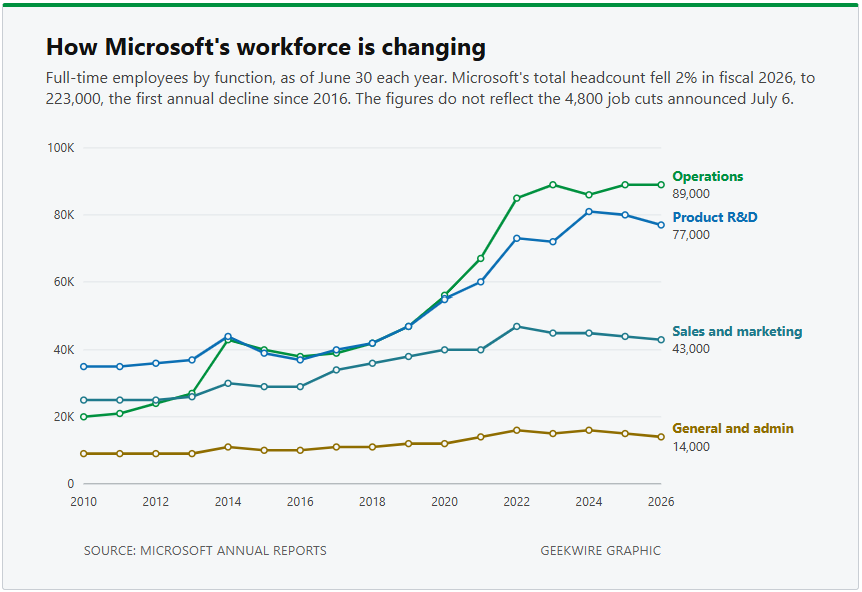
Microsoft's total headcount dropped for the first time in a decade, fueled by a second consecutive decline in R&D roles, despite record revenue growth. This strategic shift reflects the company's adaptation to the AI era, including significant investments in AI infrastructure and a reallocation of engineering talent to customer-facing roles.

Reed Jobs, son of Apple co-founder Steve Jobs, is rapidly accelerating the mission of his oncology-focused venture firm, Yosemite, aiming to revolutionize cancer treatment through a blend of early-stage academic

Seattle's tech sector is seeing major shifts, with Microsoft cutting 4,800 jobs and overhauling Xbox. Amidst this, the startup scene thrives, showing a surge in hardware on the GeekWire 200. AI is rapidly transforming how founders build and operate, driving efficiency and innovation across all ventures.

Andrew Yang is championing a new wave of startups focused on lowering the cost of living for average Americans. His latest venture, Nobile Mobile, offers affordable cell service and returns savings to customers, demonstrating a business model that prioritizes giving money back rather than solely extracting it. This initiative aims to address economic pressures, particularly those intensified by AI's impact on wages and jobs.
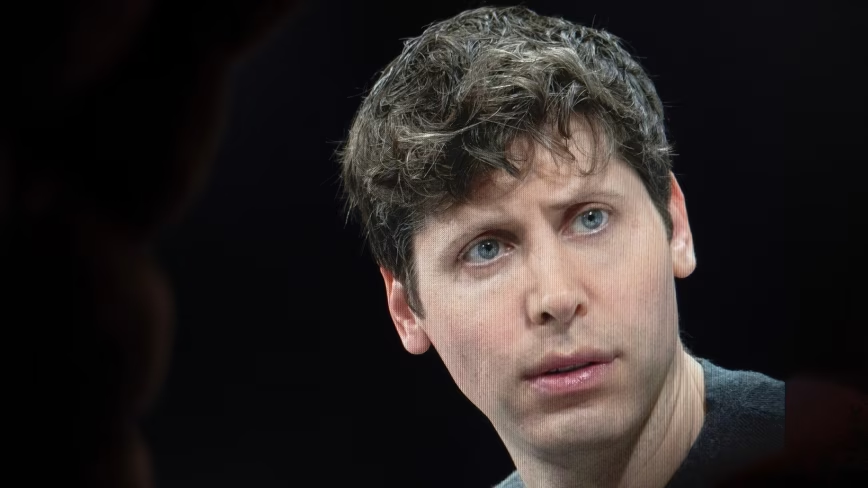
OpenAI CEO Sam Altman now states that a widespread AI-driven jobs apocalypse is improbable, a softer stance than his previous warnings. He predicts significant churn within sectors and specific job displacements, but not an economy-wide collapse, a view supported by initial labor market data.

Starbucks is cutting 61 tech jobs at its Seattle headquarters as part of a technology department reorganization, a recent Washington state filing confirms. The layoffs, impacting roles from cybersecurity to management, are tied to CEO Brian Niccol's turnaround strategy and new CTO Anand Varadarajan's vision.

Porsche is closing three subsidiaries—Cellforce Group (battery R&D), Porsche eBike Performance, and Cetitec (software)—affecting over 500 jobs. This strategic overhaul, driven by CEO Michael Leiters, aims to refocus on core business amidst declining sales and profits, particularly in key markets like China and North America.

California gubernatorial candidate Tom Steyer has proposed a groundbreaking plan to guarantee jobs for workers displaced by AI, funding it through a novel "token tax" on big tech. The initiative aims to make California the first major economy to protect its workforce from automation's impact by creating jobs in key sectors and establishing an AI Worker Protection Administration. This long-shot proposal faces political challenges but highlights growing concerns over AI's economic effects.

Meta is cutting 168 positions in Washington state, predominantly impacting its Reality Labs division across Seattle, Redmond, and Bellevue. These layoffs, effective May 8, are part of a broader company-wide restructuring and follow previous reductions as Meta emphasizes efficiency and AI integration.

New research identifies jobs most threatened by AI and who can adapt, highlighting clerical and administrative workers—primarily women—as particularly vulnerable due to high AI exposure and low adaptability. While AI is transforming white-collar jobs, economists caution that predicting its full impact is difficult, drawing parallels to past technological shifts that created new roles despite displacement.

Displaced by AI, a growing number of white-collar professionals, including lawyers, scientists, and journalists, are now reluctantly training the very AI models that rendered their jobs obsolete. This emerging gig economy reflects a bleak reality and a stark warning for the future of employment.
VR Pioneer nDreams Restructures: Two Studios Close, 78 Jobs at Risk It’s a tough day in the world of virtual reality gaming, as news has emerged that UK-based VR specialist nDreams is undergoing a significant

Startup CEOs from Read AI and Lucidya shared an optimistic outlook at Web Summit Qatar, challenging common fears about AI replacing human jobs. They told TechCrunch that AI tools are designed to automate specific tasks, not entire professional roles. This perspective suggests AI will enhance human productivity by handling mundane work, allowing people to focus on creative and strategic endeavors.
