245 results found

In a significant development shaking the artificial intelligence landscape, Anthropic has taken its two newest and most powerful AI models, including the notable Claude Fable, offline. This decision comes in compliance

The White House last Friday ordered AI giant Anthropic to immediately restrict the export of its powerful AI models, Fable and Mythos, citing unspecified national security concerns. This directive led Anthropic to
.jpg)
Apple's 2026 iPad lineup offers refreshed models and new iPadOS 27 AI features, presenting diverse options for consumers. The iPad Air received an M4 chip, the base iPad an A16, and the iPad Pro an M5 in 2025. Buyers should consider performance, price, and Apple Intelligence compatibility, while avoiding iPads released before 2020.

Most financial models rely on a single consensus estimate for forward-looking inputs like revenue or EPS. While convenient, this approach flattens crucial data, reducing complex expectations to just an average. The

Nearly 100 prominent cybersecurity experts have signed an open letter condemning the US government's ban on Anthropic's Fable 5 and Mythos 5 AI models. They argue the move disarms defenders, creates market uncertainty, and risks America's AI leadership without justifiable cause, potentially benefiting adversaries more than protecting national security.

Anthropic's recent decision to suspend access to its newest AI models, Fable 5 and Mythos 5, for all foreign nationals following a U.S. government directive has sent ripples across the global technology industry. In

Andrew Yang is championing a new wave of startups focused on lowering the cost of living for average Americans. His latest venture, Nobile Mobile, offers affordable cell service and returns savings to customers, demonstrating a business model that prioritizes giving money back rather than solely extracting it. This initiative aims to address economic pressures, particularly those intensified by AI's impact on wages and jobs.
Anthropic's Fable 5 and Mythos 5 AI models were abruptly shut down by a US Commerce Department directive over national security concerns regarding a potential 'jailbreak.' Anthropic disputes the severity, warning of industry-wide impacts.

Until Dawn 2, revealed at State of Play, continues the franchise's uncanny valley problem with its character models, despite being from a new development team. While Neil Newbon's character looks decent, the rest of the cast suffers from dead eyes and unnatural facial animations, making them unsettlingly artificial. This visual disconnect detracts from an otherwise promising horror premise.

Michael Ronis, founder of Janbrook Partners, argues that while AI offers powerful efficiencies in recruitment, companies risk costly turnover by prioritizing automation over human judgment. He emphasizes that AI excels at data processing but lacks the ability to assess crucial elements like cultural fit, candidate motivation, and interpersonal dynamics. Ronis advocates for a complementary model where AI enhances research, allowing human recruiters to focus on essential relationship-building and nuanced evaluation.

AI-powered Alpha School is launching in the Seattle region this fall, with a Kirkland campus and summer programs at Microsoft. The innovative model aims to complete core academics in just two hours daily through adaptive AI, allowing more time for project-based learning and life skills, sparking both excitement and debate in education circles.

Anthropic CEO Dario Amodei is pushing for FAA-style regulation of powerful AI models, citing public safety concerns amid rapidly advancing AI capabilities and potential misuses. This call for oversight, backed by new policy frameworks and $350 million in funding, suggests future operational, regulatory, and workforce constraints for enterprises. Key implications include potential deployment holds for frontier models, elevating AI cybersecurity to critical infrastructure status, and the need for proactive strategies to manage structural labor displacement.
Apple has introduced a groundbreaking architecture at WWDC26 for on-device AI, overcoming the long-standing DRAM memory limit. Its new AFM 3 Core Advanced model stores 20 billion parameters in NAND flash, using a unique Instruction-Following Pruning (IFP) method to dynamically load expert modules into DRAM. This innovation significantly boosts local AI capabilities for agentic workloads.

Rush Digital Marketing has launched Nexus Install, a 60-day program that builds and transfers ownership of a LinkedIn lead-generation system to coaches and consultants. It addresses a market gap by combining implementation with client autonomy, aiming for predictable client acquisition. This model empowers professionals to manage their growth systems independently.
As developers, we embrace new tools that promise to accelerate our work. AI-assisted development, leveraging powerful Large Language Models (LLMs), quickly became a game-changer. However, many of us, myself included,

Microsoft's Build 2026 showcased a bold AI-first future with seven new in-house AI models, Project Solara for agent-first devices, and the Scout assistant. Mary Jo Foley helped decode these developments, highlighting Microsoft's push for AI self-sufficiency and the road ahead for Copilot and GitHub.

InstructGPT, introduced in OpenAI's 2022 paper, revolutionized LLM development by shifting focus from raw capability to alignment. It fine-tuned GPT-3 using Reinforcement Learning from Human Feedback (RLHF) to make models more helpful, honest, and harmless. This multi-stage pipeline, involving supervised fine-tuning, reward model training, and PPO, taught LLMs to follow human instructions consistently, leading to the foundation of modern conversational AI like ChatGPT.
President Trump signed an executive order Tuesday, establishing voluntary government oversight for new AI models. This reverses his prior hands-off approach, balancing innovation with national security by asking companies for a 30-day review.

President Trump has signed an executive order creating a voluntary framework for AI companies to share advanced models with the federal government before release. This initiative aims to bolster secure innovation and protect critical infrastructure, reflecting a shift from the administration's previous hands-off approach to AI safety. Companies opting for pre-release review may receive confidentiality protections.

ZeroDrift, an AI compliance startup, has secured $10 million in seed funding from investors like a16z Speedrun. The company's service acts as a crucial intermediary, detecting compliance violations in AI-generated messages and rewriting them to meet regulatory standards like SOC 2 and GDPR. This rapid, oversubscribed funding round highlights the urgent demand for robust AI governance solutions as businesses scale AI adoption.

An intense internal power struggle within the Trump administration has stalled US federal AI regulation, leaving a policy vacuum after Anthropic's Mythos model revealed critical cybersecurity risks. Factions within the Commerce Department, intelligence agencies, and pro-industry groups are locked in a "knife fight" over who gets to evaluate and oversee advanced AI systems. This paralysis follows the abrupt cancellation of a landmark executive order and the unexplained withdrawal of AI testing announcements.

The international AI landscape presents unique challenges and opportunities, requiring developers to think beyond traditional tech hubs. Key aspects include adapting AI models to local languages and cultures, navigating the complex global supply chain for critical hardware like semiconductors, and understanding how venture capital assesses these international ventures. Success hinges on deep local market understanding, robust technical solutions for localization, and resilience against logistical hurdles.
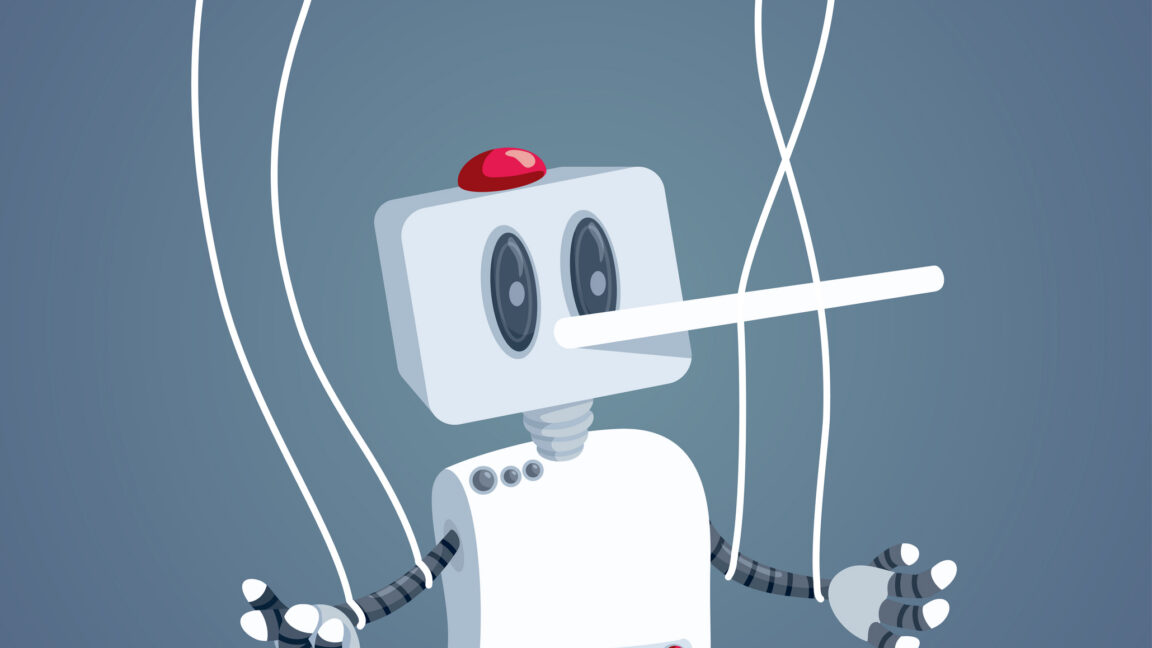
LLMs & Falsehoods: When Warnings Don't Stick Verdict: A Critical Flaw in AI Learning New research reveals a concerning "negation neglect" in large language models (LLMs), indicating a profound challenge in how these

Building a Retrieval Augmented Generation (RAG) system often begins with exciting prototypes, quickly demonstrating the power of injecting external knowledge into large language models (LLMs). However, the journey from

Discover how Home Assistant offers the most flexible and powerful way to automate your smart home using NFC tags, without being tied to a specific phone model. Learn to set up diverse automations in just a few steps.
