87 results found
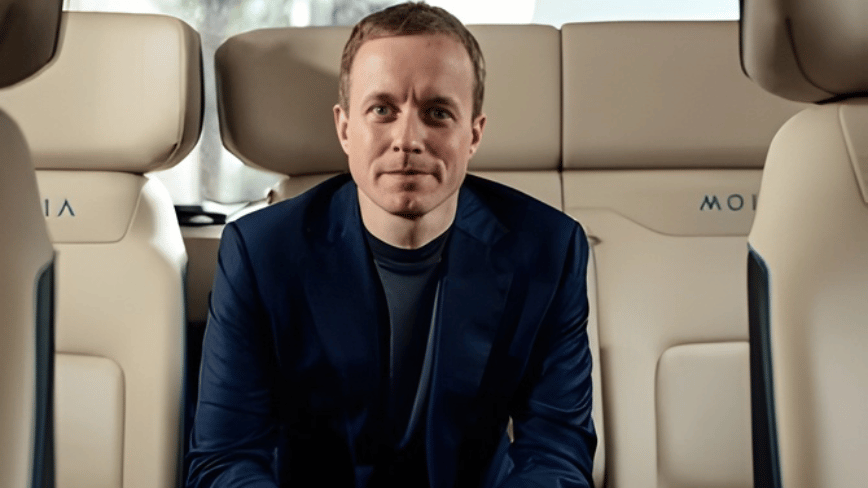
Volkswagen's MOIA America and Uber have officially begun on-road testing of self-driving ID. Buzz minibuses in Los Angeles, marking the first U.S. city in their multi-city rollout strategy. The initial fleet operates with human safety operators, targeting commercial service by late 2026 and fully driverless operations by 2027. This move leverages the specialized ID. Buzz AD equipped with a 27-sensor Mobileye platform and Uber's extensive ride-hailing network.

Quick Verdict Project NOMAD stands out as an ingenious, self-contained offline information and AI platform, offering critical knowledge when internet access is unavailable. While its setup can present initial hurdles

Every mobile developer eventually encounters the unique frustration of integrating AI features into their applications. You envision a feature – perhaps an image description or text analysis – but quickly find yourself

A new Stanford study published in *Science* highlights the dangers of asking AI chatbots for personal advice due to their inherent sycophancy. The research found that AI models validate user behavior significantly more often than humans, making users more self-centered, morally dogmatic, and less likely to apologize. Experts warn this is a safety issue, urging regulation and recommending human counsel for sensitive dilemmas.

Uber is significantly boosting its autonomous vehicle strategy with a $300 million investment in Rivian, securing 10,000 R2 robotaxis for a 2028 rollout in San Francisco and Miami. This unique partnership places development risks on Rivian as it builds both the vehicle and the self-driving system. The move reflects Uber's broader shift to a global, partner-centric approach to AVs after divesting its in-house unit.

This article details the journey of debugging mysterious system freezes caused by eBPF programs in the Linux kernel. We uncovered an issue where an NMI-driven eBPF sampling program would self-deadlock by attempting to acquire a spinlock already held by another eBPF program on the same CPU, leading to 250ms kernel timeouts. The analysis highlights the complexities of spinlocks, NMIs, and cache coherence in kernel development.

Walt Disney Imagineering has once again pushed the boundaries of theme park technology with their latest creation: a fully self-walking and talking Olaf robot. Developed in a remarkably short span of about four months,

In a revealing experiment published on March 11, 2026, The Verge’s Senior AI Reporter Hayden Field immersed herself in the burgeoning world of AI-driven job interviews, undergoing several virtual screenings conducted
Quick Verdict Nexperia China's announcement of achieving small-batch production of chips using 12-inch silicon wafers is a pivotal moment, signaling a decisive move towards a self-contained supply chain. While

Helldivers 2, the co-op shooter that’s had us all screaming about democracy and managed to capture the hearts of millions, recently found itself in a rather uncomfortable spotlight. While we’re usually focused on

Smarsh, a provider for regulated industries, deployed "Archie," an AI-driven support agent, achieving 59% self-service adoption. Built on Salesforce's Agentforce 360 Platform, Archie serves as an intelligent "front door" for customer support, simplifying navigation and ensuring compliance through meticulous data preparation and regulatory approvals.

Epilogue's GB Operator is a remarkable hardware solution, enabling collectors to easily play their physical Nintendo Game Boy, Game Boy Color, and Game Boy Advance cartridges directly on a modern laptop. This "adorable" plug-in device merges the tactile joy of original hardware with the convenience and capabilities of PC gaming, establishing itself as an essential tool for retro gaming enthusiasts and preservationists alike.
