
Was 2025 Really the Year of AI Agents? A Developer's Retrospective
In the lead-up to 2025, the developer community buzzed with anticipation. Promises of sophisticated AI agents, capable of autonomously executing complex tasks and revolutionizing workflows, dominated tech discussions.

In the lead-up to 2025, the developer community buzzed with anticipation. Promises of sophisticated AI agents, capable of autonomously executing complex tasks and revolutionizing workflows, dominated tech discussions. Fast forward to March 2026, and as we look back, the picture is more nuanced than the initial hype suggested. Was 2025 truly “the year of the agent?”
Recent discussions, such as those featuring Stefan Weitz, CEO and co-founder of the HumanX Conference, paint a realistic portrait of AI’s evolution over the past year. While significant progress was made, the widespread, transformative adoption of fully autonomous AI agents in enterprise environments faced considerable hurdles, preventing the ambitious predictions from fully materializing.
The Hype Cycle and the Reality Check
The vision for 2025 was compelling: AI agents seamlessly integrating into our daily development and operational processes, handling everything from code generation and debugging to project management and data analysis. These agents were imagined as intelligent, proactive entities that could understand context, make decisions, and act across various systems without constant human oversight.
However, the reality, as often happens with nascent technologies, presented a steeper integration curve. The enthusiasm for Artificial General Intelligence (AGI) has also seen a practical recalibration, with many companies reportedly shifting focus. This move isn't a rejection of AI, but rather a pragmatic pivot towards more specialized, manageable, and auditable AI solutions, recognizing the current limitations and the unique challenges of enterprise deployment.
Navigating Non-Determinism: A Developer's Hurdle
One of the most significant blockers for wider AI agent adoption, particularly in mission-critical enterprise applications, has been the inherent distrust in non-deterministic systems. From a developer's perspective, non-determinism in AI agents means that given the same input, the system might produce different outputs at different times. This poses several challenges:
- Debugging Complexity: When an agent behaves unexpectedly, tracing the root cause in a non-deterministic system becomes exponentially harder. Traditional debugging techniques, relying on reproducible steps, often fall short.
- Testing and Validation: Ensuring the reliability and correctness of an agent across a vast array of scenarios is daunting. How do you assert predictable behavior when the output itself isn't strictly predictable?
- Auditability and Compliance: In regulated industries, demonstrating exactly why an AI agent made a particular decision is crucial for audit trails and compliance. Non-deterministic behavior complicates this transparency significantly.
- Trust and Acceptance: For an AI agent to be truly adopted, users and stakeholders need to trust its decisions. Inconsistent or unpredictable behavior erodes this trust, leading to limited deployment in sensitive areas.
Developers are therefore tasked with building robust monitoring, guardrails, and fallback mechanisms around these non-deterministic elements, adding layers of complexity to agent design and implementation.
The Unsung Challenge: Enterprise Data-Readiness
Another major barrier highlighted is enterprise data-readiness. AI agents, especially those leveraging large language models (LLMs) and other advanced AI components, thrive on high-quality, relevant, and accessible data. Enterprises, however, often struggle with:
- Data Silos and Fragmentation: Information is frequently scattered across disparate systems, databases, and formats, making it difficult for an agent to access a comprehensive view of the necessary context.
- Data Quality and Consistency: Outdated, inaccurate, or inconsistent data can lead to erroneous agent decisions, undermining their utility and reliability.
- Security and Governance: Granting AI agents access to sensitive enterprise data raises complex security and privacy concerns. Implementing appropriate access controls, anonymization, and data governance policies is a monumental task.
- Integration Overhead: Connecting AI agent systems to existing enterprise data infrastructure, often involving legacy systems and custom APIs, requires significant engineering effort and can introduce performance bottlenecks.
For developers, this translates into substantial upfront work in data engineering, integration, and security architecture before an AI agent can even begin to deliver value. The “plug-and-play” dream of AI agents quickly meets the reality of messy, real-world data environments.
Practical Takeaways for Developers
While 2025 might not have been the unequivocal “year of the agent,” it certainly solidified key learnings for developers building the next generation of AI systems:
- Embrace Pragmatism over Pure Autonomy: Focus on building agents that augment human capabilities rather than fully replacing them, especially in critical paths. Prioritize reliability and controlled execution.
- Master Data Engineering: Invest heavily in understanding and improving enterprise data landscapes. Data quality, accessibility, and robust integration pipelines are foundational for any effective AI agent.
- Strategies for Non-Determinism: Develop explicit strategies for handling non-deterministic outputs. This includes designing for human-in-the-loop validation, implementing confidence scoring, and robust error handling to manage unpredictable behaviors.
- Set Realistic Expectations: Communicate the current capabilities and limitations of AI agents clearly to stakeholders. Manage expectations regarding autonomy, performance, and the effort required for successful deployment.
Looking back from 2026, 2025 served as a crucial year of grounding for AI agents. The initial hype has given way to a more mature understanding of the practical challenges involved, pushing developers to focus on foundational issues like data readiness and robust system design. The path to truly autonomous and reliable AI agents is longer and more intricate than once imagined, but the lessons learned are invaluable for future innovation.
FAQ
Q: Why is “non-determinism” a major blocker for AI agent adoption in enterprises?
A: Non-determinism means an AI system can produce different outputs for the same input, which makes debugging, testing, and ensuring consistent behavior incredibly difficult. For enterprises, this unpredictability creates significant issues for auditability, compliance with regulations, and general trust, especially in critical operational systems where consistent and explainable outcomes are paramount.
Q: How does “enterprise data-readiness” impact the deployment of AI agents?
A: Enterprise data-readiness is crucial because AI agents require access to high-quality, consistent, and relevant data to function effectively. Many organizations face challenges with data silos, inconsistent data formats, data quality issues, and complex security policies. These factors necessitate extensive data engineering efforts to prepare and integrate data, significantly increasing the time and resources required to deploy AI agents successfully.
Q: What's the significance of companies “moving away from AGI” in the context of AI agent development?
A: The reported shift away from Artificial General Intelligence (AGI) signifies a more pragmatic approach. Instead of pursuing systems with human-like cognitive abilities across broad domains, companies are focusing on developing more specialized, task-specific AI agents. This allows for greater control, predictability, and easier integration into existing workflows, addressing the immediate enterprise needs for practical, reliable AI solutions rather than distant, generalized intelligence.
Related articles

in-depth: Chicago-Area Cops Helped HSI Spy on Minnesota Anti-ICE
Chicago-area law enforcement, including local police and HSI agents, conducted undercover surveillance on Minnesota anti-ICE activists at an April 2, 2022, talk in Chicago. This operation was part of a federal conspiracy probe into 15 Minnesota activists facing felony charges related to immigration enforcement resistance. Civil liberties advocates have condemned the surveillance as a troubling intrusion into protected political activity.

AI's Confidence vs. Formal Methods' Rigor: Design Flaws & Verification
While AI accelerates code generation, formal methods remain critical for ensuring system correctness. Languages like TLA+ and tools like Quint enable developers to model and verify system designs before coding, catching subtle flaws. Quint makes formal methods more accessible with developer-friendly syntax and executability. This approach is vital for verifying AI-generated code through trace validation and model-based testing, ensuring reliability against real-world data.

regional: A two-person Seattle startup lands $1M to reinvent
Seattle startup TriMagnetix has secured $1 million to develop semiconductor chips that consume 800 times less energy and are radiation-resistant. The two-person company, leveraging nanomagnetic technology, is targeting space applications and data centers. With new funding and key partnerships, TriMagnetix aims for commercial sales within a year.
Ephemeral PR Preview Environments on GKE: A Deep Dive
Every development team eventually grapples with the limitations of shared staging environments. The familiar scenario: multiple features deployed simultaneously, database migrations clashing, and the phrase "it works on
Secure Internal API Access for AI Agents with MCP
AI agents accessing internal APIs directly pose significant risks, including identity loss, unrestricted queries, and security bypasses. The Model Context Protocol (MCP) offers a solution by defining explicit tools. A secure architecture involves an MCP server wrapping the API with strict input validation, coupled with a gateway that handles authentication, rate limiting, and audit logging, ensuring safe and accountable access.
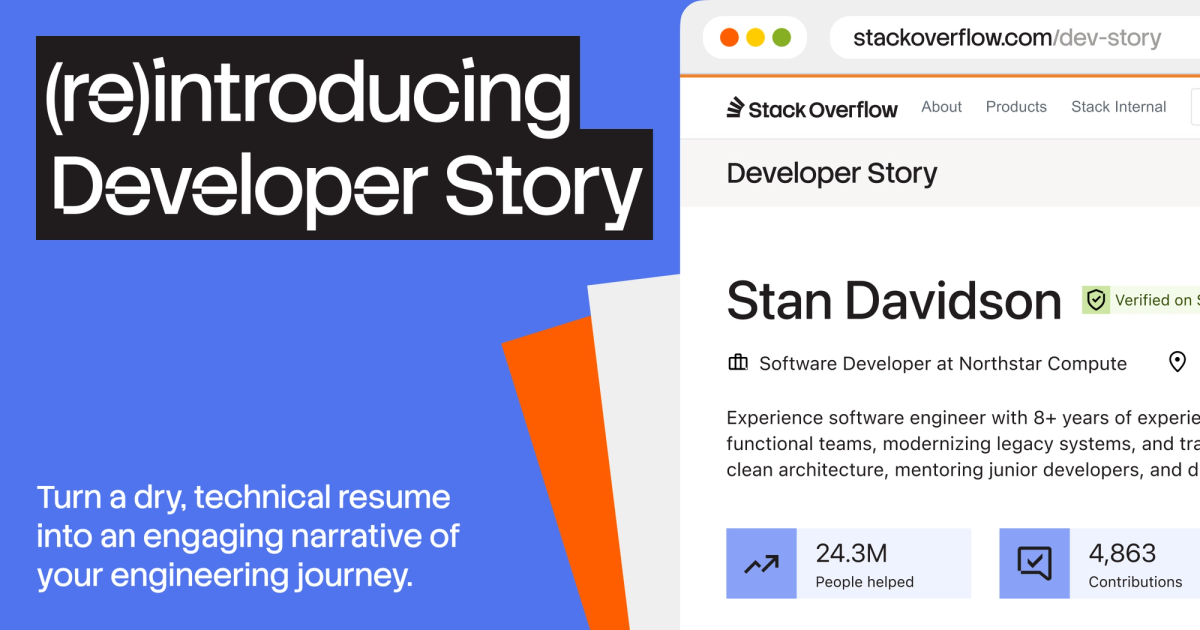
Beyond the Resume Noise: Developer Story Rethinks Tech Hiring
Stack Overflow is addressing the growing challenges in tech hiring, exacerbated by AI's influence leading to untrustworthy and generic resumes. Their solution, the re-introduced Developer Story, offers a platform for developers to authentically showcase their work, expertise, and impact through verifiable contributions and personal projects. This aims to provide hiring teams with more objective insights and help genuine talent stand out in a crowded market.