
Turn Filament Packaging into Free 3D Printer Upgrades
Repurpose empty filament spools, boxes, and silica packets into free 3D printer upgrades and storage solutions in a few simple steps. Organize your workshop and protect your filament.
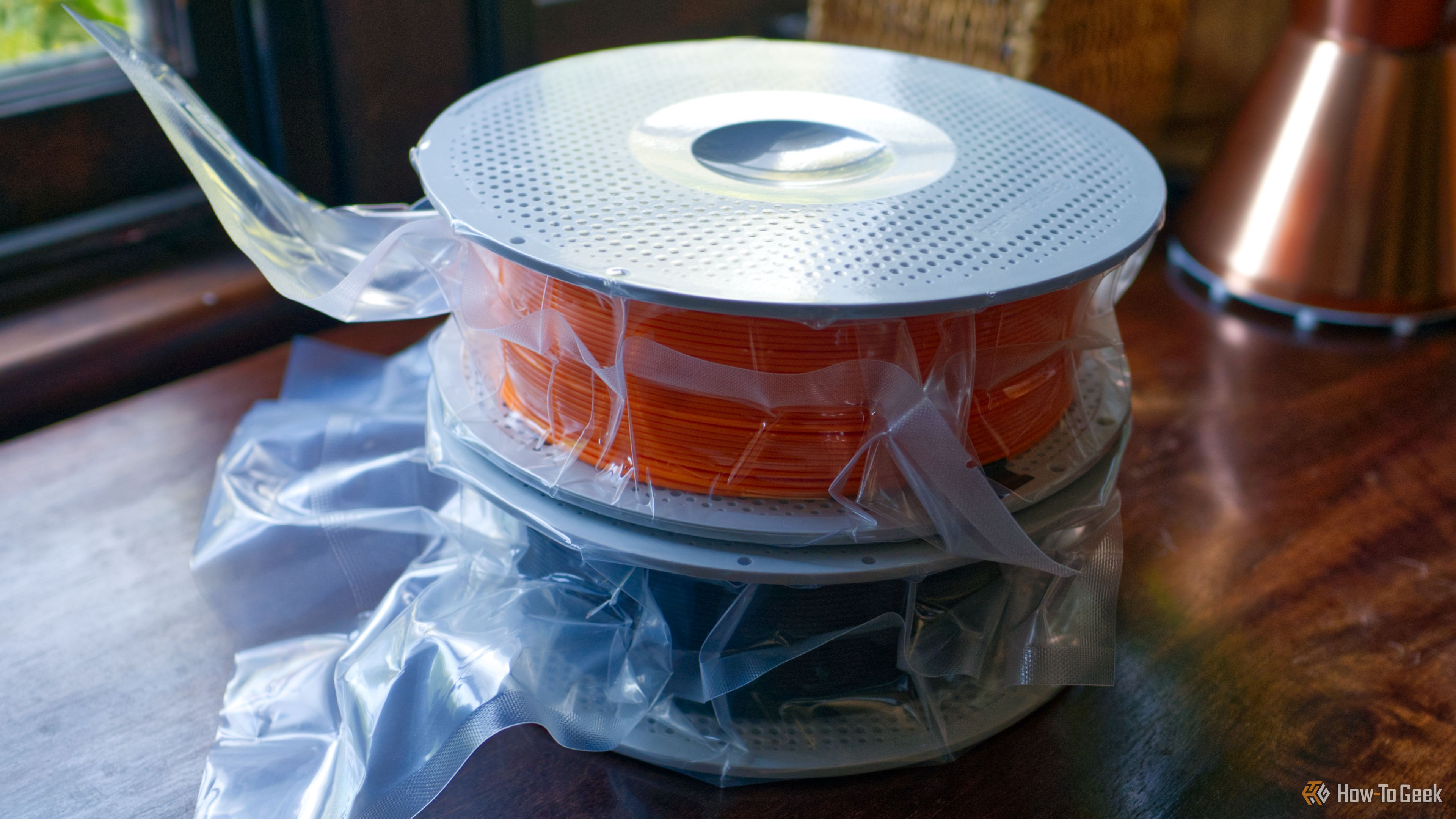
Unlock Free Upgrades: Repurpose Your Filament Packaging
Every time you finish a spool of 3D printer filament, you're left with more than just an empty core. That packaging, which often gets tossed, can be transformed into incredibly useful, zero-cost upgrades and storage solutions for your workshop. This guide will walk you through how to repurpose empty spools, cardboard cores, filament boxes, and even those tiny silica gel packets into practical tools, helping you organize your space and extend the life of your filament.
By following these steps, you'll reduce waste, save money on storage solutions, and create a more efficient 3D printing setup, all while utilizing the very materials that once held your filament.
What You'll Need
Before you begin, gather the following items:
- Empty plastic filament spools
- Empty cardboard filament spools or just their cores
- Empty filament cardboard boxes
- Saved silica gel packets from filament packaging
- A 3D printer and filament to print organizing components
- Basic tools: Bolts (for spool drawers), adhesive or magnets (for core containers), a marker or labels (for boxes and drawers), Ziploc bags or airtight containers.
1. Transform Empty Plastic Spools into a Parts Organizer
Those empty plastic spools, with their distinctive holes around the perimeter, are surprisingly versatile. Instead of discarding them, you can turn them into a rotating storage system for small parts and tools.
Step-by-step:
- Gather your spools: Collect several empty plastic filament spools. The more you have, the larger your organizer can become.
- Print the drawers: Search for and 3D print drawer designs like the "Filament Spool Drawer" by forgeofskill, which are specifically designed to fit most 1Kg spools. These models feature small bins that can be secured to the spool.
- Attach the drawers: Once printed, use bolts to secure the individual drawers to the holes around the perimeter of your empty spools. Ensure they can swing outwards easily.
- Organize your items: Fill the drawers with small items such as spare nozzles, screws, nuts, small electronic sensors, or other tiny components that tend to get lost on your workbench.
- Label for easy access: Label each drawer to quickly identify its contents. You can use sticky labels, write directly on the bins with a permanent marker, or even integrate embossed or engraved labels into your 3D printed bins.
- Stack and expand: Spools are designed to be stackable. By combining multiple spools into a tall, vertical holder (which you can also 3D print), you can create an extensive and rotating parts organizer, keeping your workspace tidy and essential components within reach.
2. Repurpose Cardboard Spool Cores into Storage Containers
If you're using eco-friendly cardboard spools, you have an additional option for repurposing. Beyond using them for spool drawers, their cores can become excellent standalone containers.
Step-by-step:
- Separate the core: Carefully remove the outer parts of the cardboard spool, leaving only the central cylindrical core. This should be a relatively easy process.
- Print the caps: Look for 3D printable cap designs, such as TheMakerSphere's "Bambu Cardboard Spool Core Container" models. These typically involve printing two circular caps designed to fit snugly onto the ends of the core.
- Assemble the container: Push one cap onto one end of the cardboard core. This will form the bottom of your container.
- Choose your lid style:
- Simple closure: Push the second cap onto the other end of the core to create a simple, removable lid.
- Permanent bottom: For a more secure container, apply adhesive to permanently secure the bottom cap to the core.
- Magnetic closure: If you prefer a reusable, easy-open solution and don't mind a small cost, you can print a design that incorporates magnets into the caps. This allows for a more satisfying click-closure.
- Store various items: These core containers are perfect for storing longer, narrower items or groups of small parts. They offer a simple, cylindrical storage solution.
3. Convert Filament Boxes into Workshop Storage Bins
Nearly all filament comes in a standard cardboard box, usually with a removable lid. These boxes are already perfectly sized for workshop storage and can be made even more efficient.
Step-by-step:
- Use as-is: The simplest method is to use the box exactly as it is. Its uniform size makes it ideal for stacking and storing a variety of workshop items, from larger tools to bundles of cables.
- Label your boxes: To keep track of contents, write directly on the boxes with a marker or attach labels. This is especially helpful if you're stacking them vertically or horizontally.
- Print internal dividers: To maximize the utility of these boxes for smaller items, search for and 3D print divider sets, like 3DPrints4me's "Empty Filament Box Storage." These dividers slot into the box to create multiple smaller compartments.
- Organize with dividers: Once the dividers are in place, you can categorize and store small components such as screws, nuts, washers, magnets, or specific printer parts by size or type within the segmented box.
- Stack for efficiency: Their uniform dimensions mean these boxes stack neatly, allowing you to create an organized storage system for a wide array of workshop essentials.
4. Reuse Silica Gel Packets for Filament Storage
Often overlooked and immediately discarded, the small silica gel packets found in your filament's vacuum-sealed packaging are perhaps the easiest and most important free upgrade for filament longevity.
Understanding Silica Gel: These packets contain desiccant crystals designed to absorb moisture from the air. When filament absorbs moisture (becomes "wet"), it can lead to printing issues like stringing, popping sounds from the hot-end, and generally poor print quality. Your filament begins absorbing moisture the moment you open its vacuum seal.
Step-by-step:
- Save all packets: Resist the urge to throw away those packets that say "throw away." Instead, immediately collect them. (Do, however, heed the "do not eat" warning!)
- Store saved packets: Keep your accumulated silica gel packets in a small, sealed container when not in use. This protects them from absorbing ambient moisture, preserving their effectiveness.
- Long-term filament storage: When storing opened filament spools for the long term, place them inside a large Ziploc bag or an airtight container.
- Add desiccant: Include a few of your saved silica gel packets with the filament inside the sealed bag or container. The desiccant will absorb any lingering moisture and slow down or prevent the filament from re-absorbing moisture from the air.
- Prevent future issues: By keeping your filament dry with repurposed silica gel, you can avoid the need to dry it out later with a filament dryer and maintain consistent print quality over time.
Tips for a Greener 3D Printing Workflow
- Label everything: Clear labels on drawers, boxes, and containers will save you time and frustration when searching for specific items.
- Stack vertically: Maximize your workshop space by stacking spools and boxes whenever possible.
- Be creative: The spirit of 3D printing is about seeing things differently. Look for other "waste" items in your setup that could be transformed with a little creativity and your 3D printer.
Troubleshooting Tips
- Incompatible spools: If a specific 3D printed drawer design doesn't fit your spool, search for alternative designs, as spool dimensions can vary slightly between brands.
- Loose core caps: If your cardboard core caps are too loose, you might need to scale them down slightly when printing, or opt for the adhesive method for a more secure fit.
- Damp silica: If your saved silica gel packets have been exposed to humid air for too long, they might be saturated. You can often reactivate them by gently baking them in a low oven (check online guides for specific temperatures and times for your type of silica).
Next Steps & Related Topics
Now that your packaging is repurposed and your filament is protected, consider exploring more advanced 3D printer maintenance, or delve into designing your own custom storage solutions tailored to your unique workshop needs.
FAQ
Q: Is it really safe to reuse those silica gel packets, even if they say "throw away"?
A: Yes, it is safe to reuse them for moisture absorption with your filament. The "throw away" warning is typically for general consumer advice to avoid accidental ingestion or misuse, not because they are inherently unsafe for technical reuse. Just remember the "do not eat" warning and keep them out of reach of children and pets.
Q: My filament spools are different sizes. Can I still use the 3D printed drawer designs?
A: Many drawer designs, like the "Filament Spool Drawer" by forgeofskill, are created to fit common 1Kg spool sizes. However, there's always a possibility of slight variations between brands. If a specific design doesn't fit, search for alternative models that specify compatibility with your particular spool dimensions, or consider adjusting the scale of the print if you're comfortable with 3D modeling software.
Q: What if I don't want to use bolts to attach the drawers to my spools?
A: While bolts provide a secure and often rotating attachment, some 3D printed drawer designs might offer alternative attachment methods, such as clip-on or friction-fit systems. Always check the description of the 3D model you're printing for recommended assembly instructions and alternative options. Bolts generally provide the most robust and functional rotating system described in the guide.
Related articles
Turn Your Old PC into a Homelab: 6 Beginner Self-Hosting Projects
Breathe New Life into Your Old PC with Self-Hosting Don't let that dusty old laptop or desktop gather cobwebs! While it might not keep up with today's demanding software, an older PC often has more than enough power to

How to Choose the Best Smart Speaker in 2026 - Find Your Perfect Match
This guide helps you choose the best smart speaker in 2026 by evaluating your ecosystem, prioritizing features, and reviewing top Amazon, Google, Apple, and portable options. Learn to pick a device that integrates seamlessly and enhances your smart home.

Anthropic Claude Merger: Unified AI for Enhanced Productivity
Anthropic Claude Merger: The Verdict Anthropic is making a bold move, consolidating its previously distinct AI tools — Claude chat and Claude Cowork — into a single, more intuitive “all-powerful Claude.” This strategic

Mastering Full-Stack Deployment: Secure, Automate, Go Live
This article highlights a comprehensive freeCodeCamp.org course on deploying, securing, and automating full-stack web applications. It covers crucial steps from server provisioning and foundational security with UFW and Fail2Ban, to application runtime setup, data management, global access via Nginx and Cloudflare, and robust CI/CD pipelines with GitHub Actions. The course emphasizes a hands-on approach, integrating continuous security testing and observability, culminating in a production-ready application.

Wardogs' Studio: Crunch Expected, Anti-Crunch Devs Need Not Apply
The studio behind Steam hit *Wardogs*, Bulkhead, openly embraces crunch, with CEO Joe Brammer admitting it's an expected part of their development process. The studio even screens job applicants' social media, turning away those who publicly criticize crunch, believing they wouldn't fit in. While some employees with shares can see significant financial benefits from successful titles, not all staff receive these rewards, and the company has had yearly layoffs.

in-depth: ZuckOff Is a Free App That Sees Meta Glasses Before They
A new free app, ZuckOff, is gaining popularity for its ability to detect Meta smart glasses using Bluetooth, offering a tool for personal privacy against unsolicited filming. Developed by Pawel Szydlowski, it alerts users to the presence of devices like Ray-Ban Meta and Snap Spectacles, addressing growing concerns over covert recording. This innovation provides a partial solution amidst calls for stronger legislative and technological safeguards.