
The User-First Principle: Why Your Website Isn't For You
This article highlights a common problem in web development: websites often get designed to satisfy internal stakeholders' preferences rather than serve the end-user. It argues that a website is a tool, not art, and expert design decisions based on research are frequently overruled by subjective taste, leading to suboptimal user experiences and technical challenges. The piece emphasizes a user-first approach, urging developers and stakeholders to prioritize user needs backed by data.

As developers, we often find ourselves building intricate systems from designs handed to us. We might nod along in design reviews, appreciating the detailed research and user journeys presented by our design colleagues. Yet, a common scenario unfolds: a decision-maker, often the founder or a marketing lead, overrides these expert recommendations with personal preferences, uttering phrases like, "No, I want xxxxxx." This seemingly innocuous habit leads to a fundamental disconnect: the website, a critical digital asset, ends up serving the internal stakeholders' tastes rather than its intended audience—the end-user.
The Fundamental Misconception: Website as Personal Art
The core of this issue stems from a misunderstanding of a website's purpose. For many decision-makers, a website carries their name, represents their brand, and embodies years of effort. They view it as a piece of art to be admired, a digital garden reflecting their vision. However, this perspective fundamentally misses the mark. A website isn't art; it's a tool. Its singular job is to facilitate a user's objective: whether it's weighing a purchase, finding contact information, assessing credibility, or accessing gated content. Every design and functional decision should either propel the user towards that goal or, if poorly conceived, impede them. Decisions driven by personal aesthetic preference, rather than user-centric principles, inevitably introduce friction into the user's journey.
Decision-makers often get too close to the project, losing sight of the external user's perspective. Their deep emotional and financial investment can blur the line between what they like and what users need. This internal focus can transform a potentially powerful user acquisition or engagement platform into what's effectively a "mood board for the leadership team"—visually appealing to those who approved it, but functionally suboptimal for the people it's meant to serve.
The Expert Paradox in Digital Product Development
What's particularly perplexing is the expert paradox at play. In high-stakes fields like medicine, patients rarely dictate surgical procedures to a surgeon who has spent a decade mastering their craft. The expertise is acknowledged, and deference is automatic due to the obvious risks. Yet, in the realm of web design and development, the dynamic is often inverted. Because virtually everyone has interacted with a website, a misplaced confidence emerges, leading non-experts to overrule design professionals. A designer might present weeks of research, user testing data, and competitive analysis, only for their work to be dismissed over a subjective preference for a different color or layout.
This isn't to say all feedback is unwarranted, but rather that feedback should be grounded in user objectives, not personal taste. The perceived lower stakes of a website project, compared to, say, financial accounting or electrical wiring, emboldens individuals to challenge experts in ways they wouldn't in other professional contexts. Consequently, many designers, prioritizing client relationships, concede to these subjective changes. The site then drifts incrementally from its user-focused design, becoming less effective with each compromise. For us as developers, implementing these compromised designs means building features that might not truly serve the user, potentially impacting long-term maintainability, scalability, and the overall success metrics of the product.
Technical Implications and User Experience
From a technical standpoint, a website designed as a 'mood board' for internal stakeholders can introduce significant challenges and inefficiencies. Subjective design choices, unchecked by user research, frequently lead to cluttered interfaces, confusing navigation patterns, and inconsistent user flows. These issues directly translate into poor user experience (UX) metrics, such as higher bounce rates, lower conversion rates, and reduced time on site. For developers, this can mean:
- Increased Complexity: Implementing a design based on personal whims rather than established UX principles can result in more convoluted front-end logic and less intuitive data flows, making the codebase harder to maintain and extend.
- Performance Bottlenecks: A design heavily focused on elaborate aesthetics without user-centric optimization can lead to heavier page loads, slower rendering times, and a suboptimal mobile experience, all of which negatively impact user engagement and SEO.
- Accessibility Issues: Without a user-first mindset, critical accessibility considerations might be overlooked, alienating a significant portion of the potential audience and potentially leading to compliance issues.
- Ineffective Feature Development: If the underlying design strategy is flawed, even perfectly implemented features may fail to achieve their intended business goals because they don't align with how users actually interact with the site.
Ultimately, a website that fails to serve its users efficiently also fails to deliver on its business objectives, regardless of how technically robust its backend might be. The most elegant code cannot salvage a product fundamentally misaligned with user needs.
Fostering a User-First Development Culture
To counter this pervasive issue, a cultural shift towards user-centricity is essential, involving both designers, developers, and decision-makers. The next time you're in a design review, before offering subjective opinions, ask a crucial question: "Does this design choice primarily help the user achieve their goal, or does it merely satisfy a personal preference?" If the answer isn't immediately clear, or if it leans towards personal taste, challenge it constructively.
Encourage stakeholders to query the designer about the research, data, or established principles that underpin a particular design element. If the designer can provide a clear, data-backed rationale—be it from user testing, analytical data, or UX best practices—it's imperative to listen and trust that expertise. As developers, we can advocate for this by understanding the 'why' behind design decisions and highlighting how user-centric designs directly contribute to better system performance, maintainability, and ultimately, business success. By collaborating with our design counterparts to champion the user, we help ensure that the digital products we build are not just functional, but truly effective tools.
Remember, your website is not merely a reflection of your brand's aesthetics; it's a dedicated tool designed to perform a specific job for your users. Treat it as such.
FAQ
Q: How does a "mood board for leadership" design impact technical implementation from a developer's perspective?
A: Such designs often prioritize subjective aesthetics over user functionality and performance. This can lead to implementing overly complex UI components, inconsistent interaction patterns that are difficult to standardize in code, and potentially inefficient asset loading. Developers might spend more time trying to force a visually pleasing but user-unfriendly design into a functional state, resulting in increased technical debt, slower page load times, and a more challenging codebase to maintain or extend.
Q: What role can a developer play in advocating for user-centric design when faced with taste-driven feedback?
A: Developers can act as informed advocates by understanding the technical implications of design choices. They can collaborate with designers to articulate how certain user-centric design principles (e.g., clear calls to action, efficient navigation, minimal cognitive load) translate into better performance metrics, improved accessibility, and a more robust, maintainable codebase. By linking design decisions directly to measurable outcomes and system health, developers can help steer conversations away from subjective preferences towards objective user benefits.
Q: How can research and data be integrated into design reviews without requiring developers to conduct the research themselves?
A: Developers can request that designers present the underlying research and data that informed their design decisions. This includes qualitative insights from user interviews, quantitative data from analytics and A/B tests, or competitive analysis. Understanding the data-driven rationale helps developers better grasp the purpose of specific UI/UX elements, enabling them to build more effectively and suggest technical optimizations that align with validated user needs rather than personal opinions.
Related articles
Unofficial Sony Headphone PC Apps: Ditch Your Phone, Take Control
Tired of Sony's mobile app? These unofficial, open-source PC tools like Sony Device Center and SonyBridge offer desktop control over your Sony headphones' ANC, EQ, and more. A convenient, albeit unofficial, solution for Windows, Linux, and Mac users looking to ditch their phone for audio adjustments.

How to Choose and Maximize Your Bissell Pet Carpet Cleaner Deal
Dealing with unexpected pet messes or persistent carpet stains can be a real headache. Whether it’s muddy paw prints, accidental spills, or allergens from pet dander, keeping carpets clean and fresh is an ongoing
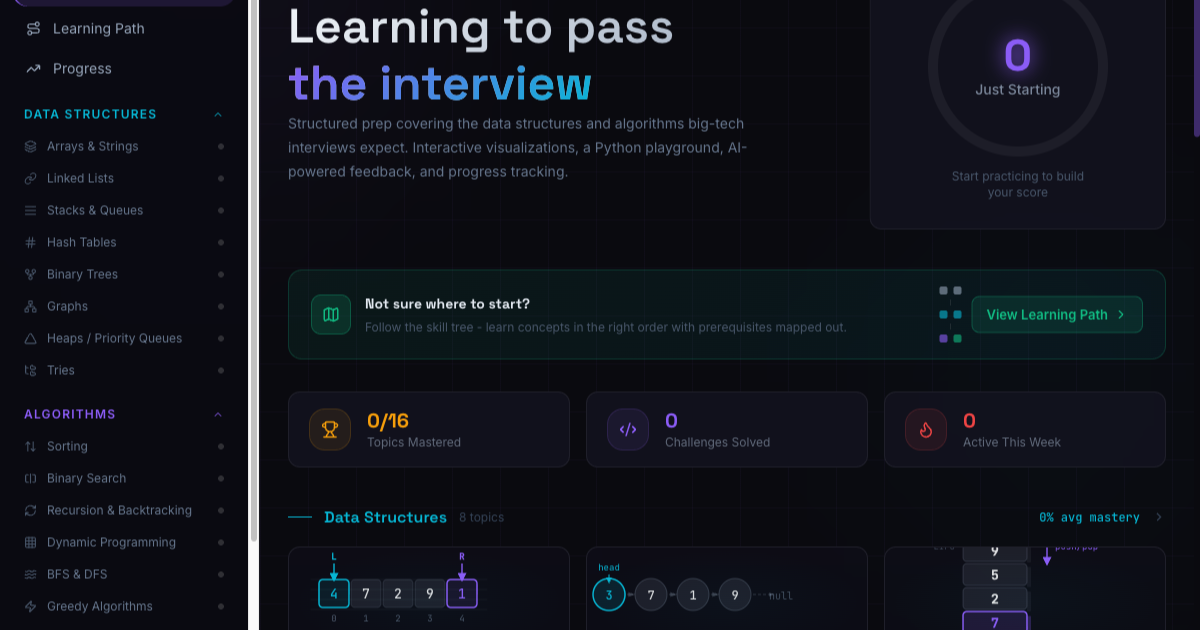
Learningto/Pass: Free, AI-Powered Interview Prep for Developers
Landing a role at a top-tier tech company often hinges on mastering complex data structures and algorithms, coupled with a solid grasp of system design. The problem for many aspiring software developers is that quality

How to Pick and Play Top Roblox Games with Your Siblings This Weekend
Looking for the perfect way to connect and have fun with your siblings this weekend? Roblox offers a vast universe of experiences designed to entertain players across various age groups and preferences. Whether you have

How to Choose Your Next AirPods - Comparing 5, 4, and Pro 3
Navigating Apple's AirPods lineup can be tricky. With the new AirPods 5 potentially offering a better, cheaper option than the AirPods 4, and the AirPods Pro 3 still a premium contender, how do you decide which is right

The Composite Design Pattern: Unifying Individual Objects and Groups
As software engineers, we frequently encounter scenarios where we need to manage collections of objects that can be either individual entities or groups containing other entities. Think of a file system with files and