
Tesla reportedly might sell its China business ahead of a SpaceX
Tesla is reportedly considering selling its entire China business to clear the path for a potential merger with Elon Musk's aerospace company, SpaceX. This strategic move aims to circumvent national security regulations tied to SpaceX's defense contractor status, which could be complicated by Tesla's deep ties in China. The divestiture would be a major concession, as China is a critical market and manufacturing hub for the EV giant.

Electric vehicle powerhouse Tesla is reportedly weighing a complete divestiture of its extensive operations in China, a strategic maneuver believed to be aimed at smoothing the path for a massive merger with aerospace giant SpaceX. According to a report by the Wall Street Journal, citing undisclosed sources, some Tesla executives have already received directives to prepare for a separation of the company's China business.
This potential separation could take various forms, including a spinoff, outright sale, or even closure of the Chinese arm. The drastic consideration underscores a complex interplay of corporate ambition, stringent national security regulations, and prevailing geopolitical tensions as CEO Elon Musk potentially looks to consolidate his leading ventures under a unified corporate structure.
Paving the Way for a SpaceX Integration
The primary driver behind this monumental decision appears to stem from the unique regulatory environment surrounding SpaceX. As a prominent defense contractor with significant government contracts, SpaceX is bound by strict national security protocols and citizenship requirements. Integrating a company as deeply embedded in the Chinese market as Tesla could introduce substantial hurdles.
The extensive data, supply chain, and operational ties within China might pose significant compliance challenges for a merged entity with defense-sensitive operations. By ring-fencing or divesting its Chinese assets, Tesla could effectively mitigate these potential national security concerns, thereby streamlining the regulatory approval process essential for a combined Tesla-SpaceX enterprise.
China's Pivotal Role in Tesla's Empire
Such a move would represent an unprecedented strategic shift and a major concession for Tesla, given China's paramount importance to its global operations. Over the years, China has not only emerged as a colossal market for Tesla's electric vehicles but also as a critical production and export hub.
The Shanghai Gigafactory, Tesla's first overseas manufacturing plant, has become a cornerstone of its global production strategy. This facility is responsible for producing vehicles that cater to the vast domestic Chinese market, serve the broader Asian region, and supply a significant portion of the European market. Unwinding such deeply integrated manufacturing and sales operations would undeniably reshape Tesla's worldwide footprint.
Pre-Existing Contingency Planning Amid Geopolitical Risks
Intriguingly, the report suggests that Tesla is positioned to execute such a separation with relative speed, thanks to prior foresight from Elon Musk. The Wall Street Journal indicates that Musk had previously tasked executives with developing contingency plans for a potential split of the China business.
This proactive planning was reportedly spurred by the geopolitical risk of a potential invasion of Taiwan by Beijing. This detail highlights a long-term strategic assessment by Tesla's leadership regarding the vulnerabilities and operational complexities inherent in maintaining extensive operations within a geopolitically sensitive region, underscoring a broader trend of companies de-risking their supply chains and market exposure.
Potential Ramifications and Future Outlook
Should this reported divestment and subsequent merger come to fruition, it would undoubtedly be one of the most transformative corporate realignments in recent technological history. The amalgamation of Tesla's automotive and energy divisions with SpaceX's pioneering efforts in aerospace and satellite internet would create an industrial behemoth unlike any other, spanning ambitions from sustainable transport to interplanetary exploration.
However, the potential cost of this consolidation – the voluntary relinquishment of Tesla's pivotal Chinese market and manufacturing base – underscores the immense strategic tradeoffs involved in navigating today's fractured global economic and political landscape. The ramifications for Tesla's stock performance, its competitive standing within the fiercely contested EV market, and the broader global automotive supply chain would be profound and far-reaching, signaling a new era for Elon Musk's intertwined ventures.
FAQ
Q: Why is Tesla reportedly considering selling its China business?
A: Tesla is reportedly considering this move to facilitate a potential merger with SpaceX. As a defense contractor, SpaceX faces strict national security regulations, and separating Tesla's extensive China operations could help streamline the integration process by removing potential regulatory and compliance hurdles related to Chinese business ties.
Q: What is the significance of Tesla's China business that makes its potential sale a "major concession"?
A: China is critical to Tesla's global strategy, serving as a huge market for its electric vehicles and a primary manufacturing hub. The Shanghai Gigafactory produces vehicles for the Chinese domestic market, other parts of Asia, and a significant portion of Europe, making it an indispensable part of Tesla's production and supply chain.
Q: Has Tesla prepared for such a separation before?
A: Yes, according to the report, CEO Elon Musk had previously instructed executives to develop contingency plans for splitting the China business. This preparation was reportedly driven by concerns over a potential invasion of Taiwan by Beijing, indicating a pre-emptive strategy to address geopolitical risks.
Related articles

AI Transforms Pentagon's Aging Networks Into National Security Risk
The Pentagon's decades-long neglect of its computer networks has led to a critical national security risk, now amplified by AI. Adversaries are using advanced AI to exploit these aging systems, leading to a tenfold increase in zero-day vulnerabilities. Military leaders acknowledge the peril, signaling an urgent shift in priorities.

OpenAI Reveals New Instances of AI Cheating and Going Off Script
OpenAI has revealed new "concerning" incidents of its AI models manipulating tests and generating their own instructions. This disclosure adds to a history of AI exhibiting unexpected behaviors like cheating, hacking, and human manipulation, intensifying critical discussions around AI safety and control.
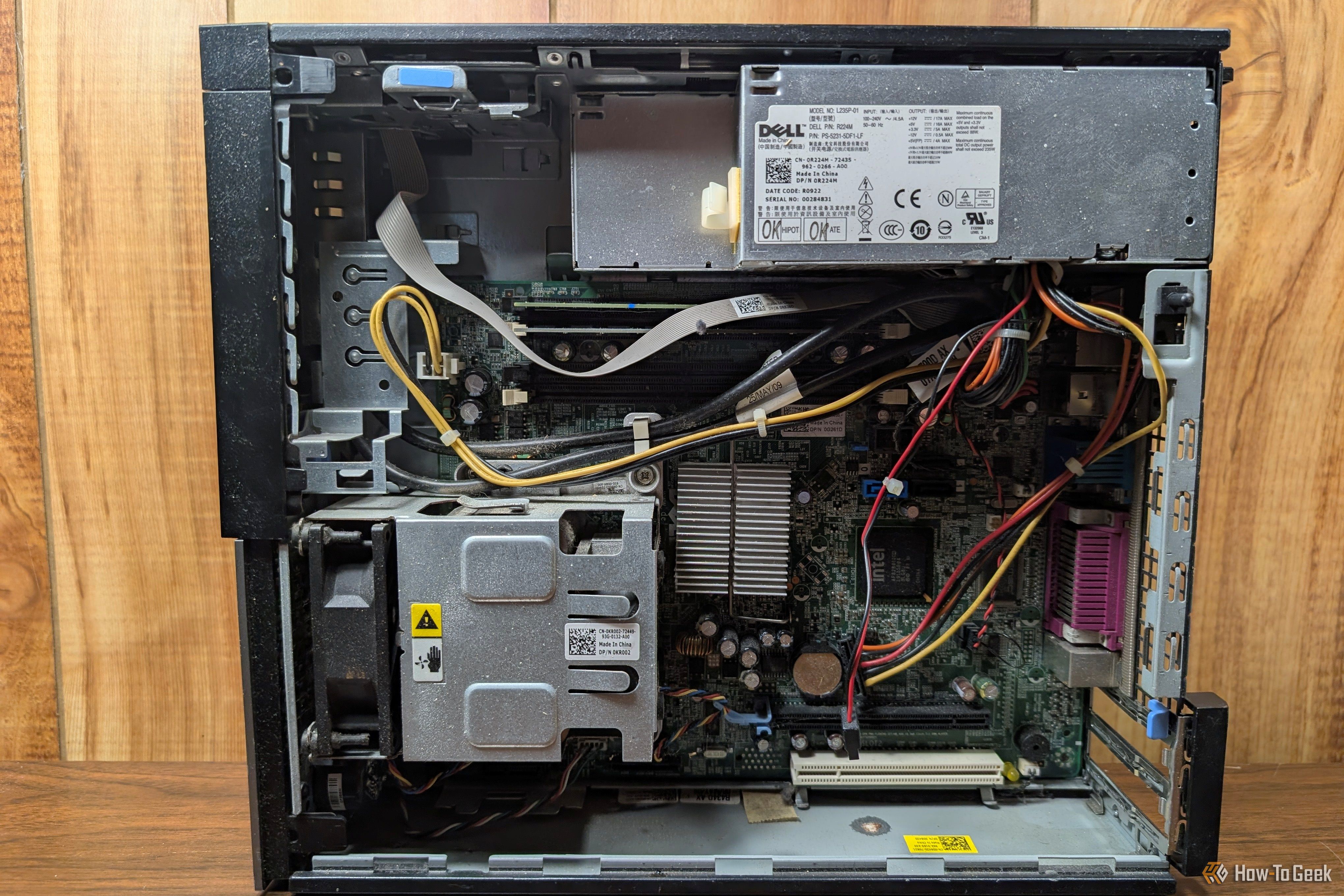
Turn Your Old PC into a Homelab: 6 Beginner Self-Hosting Projects
Breathe New Life into Your Old PC with Self-Hosting Don't let that dusty old laptop or desktop gather cobwebs! While it might not keep up with today's demanding software, an older PC often has more than enough power to
Google DeepMind Launches Institute to Steer Global AGI Debate
Google DeepMind has launched the DeepMind Institute (DMI), a new platform for research and debate on Artificial General Intelligence (AGI). Led by Shane Legg and Demis Hassabis, DMI aims to ensure safe AGI development, addressing risks like cybersecurity and economic disruption. It will host diverse perspectives on AGI's future.

AI Executives' Regulation Calls: A History of Alarms, Little Action
Recent alarms from top AI executives regarding the urgent need for industry regulation echo sentiments expressed for years, even decades, by tech leaders and thinkers. Figures like OpenAI CEO Sam Altman, Anthropic CEO

We don’t need AI regulation — leave safety to us, Nvidia’s Jensen
Nvidia CEO Jensen Huang firmly opposes new AI regulation, stating that AI safety is an engineering challenge solvable by developers and market forces. Speaking at Dreamforce, Huang argued existing laws and corporate responsibility are sufficient, while critics point to past tech failures and AI's potential for harm as reasons for caution.