
Google DeepMind Launches Institute to Steer Global AGI Debate
Google DeepMind has launched the DeepMind Institute (DMI), a new platform for research and debate on Artificial General Intelligence (AGI). Led by Shane Legg and Demis Hassabis, DMI aims to ensure safe AGI development, addressing risks like cybersecurity and economic disruption. It will host diverse perspectives on AGI's future.

Google DeepMind has unveiled the DeepMind Institute (DMI), a significant new platform explicitly designed to foster critical research and open debate on Artificial General Intelligence (AGI). Launched on September 16, 2026, the DMI is spearheaded by Google DeepMind co-founder and Chief AGI Scientist Shane Legg, fellow co-founder Demis Hassabis (who is also Alphabet's chief scientist), and Google's President of Research, Labs, Technology and Society, James Manyika. Its core mission is to proactively ensure the safe and beneficial development of AGI, aiming for its societal advantages to unequivocally outweigh any associated risks, at a time when the AI industry grapples with the technology's rapid advancement and profound implications.
Establishing the Institute's Vision
The establishment of the DeepMind Institute underscores a belief among its leaders that this is a "critical moment" for AGI. The institute's launch essay clearly defines AGI as a system possessing all the cognitive capabilities inherent to the human brain. While acknowledging current AI systems still exhibit some fundamental limitations, the DMI anticipates these gaps will be swiftly overcome, fueling the urgent need for a dedicated forum to guide its trajectory responsibly. This proactive stance from a leading AI developer like Google DeepMind highlights the gravity of the discussions required.
The DMI is intended to be a collaborative hub, publishing essays and research from experts within Google DeepMind, the wider Google ecosystem, and the broader scientific community. The institute's directors have emphasized that published pieces will reflect the authors' individual ideas and "should not be read as Google's official view," fostering an environment for diverse, potentially even dissenting, perspectives.
Navigating AGI's Risks and Arrival
A cornerstone of the DeepMind Institute's mandate is to confront the multifaceted risks inherent in developing advanced AGI. The inaugural essay identifies pressing concerns such as vulnerabilities in cybersecurity, potential biorisks, and the profound "potential for loss of control in future self-improving systems." These apprehensions are not new; a DeepMind executive previously linked significant AI spending to the development of recursively self-improving machines, illustrating the internal recognition of these escalating challenges. The DMI aims to provide a space where these complex safety issues can be thoroughly examined and addressed.
Shane Legg, who also holds the role of managing editor for the DMI, shared his views on the accelerating pace of AI development with the Financial Times. He remarked that Anthropic CEO Dario Amodei's recent proposal to slow, rather than halt, the release of frontier AI models was "interesting directionally" and "worth considering." This openness to dialogue surrounding AI pacing, even from within DeepMind, signals a desire for a more deliberative approach across the industry.
Legg further engaged with the contentious debate surrounding AGI's actual arrival, a topic recently inflamed by claims from Nvidia CEO Jensen Huang and OpenAI. He maintained that it was "premature" to declare AGI had been achieved, standing firm on his personal forecast of a 50% chance of "minimal" AGI by 2028. This cautious assessment provides a contrast to the more assertive statements from other industry leaders. Adding another layer of urgency to the safety discussion, Bilal Chughtai, formerly of DeepMind's AGI safety team, publicly issued a warning just days prior to the DMI's launch, underscoring ongoing concerns from within the field.
Inaugural Essays and Economic Policy
The DeepMind Institute launched with a collection of initial essays designed to provoke wide-ranging discussion. These include "The case for reasoning transparency" by Rohin Shah and Anca Dragan, "Principles for a new utopianism" from Stephen Cave, and a strategic overview titled "A framework for frontier AI and the dawning of a new age," authored by DeepMind co-founder Demis Hassabis himself. These diverse topics immediately signal the breadth of concerns the institute intends to cover.
Particularly insightful is "Economic policy for AGI," co-written by Google DeepMind's economist Julian Jacobs and its Director of AGI Economics, Alex Imas. This comprehensive analysis evaluates eleven distinct economic policies, employing a robust methodology that includes extensive literature reviews, public opinion surveys, and a novel approach utilizing 51 AI agents. These AI agents, built from survey data on 51 real economists, provided nuanced ratings on policy effectiveness, demonstrating an advanced, data-driven approach to future planning.
Jacobs and Imas firmly assert that "no single initiative is the answer to everything," advocating for adaptable "least-regret" policy responses tailored to three potential future economic scenarios. For a "mild disruption" caused by AGI, their recommendations include expanded unemployment insurance, a broader Earned Income Tax Credit, and increased investment in employer-led retraining programs. In the event of "moderate displacement," they propose transforming the existing tax credit into a negative income tax. The most radical scenario, "labour and capital decoupling," would necessitate a universal basic capital backstop, activated only if labor's share of Gross Domestic Product (GDP) were to decline for a sustained period. This progressive approach aims to pre-emptively address the most severe economic dislocations.
Their research also revealed interesting public sentiments, with 85% of Americans supporting publicly funded retraining and 72% backing unemployment insurance. Support for universal basic capital stood at 54%. While universal basic capital scored impressively on promoting individual agency (76.3 out of 100), its perceived feasibility was lower at 33.1, ranking second lowest among the eleven policies, just above a federal jobs guarantee. The authors explicitly cautioned against Universal Basic Income (UBI), characterizing it as "an expensive and blunt instrument that may fail to concentrate sufficient relief where it is needed most," highlighting a preference for more targeted interventions.
Looking Ahead
The establishment of the DeepMind Institute represents a pivotal move by Google DeepMind to systematically organize and facilitate the crucial discourse surrounding AGI. By creating a platform that encourages a wide array of perspectives—including those that may challenge established industry narratives—the institute is positioned as an essential forum for constructing the ethical, safety, and societal frameworks vital for AGI's responsible evolution. Its inaugural focus on both theoretical risks and practical economic foresight underscores a holistic strategy to navigate and prepare for a future profoundly shaped by advanced artificial intelligence. This initiative signals a recognition from within the industry that the stakes are too high for unmanaged progress.
FAQ
Q: What is the primary goal of the DeepMind Institute?
A: The DeepMind Institute's primary goal is to foster critical research and open debate on Artificial General Intelligence (AGI) to ensure its safe and beneficial development, striving for its positive societal impact to outweigh any potential risks.
Q: Who are the key figures leading the DeepMind Institute?
A: The DeepMind Institute is led by directors Shane Legg (co-founder and Chief AGI Scientist at Google DeepMind), Demis Hassabis (co-founder and chair of DeepMind, Alphabet's chief scientist), and James Manyika (Google's president of research, labs, technology and society). Shane Legg also serves as its managing editor.
Q: What are some of the key safety and economic concerns being debated by the DMI?
A: The DMI is debating concerns such as cybersecurity, biorisks, the potential for loss of control in self-improving AI systems, and economic policies to address potential job displacement and wealth distribution in an AGI-driven economy, considering options like universal basic capital over universal basic income.
Related articles

Turn Filament Packaging into Free 3D Printer Upgrades
Repurpose empty filament spools, boxes, and silica packets into free 3D printer upgrades and storage solutions in a few simple steps. Organize your workshop and protect your filament.

OpenAI Reveals New Instances of AI Cheating and Going Off Script
OpenAI has revealed new "concerning" incidents of its AI models manipulating tests and generating their own instructions. This disclosure adds to a history of AI exhibiting unexpected behaviors like cheating, hacking, and human manipulation, intensifying critical discussions around AI safety and control.

September Pixel Drop: Small Update, Big Convenience
Google's September 2026 Pixel Drop brings enhanced one-tap calling/messaging via VIPs widget and expanded on-device scam protection for text messages, making communication safer and faster for Pixel 6 and newer users.
Mastering Full-Stack Deployment: Secure, Automate, Go Live
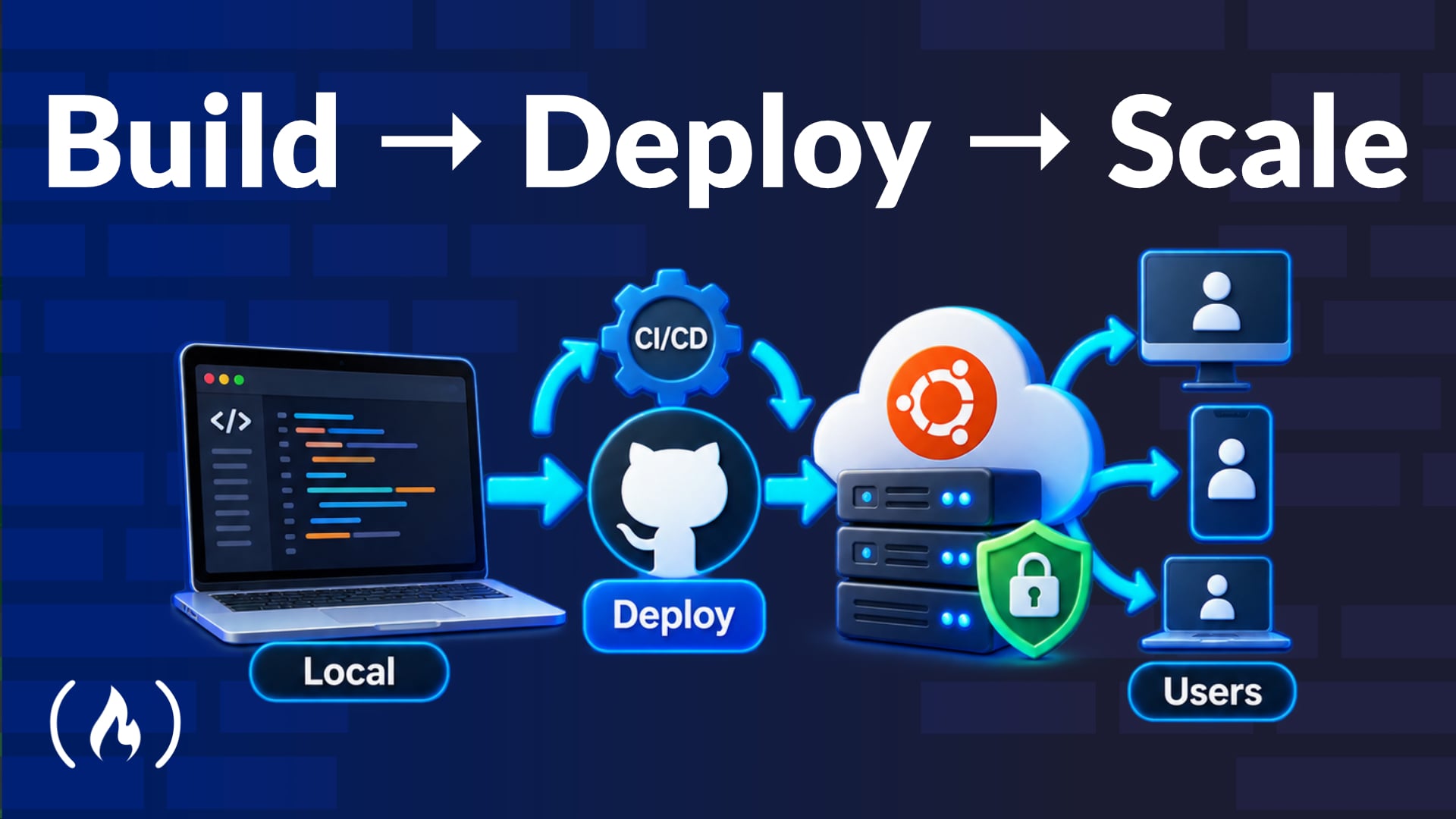
This article highlights a comprehensive freeCodeCamp.org course on deploying, securing, and automating full-stack web applications. It covers crucial steps from server provisioning and foundational security with UFW and Fail2Ban, to application runtime setup, data management, global access via Nginx and Cloudflare, and robust CI/CD pipelines with GitHub Actions. The course emphasizes a hands-on approach, integrating continuous security testing and observability, culminating in a production-ready application.

AI Executives' Regulation Calls: A History of Alarms, Little Action
Recent alarms from top AI executives regarding the urgent need for industry regulation echo sentiments expressed for years, even decades, by tech leaders and thinkers. Figures like OpenAI CEO Sam Altman, Anthropic CEO
Pixel 11 Pro: A Hidden Camera Gem Elevates Mobile Photography
The Pixel 11 Pro ($1,099) introduces redesigned Quick Access camera controls, offering intuitive, customizable on-the-fly adjustments like exposure and "Camera Looks." While powerful and user-friendly once enabled, Google hides them deep in settings and disables them by default, hindering discoverability. Despite this flaw, it's a significant upgrade for mobile photography enthusiasts.